Brisbane’s Casino in 2026: A Single Licence, a $3.6 Billion Precinct and What Replaced What
 Available in AU
Current as of 22 October 2026 and cross-checked against the Office of Liquor and Gaming Regulation licence register and The Star Brisbane’s published terms of entry.
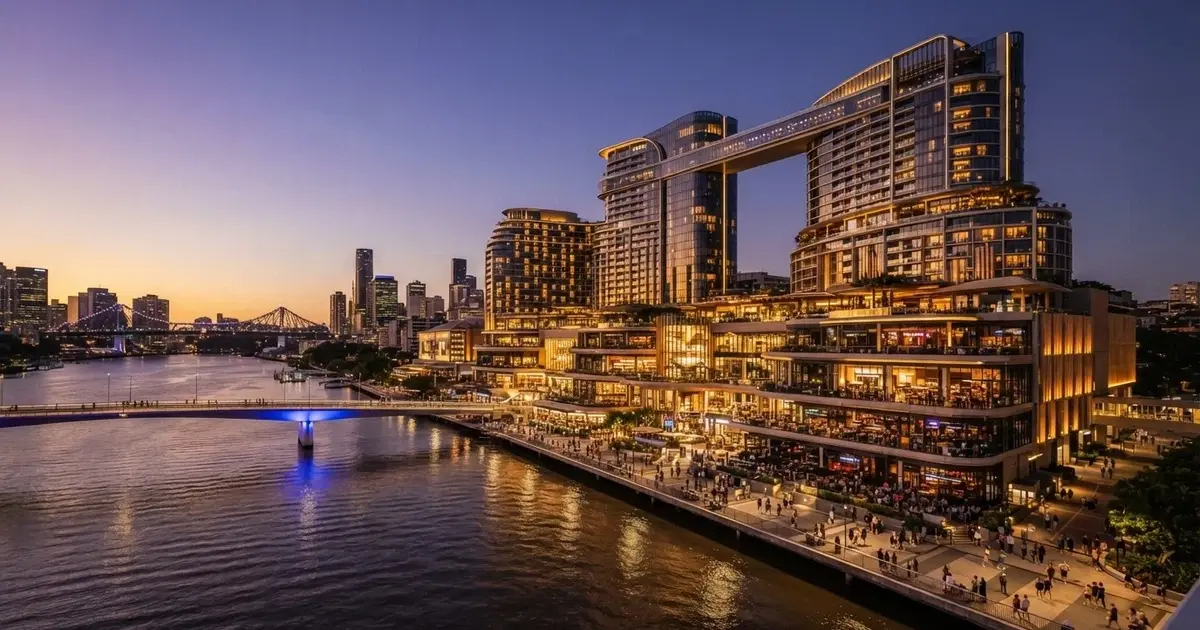
Brisbane is a one-casino city. That is the simplest way to put it, and it is also the reason a search for the “best casino in Brisbane” lands on a single address: The Star Brisbane, 33 William Street, opened in August 2024 as the centrepiece of a $3.6 billion Queen’s Wharf development that swallowed the old Treasury Brisbane and rewrote the riverfront in the process. There is no second option to compare it to within city limits. The interesting question, then, is not which venue wins a head-to-head but what one licence, one precinct and one operator can actually offer — and what the regulatory and ownership shifts of 2026 have done to the proposition.
A licensed casino in Queensland is a narrow thing. Only four approved casino sites exist across the state, and The Star Brisbane is the only one inside Brisbane’s metropolitan area. The Office of Liquor and Gaming Regulation — the state regulator that answers to the Casino Control Act 1982 — signs off on every machine, every table and every dealer on the floor. That structure explains why a “best of” list, in the conventional sense, has nowhere to go. It also explains why a single venue can present itself as a precinct: when you are the only game in town, you build a precinct.
What follows is a working through of that precinct — its 1,600 electronic gaming machines, 92 tables, its poker room, its high-limit salons, its restaurants, its hotel, its 24/7 sports bar and its observation deck — followed by the regulatory framework that governs every spin and the harm-reduction infrastructure that exists because the figures are stark. The Star Brisbane is, by any honest measure, the best casino in Brisbane. It is also the only one. The work of this page is to say what that is worth, and to whom.
Table of Contents
- Every Experience at The Star Brisbane, Ranked by What You’re Actually Walking Into
- 1,600 Machines and 92 Tables: What a Night on the Brisbane Casino Floor Actually Looks Like
- From a Rooftop Restaurant to a Late-Night Noodle Bar: Eating and Drinking at The Star
- Staying at The Star Grand and the Best Hotels Near the Casino
- 33 William Street: How to Get to the Casino and Where to Park
- The Casino Floor Never Closes, But the Dress Code Still Applies
- Why Brisbane’s Casino Rules Are Tighter Than You Think
- Jobs at The Star Brisbane and How to Apply
- How Much Queenslanders Lose at the Pokies and Where to Get Help
- How We Evaluate The Star Brisbane
- Is The Star Brisbane Worth Your Visit? What the Numbers Say
- Frequently Asked Questions About The Star Brisbane
Every Experience at The Star Brisbane, Ranked by What You’re Actually Walking Into
The “best casino” frame breaks down the moment a venue is also a hotel, a restaurant strip, an observation deck and a poker destination. The table below ranks the ten distinct experiences inside the Queen’s Wharf precinct by what they offer, in the order a first-time visitor is most likely to encounter them.
| Experience | What it is | Gaming on site? | The one thing it does best |
|---|---|---|---|
| Main Gaming Floor | 1,600 pokies and 92 table and poker games, open 24/7 | Yes — full casino floor | The single biggest concentration of EGMs in any Queensland venue |
| The Sovereign Room | Private high-limit salon for top-tier members | Yes — exclusive tables and limits | The most discreet gaming environment in the precinct |
| The Club | Members-only gaming space for Gold tier and above | Yes — higher-limit tables in private surrounds | Loyalty turned into privacy and a different table mix |
| Star Poker Brisbane | Dedicated poker room with daily cash games and WPT/WSOP satellites | Yes — poker only | The only dedicated poker room in the city and a pipeline to the major tours |
| The Star Grand | 340-room five-star hotel with direct lobby access to the casino | No | The most seamless stay-and-play arrangement on the Brisbane River |
| Sokyo | Signature Japanese fine-dining restaurant | No | High-end Japanese cooking in a casino context, which almost no other Australian casino attempts at this level |
| Aloria | Destination dining on the Level 23 Sky Deck | No | The view and the food are sold as a single experience |
| Fat Noodle | Casual Luke Nguyen-branded noodle house | No | High-volume, walk-in, no-reservation dining that feeds the gaming floor |
| Sports Bar | 24/7 sports hub with live betting terminals and wall-to-wall screens | Adjacent — terminals only | The only wagering and viewing space in the precinct that never closes |
| Sky Deck | Public observation deck, 100 metres up, 360-degree views | No | A free, no-membership-required panorama that the precinct uses as its public front door |
The ranking reflects how each experience earns its keep inside a precinct, not how it would rate as a standalone destination. The Sovereign Room is the highest-quality gaming environment, but it is invisible to anyone who has not earned entry. Sokyo and Aloria draw diners who never touch a machine. The Sports Bar is open at four in the morning when nothing else in the precinct is. Each block below goes deeper on the one thing the table can only summarise.
The Main Gaming Floor: 1,600 Reasons to Walk Through the Door
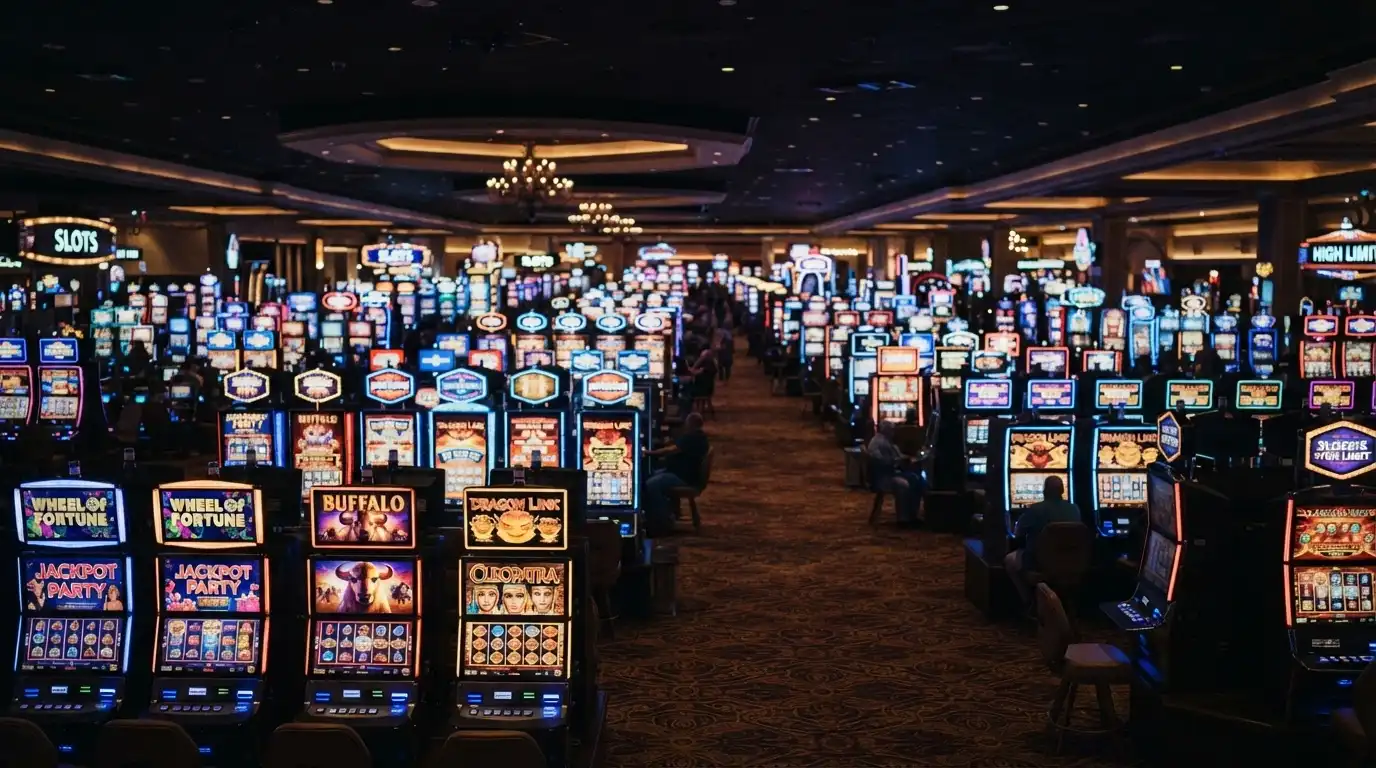
The core of The Star Brisbane is the main gaming floor, and its scale is the first thing that registers. The 1,600 electronic gaming machines and 92 table and poker games represent the largest concentration of casino product in any single Queensland venue, and the only one of comparable size inside Brisbane itself. The floor is the part of the precinct that never closes. Pokies, tables, the pit — all of it runs around the clock, every day of the year.
The atmosphere is shaped by the size of the inventory. A 1,600-machine floor is not a room; it is a small city of machines, organised in bays, with the table pit set apart under different lighting. The familiar hold-music hum of a large pokies floor is the dominant sound, broken by the chirp of a hit and the occasional chorus from a feature game. Dragon Link and Lightning Link — the two title families that have come to define the Australian pokie market — are present in volume, and the floor is laid out so that the highest-traffic machine types sit closest to the entrances.
Who the main floor suits is a question of intent. A visitor who has come for a couple of hours of $1 spins, a meal, and a walk back to a hotel room is well served. A visitor who has come for table-game action is also well served — the 92-table count covers blackjack, roulette, baccarat and craps, with minimums that vary by game and time of day. The one visitor the floor does not suit is the one looking for intimacy. For that, the precinct has other rooms.
The main floor’s relationship to the old Treasury Brisbane is worth noting because the new venue is not a like-for-like replacement. Treasury Brisbane closed on 25 August 2024 as part of the staged opening of The Star Brisbane, and a meaningful share of its regulars followed the licence to Queen’s Wharf. The new floor is larger, the building is newer and the dining and hotel product around it is on a different scale. The Treasury’s name and branding are gone.
Star Poker Brisbane: Daily Cash Games and a Path to the World Series
Brisbane’s only dedicated poker room sits inside the licensed casino at Queen’s Wharf, and it is built for one job: getting cards in the air every day of the week. Star Poker Brisbane runs daily cash games, and the schedule is structured so that a player walking in at almost any time of day finds action. The stakes run the spread a regular cash-game player expects — the smaller end for those buying in short, larger stakes on request for the rest.
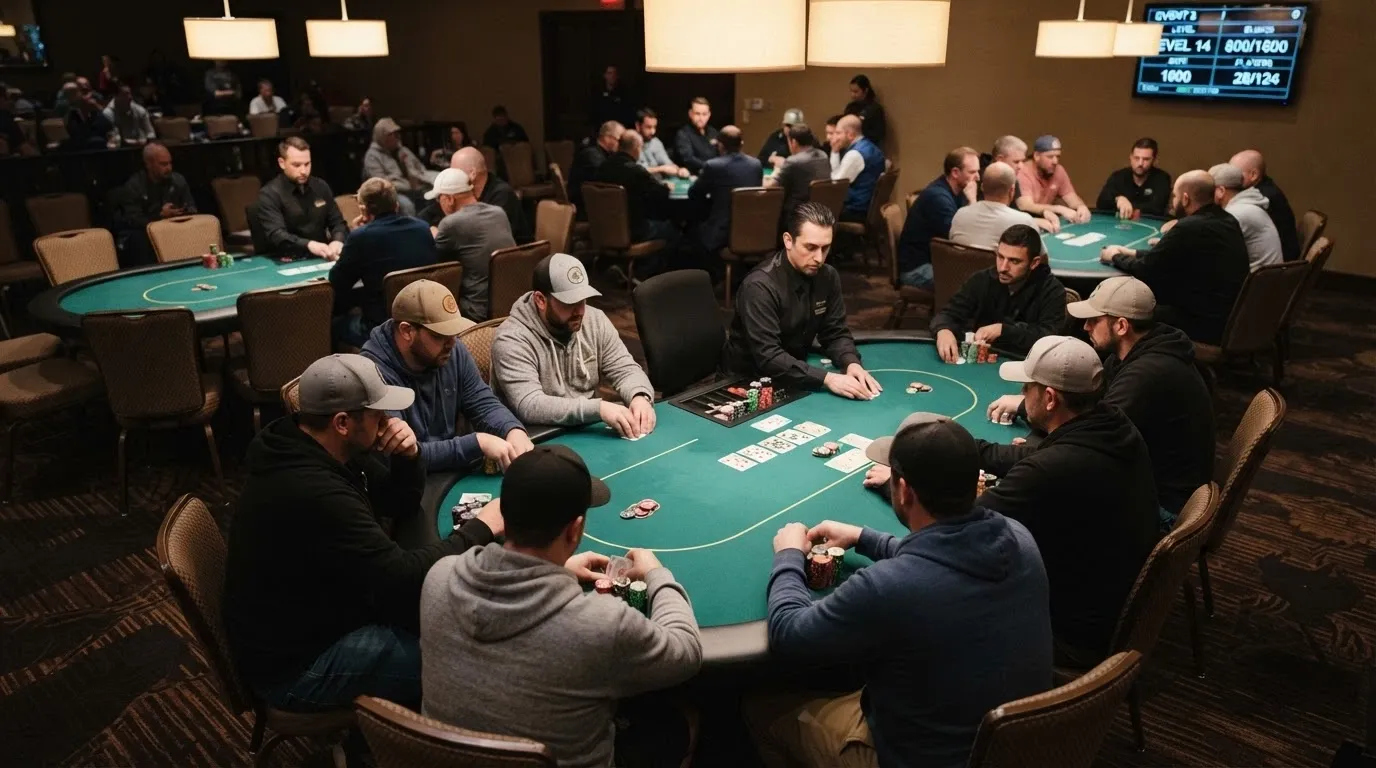
What separates the room from a poker corner of a gaming floor is the satellite pipeline. World Poker Tour satellites run from the room, as do World Series of Poker satellites, which means a player on a Brisbane bankroll has a real route to the major international events without flying to Las Vegas or Melbourne to qualify. Few land-based poker rooms in Australia carry both tours in their satellite calendar. The economics of the room are different from the main floor’s: a poker table generates far less revenue per hour than a bank of pokies, which is why a dedicated room is itself a signal about how a casino is positioning itself.
The player mix tends to self-select. Cash-game regulars, satellite grinders, the curious visitor — the room is its own community within the precinct, with its own rhythm and its own staff. It is also, in practice, the quietest part of the casino at any given hour.
The Sovereign Room: High-Stakes Gaming Behind Closed Doors
The Sovereign Room is the precinct’s invitation-only gaming salon, and it exists to serve the player whose bankroll would distort a public table. Access is gated by membership tier, and the tier required sits at the top of The Star Club hierarchy. Inside, the limits are higher, the service is bespoke, and the dealer-to-player ratio is closer to what a private gaming venue in Macau or Las Vegas offers than what an Australian casino floor usually runs.
The atmosphere is the point. The Sovereign Room is hushed, the lighting is low, and the noise of the main floor is gone. For a high-stakes player, the experience is meant to feel like a private club inside a public venue. The room also signals the venue’s ambition: a casino that has gone to the trouble of building a private salon is telling the market it intends to compete for international play, not just Brisbane’s Saturday-night crowd.
What the room is not, is a place a casual visitor can stumble into. The gating is real, and the membership criteria are not casual. For readers who will never play at the levels the room is built for, the Sovereign Room is best understood as a marker — the precinct’s way of saying it has the product to host a turn-up-and-play high roller.
The Club: Where Gold Members Play Away From the Crowd
The Club is the second of the precinct’s members-only gaming spaces, sitting a tier below The Sovereign Room in the access hierarchy and a tier above the main floor in the experience. The gate is Gold membership of The Star Club, which is reached through accumulated play. Inside, the tables run higher limits than the main pit, the surrounds are private, and the floor traffic is a fraction of what the public area carries at peak times.
The loyalty mechanics feed the room. Gold members earn a 1.25× multiplier on Casino Dollars — the precinct’s internal reward currency — which is the kind of return uplift that makes the difference between a casual loyalty programme and one that nudges regular play. The next tier, Platinum, requires 5,000 Tier Points, and it carries its own further benefits. The Club, in other words, is a destination the loyalty programme is engineered to point players toward.
For a player who plays enough to qualify, the experience is materially different from the main floor: smaller crowds, higher limits, and a staff that knows the names. For a player who does not yet qualify, the room is a reason to consider whether the loyalty programme is worth chasing — a calculation that depends entirely on how often the player is in the building.
The Sports Bar: Live Odds, Wall-to-Wall Screens, Open All Night
The Sports Bar is the only wagering space in the precinct that runs 24/7, and the only one built around the screen rather than the table. Wall-to-wall displays carry live racing and live sport, and live betting terminals for both sit within arm’s reach of the seats. The combination — venue, screens, terminals, all-night hours — is the only place inside The Star Brisbane where a punter can place a bet on a Wednesday at three in the morning and watch the result on the same wall.
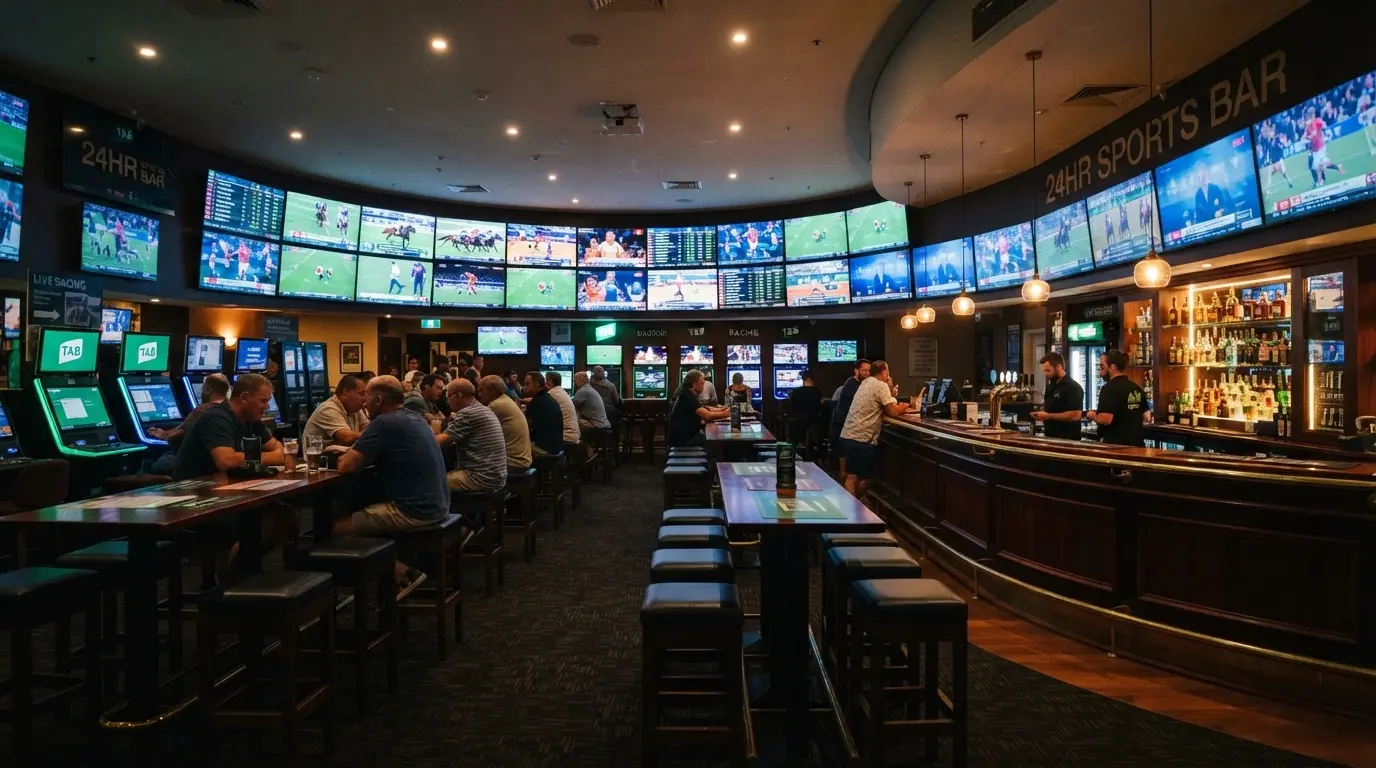
The atmosphere is what every sports bar in Australia aims at: loud on a Saturday, half-asleep on a Tuesday, somewhere in between the rest of the time. The bar pours standard drinks, the screens do the rest, and the betting terminals handle the rest. For a visitor who has come to watch a specific event rather than play a specific game, the Sports Bar is the room that suits.
The bar’s role in the precinct is to anchor the late hours. The restaurants close, the poker room winds down, the hotel lobby thins out — and the Sports Bar keeps the lights on. For the precinct’s bottom line, it is the venue that monetises the time slots nothing else can.
The Star Grand: 340 Rooms With a River View
The on-site hotel is the most obvious answer to the question of where to stay, and for most visitors it is the right one. The Star Grand carries 340 rooms in total, of which 276 are standard king rooms — a ratio that tells you the venue is built around the couple or solo business traveller rather than the family. Five-star rating, river views from the higher floors, and direct lobby access to the casino floor mean a guest can move from room to gaming floor in under a minute.
The hotel’s role inside the precinct is the stay-and-play proposition. A visitor who books The Star Grand is buying a night that includes the gaming floor as an extension of the room, and the dining and bar options as downstairs alternatives to room service. For a visitor who is not in Brisbane to gamble, the same hotel still works as a five-star CBD stay, with the river and the Queen’s Wharf precinct outside the door and the rest of Brisbane within walking distance.
Where The Star Grand does not suit is the visitor who wants to be far from the casino floor at night. Direct lobby access is the headline feature, but it is also a feature that means the building’s late-night foot traffic passes through or near the accommodation floors. For light sleepers, that is worth knowing before booking.
Sokyo: The Japanese Fine-Dining Room That Outclasses the Pokies
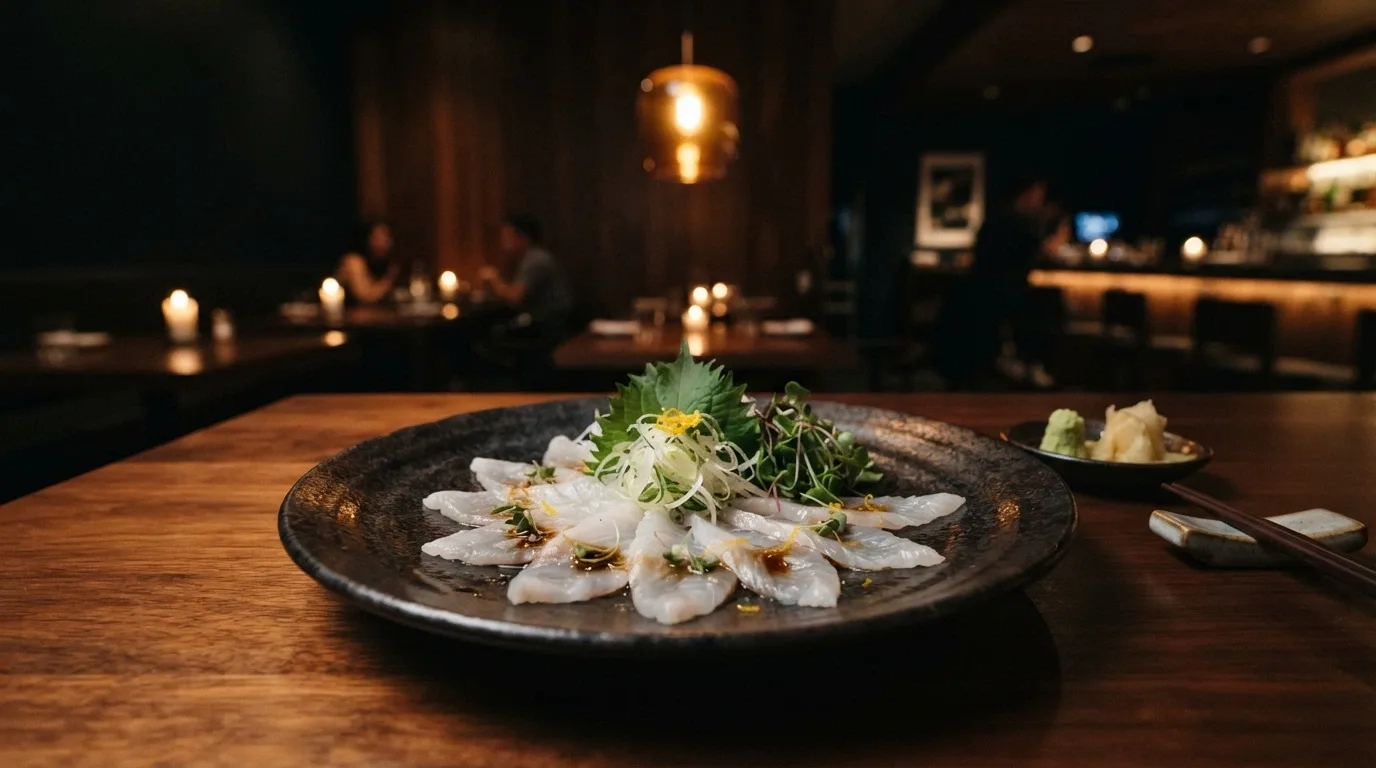
Sokyo is the precinct’s signature Japanese restaurant and the room that signals what The Star Brisbane is trying to be as a dining destination. The kitchen runs a high-end Japanese menu — sushi, robatayaki, the kind of plates that travel well past the casino context — and the room is set up for it, with mood lighting and a design that does not advertise the building it sits inside.
The point of Sokyo, for the precinct, is that a diner who comes for the food does not need to know there is a casino downstairs. That is a different proposition from the casual venues that exist to feed the gaming floor, and it is a deliberate one. A casino restaurant that draws a crowd on its own merits is a venue that earns revenue from diners who would never place a bet, and that is a diversification the precinct’s operators have an obvious interest in.
Who eats at Sokyo, in practice, is a mix: hotel guests, Brisbane food crowd, special-occasion diners, and a smaller share of casino visitors stepping up from a casual meal. The price band is fine-dining. The booking dynamic is one a fine-dining restaurant in any Australian capital would recognise.
Aloria: Destination Dining 23 Floors Above the Brisbane River
Aloria is the second of the precinct’s signature restaurants, and its main draw is the view from Level 23. The Sky Deck wraps the floor, and the panorama across the Brisbane River, the Story Bridge and the CBD is the reason most diners book. The food has to match the view, and the proposition is sold as a single package: you are paying for both, and the bill reflects it.
The Sky Deck context is the differentiator. Babblers, on the eastern end of the same level, sits in the same elevated position, but Aloria is the dining room. For a visitor weighing Sokyo against Aloria, the decision is largely about what kind of experience they want: Sokyo is the room you go to for the cooking, Aloria is the room you go to for the occasion. The two venues divide the fine-dining dollar inside the precinct without much overlap.
Aloria works for the visitor who wants one memorable meal of a Brisbane trip, and who is willing to plan around the booking. It does not work as a walk-in or a quick stop.
Fat Noodle: Luke Nguyen’s High-Volume Crowd-Pleaser
Fat Noodle is the casual, high-volume counterweight to Sokyo and Aloria, and it is the venue inside the precinct that feeds the most people in a single night. The Luke Nguyen brand carries weight in Australian food — the chef is a household name from years of television — and the menu is built around Vietnamese-style noodles, rice dishes and the small plates that travel well at volume.
The role Fat Noodle plays is the role any high-volume casual restaurant plays in a casino precinct: it absorbs the diners who would not book Sokyo, who do not want a Sky Deck view, and who are happy to walk in, sit down, eat and go back to the gaming floor. It is also the restaurant that hotel guests are most likely to use for a quick bite, given the price point and the no-reservation model. The price band is mid-market; the booking dynamic is none.
For the precinct’s overall mix, Fat Noodle matters because it keeps casual diners inside the building. A casino venue with no casual food offering loses those diners to the restaurants across the river. The Star Brisbane has chosen not to lose them.
The Sky Deck: 360-Degree Views, 100 Metres Up, No Membership Needed
The Sky Deck is an observation deck sitting 100 metres above street level, offering a 360-degree panorama of the Brisbane River, the CBD and the surrounding suburbs.
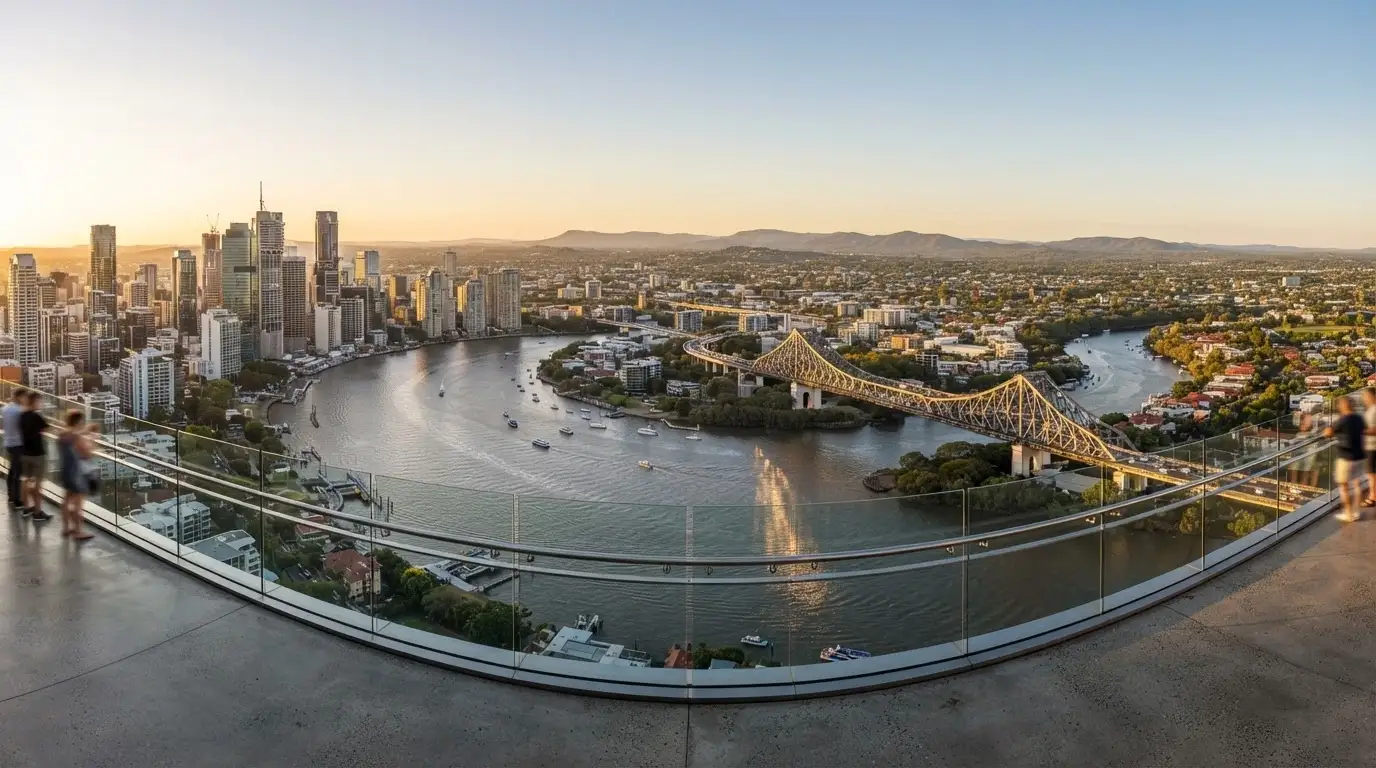
The Sky Deck is the precinct’s front door to non-gamblers, and it is doing real work for the venue’s image. A casino complex that opens a public observation deck at the top of its tower is making a statement about how it wants to be seen: not as a closed members-only venue, but as a Brisbane destination that happens to include a casino. For visitors who would never enter a gaming floor but are curious about Queen’s Wharf, the Sky Deck is the reason to visit.
It is also, on a clear day, the best free view in Brisbane. That alone is worth knowing about.
1,600 Machines and 92 Tables: What a Night on the Brisbane Casino Floor Actually Looks Like
The gaming inventory at The Star Brisbane is the largest single-venue offering in Queensland, and the table below breaks it down by area. Every cell draws on the venue’s own floor configuration.
| Gaming area | Gaming focus | Access level |
|---|---|---|
| Main Floor | 1,600 EGMs, full table-game pit, 24/7 | Public, 18+ |
| The Club | Higher-limit tables, private environment | Gold Club members and above |
| The Sovereign Room | Private high-limit tables, bespoke service | Top-tier members, by invitation |
| Star Poker Brisbane | Dedicated cash games and WPT/WSOP satellites | Public, 18+ |
| Sports Bar betting terminals | Live racing and sport wagering | Public, 18+ |
Five distinct gaming environments, four of them gated by membership tier or poker-room status. The progression from public to private tracks the membership hierarchy of The Star Club, and the dollar volumes that follow it.
The Pokies Floor: 1,600 Machines, One Cent to Whatever You’re Willing to Lose
Electronic gaming machines are the revenue engine of any Australian casino, and the Brisbane floor is built around them. The 1,600 machines at The Star Brisbane sit inside a venue that, in a state context, is small: Queensland has 5,211 approved EGMs across its four approved casino sites, and Brisbane’s share is a fraction of the state total. Inside Brisbane itself, however, the 1,600 is the entire pie.
The minimum bet starts at $0.01 — a one-cent spin is the cheapest the venue allows, and the upper end of the stake range is the maximum a given machine permits. The titles that dominate are the ones that have come to define the Australian pokie market: Dragon Link and Lightning Link are the two hold-and-link families that competitors’ venue pages consistently name on the floor, and both are present in volume. The games run the standard pokie mechanics — base game, feature trigger, free-spin round, hold-and-spin lock — and the loss rate is the standard pokie loss rate, which in Queensland terms means a category that drives 53% of all gambling losses across the state.
What 53% of all QLD gambling losses looks like in practice, applied to a 1,600-machine floor, is the question a sharp-eyed reader is asking. Pokies are designed to take a small percentage of every dollar cycled through them, and a 1,600-machine floor running 24/7 will cycle a lot of dollars. The venue is profitable precisely because the design works. The visitor’s bankroll, on any given session, is the input to that machine.
Who the pokies floor suits is also a question of intent. A visitor who comes for an hour, sets a loss limit, and walks away has a much better night than a visitor who chases. The venue’s own design — the size of the floor, the title mix, the stake range from one cent upward — is engineered to keep visitors on the floor, and a player who is not paying attention to their own clock and budget is playing the venue’s game, not their own.
Table Games: Blackjack, Roulette, Baccarat and Craps Under One Roof
The 92-table count covers the standard table-game spread: blackjack, roulette, baccarat and craps. The pit is organised by game, with a separate section for each, and the dealer and pit-boss structure follows the standard Australian casino model. Minimums vary by game and time of day, with the lower end during the off-peak hours and the higher end on a Saturday night.
The rhythm of a table-game night is different from a pokie session. A table player is interacting with the dealer and the other players at the table, the pace of play is set by the game and the shoe, and the loss rate per hour is usually a function of the minimum bet and the number of hands per hour rather than the spin speed of a machine. The pit feels less like a floor and more like a small, well-lit room with a dozen conversations happening at once.
The dealer rotation is what the venue uses to manage fatigue and the table’s edge — dealers are moved between tables and breaks, the pit boss keeps an eye on the floor, and the higher-limit tables are staffed by the more experienced dealers. For a first-time table player, the pit is more forgiving than it looks: dealers will explain the game, the minimums are posted, and the worst that happens at a blackjack table is that you lose what you brought.
The Poker Room: Cash Games, Tournaments and a Satellite Seat at the Big Table
The dedicated poker room, Star Poker Brisbane, is the venue’s most specialised gaming space, and the only one in the city. Daily cash games run on a published schedule, and the stakes cover the range a regular cash-game player would expect to find. Tournament play runs alongside, and the satellite pipeline — WPT and WSOP events — gives the room a function beyond its cash-game traffic.
The economics of a poker room are different from a pokie floor’s. A table of nine players generates a fraction of the revenue a bank of pokies does, and the rake that the house takes is the only direct income. The room is profitable as part of a wider precinct — it brings players into the building who eat, drink and stay in the hotel — but on its own terms, it is a community investment as much as a revenue one. That is why most Australian casinos without a dedicated poker room do not have one, and why the room at The Star Brisbane matters as a marker of the venue’s positioning.
For a player who already plays poker, the room is straightforward. For a player who does not, the room is the reason The Star Brisbane has any claim to a poker destination in Brisbane at all.
What About Playing Online? Why the Pokies Stay Inside the Building
The reason this section exists on a page about a land-based casino is that a large share of the searches that bring readers here start with “pokies” — and “pokies” is a term that, in 2026, points as much at a screen as a machine. The Interactive Gambling Act 2001 draws a hard line: it is an offence to provide online casino games or online pokies to a person physically in Australia. The prohibition covers the products, not the act of placing a bet; the Australian end is policed by the providers, not the player.
What is legal online in Australia is narrower than the marketing suggests. Sports betting and racing wagering, through licensed Australian operators, are legal. Lotteries are legal. Online casino games — blackjack, roulette, slots, live dealer — are not, and the providers that offer them to Australian customers do so from offshore and outside the local regulatory perimeter. Since 11 June 2024, credit cards, credit-related products and digital currencies have been banned as a payment method for online wagering, which has narrowed the deposit rails available to anyone using a licensed Australian wagering service.
What that means for a reader on this page is straightforward. The 1,600 pokies inside The Star Brisbane are the only way to play a real-money pokie within the law in Brisbane. Any other route to the same game is operating outside Australian regulation, and any consumer protection that follows from a domestic licence does not apply to it. The safer, simpler, regulated answer is the building at 33 William Street.
From a Rooftop Restaurant to a Late-Night Noodle Bar: Eating and Drinking at The Star
The food-and-drink offering at The Star Brisbane is large enough to be a destination in its own right, and the precinct uses it as a deliberate counterweight to the gaming floor. The dining range runs from Sokyo and Aloria at the top end, through Babblers on the Sky Deck, to Fat Noodle and the casual venues at ground level. The bar mix covers the Sports Bar’s 24/7 wagering-and-screens format, the rooftop and lobby bars, and the late-night venues that keep the precinct alive when the restaurants close.
For a visitor, the question is which venue suits which occasion. The next three sections work through that.
Fine Dining and Destination Restaurants: Sokyo, Aloria and Babblers
The fine-dining tier at The Star Brisbane is Sokyo, Aloria and Babblers, and the three divide the high-end dollar in different ways. Sokyo is the room for the food — Japanese fine dining, the kind of cooking that justifies the booking on its own merits. Aloria is the room for the occasion — Level 23, Sky Deck views, the meal sold as a single package with the panorama. Babblers is on the eastern end of the same Sky Deck level, and the position makes it the third of the elevated dining options, with a slightly different menu focus and a slightly different booking dynamic.
The price band across all three is fine-dining, the bookings are required, and the dining rooms are the precinct’s strongest pitch to non-gambling visitors. For a Brisbane food crowd, the three restaurants are worth knowing about on their own merits. The casino downstairs is a context, not a reason to book.
Casual Eats, Cafés and the Buffet: Where to Eat Without the White Tablecloth
The casual tier is anchored by Fat Noodle, the Luke Nguyen-branded noodle house that handles the high-volume, no-reservation traffic. The price band is mid-market, the menu is built around Vietnamese-style noodles and rice dishes, and the room is the most likely destination for a hotel guest who wants a quick meal or a casino visitor who wants to eat between sessions.
What the research does not give is a venue-specific name for the buffet, breakfast or café options the coverage map surfaces. The precinct carries the casual food outlets a venue of this size is expected to run — coffee, light meals, daytime food for hotel guests and visitors who are not yet at the gaming floor — but the specific venues in those categories were not inventoried this run. A reader planning a daytime visit is best served by checking the venue’s own published dining directory for the current casual and café offering.
Bars, the Sports Hub and What Happens After Dark
The bar mix at The Star Brisbane is built around the 24/7 Sports Bar, which is the precinct’s wagering and viewing anchor and the only venue that never closes. The Sports Bar carries wall-to-wall screens for live racing and live sport, live betting terminals for both, and a bar that pours standard drinks. It is the room that monetises the hours nothing else can.
The rooftop and lobby bars round out the offering, and the precinct carries the late-night venues — including a nightclub and live-show programming — that a venue of this scale is expected to run. The specific late-night and live-show names beyond the Sports Bar were not inventoried this run; a reader planning a late visit is best served by the venue’s own published directory for current programming and hours.
For a visitor, the practical point is that the precinct has food and drink from breakfast to the early hours, and that the choice between rooms is a choice between formats: fine dining, casual dining, sports bar, rooftop bar, late-night venue. The casino is the building; the venues are the building’s rooms.
Staying at The Star Grand and the Best Hotels Near the Casino
The on-site hotel is the obvious pick for most visitors, but it is not the only option in the neighbourhood. The Brisbane CBD and Queen’s Wharf area carries a hotel density that gives a visitor with different priorities — different price point, different distance from the gaming floor, different length of stay — real alternatives.
The Star Grand: Rooms, Views and What You Get for the Tariff
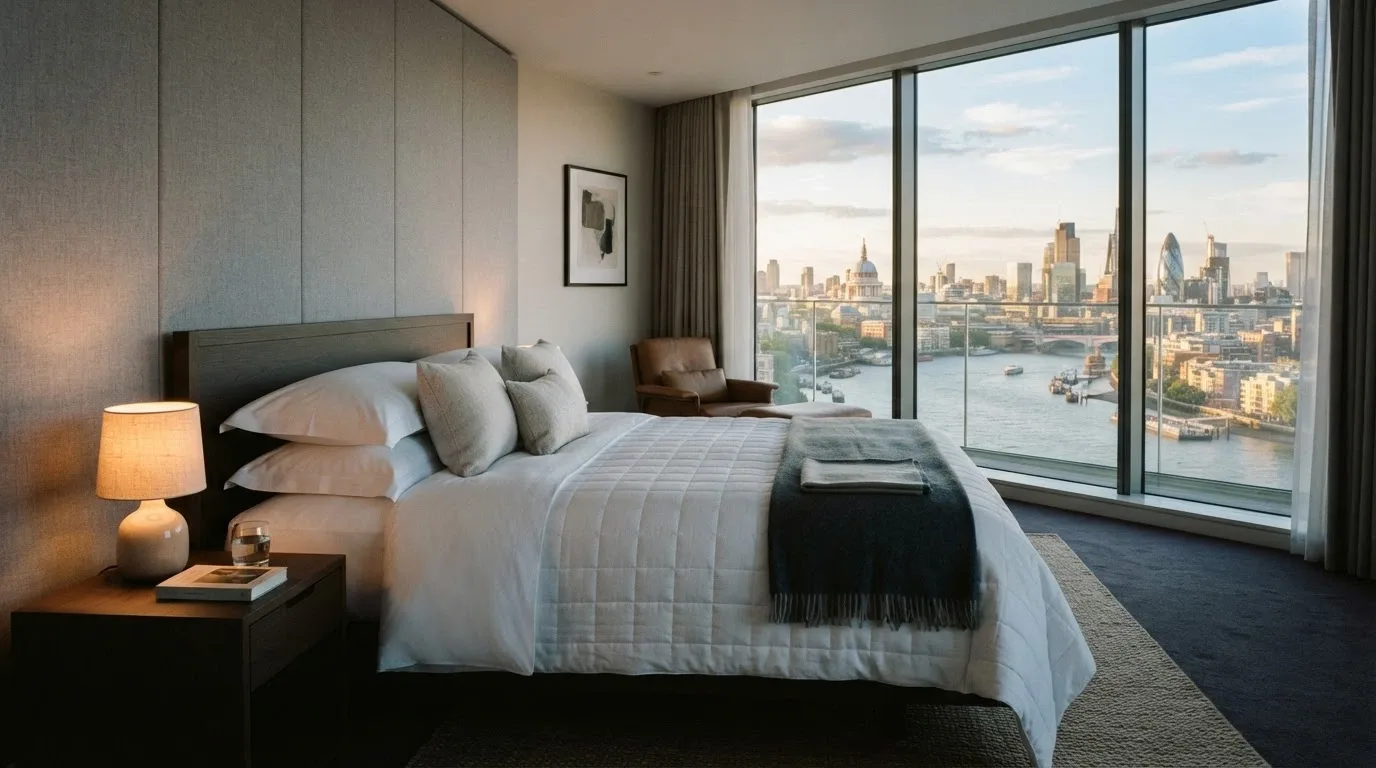
The Star Grand is 340 rooms in total, of which 276 are standard king rooms. The remaining rooms sit in higher categories — suites, river-view premium rooms, the kind of upgrade an Australian five-star hotel is built around. The view is the headline: river-facing rooms carry the Brisbane River, the Story Bridge and the CBD, and the higher the floor, the wider the panorama.
The direct lobby access to the casino floor is the second headline, and the feature that turns the hotel into a stay-and-play proposition. A guest at The Star Grand is, in practice, a minute from the gaming floor at any time of day. For a visitor who is in Brisbane specifically for the casino, that is the point. For a visitor who is in Brisbane for other reasons and would rather be slightly further from the gaming floor at night, it is a feature to weigh.
The hotel’s place in Brisbane’s five-star market is as the precinct’s anchor property. Other five-star options exist within the CBD, and the comparison is a matter of brand preference, view and price. The Star Grand’s competitive advantage is the direct casino access; its competitive constraint is that the building also contains 1,600 pokies.
Nearby Accommodation and Package Deals
The Brisbane CBD and the Queen’s Wharf precinct carry enough hotel density that an alternative to The Star Grand is always within walking distance. The price spread covers the budget end through the five-star tier, and the choice between The Star Grand and a neighbouring property is, in most cases, a choice about how close the visitor wants to be to the gaming floor.
Package deals — a stay bundled with casino credit, a dining credit, or a combination — are the kind of arrangement a venue of this scale typically offers through its own booking channel, and the specific packages change frequently. The research for this page did not inventory current package terms, and a reader planning a stay-and-play visit is best served by checking the venue’s own bookings page for what is currently available.
33 William Street: How to Get to the Casino and Where to Park
The address of The Star Brisbane is 33 William Street, Brisbane City QLD 4000, and the venue sits inside the Queen’s Wharf precinct on the northern bank of the Brisbane River. The CBD is a short walk, the river is across the road, and the precinct itself is built to be walkable from central Brisbane.
Parking at the Casino: What Is Free, What Is Not and Where the Car Park Is
The Queen’s Wharf precinct carries a parking structure that serves the casino, the hotel, the dining venues and the Sky Deck, and parking is the question most visitors arriving by car need answered first. The specifics — exact rates, validation rules, the cost of valet, the conditions under which parking is free — are the kind of detail the venue publishes directly, and the research for this page did not pin down the per-venue specifics.
What is generally true of a precinct of this scale is that parking is paid, that validation is sometimes available through dining or gaming-floor activity, and that valet is offered as a premium option. A visitor planning to drive is best served by the venue’s own parking page for the current rates and any free-parking thresholds, because those are the figures that change most often.
Public transport is the other route in. The CBD is walkable, the Brisbane bus and train networks have stops within a short walk, and the river ferry stops at the precinct during operating hours. For a visitor who is not committed to a car, public transport plus walking is often the simpler arrival.
The Casino Floor Never Closes, But the Dress Code Still Applies
The 24/7 gaming floor is the headline of The Star Brisbane’s operating model, and the entry rules are the part of the proposition that actually determines who gets in. The hours are simple; the door policy is enforced.
Trading Hours: 24/7 Gaming, But Not Everything
The main gaming floor runs 24 hours a day, every day of the year, and the Sports Bar runs the same schedule. The other venues inside the precinct — the restaurants, the bars, the Sky Deck, the poker room, the hotel — keep their own hours, and a visitor planning a specific experience is best served by checking the venue’s own published times.
What that means in practice is that a visitor at two in the morning has the gaming floor and the Sports Bar, and not much else. A visitor at lunchtime has the dining venues, the Sky Deck, the hotel lobby and the gaming floor. A visitor at six in the evening on a Saturday has the full precinct, with the restaurants and the bar at their busiest. The 24/7 headline is true of the gaming floor; it is not true of the precinct as a whole.
Dress Code, Age Checks and What Gets You Turned Away
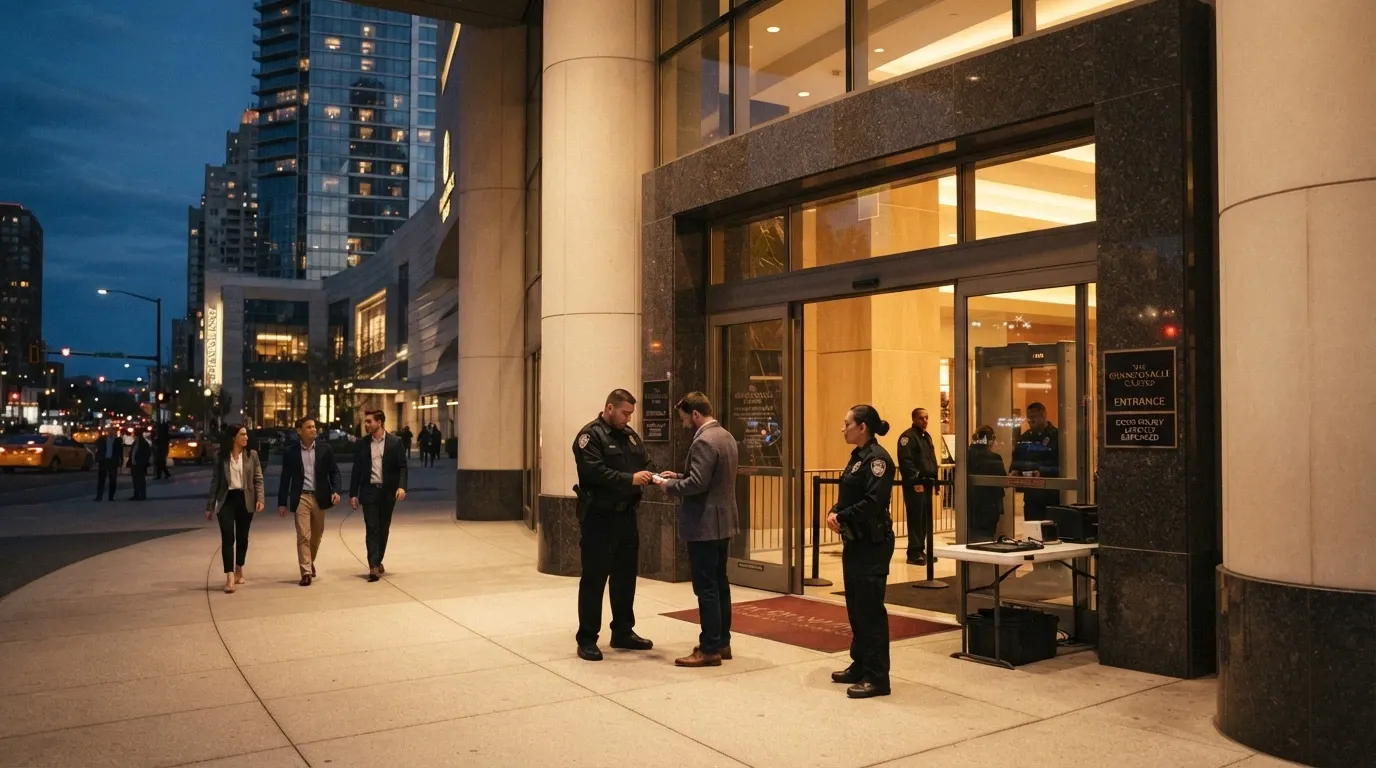
Entry to the casino requires acceptable proof of age that the patron is at least 18 years old, and the proof is checked at the door. The dress code is described as “neat and tidy” and is strictly enforced. The practical reading is the same as any Australian casino’s: no thongs, no singlets, no visibly torn clothing, no workwear, and the kind of discretion about hats and sports gear that a security guard at the door will apply case by case.
Bag checks and metal-detector screening are standard. The security presence at the entrance is the venue’s first signal that it is operating under a regulatory regime that takes harm minimisation seriously, and the visible enforcement is part of how that signal is communicated. A visitor who has the right ID, the right clothes and no prohibited items in their bag is waved through in under a minute. A visitor who trips one of those checks is asked to address it before entry.
Why Brisbane’s Casino Rules Are Tighter Than You Think
The casino floor at The Star Brisbane answers to two regulatory frameworks: the state-level Casino Control Act 1982 (Qld), administered by the Office of Liquor and Gaming Regulation, and the federal Interactive Gambling Act 2001, which governs what can and cannot be offered to Australians online. The two frameworks operate at different layers — state for the building, federal for the wire — and the 2026 shifts in both have changed the shape of the proposition.
The Casino Control Act and the Regulator That Enforces It
The Casino Control Act 1982 (Qld) is the founding statute for casino gaming in Queensland, and the Office of Liquor and Gaming Regulation is the state body that administers it. The OLGR’s scope covers the licensing, the operational standards, the harm-minimisation requirements and the ongoing compliance of every approved casino in the state. Queensland has four approved casino sites in total, and those four sites carry 5,211 approved EGMs between them. The Star Brisbane is one of the four.
The state framework interacts with the federal one in a specific way. The Casino Control Act governs the building — what is on the floor, how the staff are licensed, what the venue can offer to a player who walks in. The IGA governs the wire — what can be offered over the internet to a person in Australia. The Star Brisbane operates under the state framework for everything that happens inside 33 William Street, and under the federal framework for any digital product it might attempt to offer outside the building. The state framework is the more relevant one for a visitor.
The 2026 Ownership Shift and What Changes in 2026
Two shifts in 2026 have changed the legal and commercial shape of The Star Brisbane, and a third, in 2027, will change how the wider wagering industry advertises.
The first is the ownership shift. On 1 April 2026, The Star Entertainment Group completed its exit from the Destination Brisbane Consortium — the joint venture that built and operated the precinct. Star Entertainment shareholders had earlier approved a $300 million rescue deal backed by US casino operator Bally’s, and the restructure that followed left The Star Brisbane under a fixed annual operator fee of $18 million, paid monthly to the consortium. The economic effect is that the venue now runs on a management-fee model rather than an ownership model, and the long-term ownership of the precinct sits elsewhere.
The second is the credit and crypto ban that has been in force for online wagering since 11 June 2024. Credit cards, credit-related products and digital currencies are no longer usable as payment for online wagering with licensed Australian operators. The ban does not extend to land-based venues, where debit cards and cash remain standard, but the broader direction of the regulatory travel is clear.
The third is the advertising and inducement framework that takes effect on 1 January 2027. From that date, broadcast wagering advertisements are capped at three per hour between 6:00 am and 8:30 pm, with a live-sport blackout that further restricts when wagering ads can run around scheduled play. Inducements — sign-up offers, referral bonuses and the broader category of marketing sweeteners that licensed operators have used to attract new customers — are also prohibited or tightly limited by several state regimes. The combined effect is a tightening of how wagering is sold to Australians, and a casino visitor in 2027 will see a markedly different marketing environment than one in 2024.
Jobs at The Star Brisbane and How to Apply
A venue of The Star Brisbane’s scale is one of the largest hospitality employers in the Brisbane CBD, and the role categories it staffs cover the full range of operations a casino precinct runs.
- Gaming roles: dealers, pit bosses, floor staff, EGM technicians, surveillance and the security team that operates the door.
- Hospitality roles: chefs, kitchen staff, front-of-house, restaurant and bar managers, the F&B teams across Sokyo, Aloria, Fat Noodle and the casual venues.
- Hotel roles: front desk, housekeeping, concierge, the management layer that runs a 340-room five-star property.
- Corporate and support roles: finance, marketing, compliance, HR, IT, the administrative layer that keeps a precinct of this size operating.
Current openings change frequently, and the authoritative source for what is currently available is the venue’s own careers page. Salary bands and specific role listings are not inventoried here for that reason — they are out of date the moment a page is published. The application process for most roles follows standard hospitality-industry practice: an online application, an interview, the venue’s standard background checks (which, for a casino, are more thorough than for many hospitality roles because of the regulatory framework around gaming staff).
A reader who is interested in working at The Star Brisbane is best served by the venue’s own published careers portal. The role mix is broad enough that a candidate with experience in any of the categories above is likely to find something current.
How Much Queenslanders Lose at the Pokies and Where to Get Help
The figures behind the gaming floor at The Star Brisbane are not abstract, and the infrastructure that exists to help players who need it is part of how the precinct operates under its regulatory framework.
The Numbers: What Gambling Harm Looks Like in Queensland
In 2022–23, total gambling losses in Queensland were $6.1 billion — an increase of 36% over the 2018–19 figure. The Queensland Audit Office’s reporting on the period was direct: gambling has grown significantly in Queensland in recent years, and the dollar volume is the headline. Of the $6.1 billion, pokies accounted for 53% — more than half of all gambling losses in the state, on a category that occupies a single floor of a single building inside a single venue.
Nationally, approximately 2.1% of Australian adults experience problem gambling — around 430,000 people. The figure is a prevalence rate, not a count of people who have ever had a problem with gambling, and the public health framing of problem gambling is the one the state and federal regulators have adopted. The Star Brisbane’s 1,600 machines, set inside a state where pokies drive more than half of gambling losses, sit inside that frame.
A reader who is visiting the venue for the first time and has a gambling budget in mind is the reader these numbers are aimed at. The house edge is the design, and the design works. Setting a loss limit, sticking to it, and leaving when it is hit is the only player-side strategy that matches the venue’s design.
Self-Exclusion, BetStop and the Helpline: Tools That Actually Work
The harm-reduction infrastructure around Australian gambling is layered, and the three tools below are the ones a player in Queensland can actually use.
- The National Gambling Helpline is 1800 858 858, free, confidential and staffed 24/7. The line is the single best first call for anyone who is worried about their own gambling or someone else’s, and it routes callers to the counselling and support services that operate in their state.
- BetStop, the National Self-Exclusion Register, had 67,480 registrations as at 31 July 2026. BetStop covers licensed wagering services — the online and phone bookmakers — and a registered user is excluded from opening new accounts, depositing and betting with any participating operator. It does not cover land-based casinos directly, but it sits inside the wider ecosystem that any Australian gambler will encounter.
- Land-based venue self-exclusion is the tool that does cover The Star Brisbane. Queensland-licensed casinos operate their own exclusion lists, and a player who self-excludes from a venue is barred from entry for the period of the exclusion. The process is run through the venue, and the OLGR’s framework makes the exclusion a regulatory requirement rather than a voluntary arrangement.
- The Queensland Gambling Harm Action Plan 2026–2028 is the state’s shared framework for reducing harm across government, industry and the community sector, and it sets the policy direction for the period. Player activity statements — the regular statements a venue is required to send to a player summarising their time and money on the floor — are mandatory at land-based casinos in Queensland.
A player who wants to use any of these tools can do so today. None of them require leaving the building to start.
How We Evaluate The Star Brisbane
The sources behind this page are the regulatory and corporate documents that govern a Queensland casino, the venue’s own published terms, the competitor landscape as it appears in casino-directory and travel-guide coverage, and the public reporting on gambling harm in Queensland. The OLGR’s licence register confirms The Star Brisbane as one of the state’s four approved casino sites. The Star Entertainment Group’s ASX announcements confirm the April 2026 ownership restructure. The Star Brisbane’s published terms of entry confirm the age and proof-of-age requirements. The Queensland Audit Office’s reporting confirms the loss figures. The venue’s own floor configuration — 1,600 EGMs, 92 tables, 340 hotel rooms — is confirmed by the competitor landscape and matches the venue’s own published material.
The criteria that ordered the ranking inside the precinct are licence status, gaming depth, dining range, non-gaming draw, and transparency of terms. The licence status is uniform across the precinct — every venue sits inside the one licensed operator. The gaming depth varies by area. The dining range is what it is. The non-gaming draw is real and is the precinct’s main point of difference against a single-purpose casino. The transparency of terms varies by area, and the page has been explicit where it is.
The limits of the review are also worth stating. The research did not pin down per-venue parking rates, late-night venue names beyond the Sports Bar, current package-deal terms, current job listings, or the specific closing times of the precinct’s non-gaming venues. The page has stated that plainly where the material required it. A reader who needs a specific current figure for any of these is best served by the venue’s own published page, which is the authoritative source for figures that change.
Is The Star Brisbane Worth Your Visit? What the Numbers Say
The Star Brisbane is Brisbane’s only casino, and the regulatory and ownership shifts of 2026 have not changed the structural fact that gives the precinct its shape. The Star is also, on the evidence, a venue that does what a single-licence casino should do: it concentrates a meaningful gaming floor inside a precinct that has other reasons to exist, and it uses the surrounding dining, hotel and observation product to make the building more than a gaming room.
The verdict that follows from the figures is straightforward. The 1,600-machine pokies floor, the 92-table pit and the 24/7 gaming hours give a visitor the most complete casino product available in Queensland. The dining tier — Sokyo, Aloria, Babblers, Fat Noodle — gives a non-gambling visitor a reason to visit that does not require a bet. The Star Grand gives a stay-and-play visitor a five-star room with direct access to the gaming floor. The Sky Deck gives any visitor, gambler or not, a free panorama of Brisbane that no other venue in the city offers at 100 metres up. The Sports Bar keeps the precinct alive in the hours when everything else is closed.
Against that, the figures that sit behind the building are stark. Pokies drive 53% of Queensland’s $6.1 billion in annual gambling losses, and a 1,600-machine floor is the largest concentration of EGMs inside any single Brisbane venue. The harm-reduction infrastructure exists, and it is the right of every visitor to use it, but it is also a sign that the product inside the building is one the regulator takes seriously. A visitor who goes in with a budget, sticks to it, and leaves when it is spent has had a good night. A visitor who does not is the input to the design.
The one-casino-city reality cuts both ways. A Brisbane visitor who wants a casino experience has a single option, and that option is a strong one. A Brisbane visitor who wants choice does not have it, and the only way to get it is to travel to the Gold Coast, the state’s other licensed casino destination, or to Cairns. The Star Brisbane is the best casino in Brisbane. It is also the only one, and the distinction matters less than the figures that come with the building.
Frequently Asked Questions About The Star Brisbane
Can I legally gamble online in Queensland?
No. The Interactive Gambling Act 2001 makes it an offence to provide online casino games or online pokies to a person physically in Australia. Sports and racing wagering with licensed Australian operators is legal, and lotteries are legal, but online casino products sit outside Australian law. The 1,600 pokies at The Star Brisbane are the only legal real-money pokie game in Brisbane.
How do I join The Star Club?
Membership is run through The Star Brisbane’s own membership programme, and the sign-up is at the venue. The Club’s tiers — Gold, Platinum and above — are reached through accumulated play, with Platinum requiring 5,000 Tier Points. The Club is the gateway to higher-limit gaming rooms and to Casino Dollar multipliers, with Gold members earning 1.25× on their Casino Dollar accrual.
What happened to the Treasury Casino in Brisbane?
Treasury Brisbane closed on 25 August 2024 as part of the staged opening of The Star Brisbane. The Treasury licence, the staff and the gaming product moved across the river to the new Queen’s Wharf precinct, and the old Treasury building no longer operates as a casino. The Star Brisbane is the legal and operational successor.
Are drinks free at The Star Brisbane?
Complimentary drinks for gaming-floor patrons are the standard practice at Australian licensed casinos, and The Star Brisbane follows the convention. The specifics — which drinks, how often, at which gaming activity — are matters of venue policy, and a visitor who is on the floor can confirm the current offering with floor staff. The bar venues inside the precinct operate on standard bar pricing.
What is the dress code at The Star Brisbane?
The venue describes its standard as “neat and tidy”, and the dress code is strictly enforced at the door. The practical reading is the standard Australian casino convention: no thongs, no singlets, no visibly torn clothing, and a security guard’s discretion on hats and sports wear. The enforcement is real, and a visitor who arrives in the wrong clothing is asked to address it before entry.
Created by the ”Best Casino Sydney” editorial team.