
Two Dollars at the Door: How $2 Deposit Casinos Really Work for Australian Players
Data current as of 22 October 2026 and verified against the ACMA register, the BetStop public dashboard, and licensed wagering listings in the Northern Territory.
Table of Contents
- What Your $2 Deposit Actually Buys at an Australian Online Casino
- Where Australian Players Actually Find a $2 Deposit in 2026
- The Pokies That Make a $2 Bankroll Last
- Payment Methods That Actually Clear at $2
- Mobile $2 Deposit Casinos — What Works on Your Phone
- New $2 Deposit Casinos — Worth the Hype?
- Why Every “$2 Deposit Casino” in Australia Sits Offshore
- What Keeps You Safe When the Licence Doesn’t
- How We Evaluated These $2 Deposit Casinos
- Your $2 Deposit — a Cheap Ticket or a Costly Trap?
- Frequently Asked Questions
What Your $2 Deposit Actually Buys at an Australian Online Casino
The phrase “two-dollar minimum deposit casino” gets traded across the affiliate web the same way every cheap-seat promise does, and almost none of the pages selling it explain what you actually receive for the two dollars. You receive, in most cases, an offshore account held under a Curaçao or Anjouan licence, opened from Australia in spite of the Interactive Gambling Act, loaded with a balance that the operator’s withdrawal rules may never let you walk out with. The headline is real. The picture it paints is not.
What follows is the part the marketing copy skips: the rails that genuinely clear at $2, the rails that don’t, and the asymmetry between putting money in and getting it back out.
The fiat-vs-crypto $2 reality — what the headline hides
The first thing to know is that almost no fiat rail — credit card, debit card, PayID, POLi, bank transfer — clears at two dollars at any AU-facing offshore casino. Card processors and bank-linked payment services in Australia enforce minimums between roughly $10 and $20 AUD at the casino end. That is not an oversight. That is the floor at which card interchange, anti-fraud screening, and PayID’s overnight settlement model make a micro transaction economically viable for the operator. Three rails clear the $2 mark, and only three: Neosurf and Paysafecard prepaid vouchers, and cryptocurrency wallets whose floor is set by the casino rather than the rail.
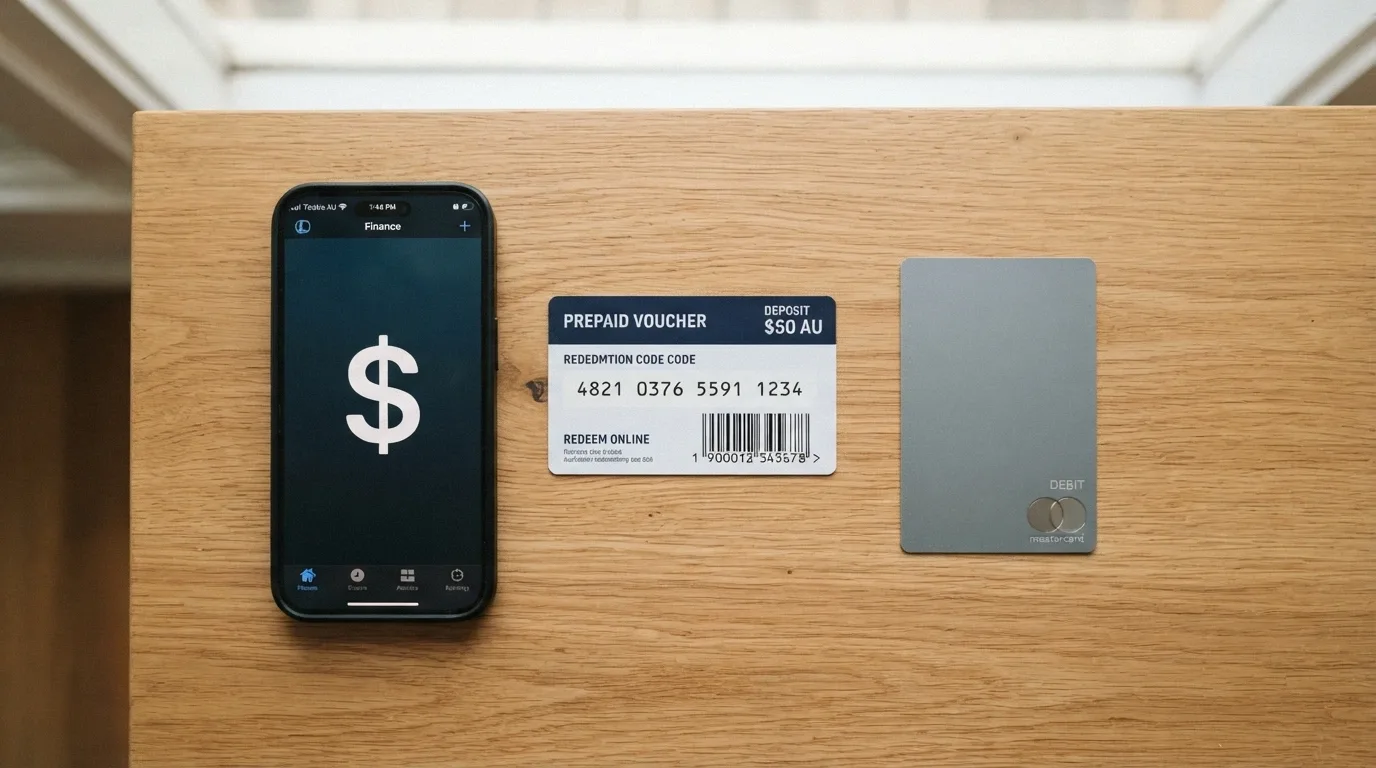
Among the offshore brands Australian players actually reach, only one consistently accepts deposits below a dollar in real money terms: Stake, where a Bitcoin deposit of roughly AU$0.10 — yes, ten cents — funds an account. For fiat, the practical floor across the AU-facing offshore market is around AU$10 via Neosurf. Two-dollar deposits as advertised only materialise through specific configurations: a crypto wallet where the casino accepts USDT TRC-20 at that floor, or a Neosurf voucher purchased at the smallest denomination the operator’s cashier recognises.
The five-dollar mark is a myth. There is no AU$5 fiat-deposit casino available to Australian players, and the gap is structural rather than circumstantial. Neosurf voucher denominations, card processor economics, and PayID anti-fraud thresholds rule out the in-between figure. The marketing pages that quote $5 are borrowing from European markets where the rails differ. In Australia, the choice is roughly $10 on fiat, or below via crypto or a prepaid voucher.
The withdrawal trap — cashing out costs more than getting in
The second thing to know is the more expensive one for the small-stake player. The minimum withdrawal at low-deposit casinos is rarely below A$25, more often A$50, and at some brands A$100. A two-dollar deposit can fund an account, and a lucky spin can push the balance to five or ten dollars, but the cashout floor sits between roughly twelve and fifty times the entry point.
That asymmetry is the business model. The operator accepts the small entry, holds the balance, and trusts that the house edge plus the player’s reluctance to leave a small balance uncollected will turn most $2 deposits into casino revenue. The structural gap between the deposit floor and the withdrawal floor is where the “$2 entry” promise lives or dies. A punter who treats a $2 deposit as a way to test a site for ten minutes and walk out with the winnings is up against the floor before they spin.
$2 vs $5, $10 and $20 minimum deposits — what the extra few dollars change
The ladder of AU minimum deposit thresholds looks like this in practice. The advertised $2 mark lives at crypto and the smallest Neosurf denomination. The $5 mark does not exist as a fiat option anywhere on the AU-facing offshore market. From $10 onward, fiat becomes a real option via Neosurf, or at a handful of brands via PayID. At $20, the welcome bonus on most operators unlocks. At $30, the bonus tiers on the larger-AU-share brands activate.
The extra few dollars change what the player actually receives beyond the balance. A $2 deposit buys a session and nothing else — no bonus funds, no free spins, no entry into the promotional ladder. A $10 deposit buys the same plus a real chance at a bonus trigger at the brands that gate at $20. A $20 deposit buys a welcome offer on the bulk of the AU-facing offshore market. None of these moves change the underlying rail question, and none of them move the player into the licensed Australian market — but they do change the maths of whether the deposit is worth the evening.
Where Australian Players Actually Find a $2 Deposit in 2026
Ten offshore operators account for almost all of the AU traffic at the micro-deposit end of the market. None of them hold an Australian licence, because none can. The table below ranks them by AU market share — a traffic figure, not a licence figure — and the legal status is identical across every row.

How we separated the real $2 entries from the marketing
Most “$2 deposit casino” pages collapse the moment you check the cashier at any of the brands they list. The Neosurf voucher denomination is the giveaway: at most AU-facing brands the smallest Neosurf the cashier accepts is $10, not $2, and the marketing copy cheerfully rounds down. The brands where the $2 floor genuinely exists are the ones that combine a crypto wallet with a tiny minimum and a Neosurf line that the cashier honours at the voucher’s face value.
We filtered the AU-facing offshore set on three tests: does the brand honour an actual $2 transaction, does the bonus trigger at a realistic deposit level, and is the minimum withdrawal below the deposit-plus-winnings a $2 player is likely to keep on the account? Two brands cleared all three with no daylight between marketing and cashier. The other eight either accept a real-money deposit close to $2 only via crypto, or accept a higher fiat minimum via Neosurf — both of which we kept in the ranking because AU players reach for them, but with the rail labelled.
$2 deposit vs $5 and $10 entry sites — what the extra dollars change
The honest version of the comparison is that almost every brand on this list sits at the same effective AU minimum — somewhere between $2 and $10 — once the rail is taken into account. The differences between brands are not deposit-floor differences; they are bonus-trigger differences, withdrawal-floor differences, and provider-list differences. SkyCrown triggers its welcome bonus at A$30, which is fifteen times the floor. VegasNow triggers its welcome bonus at A$20. The other eight brands in the featured set accept either AU$10 via Neosurf as their fiat floor or a crypto deposit below a dollar.
A punter who wants a $2 session of pokies and no further involvement will find the floor at every brand on this list. A punter who wants to clear a welcome bonus will need to deposit three to fifteen times the floor before the bonus unlocks. Those are different decisions, and they sit at the centre of which brand suits which reader.
Featured $2-deposit offshore casinos by AU market share and legal status
| Operator | AU Legal Status | AU Market Share |
|---|---|---|
| Rocket Play | Offshore (not AU-legal) | 9.40% |
| SkyCrown | Offshore (not AU-legal) | 8.55% |
| Royal Reels | Offshore (not AU-legal) | 2.51% |
| WinSpirit | Offshore (not AU-legal) | 1.55% |
| Stake | Offshore (not AU-legal) | 1.28% |
| Rainbet | Offshore (not AU-legal) | 1.28% |
| Scream Casino | Offshore (not AU-legal) | 0.99% |
| FairGO | Offshore (not AU-legal) | 0.80% |
| Bizzo Casino | Offshore (not AU-legal) | 0.57% |
| Rocket Casino | Offshore (not AU-legal) | 0.57% |
SkyCrown
SkyCrown is the largest-AU-share $2 crypto-entry casino in the featured set, at 8.55% of the AU offshore market. The two-dollar deposit clears via USDT TRC-20; the welcome bonus unlocks at A$30, not at the floor, so a $2 player is depositing into a bonus-free entry. The minimum withdrawal is A$50 — twenty-five times the entry. The game library runs Pragmatic Play, NetEnt, Hacksaw, Play’n GO and BGaming, enough breadth to find a high-RTP pokie at the minimum-spin end of the catalogue.
SkyCrown suits a punter who already holds USDT in a TRC-20 wallet and wants a low-friction offshore session with the broadest game library in the featured set. The trade is the bonus exclusion: the welcome offer exists, but it does not exist for the player who actually arrived for the $2 floor.
Stake
Stake is the operator with the lowest genuine real-money deposit available to AU players — roughly A$0.10 in BTC-equivalent. That is not a marketing number; the cashier accepts it. The brand is crypto-only, which means no Neosurf, no Paysafecard, no fiat rail at all. The game library runs Pragmatic Play, Hacksaw and Nolimit City, with a strong lean toward the high-volatility titles those studios are known for. AU market share sits at 1.28%.
A punter who already trades crypto and wants to test an offshore casino for under a dollar will not find a lower genuine entry anywhere on the AU-facing market. The cost of that floor is the loss of every fiat convenience and the absence of a deposit-match welcome offer — Stake runs on rakeback and ongoing promos rather than a sign-up bonus, and a $2 deposit sits below every threshold on that ladder too.
Royal Reels
Royal Reels sits at 2.51% of the AU offshore market, and the reason it sits there is a Pragmatic Play lobby of roughly 350 titles with Play’n GO close behind at around 260, Nolimit City around 120, and Hacksaw around 140. Per-title RTP is published in the lobby, which is rare among offshore operators and the concrete reason a researcher rather than a casual visitor treats the brand with some care. Book of Dead remains the most-played pokie on the lobby.
For a player who wants to compare RTP across titles before staking, Royal Reels is the standout in the featured set — and the comparison is the whole point. For a player who wants a $2 deposit to clear with no further thought, the deposit minimums on the brand sit in the same AU$10–$15 fiat band as most of the set, and the brand does not deliver what the page’s headline promises.
Rocket Play
Rocket Play is the third-largest AU offshore casino by market share, at 9.4% — a traffic figure that places it just behind the very top of the featured set. Minimum-deposit specifics were not confirmed for this brand in the current data set; what is confirmed is the scale, which is large enough that liquidity and game availability are unlikely to be the limiting factor on a session.
The brand suits a punter who values traffic scale over a published deposit-floor number. The honest read is that a $2 entry is plausible at the cashier given the rail mix common to brands in this tier, but the cashier specifics belong to the operator’s own site rather than to this page.
WinSpirit
WinSpirit sits at 1.55% of the AU offshore market — a mid-tier presence, neither dominant nor fringe. The game library and bonus terms were not confirmed in detail for this brand, and the honest coverage here is qualitative: a mid-tier AU offshore option with traffic consistent with a stable, established brand rather than a launch.
A punter looking for a brand with steady AU traffic and no headline gimmicks will find what WinSpirit offers. A punter looking for a confirmed $2 floor with a published bonus structure will not find it on this page.
FairGO
FairGO is an AU-facing brand at 0.8% of the market — niche but persistent in a way that suggests a stable customer base rather than a flash launch. The deposit minimums and bonus terms for this brand are not confirmed in the current data set.
The honest verdict is that the brand exists in the AU offshore market with a small but real share, and a punter who finds the cashier on the brand’s own site and confirms the floor before depositing is in the same position as a punter at any of the other mid-tier offshore brands on this page.
Bizzo Casino
Bizzo Casino sits at 0.57% of the AU offshore market — small but visible. The deposit specifics and bonus terms were not confirmed for this brand, and the qualitative read is of a smaller-scale offshore operator with AU traffic consistent with the lower end of the featured set.
For a punter, the brand offers what the other small-share brands offer: an offshore cashier, a $2-class floor at one rail or another, and the same absence of Australian consumer protection that the entire featured set carries.
Rainbet
Rainbet sits at 1.28% of the AU offshore market — level with Stake in reach but less documented in the AU-facing reviews we cross-checked. The qualitative read is of a smaller offshore operator with a stable AU traffic share, deposit methods consistent with the rest of the featured set, and game-library breadth sufficient to find a minimum-spin pokie for a $2 session.
A punter who wants to try a brand off the top-three list will find Rainbet on the same rail menu as the rest. A punter who wants a published $2 floor in marketing copy will not.
Scream Casino
Scream Casino sits just under 1% of the AU offshore market, at 0.99% — a fringe option with a real share. The qualitative coverage is of a brand at the smaller end of the featured set, with a deposit floor and bonus structure typical of the band rather than the headline.
The verdict is the same as the other small-share brands: try the cashier first, confirm the floor and the bonus trigger before committing even the two dollars, and read the withdrawal minimum against the balance the player expects to walk out with.
Rocket Casino
Rocket Casino sits at 0.57% of the AU offshore market — the smallest share in the featured set. The qualitative read is of a brand at the bottom of the tier, with traffic consistent with either an early-stage operator or a niche product rather than a mainstream AU-facing brand.
A punter who reaches Rocket Casino has already stepped off the main ladder, and the honest verdict is that nothing on this page distinguishes the brand’s $2 entry from the rest of the featured set — the rail question is the same, the bonus trigger is the same, the offshore status is the same.
The Pokies That Make a $2 Bankroll Last
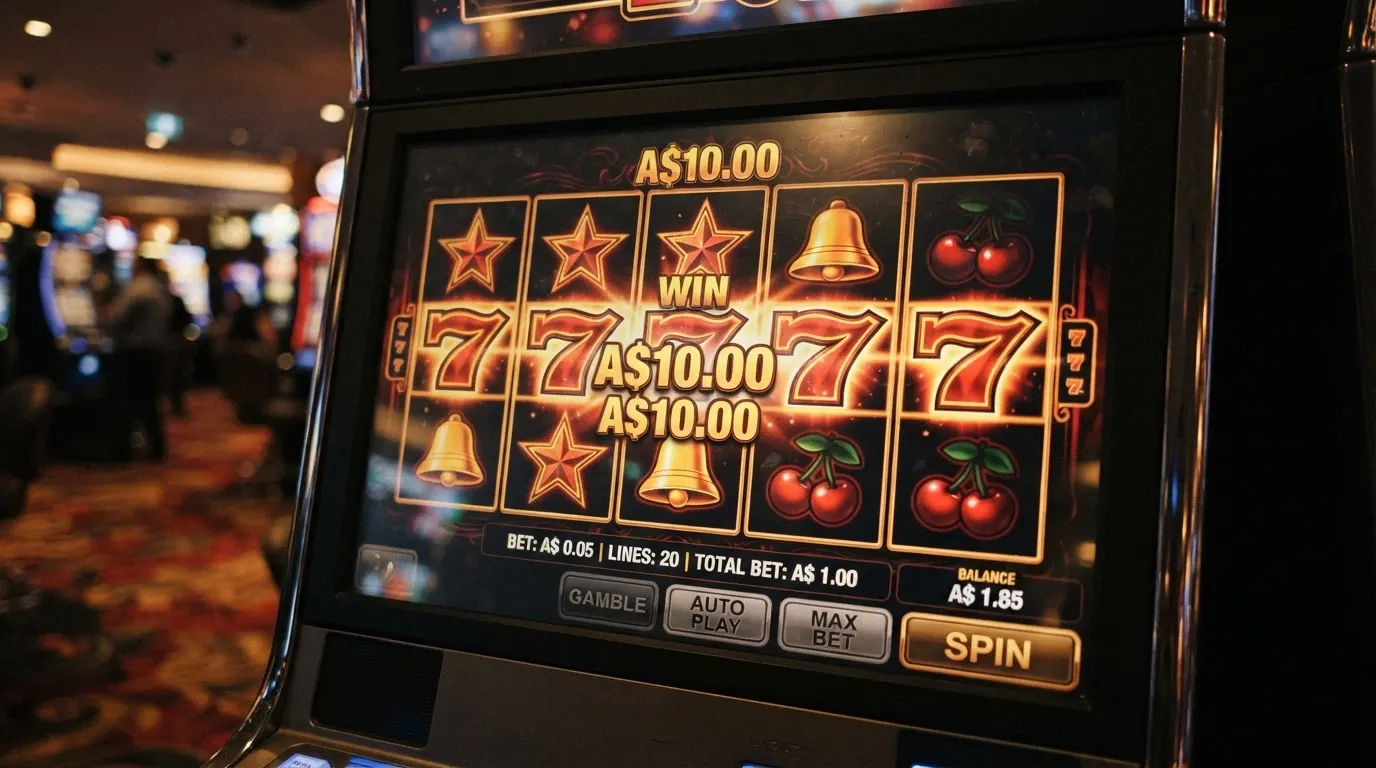
The cheapest deposit in the world is worthless without a pokie the player can actually spin. Two dollars at A$0.05 a spin is forty chances; at A$0.10 it is twenty; at A$0.20 it is ten. The pokie the player picks decides whether those chances are spent in three minutes or thirty, and whether the session costs the player three cents or thirty cents in expected house-edge loss.
How many spins your $2 actually buys — the minimum-spin maths
The maths is unfussy. A two-dollar bankroll divided by the minimum-spin figure equals the number of spins the player can press the button for, and the expected cost of those spins is the turnover multiplied by the house edge. A $2 deposit at Cats and Cash — minimum spin A$0.05, RTP 96.18% — funds exactly forty spins, with an expected loss of around seven cents across the session. A $2 deposit at 1429 Uncharted Seas — minimum spin A$0.10, RTP 98.50% — funds twenty spins, with an expected loss of around three cents. A $2 deposit at Blood Suckers — minimum spin A$0.20, RTP 98.00% — funds ten spins, with an expected loss of around four cents.
The session length, on a low-stake pokie where every spin takes roughly the same time, runs thirty to sixty minutes for a player who sets the autoplay and watches. On a high-volatility title where the player is staking at the top end of the minimum-spin ladder, the same two dollars is gone in under five minutes. The variance is what kills a $2 bankroll before the maths does, and the pokie selection is what controls the variance.
These are statistical estimates of an average session under the stated assumptions — they promise no win, no payout and no return. A punter who happens to hit a feature on spin three will walk away with multiples of the deposit. A punter who hits the variance on a high-volatility title at minimum spin will watch the bankroll drain in two minutes. The expected value is what the maths gives; the realised session is what the player gets.
High-RTP pokies that stretch a micro deposit furthest
The list of pokies where the return to player sits above 97% — Blood Suckers, 1429 Uncharted Seas, Book of 99, Mega Joker in supermeter mode — is short, and each entry has a quirk. Blood Suckers is a low-volatility NetEnt title with a horror theme and a minimum spin of A$0.20, which means a $2 deposit buys ten chances rather than forty. 1429 Uncharted Seas is a Thunderkick title with a maritime-exploration theme, a 98.5% return and a minimum spin of A$0.10 — the closest the AU market gets to a true low-stake, high-return combination. Book of 99 from Relax Gaming returns 99% over its full feature cycle but at a higher volatility and a higher minimum spin. Mega Joker’s supermeter mode reaches roughly 99% return, but the base game sits closer to 77%, which is the kind of detail a player needs to know before assuming the headline figure applies to every spin.
The pragmatic shortlist for a $2 deposit is the small handful of titles where the minimum spin sits at A$0.05 or A$0.10 and the RTP sits at or above 96%. Cats and Cash at A$0.05 a spin and 96.18% return gives forty chances for two dollars. Starburst at A$0.10 and 96.09% gives twenty. Big Bass Splash at A$0.10 and 96.71% gives twenty, with the higher volatility eating through the bankroll faster when the dry spells hit.
High-RTP pokies playable from a $2 deposit
| Pokie Title | Provider | RTP | Volatility | Min Spin (AUD) |
|---|---|---|---|---|
| Book of 99 | Relax Gaming | 99.00% | Medium-High | A$0.20 |
| 1429 Uncharted Seas | Thunderkick | 98.50% | Low-Medium | A$0.10 |
| Blood Suckers | NetEnt | 98.00% | Low | A$0.20 |
| Big Bass Splash | Pragmatic Play | 96.71% | High | A$0.10 |
| Gates of Olympus | Pragmatic Play | 96.50% | High | — |
| Sweet Bonanza | Pragmatic Play | 96.48% | High | — |
| Cats and Cash | Play’n GO | 96.18% | Low | A$0.05 |
| Starburst | NetEnt | 96.09% | Low-Medium | A$0.10 |
| Lady Wolf Moon Megaways | BGaming | 96.00% | High | — |
| Elvis Frog in Vegas | BGaming | 96.00% | Medium-High | — |
| Mega Joker | NetEnt | ~99.00% (supermeter) / ~76.90% (base) | Low | A$0.10 |
Payment Methods That Actually Clear at $2
Three rails make a $2 deposit possible at an AU-facing offshore casino, and three is the total. The marketing pages that list six or seven payment options are usually counting bank transfer, credit card, debit card and POLi — each of which carries a minimum closer to ten or twenty dollars. The honest version of the list is shorter.
Neosurf and Paysafecard — the prepaid voucher path to a $2 deposit
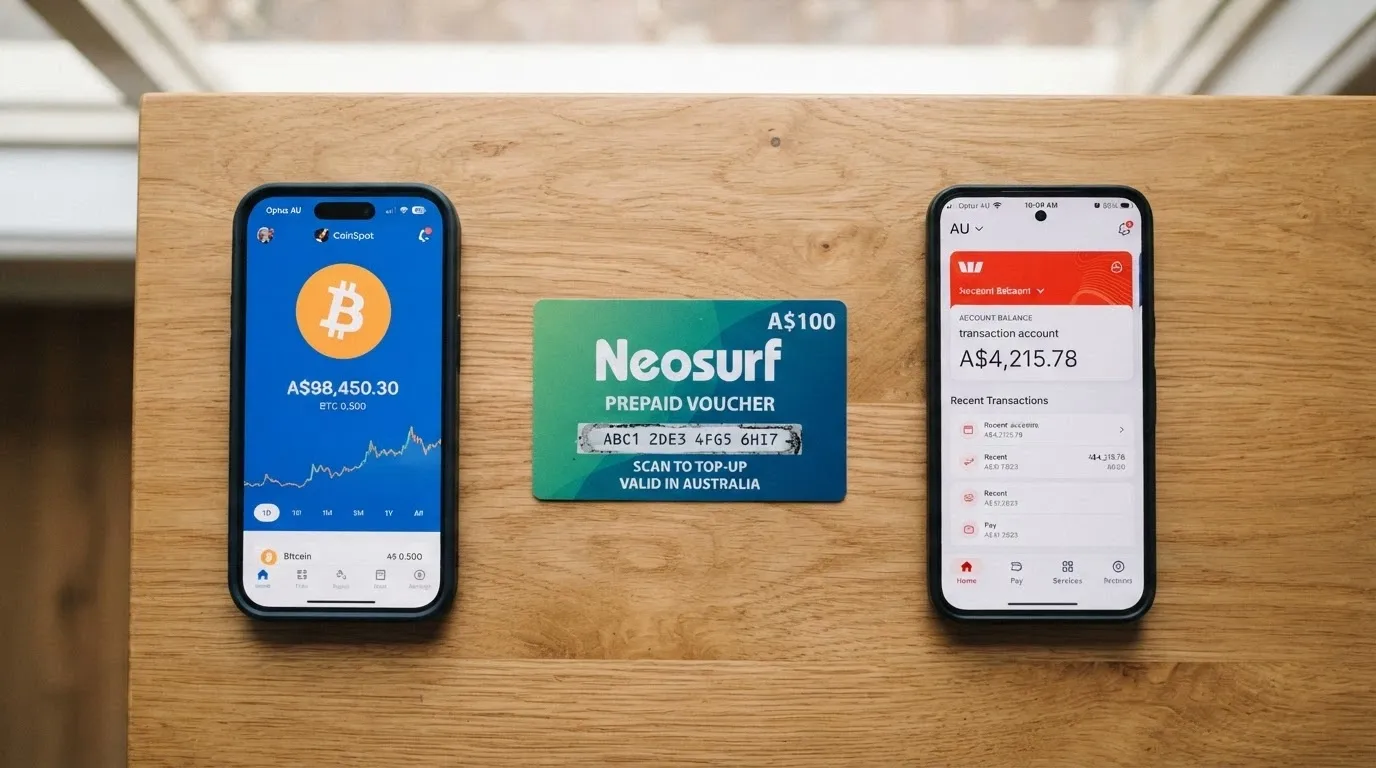
Neosurf and Paysafecard are prepaid vouchers purchased at Australian retail outlets for a fixed denomination and redeemed at the casino cashier with a sixteen-digit code. The deposit matches the voucher to the cent — buy a $5 voucher, deposit $5; buy a $10 voucher, deposit $10 — which is what makes them the only fiat rail on which a sub-$10 deposit is even possible. Among the featured operators, VegasNow accepts A$2 deposits via Neosurf, one of the few places the marketing floor and the cashier floor agree. Most AU-facing offshore brands, however, set their cashier minimum for Neosurf at A$10 or A$15, which moves the practical fiat floor above the headline figure rather than below it.
The voucher path does not require a bank account or a credit card, which is part of the appeal for a player who wants to keep gambling spend off a statement. It also does not require identity verification at the purchase stage, although the receiving casino will still KYC-check any withdrawal over a token amount.
Crypto deposits — Bitcoin, USDT and the near-zero deposit floor
Cryptocurrency wallets carry no processing minimum set by the rail itself. The minimum is set by the casino, and some casinos set it very low. Stake accepts deposits as low as approximately AU$0.10 BTC-equivalent, which is the lowest genuine real-money deposit at an AU-facing offshore casino and lower than the cost of a Neosurf voucher. SkyCrown accepts A$2 deposits via USDT TRC-20 — a stablecoin transfer on the Tron network, which keeps the transaction fee low enough that a two-dollar transfer is not eaten by the rail. Other featured brands accept crypto at minimums between roughly $5 and $20 in coin-equivalent.
The crypto rail carries one important caveat for Australian players. Credit cards and digital currency have been banned as payment for licensed online wagering since 11 June 2024. That ban applies to operators holding an Australian wagering licence — it does not, in practice, extend to offshore casino brands, which is precisely why the offshore operators accept crypto in the first place. A punter using USDT at SkyCrown is not using an Australian-licensed rail, and the offshore operator is not bound by the Australian prohibition.
Why PayID, POLi and bank transfers can’t hit a $2 deposit
PayID and POLi — the two most-cited Australian bank-linked deposit options at offshore casinos — carry minimums of roughly $10 at the casino end. The reason is structural. PayID runs on the New Payments Platform and uses anti-fraud screening at the bank level, with thresholds designed to flag sub-$10 transactions as suspicious rather than process them cheaply. POLi processes payments through direct debit, and the direct-debit economics do not work below roughly $10 either. Credit cards carry interchange and processing fees that the operator absorbs only above roughly $10–$20, and bank transfers carry the same floor.
The Australian rail environment is the reason the $2 floor exists at all. Without the prepaid voucher and the crypto wallet, the lowest real-money deposit an Australian punter could make at any AU-facing offshore casino would be ten dollars. The $2 headline is real, and it is real only because the rail is one that bypasses Australian banking.
Mobile $2 Deposit Casinos — What Works on Your Phone
Every featured operator on this page runs in a mobile browser rather than as a downloadable app, and the $2 deposit question is identical on a phone screen to what it is on a desktop. The mobile-optimised pokies from the high-RTP list — Pragmatic Play, NetEnt, Thunderkick, Relax Gaming — render in HTML5 in the browser, and the cashier accepts the same Neosurf, Paysafecard and crypto rails on mobile that it does on desktop. There is no AU-facing operator in the featured set that requires an app download, and the friction of a $2 deposit is no higher on a phone than on a laptop.

Mobile pokies at a $2 entry — what the catalogue looks like on a phone screen
The Pragmatic Play and NetEnt titles on the high-RTP list — Book of 99, 1429 Uncharted Seas, Blood Suckers, Cats and Cash — run identically on mobile. The minimum spin is the same, the autoplay controls are the same, and the bankroll behaves the same. A two-dollar deposit at Cats and Cash on a phone is forty spins, with the same expected loss and the same session length as it would be on a desktop browser. The screen size changes the experience but not the math, and a punter who plans to play on a phone can pick a pokie from the same list with no adjustment.
New $2 Deposit Casinos — Worth the Hype?
New AU-facing offshore casinos launch every quarter, and most of them advertise a $2 minimum deposit in their first affiliate pitch. The marketing rarely survives contact with the cashier. Spin Samurai, Asino and Casino Rocket — three brands the AU-facing comparison pages have promoted as newer options — accept fiat deposits in the AU$10–$15 range via Neosurf, PayID or POLi, and the welcome bonus at each requires topping up to A$20. None of them genuinely accepts a $2 fiat deposit. None of them breaks the structural floor that Neosurf denominations, card processor economics and PayID anti-fraud thresholds impose on the AU-facing offshore market.
The honest assessment of a new AU-facing offshore brand in 2026 is that it sits on the same rails as the established brands, and the same fiat floor applies. A new brand launching with a published $2 floor is publishing either a crypto-floor (which is the same floor as everyone else’s) or a Neosurf-voucher-floor at the smallest denomination the cashier accepts (which is the same floor as everyone else’s, expressed differently). The novelty is in the brand, not in the deposit.
First-deposit bonuses for new players at the $2 level — what actually triggers
The welcome bonus at most featured operators does not trigger at $2. SkyCrown’s welcome bonus unlocks at A$30. VegasNow’s unlocks at A$20. Other operators in the featured set require an A$20 top-up to claim the welcome offer. A punter who arrives for the $2 floor is depositing into a bonus-free entry by default, and the bonus ladder sits above the headline figure on every brand in the ranking.
The choice is real. A $2 deposit buys a session and no further involvement. A $20 deposit buys the same session plus a welcome offer that carries its own wagering requirements, game restrictions and expiry. None of these moves the player off an offshore casino, and none of them moves the player into the licensed Australian market — because the licensed Australian market does not offer online casino games at all.
Why Every “$2 Deposit Casino” in Australia Sits Offshore
The reason every operator on this page is offshore is the simplest possible reason: there is no Australian licence for online casino games, and the prohibition has been in place for the better part of two decades. Every $2 deposit casino that accepts an Australian player is operating against the Interactive Gambling Act 2001, and the Australian Communications and Media Authority has the power to have the operator’s site DNS-blocked at the ISP level.

The Interactive Gambling Act — what it prohibits and what it doesn’t
The Interactive Gambling Act 2001, strengthened by the Interactive Gambling Amendment Act 2017, makes it an offence to provide online casino games, online pokies or in-play sports betting to a person in Australia. The Act targets the provider, not the player — an Australian who deposits $2 at an offshore casino is not committing an offence under the IGA. The offshore operator, however, is committing an offence by offering the product to the Australian, and the ACMA has been enforcing that prohibition by requesting Australian ISPs block offending sites since November 2019.
The IGA does not prohibit the player. It does not prohibit the player’s winnings from being paid out (assuming the operator chooses to pay them). It does not prohibit the existence of offshore casino sites — it prohibits their offer to Australians. The net effect is that the player carries every risk of the relationship and has none of the consumer protection that an Australian licence would provide.
What IS licensed in Australia — wagering, not casino
What Australia does license is wagering on races and sport placed before the event begins, plus lotteries and keno. The Northern Territory Racing and Wagering Commission, administered through Licensing NT, is the de facto national licensor for online wagering, and the large online bookmakers — Sportsbet, bet365, Ladbrokes and around fifty others — hold NT licences with terms of up to twenty years. The NT licensing regime was reformed in 2026 after sustained criticism of its structure. None of those licensed operators offers online casino games or online pokies. The licensed Australian market is a sports-and-racing market, and the gap between it and the offshore casino market is the entire reason the offshore casino market exists.
The bright line is worth holding clearly. A punter who deposits $2 at SkyCrown is not making a deposit at an Australian-licensed casino — there is no such thing. A punter who places a bet on the Melbourne Cup at Sportsbet is making a wager at an Australian-licensed operator, with BetStop, with consumer protection, with the ability to complain to a regulator. The two products are different products under different regimes, and the offshore casino product sits outside every Australian safeguard.
The 2026 gambling reform and what changes from 1 January 2027
The Interactive Gambling Amendment (Gambling Reform) Bill 2026 passed Parliament on 19 August 2026, and its measures commence on 1 January 2027. The reform is the largest overhaul of Australian gambling law in a decade, and the headline measures bear directly on the offshore market.
Banks and payment providers gain express authority to block transactions to illegal gambling operators. Direct marketing of inducements is prohibited for fourteen days after a customer signs up, for three months after a person deregisters from BetStop, and indefinitely for customers identified as at risk of gambling-related harm. Wagering advertising is capped at three ads per hour between 6:00 am and 8:30 pm, with a live-sport blackout from fifteen minutes before until five minutes after each event. Radio wagering ads are barred during school drop-off and pick-up times. Athletes, celebrities and influencers are barred from promoting wagering products, broadcasting sporting odds is banned outright, and wagering ads inside sports venues and on uniforms of players and officials are prohibited. Online wagering ads may be shown only to a user who is logged in, confirmed over 18 and offered an opt-out.
The bank-blocking power is the measure that lands hardest on the offshore casino market. From 1 January 2027, an Australian bank can refuse to process a transaction to an illegal-gambling merchant, and the punter’s $2 deposit attempt at SkyCrown can be stopped at the payment-rail layer before it reaches the cashier. The reform does not legalise online casino, and it does not provide new consumer protection for the offshore punter — but it does give the Australian banking system a tool it did not previously have.
What happens when an offshore casino gets blocked — and your balance with it
The ACMA has had 1,564 illegal gambling and affiliate websites blocked by Australian ISPs since its first blocking request in November 2019. More than 225 illegal services have withdrawn from the Australian market since enforcement was strengthened in 2017. A punter’s balance at an offshore casino at the moment the site gets DNS-blocked is not recoverable from the ACMA — the regulator does not have a money-recovery function, and the Australian consumer protection that would normally enforce a payout does not apply to an unlicensed offshore product. The balance sits at the offshore cashier under the operator’s house rules, and the operator can choose to pay it, void it, or hold it pending identity verification that never quite completes.
The blocking programme is the most visible consequence of the IGA prohibition, and it is also the most concrete illustration of what the offshore route costs the player. A punter at a licensed Australian wagering operator has access to BetStop, to consumer protection law, to a regulator, and to a payment system that has not been built to facilitate the transaction. A punter at an offshore casino has none of those things, and the $2 deposit that opened the account is the last guaranteed contact the punter will have with Australian law.
What Keeps You Safe When the Licence Doesn’t
The offshore route strips out every safeguard the Australian licensed market offers, and the player has to build their own. The good news is that the help infrastructure outside the casino — the helpline, the chat service, the self-exclusion register for licensed operators — is solid. The bad news is that none of it reaches the casino where the $2 deposit actually sits.

BetStop and the offshore blind spot — what self-exclusion actually covers
BetStop — the National Self-Exclusion Register — has been live since August 2023. One registration excludes a person from every Australian-licensed online and phone wagering service. As at 31 July 2026, BetStop had 67,480 registrations, of which 41,290 exclusions were still active. Seventy-eight per cent of registrants were under 40, and thirty-eight per cent chose lifetime exclusion. BetStop binds Australian-licensed wagering services only, and an offshore casino is not connected to the register. A punter who has self-excluded through BetStop can still deposit $2 at SkyCrown, because SkyCrown is not part of the system BetStop covers.
That gap is the most concrete harm of the offshore route for a person trying to control their own gambling. The licensed market provides a single-step exclusion that closes every legal account. The offshore market provides nothing of the kind, and the operator keeps accepting deposits from a self-excluded Australian without breach of any Australian rule — because no Australian rule applies.
Setting your own guardrails when the site sets none
Offshore casinos have no legal obligation to enforce deposit limits, cool-off periods or self-exclusion — those obligations attach to an Australian licence, and these operators do not hold one. The Australian licensed market does not impose a federal deposit, loss or stake ceiling on online gambling, because the product those ceilings would govern is banned outright. The punter at an offshore casino has no legislated ceiling to push against, and the punter who wants to keep the $2 deposit at $2 is relying on the discipline they set themselves.
The National Gambling Helpline — 1800 858 858 — is free, confidential and staffed 24 hours a day. Gambling Help Online (gamblinghelponline.org.au) provides online chat and counselling. About 2.1% of Australian adults — roughly 430,000 people — experience problem gambling, and the Australian Institute of Health and Welfare put high-risk gambling at 1.8% in 2022. The help infrastructure that exists outside the casino is real and reachable, and it is the one part of the offshore-customer experience that does not require the offshore casino to do anything.
A punter who deposits $2 at an offshore casino and finds themselves back the next day, and the day after, and the day after that, has not failed at the casino. The casino has no mechanism for failing them. The right call is the helpline, the chat service, and the licensed-market self-exclusion that BetStop covers — every one of which sits outside the offshore route.
How We Evaluated These $2 Deposit Casinos
Every operator and figure on this page was cross-checked against the ACMA register of blocked sites, the BetStop public dashboard, and the published RTP data from each pokie provider named in the featured set. The legal framework comes from the Interactive Gambling Act 2001 and its 2017 amendment, the Interactive Gambling Amendment (Credit and Other Measures) Act 2023, and the Interactive Gambling Amendment (Gambling Reform) Bill 2026 — the three statutes that define what is licensed in Australia and what is not.
Operator market-share data comes from the AU-facing traffic share published in the operator comparison sources we reviewed during research. Per-pokie RTP and minimum-spin figures come from the published provider data and the third-party test results in those same sources. Where the operator-sweep queries did not return data — most bonus-specific fields for brands other than SkyCrown and VegasNow — the page carries the operator’s AU market share and a qualitative description of the brand rather than a number we could not verify.
The honest version of the methodology is that the page is a buyer’s guide assembled from what the AU-facing offshore market actually publishes about itself, minus the marketing varnish. The legal status is identical across every operator on the page. The bonus terms differ by brand and were not all confirmed in the current data set. The deposit floor differs by rail, and the rail that delivers $2 is the rail the page labelled at the top.
Your $2 Deposit — a Cheap Ticket or a Costly Trap?
A two-dollar deposit is a cheap ticket onto a real-money session, and it is a costly trap if the player assumes the cheap ticket leads anywhere. The session cost on a low-volatility pokie at minimum spin is a few cents in expected loss, and the session length is thirty to sixty minutes if the player chooses the pokie carefully. The cashout floor is between twelve and fifty times the deposit, which means a player who wins modestly on a $2 deposit cannot walk out with the winnings unless they top up the balance to the withdrawal minimum. The offshore status means no Australian consumer protection, no BetStop coverage, no recourse on a refused withdrawal, and a real chance the site gets DNS-blocked before the player comes back.

The honest call is to treat a $2 deposit as a session ticket, not a balance-building investment. Pick a high-RTP, low-minimum-spin pokie — Cats and Cash at A$0.05 or 1429 Uncharted Seas at A$0.10 — set a personal stop at the original $2, and accept the session for what it is. If the balance climbs to the withdrawal minimum and the player wants to cash out, the offshore operator’s KYC and payout rules apply, and the Australian system provides no fallback. The $2 deposit is real. The protection behind it is not.
Frequently Asked Questions
What is the difference between a $2 deposit and a $2 minimum bet at online pokies?
A $2 deposit is the amount the player funds the casino account with — the entry ticket onto the platform. A $2 minimum bet at a pokie would be the lowest stake-per-spin the pokie accepts, which no real-money pokie on the AU-facing market operates at; the lowest minimum spins sit at A$0.05 (Cats and Cash). The two figures describe different things — one is the bankroll, the other is the cost per spin of using it.
Do $2 deposit casinos offer welcome bonuses or free spins?
Most welcome bonuses at AU-facing offshore casinos do not trigger at $2. SkyCrown’s welcome bonus unlocks at A$30, VegasNow’s at A$20, and the welcome offers at other featured operators require an A$20 top-up. A player who arrives for the $2 floor is depositing into a bonus-free entry by default, and the bonus ladder sits above the headline figure on every brand in the ranking.
Does BetStop cover $2 deposit offshore casino sites?
No. BetStop — the National Self-Exclusion Register — binds Australian-licensed wagering services only. As at 31 July 2026, 67,480 registrations were on the register and 41,290 were still active. None of those exclusions reach an offshore casino, and an offshore operator keeps accepting deposits from a self-excluded Australian without breach of any Australian rule.
What happens to my $2 deposit if the casino site gets blocked in Australia?
The ACMA has had 1,564 illegal gambling and affiliate websites blocked by Australian ISPs since November 2019, and a blocked site takes any balance sitting on it at the moment of blocking with it. The ACMA does not have a money-recovery function, and the punter has no Australian consumer protection to enforce a payout against an unlicensed offshore operator. The $2 deposit is recoverable only through the operator’s own cashier, and only if the operator chooses to honour the balance.
Is PayID available for $2 deposits at Australian online casinos?
No. PayID at AU-facing offshore casinos carries minimums of roughly $10 — the floor is set by PayID’s anti-fraud thresholds and by the New Payments Platform’s economics, not by the casino. The $2 deposit at an AU-facing offshore casino clears via Neosurf, Paysafecard or crypto, not via PayID.