
What an Australian Player Actually Gets From a No Deposit Bonus Casino
Current as of 16 October 2026 · verified against ACMA licensing and enforcement records.

A free chip lands in your account. Then the wagering begins. Then the cap bites, the bonus expires, or both — and what looked like free money turns out to be free play wrapped in a turnover requirement you have to clear before a single dollar walks out the door. The rest of this page is about that gap, the operators that operate it, and what an Australian player is actually agreeing to by claiming a no deposit bonus.
Table of Contents
- What a No Deposit Bonus Actually Delivers — and What It Doesn’t
- The Best No Deposit Bonus Casinos Australian Players Can Access in 2026
- Why Your No Deposit Bonus Is Worth Less Than the Number on the Screen
- How Your Payment Method Reveals Whether a Casino Follows Australian Law
- Playing NDB Casinos on Your Phone: Convenience Without the Consumer Protection
- New 2026 NDB Casinos: Fresh Logos, Same Offshore Fine Print
- No Deposit Bonus Casinos and the IGA: What Australian Law Actually Says
- Staying in Control When the Australian Safety Net Cannot Reach You
- How We Evaluated These No Deposit Bonus Casinos
- What You Should Actually Do With This No Deposit Bonus Information
- Frequently Asked Questions
What a No Deposit Bonus Actually Delivers — and What It Doesn’t
NDB — short for no deposit bonus — is the casino industry term for a free-to-claim offer a player collects without funding the account first. At an Australian-facing site that means one of two formats: a free chip, a fixed AUD amount credited as bonus funds, or a free spins bundle, a fixed number of spins on a named pokie at a named stake. Both formats activate through registration and verification, both formats attach a wagering requirement, and both formats sit behind a max cashout cap. That last item is the one the marketing copy skips past fastest.
Every NDB casino an Australian player can reach in 2026 is an offshore operator. The Interactive Gambling Act 2001 makes it illegal to provide online casino games — pokies, blackjack, roulette, anything with a dealer or a random number generator running the show — to people in Australia. There is no Australian online casino licence, in any state or territory, and no operator on this page holds one. What they hold is a Curaçao licence, an Anjouan licence, or a RealTime Gaming platform wrapper. None of those documents do anything inside Australian borders: if an offshore casino refuses a withdrawal, the player has no local regulator to call.
What the Abbreviation “NDB” Means at an Australian-Facing Casino
“NDB” appears in affiliate sites, in forum threads, and on the bonus pages of offshore operators. It is shorthand for the same thing: a no deposit bonus, an offer you can claim without paying anything in. Australian players tend to search the abbreviation rather than the full term because the full phrase — “no deposit bonus casino Australia” — is the long-hand version of a sentence the affiliate sites have been writing for years. The abbreviation is how the same player asks the same question on a forum at 11 pm.
The NDB differs from a deposit-match welcome offer in one structural way. A welcome offer attaches a multiplier to a real deposit and credits the bonus on top of it. An NDB attaches the same kind of multiplier to a starting balance the operator hands you. The result is the same shape of turnover requirement — the player must wager the bonus a number of times before withdrawal — but the starting point is house money, not the player’s own. That distinction is what makes NDBs the entry point most Australian players try first, and what makes the terms worth reading carefully.
How a No Deposit Bonus Works, Step by Step
The claim flow at every featured operator runs through four gates. First, register an account with an email and password. Second, verify identity — at most featured operators that means a phone or SMS confirmation, at others it means submitting a copy of an ID document. Third, either enter a bonus code in the cashier or activate the offer directly from a lobby tile. Fourth, the bonus is credited and the wagering window starts.
After that, four rules apply for the lifetime of the bonus. Pokies contribute 100% to the wagering requirement; table games contribute between 0% and 10% depending on the operator. The maximum bet per spin is capped at A$5–A$7 across the featured set, and breaking that cap — even once — voids the bonus and all winnings from it. Wagering typically sits in the 35×–60× range. The bonus has a 24 to 72 hour expiry window in the most aggressive terms, with longer windows at the more relaxed operators. When the wagering is complete and the balance sits under the cashout cap, the withdrawal is unlocked — and the operator’s payout process takes over from there.
No Deposit Play vs Real-Money Play: What You Cannot Do With an NDB
The marketing around an NDB frames it as free play. The mechanics frame it as locked play. The bonus is credited as a separate balance from any real-money balance the player later adds, and the two do not mix until the wagering is cleared. While the bonus is live, the player cannot withdraw the balance, cannot move it to a table game that would let them grind a flat-bet strategy, and cannot push the bet size above the cap without losing everything.
The cashout cap is the term that does the most damage in practice. A typical NDB caps withdrawals at A$50 to A$100, with a handful of operators pushing to A$150 or A$180. If a player turns the bonus into A$500 on a hot streak, the operator keeps everything above the cap. The bonus terms do not say “you can win up to the cap”; they say “the most you can withdraw from this bonus is the cap, regardless of your balance when wagering completes.” That is a different statement and a different outcome.
There is also no access to live dealer games or table games on bonus funds at most featured operators. Pokies are the only game category that contributes 100% to wagering at every site in the ranking. A player who would rather play blackjack than spin reels will find the bonus locked away from their preferred game — or, where the operator does allow table play, the contribution rate drops to 10% or less, which stretches the wagering time past the expiry window.
The Australian NDB Landscape: Crypto, Pokies and Offshore Platforms
The NDB ecosystem serving Australian players in 2026 is an offshore ecosystem, period. The handful of established brands that dominate AU-facing search results — Skycrown, BitStarz, Royal Reels, Fair Go, Ozwin, Bizzo — operate from Curaçao or under RTG aggregator licences. None accepts Australian players under an Australian framework because no such framework exists.
Pokies dominate the catalogue because pokies are the only game type that clears wagering at full speed. A 40× turnover requirement is a hard target on a blackjack table contributing 10%; the same requirement clears in roughly a tenth of the time on a pokie. That is not a quirk. It is the architecture every operator in the ranking has settled on, and the reason the bonus terms tell the player to spin rather than play.
Crypto and PayID are the deposit rails of the offshore NDB world. Crypto (BTC, ETH, USDT, LTC, DOGE) clears withdrawals in roughly five minutes on the operator’s side. PayID clears in one to two hours, and Skycrown was tested at two hours 29 minutes for an A$180 withdrawal. Both methods are also the payment-method signal that an Australian-facing site is offshore: licensed Australian wagering operators cannot accept crypto, and have been banned from accepting credit cards since 11 June 2024. The payment method is itself a tell.
The Best No Deposit Bonus Casinos Australian Players Can Access in 2026
The comparison below ranks ten offshore operators against each other — there is no Australian licensed benchmark to rank them against, because no Australian online casino licence exists. ACMA data reports over 1,500 illegal gaming and affiliate sites restricted by Australian ISPs since 2019, with hundreds of services exiting the market.
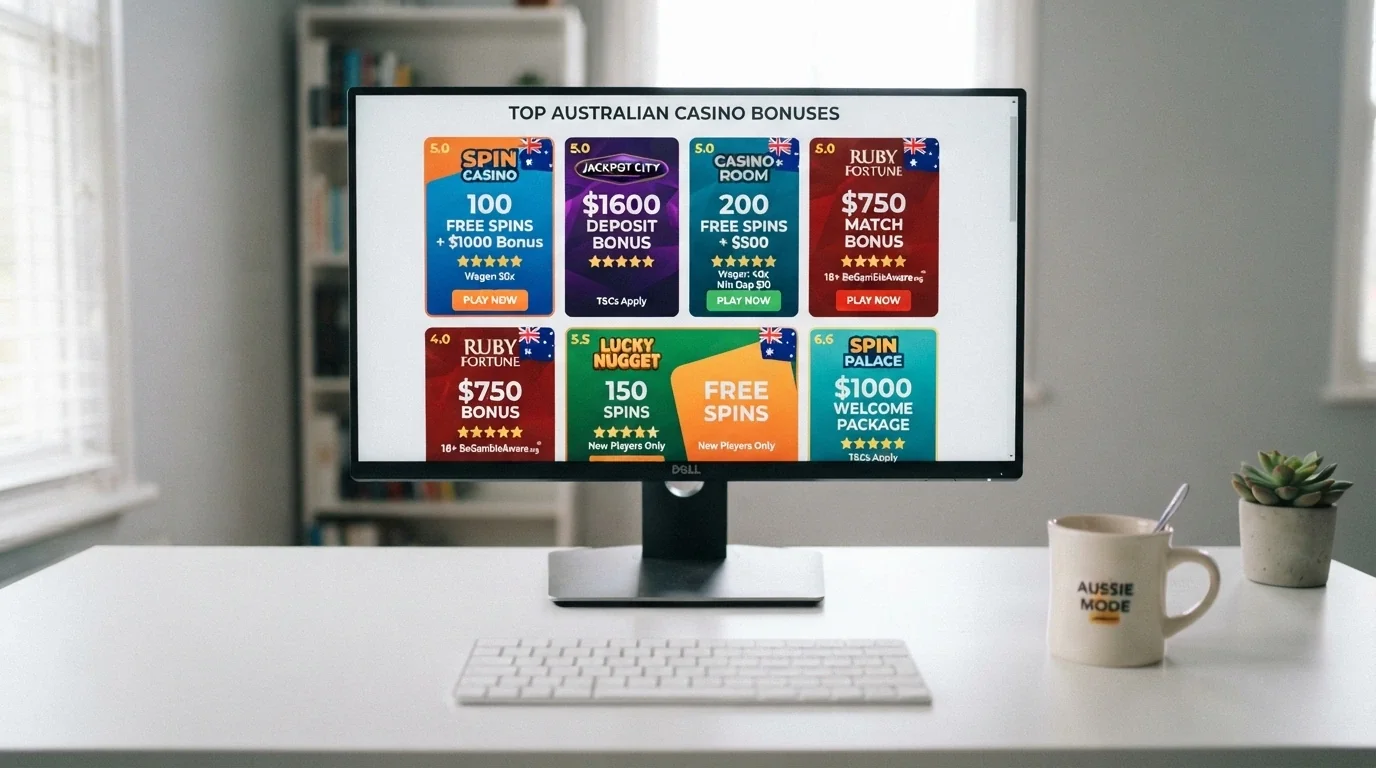
The ranking orders by the strength of the no deposit offer (free spin count or free chip value), the fairness of the wagering multiple, and the clarity of the cashout cap. Deposit method coverage, game library breadth, and tested payout speed fill in the comparison where the operator publishes the data.
| Casino | No Deposit Bonus (2026) | Wagering Requirement | Deposit Methods | Provider Mix |
|---|---|---|---|---|
| Skycrown | 100 free spins | 25× on winnings | AUD, PayID, cards, BTC, ETH, USDT, LTC, DOGE | 50+ providers, 10,400+ games |
| Royal Reels | A$10 free chip | 30× on bonus | AUD, crypto, PayID | 40+ providers, 5,400+ pokies |
| Fair Go | A$15 free chip | 60× on bonus | BTC, PayID, bank wire, cards | RTG single provider, 280+ games |
| Rocket Play | No standing NDB | — | AUD, PayID, crypto | Multi-provider, 3,000+ games |
| Ozwin | A$20 free chip | 60× on bonus | BTC, PayID, bank wire | RTG single provider |
| Bizzo Casino | 10–25 free spins | 40× on winnings | Crypto, PayID, e-wallets | Multi-provider aggregator |
| WinSpirit | No standing NDB | — | — | — |
| Scream Casino | No standing NDB | — | — | — |
| BitStarz | 100 free spins | 40× on winnings | AUD, BTC, ETH, LTC, DOGE, BCH, USDT | Multi-provider, established 2014 |
| Rocket Casino | No standing NDB | — | — | — |
Skycrown: 100 Free Spins, No Deposit, 25× Wagering on Winnings
Skycrown’s 100 free spins is tied for the highest free-spin count in the featured set, and the 25× wagering on spin winnings is the lowest multiplier any operator carries. The bonus activates after a phone verification — no bonus code required, no waiting on a support ticket. The casino holds a Curaçao licence and runs more than 10,400 games from over 50 providers including Pragmatic Play, NetEnt, Microgaming, Play’n GO, BGaming, Hacksaw Gaming and Nolimit City.
The welcome package that follows the NDB is A$8,000 plus 400 free spins across four deposits, with 40× wagering on the bonus and 30× on free spin winnings, an A$20 minimum deposit, an A$5 max bet, and 14 days to clear each tier. That welcome package is generous by offshore standards but carries the standard offshore caveats — none of those terms are enforceable inside Australia.
On payout, Skycrown has been tested at an A$180 PayID withdrawal reaching a bank account in two hours and 29 minutes. That is the most concrete payout-speed datapoint in the ranking and the closest thing to an independent verification of any operator’s withdrawal flow. Combined with the breadth of the game library and the lowest NDB wagering multiple in the set, Skycrown is the strongest NDB in the ranking — for the reader who has decided offshore play is acceptable, the terms here are the least unfriendly of the available options.
BitStarz: 100 Free Spins, 40× Wagering, A$150 Cashout Cap
BitStarz matches Skycrown’s 100 free spins count but attaches a 40× wagering multiple and an A$150 max cashout. The cashout cap is unusual in the set: most NDB operators leave the cap at A$50 or A$100, so A$150 is on the friendlier end. The 40× wagering sits in the middle of the Australian-facing range. BitStarz was established in 2014, the oldest operator in the ranking, and supports AUD plus a full crypto stack — BTC, ETH, LTC, DOGE, BCH and USDT — for both deposits and withdrawals.
On the deposit side, the multi-crypto suite is one of the broadest in the ranking. On the welcome package side, BitStarz advertises up to 5 BTC plus 180 free spins across deposits — the BTC denomination reflects the operator’s crypto identity rather than any direct AUD value a player can quote at the cashier. Crypto withdrawals are reported at eight to ten minutes per community testing, which sits at the fast end of the offshore withdrawal range.
The verdict is track record. BitStarz has been operating since 2014, the year the Australian offshore market was effectively beginning to scale. A platform that old has survived multiple ACMA blocking cycles and several years of payment-provider churn without disappearing, which is not nothing in a market where 225 services have already withdrawn. The cashout cap at A$150 is the friendliest in the set; the wagering at 40× is the standard offshore norm. For the Australian reader comfortable with crypto, BitStarz is the operator with the longest paper trail.
Royal Reels: A$10 Free Chip, 30× Wagering, 5,400+ Pokies
Royal Reels offers an A$10 free chip after phone verification, with 30× wagering on the bonus amount. Thirty-times is the friendliest multiplier on any free chip in the ranking. The casino holds a Curaçao licence through Digibrite S.R.L. and runs more than 5,400 pokies from 40+ providers.
The welcome package is A$2,500 plus 50 free spins across three deposits (100% up to A$500, 75% up to A$750, 100% up to A$1,250), with 35× wagering on the bonus amount and an A$5 per-spin cap. The minimum deposit on the welcome package is A$30. The three-tier structure means a player who wants the full A$2,500 needs to deposit three times, which is a steeper climb than the single-deposit packages most Australian-facing operators run.
The small chip is a deliberate trade. A$10 at 30× is A$300 in required turnover — comfortably lower than the A$900 a comparable A$15 chip at 60× would demand, and lower than the A$480 Skycrown’s expected A$19 in spin winnings would impose at 25×. For the player who values budget control over headline value, Royal Reels is the cleanest offer in the ranking. The 5,400-game library is roughly half Skycrown’s catalogue, which is the trade-off for the friendlier wagering.
Fair Go: A$15 Free Chip, 60× Wagering, A$180 Max Cashout
Fair Go runs one of the higher free-chip values in the ranking — A$15 against Royal Reels’ A$10 — but the wagering sits at 60×, double Royal Reels’. The total turnover required on the bonus amount is A$900, which at the A$5 max bet per spin is 180 spins of pokies. The platform is RTG-only, which means 280 games in the catalogue. There is no multi-provider aggregator on the back end.
Two terms distinguish Fair Go from the rest of the set. First, the A$180 max cashout cap — the highest in the ranking — which gives the player more room on the upside if a hot streak lands during wagering. Second, the consecutive free bonus rule, which requires a real-money deposit between any two free chip claims. A player cannot claim the A$15 free chip twice in a row; the first claim must be followed by a real deposit before the next chip activates.
The welcome package, by contrast, is friendlier: 100% up to A$200 on each of the first five deposits (A$1,000 total), 30× wagering on deposit plus bonus, no maximum cashout on deposit bonuses. That welcome package is the better of Fair Go’s two offers for any player willing to deposit. The free chip is a marketing entry point with strings attached.
Ozwin: A$20 Free Chip, 60× Wagering, RTG Platform
Ozwin offers the highest-denomination free chip in the ranking — A$20 against Fair Go’s A$15 — with the same 60× wagering and an RTG single-provider catalogue. Some listings report an Ozwin free chip as high as A$50, but A$20 is the figure this ranking works from. The platform supports BTC, PayID and bank wire as deposit methods.
The shape is identical to Fair Go: an RTG operator with a 60× wagering multiple on a no-deposit chip. The only meaningful differentiator is the A$20 starting value, which means A$1,200 in required turnover at the cap — 240 spins at A$5. The max cashout is not specified in the operator’s public snippets, which means the player has to check the bonus terms at activation to find the cap, and Ozwin does not pre-publish it the way Fair Go pre-publishes A$180.
For the reader who already plays on an RTG platform and prefers that catalogue, Ozwin is the bigger-chip version of Fair Go. For the reader who has not chosen an RTG-specific workflow, the same A$20 chip would be better spent on a multi-provider operator whose catalogue is ten to forty times larger. Pick the platform by the games you already like, not by the chip value.
Bizzo Casino: 10–25 Free Spins, 40× Wagering, Multi-Provider
Bizzo offers 10 to 25 free spins with no deposit, with 40× wagering on spin winnings. The lower end of the spin range — 10 spins at A$0.20 each — is the smaller commitment in the ranking; the upper end of 25 spins is closer to a third of Skycrown’s 100-spin offering. The platform is a multi-provider aggregator, supports crypto, PayID and e-wallets, and does not lock the player to a single RTG catalogue.
The 40× wagering is the Australian-facing market norm rather than the friendliest end. The free spin count, at the lower end, produces so little in spin winnings that even an unlucky session keeps the player close to breakeven — which is itself the point of a low-commitment NDB. There is no standalone max cashout figure in the public snippets; the player reads the cap at activation.
Bizzo is the low-commitment slot in the ranking. The free spin count is small enough that the player is not betting much, but the multi-provider catalogue means the 10 to 25 spins can land on a pokie the player would choose rather than one the operator has pre-selected. That is the choice the smaller free-spin count buys.
Rocket Play: No Standing NDB, 300% Welcome Package up to A$6,000
Rocket Play does not feature a standing no-deposit offer in the data sources used for this ranking. What it does carry is a 300% welcome package up to A$6,000 plus 300 free spins, distributed as a 100% first-deposit match up to A$1,000 plus 100 free spins, with 30× to 40× wagering, an A$7.50 max bet, and a 5-day expiry on the bonus. Free spins drip out at 20 per day over five days. The platform runs 3,000+ games from multiple providers, was established in 2020, and accepts AUD, PayID and crypto.
The 300% headline is among the largest in the ranking, but the 5-day expiry is among the tightest — most operators in the set give 14 days. A 30× to 40× multiple is on the friendlier end of the welcome-package range. For the player willing to make a deposit, Rocket Play is the largest headline offer in the ranking. For the player specifically looking for a no-deposit entry, it is not on this page as an NDB.
The place in the ranking is a deposit-gated alternative. The reader who wants to start with an NDB at one of the operators above and then continue on Rocket Play’s welcome package is using two offers in sequence; the reader who wants to deposit first and skip the NDB has Rocket Play as the most generous deposit match in the ranking.
WinSpirit: No Confirmed Standing NDB — AU Market-Share Context
WinSpirit does not carry a confirmed standing no deposit bonus in the snippets checked for this ranking. The operator sits at 1.55% of the AU online casino market by recent snapshot, with A$110.3M in associated revenue — the largest market share among the operators in this ranking without a confirmed NDB. The platform is offshore and holds no Australian licence, like every other operator on this page.
Market share is not a stand-in for an offer. WinSpirit’s AU reach means Australian players are finding and playing on the platform in volume, but it does not translate into a no-deposit offer on the operator’s public pages in the snippets this ranking was built from. The reader looking for an NDB should check the operator’s own promotions page directly, because NDB availability at offshore operators can change week to week and the public snippets are a snapshot.
WinSpirit is in the ranking because the AU reach is the kind of context an informed reader wants when comparing offshore operators — even when the no-deposit offer is absent. The decision is the reader’s: chase the offer at one of the operators above, or check WinSpirit’s current promotions and decide on whatever the operator is publishing this week.
Scream Casino: No Confirmed Standing NDB — AU Market-Share Context
Scream Casino does not carry a confirmed standing no deposit bonus in the snippets checked for this ranking. The operator sits at 0.99% of the AU online casino market, with A$94.87M in associated revenue — third in the ranking by market share behind WinSpirit and behind the wider recognition of the operators above. The platform is offshore.
For the reader who arrived at this ranking looking for an NDB, Scream’s place is the same as WinSpirit’s: a market-share context line, not an offer. The recommendation is the same — check the operator’s own promotions page directly for any current no-deposit offer, because the snippets this ranking was built from did not find a standing one.
Rocket Casino: No Confirmed Standing NDB — AU Market-Share Context
Rocket Casino does not carry a confirmed standing no deposit bonus in the snippets checked for this ranking. The operator sits at 0.57% of the AU online casino market, with A$43.22M in associated revenue. The platform is offshore.
Rocket Casino is in the ranking because the AU reach places it among the operators Australian players are actually playing on, even without an NDB. The reader’s options remain the same: pick an operator above with a confirmed NDB, or check Rocket Casino’s own promotion page. The market-share data is selection background only.
Why Your No Deposit Bonus Is Worth Less Than the Number on the Screen
The A$15 free chip, the 100 free spins, the A$10 chip — those numbers are what the player sees first. What the player walks away with is something else, and the difference lives in the four numbers that follow: the wagering requirement, the max cashout cap, the game contribution rate, and the expiry window. Each one takes a cut, and the cumulative cut is usually larger than the headline value implied.

Take a representative offer in the middle of the range: an A$15 free chip at 40× wagering. The required turnover before any withdrawal unlocks is A$15 multiplied by 40, which equals A$600 that has to pass through eligible pokies. At the A$5 maximum bet per spin — the middle of the A$5–A$7 cap range — that is 600 divided by 5, which equals 120 spins. At an average of 5 seconds per spin, that is 600 seconds, or roughly 10 minutes of pokies the wagering has to survive. Across that whole run, the house keeps its edge: at the 96.71% RTP that representative pokies like Big Bass Bonanza carry, A$600 turnover returns an expected A$580.26 in play money — A$19.74 expected loss — which is what the bonus actually costs the player before the cashout cap even applies.
The next cut is the max cashout cap. Even if those 120 spins land a winning streak and the player’s bonus balance climbs past A$200, anything above the cashout cap — typically A$50 to A$100, with Fair Go’s A$180 and BitStarz’s A$150 stretching higher — is taken back at withdrawal. The bonus does not pay the player for hitting a large balance; it pays the player up to the cap. The difference between a balance of A$500 and a withdrawal of A$100 is what the cap costs in a hot scenario.
The third cut is game contribution. Pokies contribute 100% to wagering; table games contribute 0% to 10% at most featured operators. A player who would rather play blackjack than spin reels will find either the bonus locked away from their preferred game or the wagering stretched past the expiry window by the 10× factor. The bonus is, in effect, a pokies-only product even when the operator’s lobby has a thousand other games.
The fourth cut is the expiry window. A 24 to 72 hour expiry on an NDB means the wagering has to clear within a working day or two. A 14-day window on a welcome package is generous by comparison. The short NDB expiry is the reason the operator can offer the bonus at all — a tight window combined with a 40× wagering gives the player a runway most will not complete without multiple top-ups.
Free Chip vs Free Spins: Which No Deposit Bonus Works for You
The two NDB formats look similar on the surface but behave differently under the bonus terms.
| Feature | Free Chip | Free Spins |
|---|---|---|
| Bonus value | Fixed AUD amount, credited as bonus funds | Variable winnings from a fixed number of spins |
| Wagering base | The chip amount (e.g. A$10 × 30× = A$300 turnover) | The spin winnings only, not the stake (e.g. A$20 winnings × 25× = A$500 turnover) |
| Typical multiplier | 30×–60× | 25×–40× |
| Game eligibility | Pokies only at most operators | Pre-selected pokie(s) named in the bonus terms |
| Worst case | Balance hits zero mid-wagering, bonus expires | Spin winnings land under the cashout cap |
| Best case | A hot streak lifts balance above the cashout cap | A spin lands a max-win feature on a high-volatility pokie |
| Player profile | Budget control, choice of which pokie to clear on | Try a specific high-volatility pokie with no risk |
For a low-volatility pokie like Big Bass Bonanza, which carries a 96.71% RTP, a free chip at 30× produces a tight, predictable clearing path. For a high-volatility pokie like Sweet Bonanza at 96.51% RTP, a free spin bundle lets the player chase a feature without risking the bankroll. The format the player picks is the format that matches the volatility the player wants to expose the bonus to.
Bonus Codes: Where to Find Them and How to Activate Them
NDBs activate through one of two routes at the featured operators: an automatic credit once verification completes, or a code entry in the cashier or a promo field. Skycrown’s 100 free spins credits automatically after phone verification. Royal Reels’ A$10 chip credits after phone verification. Operators that run code-gated offers typically publish the code on the operator’s own promotions page or through an affiliate partner listing, and the player enters it at registration or in the cashier after the account is verified.
A code-gated offer carries a small risk the reader should know about: the code can be region-locked, expired, or specific to a particular bonus type. A region-locked code will reject at activation; an expired code will reject on the same check. The player who runs into a rejection should check the operator’s own page first, since the affiliate partner listings are not always updated as quickly as the operator’s primary terms.
Wagering Requirements in Plain English: What 40× Actually Means
A 40× wagering multiple means forty times the bonus amount (or the spin winnings) must pass through the games before withdrawal is unlocked. An A$15 free chip at 40× requires A$600 in turnover; a 100-spin win of A$20 at 40× requires A$800 in turnover. The two numbers are different because the wagering base is different — bonus amount on the chip, spin winnings on the free spins.
The game-contribution trap is what makes a 40× requirement harder than it looks on paper. Table games contribute 0% to 10%, so a player who bets A$5 a hand on blackjack contributes A$0 to A$0.50 of that A$5 toward wagering — the other A$4.50 to A$5.00 sits on the blackjack counter at zero. Pokies contribute 100%, so every A$5 spin moves the counter by A$5. The difference is the difference between clearing the wagering in 120 spins of pokies and clearing it in 1,200 hands of blackjack, which at a hand every 15 seconds is five hours of play at the table — past most expiry windows.
The max-bet rule is the rule that voids the bonus. The cap is A$5–A$7 per spin across the featured set. A single spin at A$8, even by accident, voids the bonus and the winnings. The rule is in place because a high-roller spin would otherwise clear the wagering in a handful of bets, which the operator does not allow on bonus funds.
When the balance hits zero mid-wagering, the bonus expires with whatever turnover has been completed. The player does not get a second chance at the same bonus until the cooldown rules reset — at Fair Go, that requires a real deposit between any two free chip claims.
Max Cashout Caps: The Real Ceiling on Your No Deposit Winnings
The cashout cap is the most important term on an NDB. Typical caps in the Australian-facing market sit at A$50 to A$100, with Fair Go’s A$180 and BitStarz’s A$150 at the higher end. A player who turns a A$15 chip into a A$500 bonus balance keeps A$100 at a A$100 cap, A$150 at BitStarz’s cap, and A$180 at Fair Go’s cap. The rest goes back to the operator regardless of how the wagering ends.
The cap is the reason a high-volatility pokie is a double-edged sword on an NDB. High volatility produces larger swings, which is what produces a balance that climbs above the cap. Low volatility produces smaller, steadier returns, which is what produces a balance that climbs toward the cap without breaching it. A player who chooses the high-volatility route is taking the higher expected value against the higher chance of having most of a large balance written off at withdrawal.
Operators that pre-publish the cap — Fair Go at A$180, BitStarz at A$150 — are easier to evaluate. Operators that show the cap only at activation require the player to start the claim flow to find out. Read the cap before claiming: the difference between an A$80 cap and an A$180 cap is the difference between an offer worth chasing and one the operator is using to convert sign-ups into deposits at a marketing cost.
Why New-Casino Bonuses Often Carry Extra Strings
A new offshore casino launching in 2026 with a generous NDB is using the bonus as a customer-acquisition cost. The platform is new, the player base is small, and the bonus is the hook. The terms tend to be stricter than the established operators in this ranking — higher wagering, shorter validity, more friction on KYC — because the operator cannot yet absorb the marketing cost in volume.
The ACMA blocking risk is the other half of the new-casino calculation. The regulator has restricted access to over 1,500 illegal gambling and affiliate domains since November 2019, while 225 services have withdrawn from the Australian market following strengthened enforcement. A platform that has been operating since 2014 has survived multiple ACMA intervention cycles without disappearing. A platform launched this year has not. Weight the new operator’s offer against the platform’s survival track record, which is itself invisible until it fails.
The published benchmark against which a new operator’s NDB should be compared is the 35×–60× wagering and A$50–A$100 cashout cap that the established Australian-facing market runs through. An offer well below — say, A$10 chip at 20× with a A$200 cap — should be read carefully, because the marketing is selling something the operator does not want to pay out. An offer well above — say, A$10 chip at 80× with a A$30 cap — should also be read carefully, because the operator has structured the bonus not to convert into a withdrawal.
Game Type Contributions Toward No Deposit Bonus Wagering
| Game Type | Contribution to Wagering |
|---|---|
| Pokies (slots) | 100% |
| Table games (blackjack, baccarat, roulette) | 0%–10% |
| Live dealer | Typically 0% |
| Video poker | 0%–10% |
Pokies are the only category that contributes the full stake toward the wagering counter at every operator in the ranking. Table games contribute at 0% to 10% — the 10% end requires the player to check the operator’s specific table, since most operators set table games to 0%. Live dealer games contribute 0% at most operators. Video poker sits in the same 0%–10% band as table games.
The contribution table is the reason the operator’s bonus terms funnel the player toward pokies. The same A$600 turnover target clears in 120 spins of pokies at A$5 each, or in 1,200 hands of blackjack contributing 10% at A$5 each — five hours of play at the table, which most expiry windows will not survive.
How Your Payment Method Reveals Whether a Casino Follows Australian Law
From 11 June 2024, credit cards, credit-related products and digital currency (crypto) are banned as payment for online wagering in Australia. The ban is enforced against licensed Australian operators, which are the only operators the ACMA can reach directly. The ban’s effect on offshore operators is indirect but visible: an Australian-facing site that asks for a credit card or a crypto deposit is signalling, through the payment method alone, that it operates outside Australian rules.

The legal deposit routes for licensed Australian wagering are debit card, bank transfer, PayID/Osko and BPAY. Any of those four routes means the operator is licensed in Australia and accepting a regulated payment. Any other route — credit card, crypto, e-wallet transfers that route through an unlicensed processor — means the operator is offshore. The payment method is itself a tell.
PayID sits at the boundary. PayID is a licensed-ecosystem rail — a real-time payment layer built on the New Payments Platform — that licensed Australian wagering operators accept under the regulated framework. Offshore operators have also adopted PayID as a deposit route because Australian punters expect instant AUD transfers and PayID delivers them. The payment moves through the same banking rails regardless of whether the receiving operator is licensed. The difference is at the receiving end.
Crypto vs Fiat at Australian-Accessible NDB Casinos
Crypto is faster on the operator’s side. A Bitcoin, Ethereum, USDT, Litecoin or Dogecoin deposit at an offshore casino confirms in roughly 5 minutes and a withdrawal takes roughly the same. PayID is slower, at one to two hours on the operator’s side and a tested two hours 29 minutes at Skycrown for an A$180 withdrawal. AUD deposits through a debit card or BPAY ride on banking rails that take one to three days.
The legal asymmetry is what makes the speed comparison misleading. Crypto is fast and banned. PayID is slower and legally available. AUD debit deposits are slowest and legally available. A player who wants the licensed route is choosing the slower payment for the legal protection. A player who wants the faster payment is choosing the route the law has closed for wagering. The offshore operator accepts both because the operator is already outside the law; the player’s choice of method is a choice about which side of that line to sit on.
For the featured operators, AUD, PayID, BTC, ETH, USDT, LTC and DOGE are the most common payment methods. Some operators add bank wire or e-wallets. None accepts a credit card from an Australian player without breaking the credit card ban, though offshore operators are not subject to that ban directly because they do not hold an Australian licence. The ban runs against the licensed operator, not the offshore one, which is part of why the offshore operators have been able to keep accepting crypto without consequence.
Withdrawal Speed, Limits and What a Real Payout Looks Like
The withdrawal flow at an offshore NDB casino runs through three stages. First, the player completes KYC verification — a copy of an ID document, sometimes a proof of address, occasionally a copy of the payment method used. Second, the operator processes the withdrawal, which on the operator’s side is a queue that runs from minutes to days depending on the platform. Third, the payment method carries the funds: crypto in roughly five minutes, PayID in one to two hours, debit card in one to three days.
The tested datapoint in the ranking is Skycrown’s A$180 PayID withdrawal in two hours and 29 minutes — the only operator in the ranking with a publicly documented test of an Australian-facing withdrawal. The crypto withdrawal speed at BitStarz is reported at eight to ten minutes per community testing. For the operators without a published payout time, the reader should expect the operator’s stated processing window plus the payment-method speed, with a wider variance at newer platforms.
The first withdrawal is usually the slowest because the KYC check fires on it. A player who has deposited, played, and is requesting a withdrawal for the first time will be asked for documents they did not need at the deposit stage. Subsequent withdrawals clear faster once the KYC check is on file. That is the standard offshore pattern; it is also the standard offshore friction, and the offshore location is the reason no Australian regulator is looking over the operator’s shoulder during the wait.
Playing NDB Casinos on Your Phone: Convenience Without the Consumer Protection
Every offshore NDB casino runs in a mobile browser. No featured operator requires an app download. No featured operator has a presence in Apple’s App Store or Google Play for Australian users, because both app stores block real-money gambling apps in jurisdictions where the product is unlicensed — and Australia is one of those jurisdictions for online casino. The browser-only access is not a feature the operators chose; it is the only route the app store gatekeeping leaves open.

What the player gets in return for the browser-only delivery is full catalogue access. Skycrown’s 10,400+ games run in mobile Safari and Chrome the same way they run on desktop. Royal Reels’ 5,400+ pokies scale to a phone screen without losing the catalogue. The bonus terms do not change on mobile. The wagering counter ticks at the same rate. The max bet cap applies to the same A$5–A$7 per spin. The mobile experience is the desktop experience, repackaged for a smaller screen.
What the player does not get is the safety net an app store would provide. Apple and Google review every app before publication and on subsequent updates; an offshore casino running in a browser skips both reviews. The player is the only layer of vetting between their money and the operator. That is the trade the browser-only delivery makes — full catalogue access, zero independent review of the software that delivers it.
Do No Deposit Bonuses Work on Mobile? Yes, With a Few Catches
The NDB claim flow runs on mobile exactly as it runs on desktop. Register, verify, claim, play. The phone verification step at Skycrown and Royal Reels aligns with mobile use because the verification is a phone call or SMS — there is no second device required. The bonus credits the same way. The wagering counter ticks the same way. The cashout cap applies the same way.
Two practical catches. First, the bonus terms are harder to scan on a small screen, and the terms are where the cashout cap, the max bet rule, and the game contribution exclusions live. A player who would read the terms carefully on a desktop tends to skim them on a phone, which is the failure mode the operator’s terms page is designed to exploit. Read the terms before claiming, not at the withdrawal request.
Second, mobile data usage on pokies play is real. A pokies session at A$5 per spin over a 120-spin wagering run is a small file footprint per spin but a non-trivial cumulative download. A player on a capped mobile plan should be aware of the data cost; a player on a wifi connection will not notice it. Either way, the bonus works the same on the phone.
New 2026 NDB Casinos: Fresh Logos, Same Offshore Fine Print
“New” in this context means launched within the last 12 to 18 months, which is the rough window of operator freshness the affiliate sites use to differentiate recent launches from established platforms. The new-casino playbook is the same at every offshore brand: a generous NDB or welcome package as the customer-acquisition hook, a fresh Curaçao or Anjouan licence, a multi-provider aggregator catalogue, and a payment suite built around PayID and crypto.
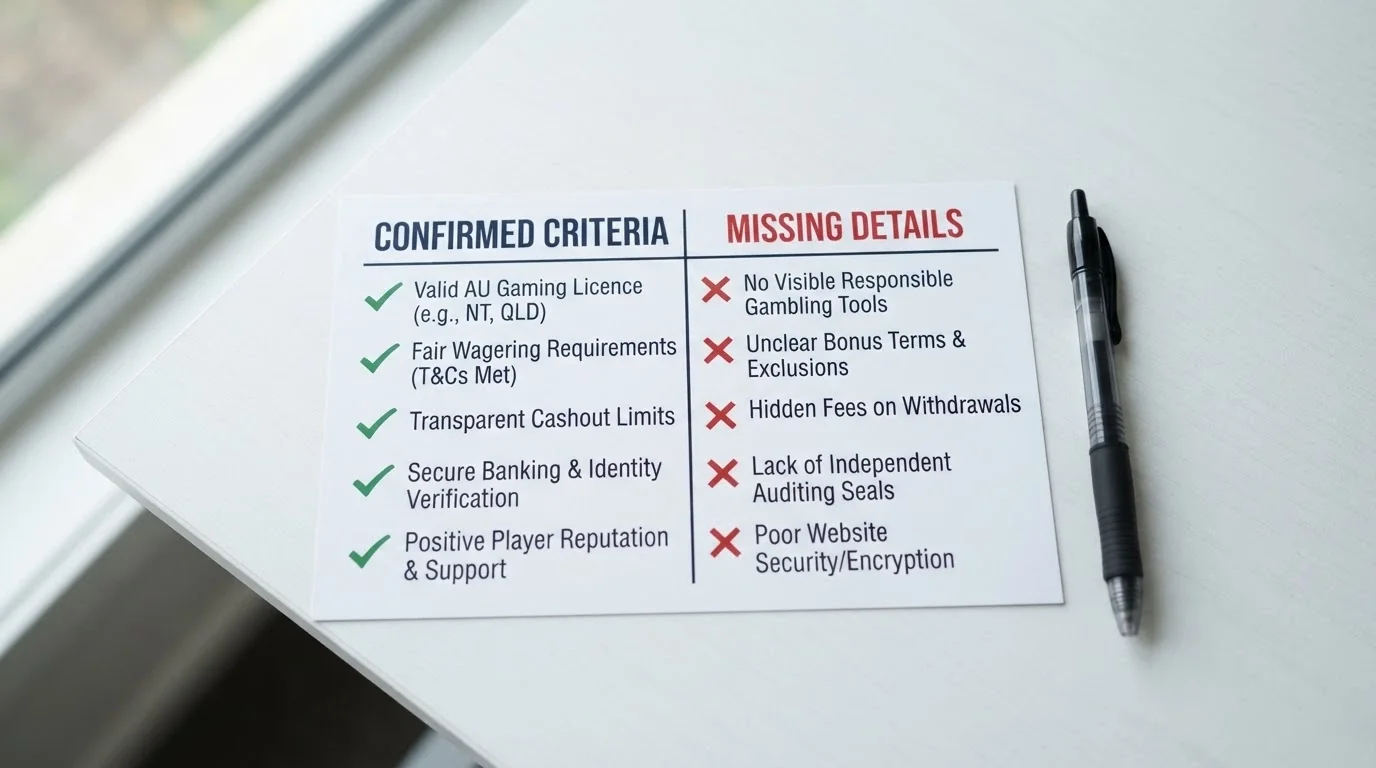
The terms tend to be stricter than the established operators. A new casino’s NDB will frequently run at 50× to 60× wagering where a Skycrown-equivalent would run at 25×. The expiry windows are tighter. The KYC check is more aggressive on the first withdrawal. The reason is structural: a new operator cannot yet absorb the acquisition cost in player lifetime value, so the bonus terms do more of the cost-shifting. The marketing is selling free play; the terms are selling it expensively.
The ACMA blocking risk is the harder variable. The regulator has taken action against over 1,500 unlicensed gambling and affiliate portals since late 2019, and the new platforms are at higher risk of appearing on future enforcement lists. A platform that was launched six months ago has not been through a single ACMA enforcement cycle. A platform launched in 2014 has been through seven years of them. Weight the new platform’s bonus against the platform’s survival probability, which is itself invisible until it fails.
The published benchmark for evaluating a new operator’s NDB is the 35× to 60× wagering and A$50 to A$100 cashout cap that the established Australian-facing market runs through. An offer that sits inside that band is consistent with what the player should expect. An offer that sits well below should be read as marketing trying to convert sign-ups into deposits; an offer that sits well above is a bonus the operator has structured not to pay out.
New vs Established: What an Older Platform’s Track Record Tells You
BitStarz launched in 2014, the oldest operator in this ranking. Rocket Play launched in 2020. The other operators in the ranking are somewhere in between, mostly clustered in the 2020 to 2023 window. Establishment year is not a guarantee of quality, but it is a rough proxy for the number of ACMA blocking cycles the platform has survived, the number of payment-provider relationships it has kept, and the number of player disputes it has processed.
A platform operating since 2014 has been through the 2024 credit card and crypto ban transition, the multiple state-level inducement crackdowns, and the post-2017 strengthening of the IGA enforcement. A platform launched in 2026 has been through none of those. Establishment year is not safety — the offshore casino business does not have a guaranteed survival rate, and 225 services have already withdrawn from the Australian market — but the longer the paper trail, the more the player knows what they are signing up to.
Player-community reputation is the qualitative check. Long-running affiliate forums track which operators process withdrawals cleanly, which have KYC friction on the first payout, and which have disappeared after a blocking cycle. A platform with three years of community discussion has a track record a six-month-old platform does not. Trust the community’s volume rather than its enthusiasm — discussion is a signal the platform is still operating, and silence often isn’t.
No Deposit Bonus Casinos and the IGA: What Australian Law Actually Says
The Interactive Gambling Act 2001 makes it illegal for gambling providers to offer online casino games — pokies, blackjack, roulette, live dealer tables, anything of that shape — to people in Australia. There is no licence for online casino anywhere in the country. Not federally, not in any state or territory. The Australian Communications and Media Authority is the federal regulator that enforces the prohibition, investigates complaints, and directs Australian ISPs to block illegal sites.
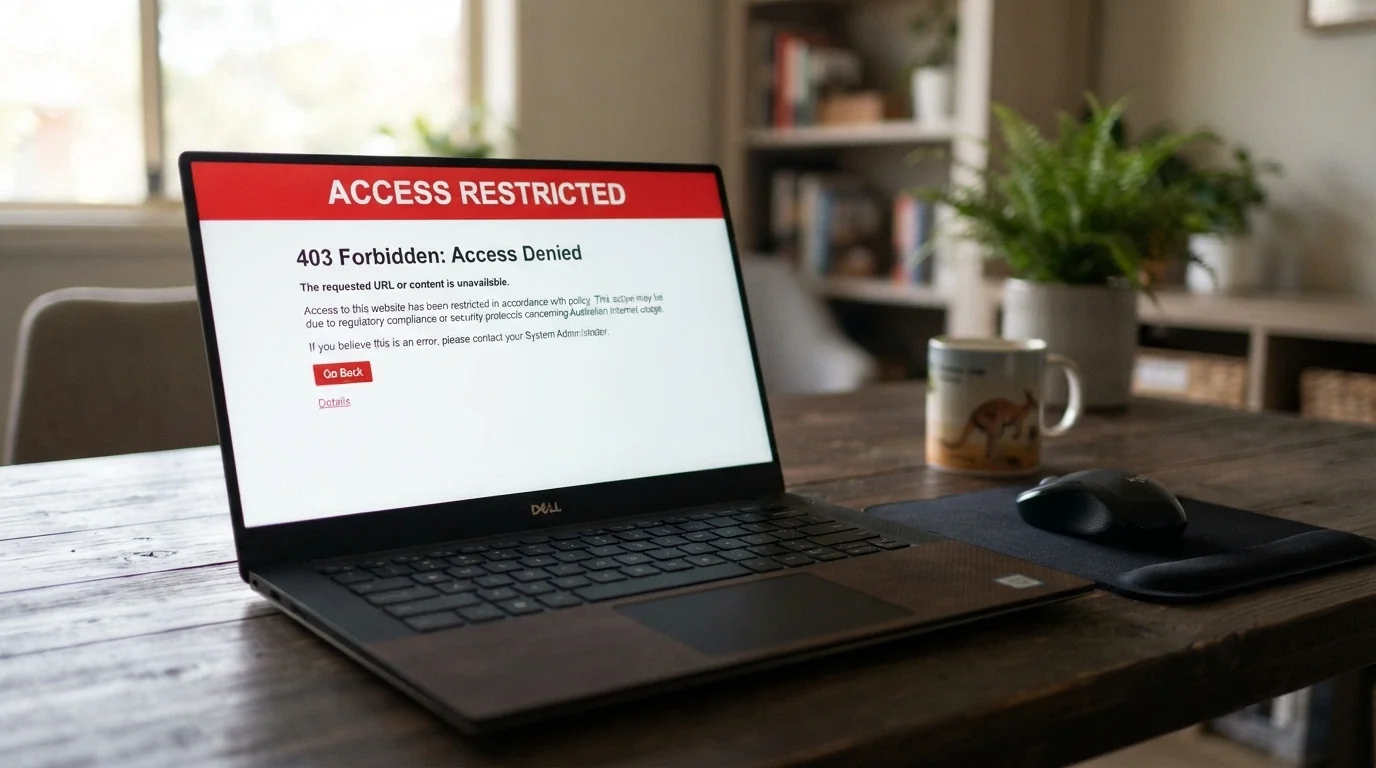
The ACMA’s enforcement record, as of March 2026, counts more than 1,500 illegal gambling and affiliate portals restricted from Australian ISPs since the first blocking request in November 2019, and 225 illegal services withdrawn from the Australian market since enforcement was strengthened in 2017. Those are the regulators doing their job; the offshore operators on this page are the ones the ACMA’s blocking requests target. The current block list is on the ACMA’s website for anyone who wants to verify.
The individual player is not prosecuted under the IGA. The Act targets the provider — the offshore casino — not the person placing the bet. There is no record of an Australian player being charged for using an offshore casino. “Not illegal for you” does not mean “safe.” It means the law has chosen to enforce against the operator side of the transaction and to leave the player side of it alone, which is a different proposition from “the player’s money is protected.”
The payment-method ban, from 11 June 2024, is the second pillar of the Australian enforcement framework. Credit cards, credit-related products and digital currency are banned as payment for online wagering in Australia. The ban runs against licensed Australian operators and is enforced through the banking system; an offshore casino accepting crypto from an Australian is not bound by the ban directly because the offshore operator is not under Australian jurisdiction. The ban’s practical effect on offshore operators is the payment-method tell — a site accepting credit cards or crypto from Australians is, by the payment method alone, signalling that it operates outside the Australian framework.
What Australian Players Give Up When They Play at an Offshore Casino
Playing offshore is not illegal for the individual player. Playing offshore does strip away every Australian consumer protection the player would otherwise have.
BetStop is the first protection that does not apply. BetStop is the National Self-Exclusion Register, launched on 21 August 2023, which lets a person exclude themselves from every Australian-licensed online and phone wagering service in a single registration. As of 31 March 2026, the register had 59,830 registrations and 37,247 active exclusions. BetStop binds approximately 150 licensed wagering providers. It does not bind an offshore casino. A player who has self-excluded via BetStop can still register, claim an NDB, and play at every operator in this ranking. The exclusion does not travel offshore.
The second protection is the ACMA complaints body. A licensed Australian wagering operator can be the subject of an ACMA complaint that results in formal warnings, civil penalty proceedings, or referral to a state tribunal. An offshore operator cannot. The player with a complaint has no Australian regulator to call.
The third protection is the payment-system recourse. A licensed Australian operator that refuses a withdrawal is subject to Australian financial services law, which gives the player a chargeback path through their bank. An offshore operator that refuses a withdrawal is subject to the operator’s own dispute process, which the operator controls. The bank will not reverse a chargeback on a crypto transaction; on a PayID transaction, the bank may, but the chargeback process is contested by the operator and the player has no Australian tribunal to escalate to.
The fourth protection is the site-blocking stability. The ACMA can block an offshore casino at any time, cutting off Australian access without notice. A player with money in the account when the block lands has no Australian recourse to recover it. The offshore operator still holds the funds; the player has lost the connection.
The 2026 Gambling Reform: What Changes on 1 January 2027
The Interactive Gambling Amendment (Gambling Reform) Bill 2026 passed Parliament on 19 August 2026. Its measures commence on 1 January 2027. The reform is law with a start date — not speculative, but not yet binding in 2026.
The advertising restrictions are the most visible change. From 1 January 2027, no more than three wagering ads per hour can run between 6:00 am and 8:30 pm. There is a live-sport blackout within those hours, running 15 minutes before the start to 5 minutes after the end. Radio ads are barred during school drop-off and pick-up windows. Broadcasting of odds is banned. Online ads can only target logged-in, age-verified users with an opt-out flag set. Wagering ads are banned in sports venues and on uniforms. Athletes, celebrities and influencers are barred from promoting wagering.
The second change is the inducement ban. Direct marketing of inducements — sign-up offers, referral bonuses, the kind of marketing that produces an NDB landing page — is prohibited for 14 days after a player signs up and for three months after a player deregisters from BetStop. The intent is to cut the marketing pressure at the exact moments a player is most exposed to it.
The third change is bank-level transaction blocking. From 1 January 2027, banks and payment providers gain express authority to block transactions to illegal gambling operators. The PayID transfer an offshore casino currently accepts because the banking rails carry it becomes, in 2027, a transaction the bank can refuse on the operator side. The crypto route was already blocked at the licensed-operator level by the 2024 ban; the 2027 reform extends a similar authority to the financial-side transaction.
The reform does not legalise online casino in Australia. The product remains prohibited. What the reform changes is the financial and marketing architecture around the prohibition — fewer ads, no inducements at the moment of sign-up, and a banking system with the authority to refuse the offshore transaction. For an Australian player who chooses to play offshore anyway, the practical effect is fewer deposit routes that succeed and fewer bonus offers in the inbox.
Staying in Control When the Australian Safety Net Cannot Reach You
Offshore casinos sit outside every Australian responsible gambling safeguard. BetStop’s coverage of approximately 150 licensed wagering providers does not extend offshore. The National Gambling Helpline’s operator-level integration does not extend offshore. The mandatory RG officer requirement at licensed venues does not extend offshore. The player who chooses to play offshore is choosing to build their own safety rails, because the licensed-ecosystem rails stop at the licensed-ecosystem edge.
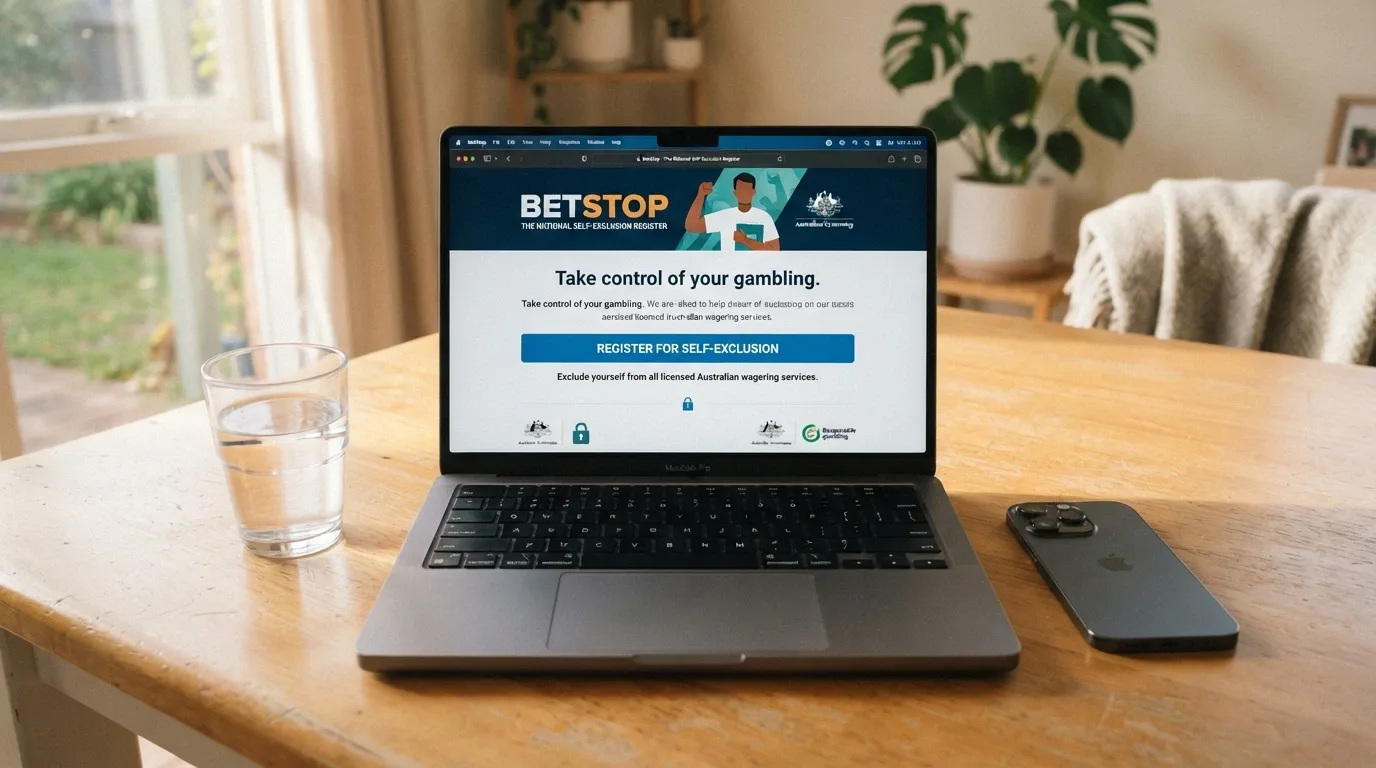
The harm context is real. About 2.1% of Australian adults — roughly 430,000 people — experience problem gambling, with high-risk gambling at 1.8%, according to the Australian Institute of Health and Welfare’s 2022 figures. In 2022, more than one in 10 Australians (11%) had gambled online in the previous six months, up from 8% in 2020. Australians lose around A$32 billion on legal gambling every year — the heaviest per-person losses of any country on earth. The licensed market is where most of that loss happens; the offshore market is where the consumer protections stop.
BetStop and the National Self-Exclusion Register: The Offshore Blind Spot
BetStop — the National Self-Exclusion Register at betstop.gov.au — is Australia’s most powerful responsible gambling tool. One registration excludes a person from every Australian-licensed online and phone wagering service in a single step. The minimum exclusion period is three months; the maximum is a lifetime. As of 31 March 2026, the register had 59,830 registrations; 37,247 exclusions are active. 78% of registrants are under 40. 38% chose lifetime exclusion. The register binds approximately 150 licensed wagering providers.
It does not bind offshore casinos. An offshore operator is not licensed in Australia, is not connected to BetStop, and is not required to check the register. A player who has self-excluded via BetStop can still register, verify, claim an NDB and play at every operator in this ranking. The exclusion does not travel offshore.
The practical consequence is concrete. A player in the middle of a problem-gambling spiral who has self-excluded from the licensed market has not solved the problem if the offshore market is still open. The offshore casino does not know about the BetStop registration. The Australian regulator does not have jurisdiction over the offshore casino’s acceptance of the player. The bank may or may not block the deposit under the 2027 reform’s transaction-blocking authority; in 2026 it cannot. The player is the only layer of protection on the offshore side, which is the exact layer that problem gambling compromises first.
Practical Tools: Limits, Helplines and Where to Get Help
The National Gambling Helpline is 1800 858 858 — free, confidential, staffed 24 hours a day, seven days a week. Gambling Help Online at gamblinghelponline.org.au offers free 24/7 chat and email counselling. Both services are free and confidential. Both work whether the gambling is happening at a licensed venue, a licensed online wagering operator, or an offshore casino. The helpline does not require the player to name the operator.
Payment-level controls are the tools the player can apply independently. Most Australian banks offer gambling transaction blocks at the card or account level, which stops deposits to any operator regardless of licence status. A bank-imposed gambling block is the closest thing to a BetStop equivalent for the offshore side, because the block sits at the bank rather than the operator. Setting the block requires contacting the bank’s fraud or card services team.
Self-imposed session limits work the same way at an offshore casino as they do at a licensed one. A timer on the phone, a maximum-deposit rule set in advance, and a hard stop at the chosen limit are all under the player’s control. Reality checks — pop-up reminders of time and money spent — are mandatory at licensed operators and sometimes available at offshore operators; where the operator does not provide them, the player’s own timer is the substitute.
The signs of problem gambling to watch for are the standard ones: chasing losses, playing past the planned budget, hiding the play from family or friends, gambling with money earmarked for essentials. The Australian minimum age for commercial gambling is 18, and the offshore operators on this page do not run an effective age-verification process for Australian residents. A parent concerned about an underage player should be aware that the offshore sign-up flow is not screened by Australian identity verification.
The decision to use these tools is the player’s. The decision to seek help, when the tools stop working, is also the player’s. The 1800 858 858 helpline is the place to start.
How We Evaluated These No Deposit Bonus Casinos
The ranking draws from the AU operators list — the offshore casino brands that Australian players are actually reaching — and from the published bonus terms at each operator. Where independent test data exists for a payout, that data is included; the only operator in the ranking with a tested Australian-facing withdrawal time in this evaluation is Skycrown, which cleared an A$180 PayID withdrawal in two hours and 29 minutes. The remaining payout-time figures are operator-stated or community-reported.
The ranking criteria, in order of weight, are the strength of the no deposit offer (free spin count or free chip value), the wagering multiple, the clarity of the cashout cap, the breadth of the game library and provider mix, and the deposit method coverage. Operators with no confirmed standing NDB are included in the ranking because they hold a measurable share of the AU market and an informed reader wants to know which platforms Australians are playing on, even when the NDB is not the draw.
The honest limitation is the framing. No operator holds an Australian casino licence because no such licence exists. The ranking compares offshore operators against each other, not against an Australian licensed standard that does not exist. A player who wants a licensed alternative has to leave the page — the closest licensed Australian product is a wagering operator (Sportsbet, bet365, Ladbrokes) holding an NT licence, and that product is sports and race betting, not online casino.
The bonus terms are taken from operator-published pages and from the affiliate sites that mirror those pages. Where the operator’s own page and an affiliate’s page disagree, the operator’s page wins. Where the operator does not publish a term — a payout speed, a max cashout — the cell stays empty rather than guessed.
What You Should Actually Do With This No Deposit Bonus Information
The honest trade-off is the page’s whole point. An NDB lets an Australian player test an offshore casino with no deposit, no commitment, and no risk of losing their own money on the first session. The same NDB sits inside a framework that offers zero Australian consumer protection — no BetStop coverage, no ACMA complaints body, no state tribunal recourse, no Australian license to revoke, no payment-system protection beyond what the player’s own bank chooses to apply. The free play is real. The offshore reality is also real.
Three questions before claiming. First, do you understand the wagering multiple and the cashout cap, and have you read both in the bonus terms before activating? Second, are you comfortable playing at an offshore casino that operates outside Australian consumer law, knowing that no Australian regulator will help you if the withdrawal stalls or the operator disappears? Third, do you know where to get help — the National Gambling Helpline at 1800 858 858, Gambling Help Online at gamblinghelponline.org.au, BetStop at betstop.gov.au — if the play stops feeling like a choice?
The information on this page that competing NDB pages do not give the reader is the legal framing. The IGA prohibition is real and the ACMA enforces it through blocking requests and provider enforcement. The 1,564 blocked sites and 225 withdrawn services are the regulator’s record to date. The credit-card and crypto ban from 11 June 2024 is the payment-method signal an offshore site leaves. The 1 January 2027 reform is the date on which banks gain express authority to block the offshore transaction. None of this recommends an operator. All of it puts the reader’s decision in the context the marketing copy skips past.
The decision is the reader’s, made with the facts the page has presented. An NDB at an offshore casino is a real product on a real platform; it is also a product with no Australian safety net. A player who claims one with both facts in hand is choosing with eyes open.
Frequently Asked Questions
How do wagering requirements work on a no deposit bonus?
A wagering requirement is the multiplier applied to the bonus before withdrawal unlocks. On an A$15 free chip at 40×, you must stake A$600 in eligible pokies before any withdrawal is processed. On a 100-free-spin offer with A$20 in winnings at 25×, you must stake A$500 in eligible pokies from the spin winnings before withdrawal. Pokies contribute 100%; table games contribute 0% to 10%. Exceeding the A$5–A$7 max bet, even once, voids the bonus and the winnings.
Can I use PayID or crypto to deposit at no deposit bonus casinos in Australia?
Yes, at every offshore operator in this ranking. PayID clears deposits in minutes and withdrawals in one to two hours. Crypto (BTC, ETH, USDT, LTC, DOGE) clears both directions in roughly five minutes. Neither route is legal for licensed Australian wagering — credit cards and crypto have been banned as payment for online wagering since 11 June 2024, and PayID is a licensed-ecosystem rail that offshore operators have adopted for Australian players. The fact that an offshore casino accepts both is itself a tell that the operator is outside Australian rules.
How do I know if an NDB casino is trustworthy and safe?
You check four things: the licence (Curaçao, Anjouan, RTG aggregator — none of which is enforceable in Australia), the bonus terms (wagering multiple, max cashout cap, max bet rule), the operator’s track record (BitStarz has been operating since 2014; newer operators have shorter histories), and the payment routes (PayID and crypto are standard offshore; credit card acceptance from Australians is a red flag for the operator’s legal position). No operator in this ranking is licensed in Australia because no online casino licence exists in Australia.
What happens if I win big with a no deposit bonus — can I withdraw it all?
Not necessarily. The max cashout cap — typically A$50 to A$100 in the Australian-facing market, with Fair Go at A$180 and BitStarz at A$150 stretching higher — is the most important term. A A$500 bonus balance at a A$100 cap pays A$100 at withdrawal; the remaining A$400 is taken back by the operator regardless of how the wagering ends. The cap is the difference between an NDB that pays out and an NDB that produces marketing value for the operator without producing a withdrawal for the player.
Are there new no deposit bonus casinos for Australian players in 2026?
Yes, but with caveats. A new offshore casino launching in 2026 typically offers a generous NDB as a customer-acquisition cost, with terms that run stricter than the established operators — 50× to 60× wagering where Skycrown-equivalent would be 25×, shorter expiry windows, more aggressive KYC on the first withdrawal. New operators also carry higher ACMA blocking risk: a platform launched six months ago has not survived a single ACMA enforcement cycle, while BitStarz has been through seven years of them. Evaluate a new casino’s offer against the 35× to 60× wagering and A$50 to A$100 cashout cap benchmark before claiming.
Does BetStop cover no deposit bonus casinos in Australia?
No. BetStop binds approximately 150 licensed Australian wagering providers. Offshore casinos are not licensed in Australia and are not connected to the register. A player who has self-excluded via BetStop at betstop.gov.au can still register, verify, claim an NDB and play at every operator in this ranking. BetStop is a powerful protection against the licensed market and has no effect on the offshore one. The National Gambling Helpline at 1800 858 858 and Gambling Help Online at gamblinghelponline.org.au are the support services that work regardless of the operator’s licence status.