
Choosing a Casino Payment Method From Australia in 2026
 Available in AU
The payment rail you pick shapes everything that follows at an online casino. It sets how fast the first dollar lands, how long the last one takes to come back, whether your bank ever sees the merchant, and whether a single declined transaction locks you out of a session on a Friday night. Australian players face a sharper version of this than most markets, because every casino accessible from this country is offshore, unlicensed in Australia, and running on its own terms. There is no AU regulator on the other end. The rail you choose is the only safety gear you actually get to wear.

Current as of 22 October 2026 against the ACMA register and the Australian Department of Infrastructure statements on the Interactive Gambling Act.
Table of Contents
- Why Your 2026 Casino Payment Method Matters More Than You Think
- What Really Happens When You Hit “Deposit” at an Online Casino
- Every Casino Payment Method Australian Players Can Actually Use in 2026
- The Real Cost of a “Fast” Casino Withdrawal
- Why the Payment Method a Casino Offers Is a Legal Tell
- 10 Online Casinos Ranked by Payment Flexibility (2026)
- Beyond the Spin: Responsible Gambling Support That Actually Works for Australians
- How We Evaluated These Casino Payment Methods
- Your Deposit, Your Call — What This Payment Guide Means for You
- Frequently Asked Questions
Why Your 2026 Casino Payment Method Matters More Than You Think
A payment method is not a checkout step. It is a series of decisions: how much of your bankroll sits inside a casino account you cannot reach on a Sunday, whether your bank statement shows a gambling merchant code, and what a single misroute costs you. For Australian players, the first strategic choice in online gambling is the rail, not the bonus.
The legal shape of the country pushes this choice to the front. Online casino games are prohibited under the Interactive Gambling Act 2001. The prohibition targets the provider, not the individual player, so a person in Australia is not at personal legal risk for playing. What they do lose is every consumer protection the IGA would otherwise extend. No ACMA complaints recourse. No BetStop coverage. No guarantee the site will be reachable next week. The payment method is the layer that holds some of what the law does not, and the offshore sites still offer the methods the licensed ones do not, including credit cards and cryptocurrency. The Australian who is asked for a credit card or a crypto deposit by a gambling site is being served by someone outside the Australian rules. The payment method is itself a tell.
Crypto sits in an interesting position here. Crypto deposits remain a small fraction of overall iGaming payment volume in Australia, but they attract outsized regulatory attention because the unlicensed offshore segment uses crypto to reduce traceability. That is why a ban on crypto for licensed wagering took effect in June 2024, and why the payment method an offshore casino accepts is now the cleanest signal of which side of the regulatory line the operator sits on.
What Makes a Payment Method “Best” for Australian Players
“Best” is not a single axis. It is a combination of speed, fees, privacy from bank scrutiny, and whether the same rail works for deposits and withdrawals. A method that lands instantly but cannot cash out is half a method. A rail that pays out fast but flags as gambling on a bank statement is a privacy problem the player pays for in stress.
Speed dominates Australian preferences, and PayID is the headline answer for fiat. PayID runs on the New Payments Platform, clears in Australian dollars with no conversion, and stays open 24 hours a day, seven days a week, including weekends and public holidays. Crypto is faster still, with most withdrawals settling in thirty minutes or less. Cards clear in seconds on the deposit side and in days on the withdrawal side, which is why they feel convenient at first and then stop feeling convenient. Bank transfers take a working week.
No method wins every category. PayID is fast and fee-free but capped. Crypto is fastest and most private but operationally heavier for anyone who has not used a wallet before. Cards are familiar but increasingly declined by Australian banks for gambling-coded merchants. The honest comparison is across the categories, not down a single ranking.
Speed: Why Instant Deposits Are Now the Baseline
Deposit speed has become the entry ticket. PayID and crypto deposits clear instantly or near-instantly. Card deposits process in seconds, though a 1% to 2% international transaction fee sometimes appears if the casino is billed in a currency other than AUD. Bank transfer sits at the other end of the spectrum, often a full business day or more for the deposit alone.
The asymmetry is what surprises players. A deposit on any of these rails arrives in seconds. A withdrawal on the same rail, from the same operator, can take a working week for cards and bank transfer. PayID keeps the gap narrow, clearing in minutes at best and roughly thirty hours on average across tested offshore operators. Crypto closes the gap almost entirely. The deposit speed bar is now set by PayID and crypto; anything slower is a deliberate operator-side choice.
Safety First: Protecting Your Banking Details from an Offshore Operator
Handing card details to an offshore casino is a different exposure than handing the same details to a domestic merchant. The site sits outside Australian consumer law. The card network treats gambling chargebacks with suspicion. The bank may decline the transaction outright if the merchant is coded as gambling. Every one of those friction points is a small vote of no-confidence from the financial system, and the rail that masks bank details avoids all three.
PayID does not share card numbers. It uses BSB and account number routing, which is why PayID is not subject to bank gambling blocks even when those blocks are active for card transactions. E-wallets sit between the bank and the casino as a buffer. Crypto cuts the bank link entirely. Prepaid vouchers like Neosurf cap the exposure to the voucher value, which is convenient for a player who wants to spend a fixed amount and walk away from the merchant code altogether.
Chargeback rights are the one card advantage that does not extend to gambling. The card networks treat gambling transactions as service rendered once the deposit clears, and a refund request on a settled deposit has a poor track record. The protection that exists is at the bank level, not the card network level, and that protection is shrinking as more Australian banks default-decline gambling-coded merchants.
How to Match a Payment Method to Your Play Style
A frequent depositor wants PayID speed and the AUD-native rail. The limits run from a low minimum deposit around AU$30 to a daily withdrawal ceiling near AU$4,000, which suits most regular play and most casual budgets. The privacy-conscious player wants crypto, where the bank sees nothing and the network sees a wallet address. The casual depositor who plays a few times a year may accept card convenience and accept the bank decline risk that comes with it. The high-roller needs a high ceiling and is best served by crypto, where withdrawal limits stretch to AU$50,000 or more, or by PayID stacked against a daily cap.
Crypto limits at offshore casinos typically run from AU$20 minimum to AU$50,000 or more at the top end, with network fees only and those fees usually measured in cents. PayID limits typically run from AU$10 minimum to AU$5,000 maximum per transaction, with no fee on either side. The shape of the rail decides who it suits.
What Really Happens When You Hit “Deposit” at an Online Casino
The deposit flow has four moving parts. The player’s bank or wallet. The payment rail. The operator’s payment gateway. The casino’s internal processor. On the deposit side, the player touches the first two; the latter two are invisible unless they break. The gateway is what authorises the transaction and routes it to the right processor. The processor is what credits the casino account.
On the withdrawal side, the same four parts work in reverse, with one addition: a KYC gate that sits between the operator’s payment team and the rail. The gate is the reason deposits feel instant and withdrawals never quite do.
The KYC Gate: Why Your First Withdrawal Always Takes Longer
KYC stands for Know Your Customer. For an offshore casino it is the operator collecting proof that the player is who they say they are, before the operator releases funds to an account the player has not used before. A passport or driver’s licence. A recent utility bill or bank statement. Sometimes a selfie with the document.
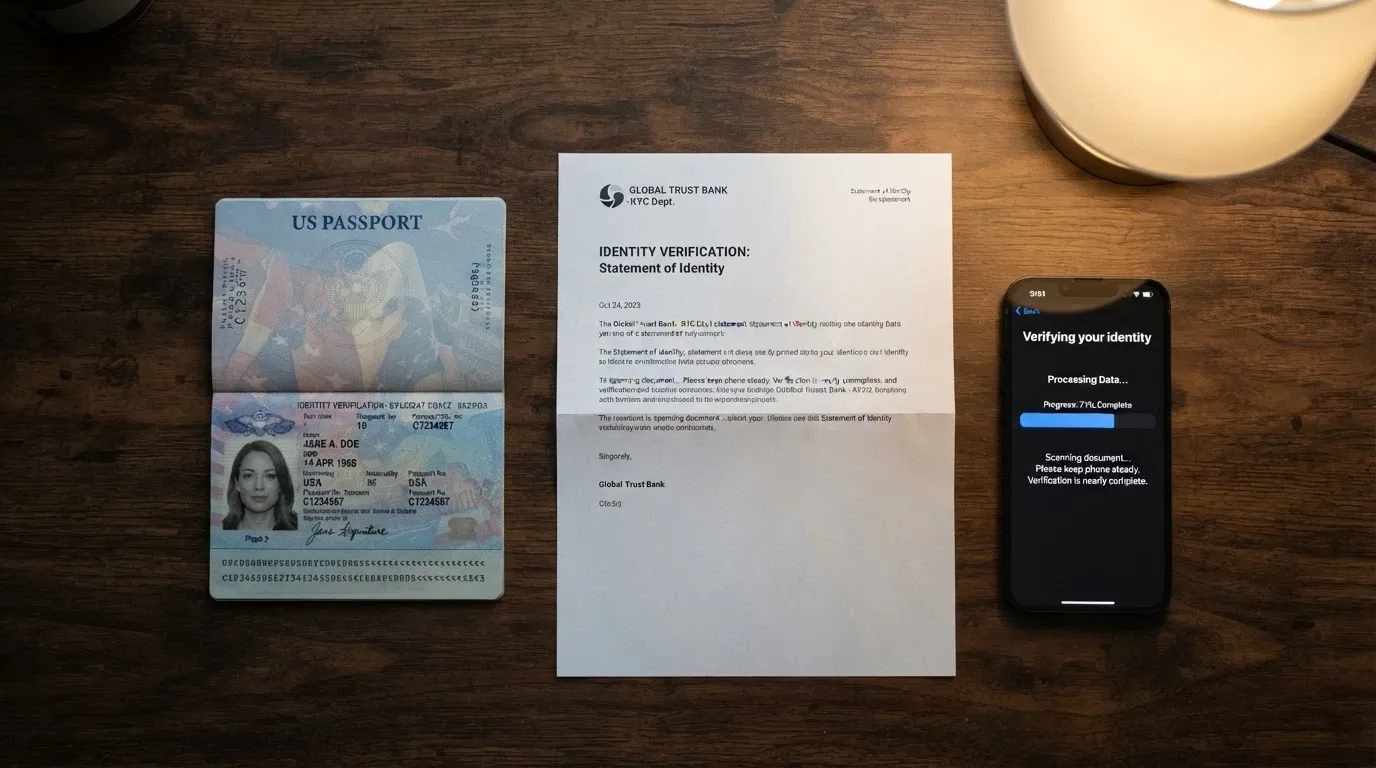
Incomplete KYC is the number one cause of withdrawal delays at offshore casinos. The operator will not release funds until the file is complete. The fastest path is to submit documents at registration rather than at the first cash-out request. The review itself takes hours to a couple of business days at most offshore operators. After the file is verified, repeat withdrawals usually clear without re-checking, which is why a player’s second and third withdrawals are routinely faster than the first.
Limits, Pending Periods and the Fine Print Nobody Reads
The gap between “processed” and “in your account” is built from three delays. The operator’s pending period, where the withdrawal sits in the casino’s payment queue. The bank-side clearing time, where the rail does its work. The KYC review, which only runs the first time or when something has changed.
PayID’s NPP rail operates 24/7 and skips the bank-side delay entirely on weekends and public holidays. Crypto skips the bank leg altogether. Card withdrawals add a KYC round tied specifically to the card, because card networks require a separate verification check. Bank transfer has the longest clearing time at three to seven business days, and the operator cannot compress it.
The practical implication is that a player who knows the pending period is a working day or two can plan around it. A player who does not check it can lose a weekend to a withdrawal that the operator had sitting in a queue.
Every Casino Payment Method Australian Players Can Actually Use in 2026
The table below covers the deposit speed, withdrawal time, fees and Australian-specific limits for each rail available at offshore casinos accessible from Australia. The right column “Notes” carries what the speed and limit columns cannot: bank-block exposure, deposit/withdrawal parity, and the practical situations each rail suits.
| Payment Method | Deposit Speed | Withdrawal Time | Fees | AU Limits | Notes |
|---|---|---|---|---|---|
| PayID | Instant (NPP, 24/7) | Minutes to ~30h average | None | ~AU$30 min deposit; AU$4,000 daily withdrawal | Fastest fiat; not subject to bank gambling blocks; uses BSB/account-number routing |
| Visa / Mastercard | Instant | 1–5 business days | Possible 1–2% FX fee if billed in non-AUD | Varies by operator | Cards increasingly declined by Australian banks for gambling MCC; card withdrawals trigger extra KYC |
| E-wallets (Skrill, Neteller, eZeeWallet) | Instant | Hours to 1–2 days | Operator-set, sometimes wallet-side | Varies by operator and wallet | Privacy buffer from bank; some operators exclude e-wallet deposits from welcome bonuses |
| Cryptocurrency (BTC, ETH, LTC, USDT) | Minutes (network confirmation) | ~30 minutes or less | Network fees only (cents to a few dollars) | AU$20 min to AU$50,000+ | Fastest rail; USDT on TRC-20 is cheapest on-chain; no bank involvement |
| Neosurf (prepaid) | Instant | Not supported for withdrawal | None | Voucher value (typically AU$10–AU$200) | Deposits only; need a second rail for cash-outs |
| Paysafecard (prepaid) | Instant | Not supported at most operators | None | Voucher value | Casino footprint has shrunk; check operator by operator |
| Bank transfer | 1–3 business days | 3–7 business days | Possible intermediary fees | Varies by operator | Universally accepted; slowest rail; Sportsbet stopped bank transfer deposits in March 2025 |
| Mobile billing (Boku and similar) | Instant | Not supported for withdrawal | Carrier may apply a fee | Low caps (typically AU$30–AU$50) | Niche; small deposits only; carrier handles the charge |
PayID — The Payment Rail That Changed Australian Casino Banking
PayID is the standout Australian payment method because the rail was built for the country. PayID runs on the New Payments Platform through Osko, settles in Australian dollars without conversion fees, and stays open around the clock. A PayID deposit at an offshore casino usually arrives in seconds. A PayID withdrawal from the same casino has been tested in as little as eleven minutes at Wild Fortune and averages around thirty hours across operators. No other fiat rail at an Australian-facing offshore casino is faster.
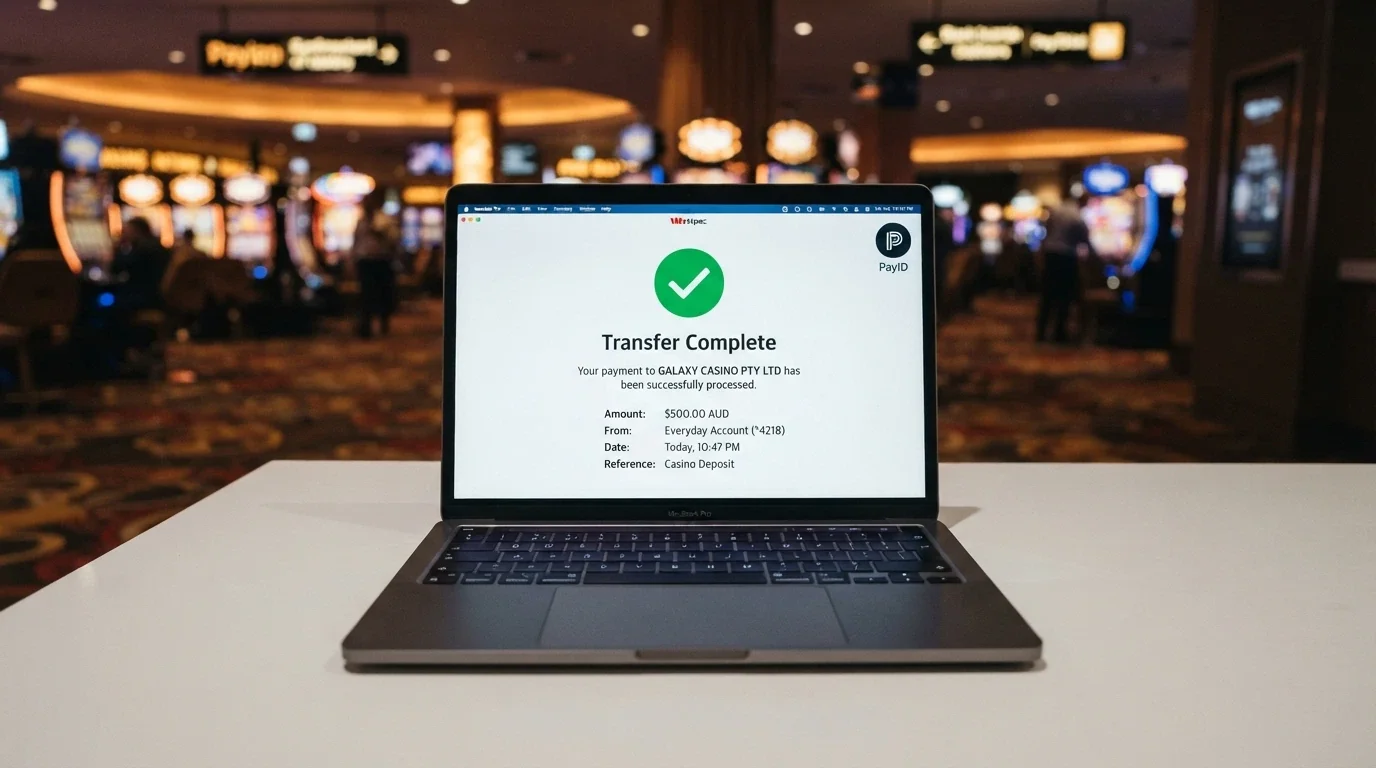
The reason banks cannot block PayID gambling transactions is the rail itself. PayID is processed using BSB and account number rather than card details, and the gambling merchant category code sits on the card transaction. PayID does not carry the same code, which is why the same player whose bank declines a Visa deposit can sometimes still move money via PayID. The privacy angle is structural, not negotiated.
Typical PayID limits run from around AU$30 minimum deposit to AU$4,000 daily withdrawal at the operator side, with the rail itself allowing anywhere from AU$10 minimum to AU$5,000 maximum per transaction and no fee at either end. The shape suits a player who wants a fast AUD-native rail and is not moving six-figure sums. For high-volume play, crypto takes over.
Licensed Australian wagering services accept PayID too, including TAB. TAB accepts PayID deposits with a minimum of AU$2 in NSW, VIC, ACT, QLD, TAS and NT, with the same caveat research flags: PayID deposits at TAB are only accepted from a bank account registered in the same name as the TAB account. The name-match rule is a small but real friction point at licensed operators.
Visa and Mastercard: Familiar, Slow, and Increasingly Blocked
Cards are the default for most Australians and the worst fit for offshore casino deposits. The deposit itself is fast, but the withdrawal takes one to five business days and triggers a separate KYC round tied to the card, because card networks require their own verification. The KYC review runs on top of the operator’s own KYC, which doubles the time to a first cash-out.
Australian banks have been tightening the screws on gambling-coded card transactions for several years. Credit cards are banned for online wagering entirely under the Interactive Gambling Amendment (Credit and Other Measures) Act 2023, effective 11 June 2024, with operators facing penalties of up to AU$247,500 for failing to enforce the ban. ANZ’s policy adds a second layer: transactions identified as gambling are declined if eighty-five per cent or more of the credit limit is used, on top of the statutory ban. For debit cards, banks increasingly decline gambling MCC transactions by default or on request, even though the statutory ban does not cover debit.
Chargeback rights do not extend to gambling in any reliable way. The card networks treat a settled gambling deposit as service rendered, and the dispute process favours the merchant when the merchant is offshore. The only real protection on a card deposit is at the bank level, and that protection is shrinking.
E-Wallets: The Middle Ground Between Speed and Bank Privacy
Skrill, Neteller and eZeeWallet sit between the player’s bank and the casino as a buffer. The player funds the wallet from a bank account or card, then deposits from the wallet to the casino. The bank sees a transfer to the wallet, not a gambling merchant. The casino sees a wallet deposit, which sometimes changes the bonus eligibility. The wallet sees both legs and charges its own fee on whichever leg it is set to charge.
Deposit speed is instant. Withdrawal speed is hours to a couple of days, faster than card, slower than PayID or crypto. The privacy buffer is the reason some players prefer this rail even when it does not win on speed. The fee structure varies by wallet and by operator, and players who want exact figures need to check both sides before depositing.
Some operators exclude e-wallet deposits from welcome bonuses, which is a real cost a player should check before assuming the rail is interchangeable with PayID. The bonus terms often treat e-wallets as a separate funding source.
Cryptocurrency: Fastest Withdrawals, Zero Bank Involvement
Crypto is the speed and privacy leader. Withdrawals clear in around thirty minutes or less. No Australian bank can block or see the transaction, because the transaction is on a public blockchain and not on the bank’s books. The only fee is the network fee, which for USDT on TRC-20 is a fraction of a cent, and for Bitcoin ranges from a few cents to a few dollars depending on congestion.

The dominant casino coins are Bitcoin, Ethereum, Litecoin and USDT. USDT on the TRC-20 network is the cheapest on-chain option and the most widely supported stablecoin at offshore casinos, which is why it pairs well with a player who wants predictable value. Limits at the operator side typically run from AU$20 minimum to AU$50,000 or more at the top end, with the rail doing the heavy lifting rather than the operator.
The Australian regulatory signal here is sharp. Crypto is banned for licensed wagering, effective 11 June 2024, alongside credit cards. Offshore casinos ignore the ban, which is exactly why the rail is the marker of an unlicensed operator. This route offers privacy and speed, though the trade-off is the total absence of Australian consumer protection.
Prepaid Vouchers: Deposit Anonymously, Withdraw Somewhere Else
Neosurf and Paysafecard let Australians deposit without exposing a bank account. The flow is simple: buy a voucher at a retail outlet or online, enter the code at the casino cashier, the funds land instantly. No bank account on the casino side. No merchant code on a bank statement. The exposure is capped at the voucher value, which is convenient for a player who wants to spend a fixed amount and walk away.
Neosurf is deposit-only at every offshore casino that accepts it. There is no withdrawal path. Paysafecard’s casino footprint has shrunk to a smaller set of operators and most do not support it for withdrawals either. Players using these vouchers must select a second payment method for cash-outs, which negates the privacy benefit unless the paired method is crypto or another private rail.
Bank Transfer: The Slow Lane That Still Works
Bank transfer is the fallback rail, universally accepted and painfully slow. Deposits take one to three business days. Withdrawals take three to seven business days. The rail moves money through BSB and account number, which means it carries the gambling MCC on the merchant side and is subject to the same bank decline behaviour as cards. Intermediary fees are possible, depending on the bank.
The reason operators still offer it is universality. A player without a card, e-wallet or crypto wallet can still move money via bank transfer. Sportsbet stopped accepting bank transfer deposits in March 2025, which is a market signal that licensed Australian wagering operators are tightening rails rather than broadening them. Offshore casinos still carry the option because the rail works for them regardless.
Mobile Billing: Small Deposits, No Bank Details Required
Boku and similar carrier-billing options deposit via the player’s phone bill. The flow is small-deposit and convenience-flavoured, with caps typically in the AU$30 to AU$50 range. The carrier applies the charge, not the bank, which is the privacy angle. Withdrawals are not supported, so the rail pairs with a second method for cash-outs.
Mobile billing is niche among the featured offshore operators. Most do not list it as a primary payment method, and the ones that do treat it as a deposit convenience rather than a core rail. A player who wants a fast AUD-native deposit with no bank details on the casino side is better served by PayID or a prepaid voucher.
The Real Cost of a “Fast” Casino Withdrawal
“Instant withdrawal” is a marketing phrase. Real cash-out speed is a product of three things: the rail, the operator’s pending period, and the KYC status of the player. The gap between the fastest and slowest methods at the same operator is measured in days, not hours. PayID and crypto are at one end. Cards and bank transfer are at the other.
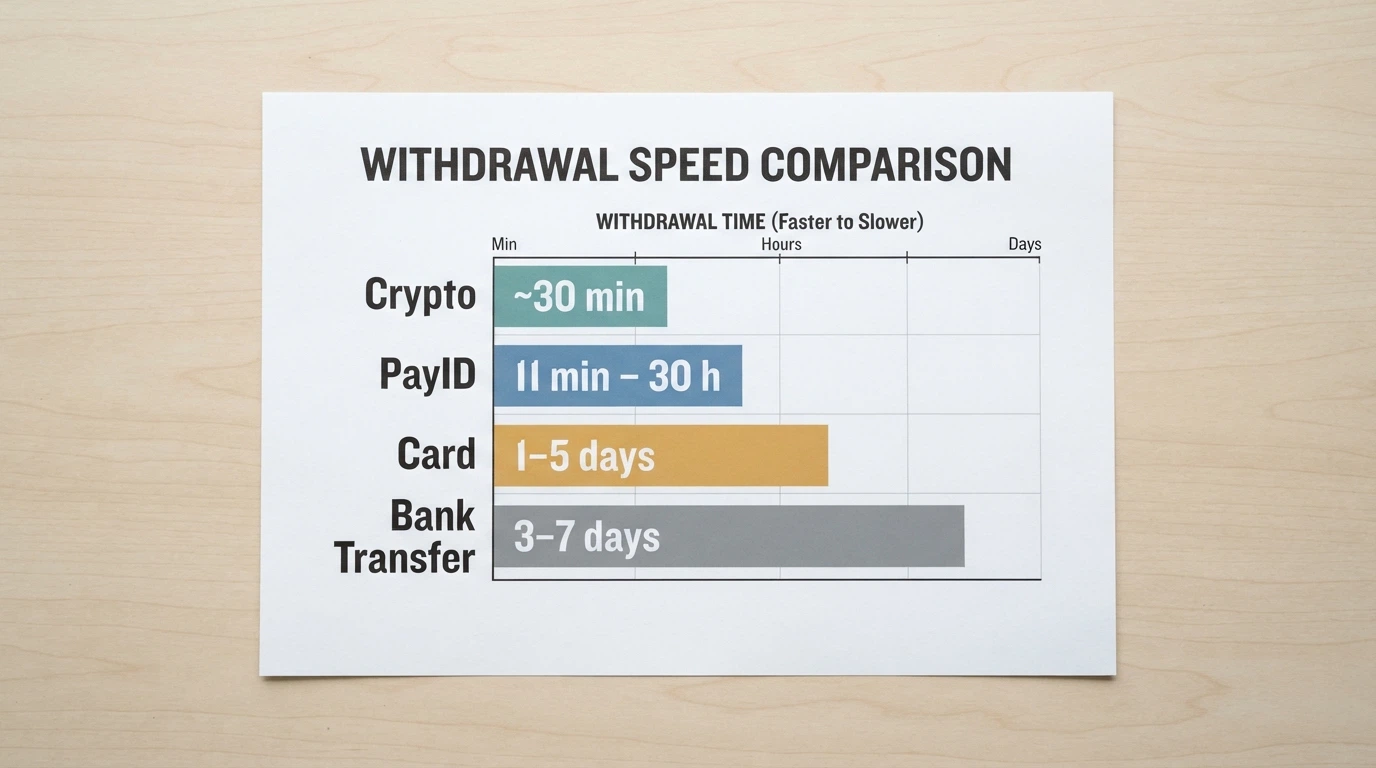
The operator’s pending period is the delay a player cannot see. A typical offshore casino holds a withdrawal for twenty-four to seventy-two hours before the rail even starts moving, which is the operator’s review window. Once the rail takes over, PayID and crypto clear fast. Cards and bank transfer take days. The pending period is the bottleneck on every rail, and it is where the player has the least leverage.
Withdrawal Speed by Method: What the Numbers Actually Show
Crypto clears in around thirty minutes at most offshore casinos. PayID has been tested in as little as eleven minutes and averages around thirty hours across operators. Cards take one to five business days depending on the operator and the issuing bank. Bank transfer takes three to seven business days, and the upper end of that range is what most operators actually deliver.
The reason the spread is so wide is that the rail does only the last part of the trip. The first part is the operator’s queue, which is the same for every method at the same operator. A casino with a forty-eight-hour pending period adds that delay to every withdrawal regardless of rail, which is why a fast rail at a slow operator can still be slower than a slow rail at a fast operator.
E-wallet withdrawal speed sits between PayID and cards, in the hours-to-couple-of-days range, but research did not return a tested figure for the featured operators this round. The shape is consistent; the exact numbers vary by operator and wallet.
The Hidden Holds: Pending Periods, Weekend Delays and KYC Resets
Operator-side delays are the real bottleneck, and they fall into three buckets. Pending periods of twenty-four to seventy-two hours at most offshore casinos, which is the operator’s review window. Weekend and public holiday freezes on fiat rails, where the bank simply does not process anything until Monday morning. KYC re-triggers, where the operator asks for fresh documentation after a long gap or a change of withdrawal method.
Crypto is the only rail that keeps moving on weekends and public holidays. Bitcoin and Ethereum settle on a 24/7/365 basis because the network does not have a weekend. PayID’s NPP rail also operates around the clock and includes weekends, which is why PayID is the closest fiat competitor to crypto on this dimension. Cards and bank transfer freeze on weekends, and a withdrawal request on Friday afternoon may not start moving until Monday.
Why the Payment Method a Casino Offers Is a Legal Tell
The methods an operator accepts signal whether the operator sits inside or outside Australian rules. Almost every online casino accessible from Australia is offshore, unlicensed in Australia, and offering methods the licensed Australian wagering operators cannot. Credit cards for online wagering are banned as of 11 June 2024, with operators facing penalties of up to AU$247,500 for failing to enforce the ban. Crypto for online wagering is banned alongside credit cards on the same effective date. The offshore sites still offer both. The payment method a casino asks for is the cleanest evidence of which side of the regulatory line it sits on.
What Australian law prohibits is the provision of online casino games, online pokies and in-play sports betting. What is licensed is wagering on races and sport placed before the event, lotteries and keno. The licensed operators accept debit card, bank transfer, PayID and BPAY. The unlicensed operators accept a wider set including credit cards and crypto. The list of accepted methods is the simplest test of which side an operator sits on.
The Credit Card and Crypto Ban: What Australian Law Actually Says
The Interactive Gambling Amendment (Credit and Other Measures) Act 2023 banned credit cards, credit-related products and digital currencies as payment methods for online wagering in Australia, effective 11 June 2024. The official wording from the Department of Infrastructure is direct: online wagering service providers are banned from accepting credit cards, credit-related products or digital currencies as payment methods. These requirements commenced on 11 June 2024.
The penalty for licensed operators that breach the ban is up to AU$247,500. The ban does not apply to lotteries. The ban does not apply directly to offshore casinos, because offshore casinos ignore Australian law. The ban is enforced against licensed operators, and the existence of the ban is the regulatory direction the offshore market is moving away from. Credit card funding is a direct signal of non-compliance with Australian regulatory standards.
How ACMA Blocks Illegal Sites — and What That Means for Your Balance
The ACMA has had 1,564 illegal gambling and affiliate websites blocked by Australian ISPs since its first blocking request in November 2019. More than 225 illegal services have withdrawn from the Australian market since enforcement was strengthened in 2017. The blocking is DNS-level, which means the site is unreachable through the major Australian ISPs but may still be reachable through less common paths. The article does not explain how to reach a blocked site, because the right framing is that the site may not be reachable next week.

The practical risk for the player is balance exposure. A blocked site can take a player’s account balance with it. There is no Australian regulator the player can complain to for recovery. There is no BetStop coverage, because BetStop only covers licensed Australian wagering providers. The payment method the player used does not change this risk, except in one way: a player who used crypto has already taken the bank out of the loop, and a player who used PayID has already taken the card out of the loop. The balance exposure is on the operator, not the rail.
The 2027 Reform: What Changes for Casino Payments Next Year
The Interactive Gambling Amendment (Gambling Reform) Bill 2026 passed Parliament on 19 August 2026, with most measures commencing 1 January 2027. The headline payment provision is the obligation on banks and payment providers to block transactions to illegal gambling operators. From 1 January 2027, the bank itself becomes the enforcement point, and a card deposit to an offshore casino can be declined by the issuing bank rather than by the merchant code alone.
Other provisions are less directly about payments but reshape the surrounding market. Direct marketing of inducements is prohibited for fourteen days after a customer signs up with a wagering company and for three months after a person deregisters from BetStop, which reduces the bonus volume the player will see in their inbox. Online keno and foreign-matched lotteries are banned. The ACMA has faster website-blocking powers.
For the player choosing a payment method today, the 2027 reform is a direction-of-travel signal. The bank-blocking power is the strongest single piece of evidence yet that the rail itself will become the regulatory lever. A player who wants to keep options open as the rules tighten is well served by PayID, which is not subject to bank gambling blocks under the current rail design, and by crypto, which sits outside the bank system entirely.
10 Online Casinos Ranked by Payment Flexibility (2026)
The table below ranks the featured operator set by payment-method diversity, with welcome offer and wagering terms where research confirms them. Unconfirmed fields are marked with an em dash. The ranking rewards breadth of rails, AU-relevant methods and deposit/withdrawal parity, in that order.
| Operator | AU Status | Payment Methods | Welcome Bonus | Wagering |
|---|---|---|---|---|
| Rocket Play | Offshore, Curaçao, unlicensed in AU | PayID, Visa/MC, BTC/ETH/LTC/DOGE/USDT, bank transfer, Neosurf (7 rails) | 300% up to A$2,000 + 100 FS | 40x, 5-day validity, A$7.50 max bet, A$30 min deposit |
| Skycrown | Offshore, Curaçao, unlicensed in AU | PayID, Visa/MC, BTC/ETH/LTC/USDT, Neosurf, bank transfer (5 rails) | A$8,000 + 400 FS across 4 deposits | 40x bonus / 30x FS winnings, 14 days per tier, A$5 max bet, A$20 min deposit |
| Stake | Offshore, Curaçao, unlicensed in AU | 22+ crypto coins, Visa/MC, Apple Pay, Google Pay, bank transfer, MoonPay/Coinbuy fiat ramps | No traditional welcome; rakeback loyalty | — |
| Royal Reels | Offshore, Curaçao, unlicensed in AU | PayID, BTC/ETH/USDT, Visa/MC (3 rails) | 100% up to A$500 + 50 FS (first deposit), up to A$2,500 across 3 | 35x, A$5 max bet, A$10 min deposit; AU$10 no-deposit bonus after phone verification |
| Rainbet | Offshore, Curaçao, unlicensed in AU | 25+ crypto coins; fiat via MoonPay/Onramper (Visa/MC buy-crypto) | 250% up to $2,100 + 60 FS across 3 deposits | 40x Wager Lock or No Wager Lock path, 7-day validity |
| FairGO | Offshore, Curaçao, unlicensed in AU | Visa/MC, Bitcoin, Neosurf, bank transfer, eZeeWallet (5 rails) | 100% up to A$200 × 5 deposits = A$1,000 total | 30x–40x (RTG standard) |
| Bizzo Casino | Offshore, Curaçao, unlicensed in AU | — | — | — |
| Scream Casino | Offshore, Curaçao, unlicensed in AU | — | — | — |
| WinSpirit | Offshore, Curaçao, unlicensed in AU | — | — | — |
| Rocket Casino | Offshore, Curaçao, unlicensed in AU | — | — | — |
Rocket Play
Rocket Play sits at the top of the payment-method count with seven rails and a clean AU footprint. PayID covers the AUD-native fiat case. Visa and Mastercard cover the familiar-card case. Crypto covers BTC, ETH, LTC, DOGE and USDT, which is the broadest single-operator coin set in the featured group outside of Stake and Rainbet. Bank transfer covers the fallback. Neosurf covers the prepaid case.
The welcome offer is a 300% match up to A$2,000 plus 100 free spins on the first deposit, with a 40x wagering requirement and a five-day bonus validity. The minimum deposit is A$30 and the maximum bet during wagering is A$7.50. The bonus clock is short. Five days is the kind of validity window that turns a 40x playthrough into a sprint rather than a marathon, and a player who does not pace the wagering from day one loses the bonus to expiry. The game library runs to forty-plus providers including Pragmatic Play, Evolution and Yggdrasil.
The verdict for an Australian player is that Rocket Play offers the strongest single payment profile in the featured group, though the welcome offer is heavy and demands rapid playthrough. While PayID and deep crypto support are major advantages, those prioritizing a longer bonus validity should weigh alternatives like Skycrown or Royal Reels.
Skycrown
Skycrown carries the biggest welcome package in the featured set, at A$8,000 plus 400 free spins across four deposits, but the headline figure comes with serious strings. Wagering is 40x on the bonus amount and 30x on free spin winnings, with a 14-day validity per tier and a 10x bonus value cashout cap on free spin winnings. The maximum bet during wagering is A$5 and the minimum qualifying deposit is A$20.
The payment profile is five rails: PayID, Visa/Mastercard, BTC/ETH/LTC/USDT, Neosurf and bank transfer. The library is sixty-plus providers including Pragmatic Play, Evolution, NetEnt and Play’n GO, which is broader than Rocket Play on the game side and narrower on the crypto side.
The verdict for an Australian player is that Skycrown is the operator for a player who wants a large headline package and is willing to pace the wagering across the four-deposit structure. The 14-day clock per tier is longer than Rocket Play’s five-day window, which gives a player breathing room, and the 10x cap on free spin winnings is the real ceiling on what the package can pay out. The maths: a player who clears a A$500 first-deposit bonus with 100 free spins can withdraw up to A$5,000 from the spins if the wagering clears, which is meaningful and worth knowing before claiming.
Royal Reels
Royal Reels carries the lowest wagering multiplier in the featured set, at 35x, with a three-deposit structure and a rare AU$10 no-deposit bonus after phone verification. The welcome package is 100% up to A$500 plus 50 free spins on the first deposit, with up to A$2,500 available across three deposits. The free spin value is A$0.20 per spin, which makes the headline A$10 free-spin component a real A$10 rather than a marketing number.
The payment profile is three rails: PayID, BTC/ETH/USDT, and Visa/Mastercard. That is the narrowest profile of the top four by rail count, and the trade-off is the no-deposit bonus and the lower wagering. The maximum bet during wagering is A$5 and the minimum deposit is A$10. The library runs to over 5,400 pokies across forty-plus providers.
The verdict for an Australian player is that Royal Reels prioritizes lower wagering multipliers and a no-deposit entry point over rail breadth. This three-rail profile suffices for AUD-native and crypto-native play, and the AU$10 no-deposit bonus remains the most accessible try-before-you-buy option. Players requiring e-wallets or traditional bank transfers should consider other operators.
Stake
Stake is the crypto-native outlier in the featured set. The platform supports 22 or more cryptocurrencies including BTC, ETH, LTC, DOGE, SOL, XRP, BCH, USDT and USDC, with fiat ramps through MoonPay and Coinbase. Apple Pay and Google Pay appear alongside Visa/Mastercard and bank transfer for fiat funding. The platform does not support AUD; players fund in USD or crypto, which is a real friction point for a player who thinks in dollars.
Stake does not run a traditional deposit-match welcome bonus. The loyalty model is rakeback, and an alternative 200% deposit match up to $1,000 has been reported via some sources with 40x wagering and a 30-day clock. The game library runs to 3,000+ pokies including Stake-made originals like Mines, Plinko and Limbo with provably fair RNG. Average crypto payout across test cycles is around one hour fifty minutes, which is slower than Rainbet or a PayID-fast operator but faster than card or bank transfer.
The verdict for an Australian player is that Stake is the operator for a player who is comfortable in crypto and wants the broadest coin set in the market. AUD is not supported, which is a real cost for a player who would otherwise convert at the casino. AU access is intermittent because DNS blocks reach some Australian ISPs, which means the site may not be reachable on the player’s network today and may be reachable tomorrow.
FairGO
FairGO is the AU-branded operator in the featured set, running on RTG with a 280-game library. The payment profile is five rails: Visa/Mastercard, Bitcoin, Neosurf, bank transfer and eZeeWallet. There is no PayID, and crypto means Bitcoin only. The welcome offer is 100% up to A$200 on each of the first five deposits, totalling A$1,000, with 30x to 40x wagering on deposit plus bonus under the RTG standard.
The narrow crypto set and the absence of PayID are the real friction points. A player who wants ETH, USDT or Litecoin does not get them here. A player who wants PayID does not get that either. The eZeeWallet inclusion is the one payment-method angle FairGO carries that the other smaller operators do not.
The verdict for an Australian player is that FairGO is the top choice for those seeking an AU-branded experience, despite the narrower range of payment rails. The 280-game RTG library is a deliberate, curated selection, which contrasts with the 3,000-game sprawl of other operators. Alternatives exist for players demanding PayID or comprehensive crypto support.
Rainbet
Rainbet is crypto-first with a dual wagering path. The platform supports 25 or more coins including BTC, ETH, LTC, XRP, SOL, ADA, BNB, DOGE, USDT, USDC, DAI, TRX, TON and LINK. Fiat funding runs through MoonPay and Onramper, which means Visa/Mastercard reach the casino via a buy-crypto step rather than a direct deposit. Regional fiat on the platform includes Interac for CAD and Pix for BRL, but no AUD path.
The welcome package is 250% up to $2,100 plus 60 free spins across three deposits, with 100% up to $700 plus 20 free spins per deposit. The wagering structure is the distinctive feature: a 40x Wager Lock path or a No Wager Lock path, where funds release gradually. The bonus validity is seven days, which is the shortest clock in the featured set outside of Rocket Play’s five-day window. A 20% rakeback boost runs for the first seventy-two hours.
The verdict for an Australian player is that Rainbet is the operator for a player who is comfortable in crypto and wants the broadest coin set in the featured group. The No Wager Lock path is the genuine novelty, and a player who dislikes playthrough requirements has a real alternative. The seven-day validity is the trade-off, and a player who does not pace the wagering from day one loses the bonus to expiry. AUD is not a direct funding option, which is the same friction as Stake.
Bizzo Casino
Bizzo Casino sits in the featured set as a known name in the offshore circuit, but payment-method and bonus specifics were not confirmed from available sources this round. The Curaçao licence is the only verified detail. Treat Bizzo as an emerging presence rather than a ranked recommendation on payment-method breadth; verification of current payment profiles and bonus terms on the operator’s site is recommended before depositing.
Scream Casino
Scream Casino carries the same thin profile. The Curaçao licence is the only verified detail, and the rest of the payment-method and bonus picture was not confirmed this round. Scream remains an offshore market participant without verified specifics; avoid assuming welcome terms or payment rails from peer operators.
WinSpirit
WinSpirit is another Curaçao-licensed name with unverified payment and bonus data. The operator exists in the offshore market, but specifics on welcome terms, wagering and payment-method profile were not confirmed. Direct verification of terms on the operator’s site is essential before any comparison or deposit.
Rocket Casino
Rocket Casino is not the same operator as Rocket Play. The names are close and the Curaçao licence is the same, but Rocket Casino is a separate operator with unconfirmed payment methods and bonus terms. A player who is researching either operator should check the domain carefully and not assume the payment profile or welcome offer transfers between them.
Beyond the Spin: Responsible Gambling Support That Actually Works for Australians
Payment advice without harm support is incomplete advice. Roughly 2.1% of Australian adults, or around 430,000 people, experience problem gambling, with high-risk gambling at around 1.8% per the Australian Institute of Health and Welfare in 2022. Around 60% of Australian adults gamble at least once a year. More than one in ten Australians in 2023 indicated they had gambled online in the past six months. Australians lost approximately $25 billion on legal forms of gambling in 2018–19, which was the largest per-capita loss in the world at the time.
The numbers explain why this section belongs on a payment-methods page. A player who is choosing a rail is also choosing a friction profile, and friction is one of the few levers a problem gambler has. A rail that blocks easily helps. A rail that bypasses bank blocks is convenient but does not help a player who needs to be blocked.
Deposit Limits and Self-Exclusion: Tools You Can Use Right Now
Australian banks offer gambling transaction blocks. CommBank, Westpac, NAB and ANZ all carry them, either as a default-decline setting on gambling-coded merchants or as a customer-activated block. A player who wants a hard barrier between their bank account and any gambling merchant can set one in a banking app, usually in under five minutes. The block covers card transactions but not PayID, because PayID is processed using BSB and account number rather than card details and is not subject to bank gambling blocks. Crypto sits outside the bank system entirely.
BetStop, the National Self-Exclusion Register, has had 67,480 registrations since going live in August 2023, with 41,290 exclusions still active as at 31 July 2026. Seventy-eight per cent of registrants were under 40, and 38% chose lifetime exclusion. The register excludes a person from every Australian-licensed online and phone wagering service, which is approximately 150 licensed providers. The register does not cover offshore casinos. A player who self-excludes through BetStop is excluded from Sportsbet, TAB and bet365, but is not excluded from any of the ten offshore operators in this guide. The harm-reduction backbone is real, but it stops at the licensed border.
Operator-level deposit limits exist at licensed Australian wagering operators, with state-by-state variation on whether they are customer-set or default-applied. Offshore casinos carry their own deposit-limit tools, with terms that vary by operator.
Where to Call: The National Gambling Helpline and BetStop Explained
Three resources every Australian should know. The National Gambling Helpline on 1800 858 858 is free, confidential, and staffed 24 hours a day, every day of the year. The ACMA’s own framing is direct: free, professional and confidential support is available 24 hours a day, every day of the year.

Gambling Help Online offers free 24/7 chat and email counselling, and is the same service network as the phone line. A player who is not ready to call can start with chat.
BetStop at betstop.gov.au is the National Self-Exclusion Register. Registration runs from a minimum three-month exclusion to a lifetime exclusion, and covers approximately 150 licensed wagering providers. The offshore casino limitation is real and worth knowing in advance.
How We Evaluated These Casino Payment Methods
The ranking above is built on three inputs. Tested speed data from Payout Verdict, which carried actual measured PayID and crypto withdrawal times at specific operators. Method comparison data from Gambling Insider, which carried the deposit and withdrawal speed ranges used in the table above. Operator-side data from the operators’ own terms pages, which carried the welcome bonuses, wagering multipliers, validity windows and max-bet rules where they were confirmed. Legal and enforcement data from ACMA, the Department of Infrastructure and Parliament of Australia, which carried the regulatory facts in the legal-context sections.
The operator set is ten offshore casinos accessible to Australian players, ordered by payment-method diversity and then by confirmed data completeness. The evaluation criteria are number of payment rails, AU-relevant methods, deposit/withdrawal parity, speed from tested data and welcome-offer terms. No operator holds an Australian casino licence, and the article does not present any of them as licensed in Australia. Unconfirmed fields are marked honestly, and the four operators with limited confirmed data are described qualitatively rather than padded with invented specifics.
Your Deposit, Your Call — What This Payment Guide Means for You
The trade-off is between speed and privacy on one side and exposure on the other. PayID and crypto sit on the speed-and-privacy end of the trade-off, and cards and bank transfer sit on the slower, more exposed end. E-wallets and prepaid vouchers sit between the two, with their own fee and bonus-eligibility trade-offs.
For most Australian players, the working combination is PayID for fiat deposits and withdrawals, with crypto as the second rail for players who want the fastest cash-outs and the most privacy. The legal context does not change regardless of method. Every casino accessible from Australia is offshore, unlicensed, and not connected to BetStop. The 2027 reform will shift the bank side of the picture, with banks required to block transactions to illegal gambling operators from 1 January 2027, but it does not change what an offshore casino accepts today.
Payment advice is harm-reduction advice. The National Gambling Helpline on 1800 858 858 is free, confidential and 24/7. BetStop at betstop.gov.au covers approximately 150 licensed wagering providers for three months to lifetime. Bank gambling blocks at CommBank, Westpac, NAB and ANZ are a hard barrier a player can set in a banking app. PayID bypasses bank blocks by design, which is why the privacy rail and the harm-reduction rail are not the same rail.
Frequently Asked Questions
Does PayID really clear casino withdrawals in under an hour?
PayID withdrawals at offshore casinos accessible to Australians have been tested in as little as eleven minutes at Wild Fortune, with an average across operators of around thirty hours. The fastest results are real and repeatable; the average reflects operator-side pending periods that vary by casino. PayID’s NPP rail operates 24/7, including weekends and public holidays, which is why PayID is the closest fiat competitor to crypto on speed.
Can I use a credit card to fund my online casino account?
Credit cards are banned as payment for online wagering in Australia, effective 11 June 2024 under the Interactive Gambling Amendment (Credit and Other Measures) Act 2023. The ban applies to licensed operators, with penalties of up to AU$247,500 for non-enforcement. Offshore casinos ignore the ban, which is exactly why a credit card deposit request is itself a signal of an unlicensed operator.
Is cryptocurrency a safe way to deposit at online casinos?
Crypto is the fastest and most private deposit and withdrawal rail, with most transactions settling in thirty minutes or less and no Australian bank involvement. The trade-off is that crypto deposits at offshore casinos are outside Australian consumer protection, outside BetStop coverage, and at the operator’s discretion on withdrawal approval. The ban on crypto for licensed wagering took effect on the same date as the credit card ban.
What happened to POLi and what should I use instead?
POLi was decommissioned by ANZ on 30 September 2023 and is no longer available at any casino. The closest Australian replacement is PayID, which runs on the same kind of bank-to-merchant rails as POLi but through the New Payments Platform and with no third-party app required. The shift is from a defunct third-party service to a bank-native rail.
Why did my bank decline a gambling transaction?
Many Australian banks now decline transactions coded under the gambling merchant category by default or on request. CommBank, Westpac, NAB and ANZ all carry this behaviour. ANZ’s policy adds that credit-card gambling transactions are declined when 85% or more of the credit limit is used. The statutory credit card ban covers licensed wagering from 11 June 2024. PayID is not subject to these blocks because PayID is processed using BSB and account number rather than card details.
Do online casinos charge fees on deposits or withdrawals?
PayID carries no fee on either side at the rail. Crypto carries network fees only, usually cents to a few dollars, with USDT on TRC-20 the cheapest. Cards can carry a 1% to 2% international transaction fee if the casino is billed in a currency other than AUD. E-wallets sometimes charge on the wallet side. Bank transfers can carry intermediary fees. Operator-side fees vary, and a player should check the operator’s banking page before depositing.
What is KYC and why does it hold up my withdrawal?
KYC is Know Your Customer verification, where the operator collects proof of identity and address before releasing funds to a new account. Incomplete KYC is the number one cause of withdrawal delays at offshore casinos. The fastest path is to submit documents at registration rather than at the first cash-out request, so the operator’s review is complete before the player asks for money.
Created by the ”Best Casino Sydney” editorial team.