Online Keno in Australia: What Actually Exists Behind the Marketing
 Available in AU
This page does what none of the top search results for “best keno online casino Australia” bother to do: it names the only licensed Australian keno product, ranks the offshore operators Australian players actually encounter, and sets their welcome-offer terms against what an average keno session really returns. The Interactive Gambling Act 2001 makes online casino a prohibited service in Australia — every result a person clicks past this paragraph is offering that product anyway. The law that governs every keno deposit from an Australian address in 2026 sits in its own section, because no competitor page has bothered to write it.
Everything here is drawn from public sources: the Australian Government’s Interactive Gambling Act 2001, the ACMA register of blocked services, the Curaçao Gaming Control Board licence registry, and the operator terms pages as they stand this month.
Current as of 22 October 2026. Licence claims verified against the Curaçao Gaming Control Board register and the ACMA register of blocked services.
Table of Contents
- What Online Keno Casino Play Actually Means for Australian Punters
- Every Keno Site Open to Australian Players in 2026 — Ranked and Fact-Checked
- Why Your Keno Game Format Changes Everything About Your Odds
- Keno-Themed Slots — When the Pokies Meet the Numbers Board
- Free Keno Games Let You Test the Waters — Here’s What the Demo Doesn’t Show
- Live Keno Brings a Real Drawer to Your Screen, but Not to Every Casino
- Crypto Keno Casinos Trade Australian Protections for Bitcoin Deposits
- Keno Rules, Real Odds and the Strategy That Does Not Pretend You Can Beat the House
- The Law Australian Keno Sites Never Mention
- Where to Get Help When the Numbers Stop Being Fun
- How We Chose and Ranked These Keno Sites
- Your Money, Your Numbers — What You Should Actually Know Before You Play
- Frequently Asked Questions
What Online Keno Casino Play Actually Means for Australian Punters
Search results for this topic promise a ranking of ten offshore casinos with welcome bonuses of AU$8,000 to AU$15,000 and forty-times wagering requirements. None of them mentions that online casino is prohibited under the Interactive Gambling Act 2001, that there is no licence for online casino anywhere in Australia, or that the only keno product with Australian regulatory standing is a licensed lottery game. The gap between what the search promises and what the law permits is the gap this page fills.
Three different products answer the same search term, and they carry three different legal statuses, three different return-to-player bands, and three different consumer-protection regimes. A licensed Australian keno product — KenoGO, run by The Lottery Corporation, playable online and in every pub and club. An offshore casino embedded in a Curaçao licence, with keno games sitting alongside slots and live dealer tables. And the pub screen, a lounge keno game that some Australians have played for decades. Each one is keno in name; none of them is keno in practice.
Online keno vs the pub screen: why the format changes everything
A pub keno terminal, a licensed lottery app and an offshore casino lobby are not the same product wearing three labels. They are three products with three different edges.
Land-based keno in Australia returns about 70% on average, a house edge north of 25%. The pub lounge is the lowest-returning version of the game most Australians have ever played. Video keno machines at the same venues, where they exist, return 85% to 95% — a meaningful step up. Online keno at the top end of the offshore catalogue (think VIP Keno, Book of Keno) returns 95% to 98%, closer to a slot than to a lounge draw.
The KenoGO product sits somewhere else. It is a licensed lottery draw — not a casino game — running on a three-minute cadence across four formats. KenoGO Classic pays up to AU$1,000,000 from a AU$1 ticket. KenoGO Jackpot pushes the top prize to AU$40,000,000. The Lottery Corporation has reported 10% annual growth of its keno platform since 2020 — more Australians are playing it, not fewer.
The offshore casino version, where the RTP can be the highest of the three, is also the version with no Australian consumer protection. The site can be blocked by the ACMA at any time. The bonus terms can void a withdrawal. The winnings are real, and so is the gap in recourse.
How the game itself works: the numbers, the draw, the catch
Every variant of keno runs on the same mechanical core. The player picks between one and ten numbers (sometimes up to fifteen) from a field of one to eighty. The game draws twenty balls at random. The player is paid based on how many of their picks — the “catches” — match the draw.
Each ball carries a one-in-eighty chance of being drawn per game. The draws are independent. A ball that missed the last draw is no more or less likely to appear in the next. The RTP is set by the paytable, not by the spot count. A 1-spot ticket pays 1:1 on a hit; a full 10-spot match pays up to 10,000:1. Most catches — the two, three and four-hit outcomes that happen most often — pay little or nothing, and meaningful payouts (five or more catches on a ten-spot card) land less than 7% of the time collectively.
That is the game. The rest of this page is what sits around it.
Every Keno Site Open to Australian Players in 2026 — Ranked and Fact-Checked
| Operator | Status in Australia | Welcome Offer | Keno Formats |
|---|---|---|---|
| KenoGO | Licensed (The Lottery Corporation, state/territory lottery licences) | — | 4 (Classic, Bonus, Jackpot, Heads or Tails) |
| Neospin | Offshore (Curaçao Gaming Authority); not licensed in Australia | 300% up to AU$11,000 + 300 free spins | 14 (Classic, Super, Turbo, Video) |
| Golden Crown | Offshore (Curaçao Gaming Authority); not licensed in Australia | 100% up to AU$15,000 + 300 free spins on Wolf Treasure; 40x wagering; A$7 max bet while wagering | 9 (Classic, Super; Magic Keno, Amaterasu Keno, Keno Goldencrown) |
| SkyCrown | Offshore (Curaçao Gaming Authority); not licensed in Australia | Up to A$8,000 + 400 free spins across 4 deposits; 40x wagering; A$30–A$50 minimum deposit | 9 (Classic, Super; Super Keno, Sweet Keno) |
| RocketPlay | Offshore (Curaçao Gaming Control Board, OGL/2024/1307/0748); not licensed in Australia | 100% up to AU$500 + 100 free spins (first deposit); 200% up to AU$500 (second deposit); 40x wagering; 30-day validity | Keno in lobby |
| Stake | Offshore (Curaçao); not licensed in Australia | — | Stake Originals keno (96% RTP) |
| Ignition | Offshore — jurisdiction not confirmed this round; not licensed in Australia | — | Keno available |
| FairGO | Offshore (RTG-powered); jurisdiction not confirmed this round; not licensed in Australia | — | Keno available |
| Royal Reels | Offshore — jurisdiction not confirmed this round; not licensed in Australia | — | Keno available |
| WinSpirit | Offshore — jurisdiction not confirmed this round; not licensed in Australia | — | Keno available |
The table is the ranking. The notes below are the explanation, and the gaps in those notes are themselves part of the picture.
KenoGO — The Only Licensed Australian Keno Product
KenoGO is the lottery product Australians already know from the pub, brought online. It runs four formats. KenoGO Classic draws every three minutes and pays up to AU$1,000,000 from a AU$1 ticket. KenoGO Bonus multiplies winnings up to ten times and pays up to AU$10,000,000 from a AU$2 ticket. KenoGO Jackpot pushes the top prize to AU$40,000,000 on the same three-minute cadence. KenoGO Heads or Tails rounds out the four.
The product is operated by The Lottery Corporation under state and territory lottery licences — not a casino licence, because no such licence exists. There is no welcome bonus, no wagering requirement, no deposit match. There is a licensed lottery, draws every three minutes, and a prize ceiling at AU$40,000,000.
For an Australian player who wants to play keno online without crossing into an offshore licence, KenoGO is the only legal option. The product is not a casino, the bonus structure is not a casino bonus structure, and the RTP is not tabulated per format the way an online casino publishes it. What it offers instead is legality, a payout ceiling most offshore casinos do not approach, and the quiet of a regulated market.
Neospin — 14 Keno Formats and a 300% Welcome Match
Neospin carries the widest keno shelf among the featured operators — fourteen formats including Classic, Super, Turbo and Video variants, plus titles like Book of Keno, Keno 10 (1 Minute) and Across the Universe Keno. The welcome package is a 300% deposit match up to AU$11,000 with 300 free spins. On top of the welcome, a 20% weekly cashback applies to keno and slots — the only such cashback on this list.
Neospin is licensed by the Curaçao Gaming Authority. It is not licensed in Australia. The wagering multiple on the welcome bonus was not confirmed in current terms, which means the headline AU$11,000 cap carries a real asterisk — until a reader reads the bonus page, the actual cost of clearing it is unknown.
The verdict for an Australian player: the broadest keno library of the featured set, the only weekly cashback, and a welcome offer whose full cost is not visible from the headline alone. Neospin matches this variety with its weekly cashback, making it the preferred choice for regular play rather than just the welcome-bonus hunt.
Golden Crown — AU$15,000 Welcome Package Across 9 Keno Types
Golden Crown’s headline figure is the largest on the list — a 100% match up to AU$15,000 plus 300 free spins on Wolf Treasure. The keno shelf sits at nine formats, including Magic Keno, Amaterasu Keno and the operator’s own Keno Goldencrown. The terms shape what the welcome package is actually worth: 40x wagering on the bonus, and a A$7 maximum bet while that bonus is being cleared.
The 40x wagering means a AU$1,500 deposit unlocks AU$1,500 in bonus money that has to be turned over sixty thousand dollars’ worth before any of it becomes withdrawable. The A$7 cap on a single bet stops a player from running the wagering through one large spin. Both rules are standard for the Curaçao market and standard for this list, but they make the AU$15,000 headline a marketing figure, not a payout.
The cost of that AU$15,000 headline is AU$600,000 of qualifying turnover at 40x wagering, with an A$7 bet cap that prevents a player from running it through in one spin. The headline is marketing, not payout. Golden Crown is the clear choice for players chasing the largest welcome-bonus figure, provided they are willing to navigate the turnover requirements. Before committing, compare the headline marketing against the actual cost of clearing the bonus.
SkyCrown — 6,000+ Games and a Four-Tier Welcome Bonus
SkyCrown carries over 6,000 titles — the largest library on the list — and nine keno formats including Classic, Super, Super Keno and Sweet Keno. The welcome package is a four-tier structure of up to A$8,000 plus 400 free spins, with a 40x wagering requirement on the bonus and on the free-spin winnings. The minimum qualifying deposit starts at A$30 on the first tier and rises to A$50 by the fourth.
Four tiers means four deposits before the full welcome package is collected. Each tier carries its own qualifying deposit, its own wagering, and its own free-spin allocation. The structure rewards commitment — a player who stays for the full A$8,000 collects more than a player who leaves after the first deposit.
As a Curaçao-licensed operator without Australian standing, SkyCrown is geared toward long-term players rather than one-time depositors. The four-tier bonus structure rewards commitment over single-session play.
RocketPlay — No-Deposit Keno Offers and a Documented Curaçao Licence
RocketPlay is the only operator on this list with a confirmed licence number — Curaçao Gaming Control Board, OGL/2024/1307/0748, operated by Scores55 Tech B.V. — and the only one with no-deposit offers specifically tagged for slots and keno. The welcome package is a 100% match up to AU$500 plus 100 free spins on the first deposit, and a 200% match up to AU$500 on the second. Wagering is 40x on the bonus amount, with a 30-day validity from first deposit.
The no-deposit side carries its own numbers. A AU$20 chip and a AU$50 chip are available with 30x wagering for slots and keno, with a maximum cashout of AUD 100 from the chips and AUD 300 from the free spins. Those caps are tight by comparison with the headline welcome — but a no-deposit chip that lets a player run keno without funding an account is a different proposition than a match bonus on a deposit.
RocketPlay is not licensed in Australia. The cashout cap is what a player who tries to withdraw fast will hit first, and the longer catch is the one every offshore site on this list carries. RocketPlay is the only site on this list that lets Australian players test keno with no-deposit chips before committing their own funds.
Stake — Crypto-First Keno at 96% RTP
Stake is the only crypto-native operator on this list. Its in-house Stake Originals keno runs at 96% RTP — the highest single figure named in this page’s research, twenty-six percentage points above the land-based keno lounge. The platform settles deposits in Bitcoin and other cryptocurrencies, processes withdrawals faster than a bank transfer, and asks for no identity documents for small balances.
The legal frame makes the rest of the picture clear. Credit cards and crypto have been banned as payment for online wagering in Australia since 11 June 2024. A platform asking for Bitcoin is, by definition, not operating inside Australian rules. The 96% RTP is real, and so is the fact that no Australian consumer protection body has jurisdiction over Stake.
Stake is the right operator for one specific Australian player — the one who already holds crypto and has accepted the jurisdictional gap that comes with it. The welcome bonus structure was not confirmed in current terms, so this page treats the available keno product rather than a headline figure.
Ignition — Keno Available, Licence Jurisdiction Unconfirmed
Ignition lists keno in its game library alongside slots, table games and a sportsbook. The exact keno format count was not confirmed in current terms. The licence jurisdiction that backs the operator was not confirmed in this round of research — the licence register entry that would name it was not located.
That gap matters more on this list than on others. Every Curaçao-licensed operator above carries the same jurisdictional limit; the gap on Ignition is over what jurisdiction the licence actually sits in. An operator whose licence cannot be named cannot be verified against the Curaçao Gaming Control Board register, the ACMA register or any other public list. A player choosing this operator is choosing it on the operator’s own terms page, and those terms can change.
Ignition is on this list because Australian players encounter it. The licence that backs the lobby was not visible in the public register this page could check. Those who prioritize verified operator data over unconfirmed claims will find Ignition’s current transparency insufficient for an informed deposit decision.
FairGO — RTG-Powered Keno, Licence Jurisdiction Unconfirmed
FairGO runs on RealTime Gaming software, the provider behind a recognisable class of offshore casino. RTG-powered keno is in the lobby. The licence jurisdiction backing the operator was not confirmed this round.
RealTime Gaming is a software provider, not a licence. It licenses its games to multiple casino operators. The entity that holds the wagering licence, processes withdrawals and answers complaints — that was not visible in the public register checked for this page. FairGO is RTG-powered keno at an operator whose licence this page could not confirm. While FairGO provides RTG-powered games, its lack of transparent licensing makes it a riskier proposition than operators with verifiable registrations.
Royal Reels — Keno Available, Licence Jurisdiction Unconfirmed
Royal Reels lists keno among its games. The bonus terms, the licence jurisdiction and the per-format keno count were not confirmed in this round of research.
The honest write-up of an operator whose central figures are not visible is short. The keno is available. The terms behind it are not. A player who proceeds does so on whatever the operator’s own terms page says at the time of sign-up, and that page is the only contract in play. The keno is in the lobby; the licence behind it is not on a public register this page could verify.
WinSpirit — Keno Available, Licence Jurisdiction Unconfirmed
WinSpirit lists keno in its library. The licence jurisdiction and the welcome offer terms were not confirmed in this round.
WinSpirit rounds out a cluster of four operators whose central figures this page cannot verify, and that cluster is a feature of the offshore market, not a gap in this article. The offshore market runs on operators of every level of transparency, and the feature of the better-run ones is that their licence number is on a public register. WinSpirit is the tenth and last operator on this list, and the fourth in the cluster. A player who proceeds does so on the operator’s own terms.
Mobile keno: every site on this list works in a browser, but apps are rare
None of the featured offshore operators offers a dedicated Australian keno app on the public app stores. Every one of them works in a mobile browser — a phone opens the site, the lobby loads, the games play. The licensed Australian alternative, KenoGO, runs an app that publishes under The Lottery Corporation’s name and connects to the same lottery backend as the pub terminal.
For a player who wants a one-thumb session on a phone, the offshore sites deliver it. For a player who wants a downloaded app with the operator’s name on it, KenoGO is the only featured option. The trade-off is the same one the desktop trade-off runs on: the app exists where the licence exists, and the licence does not exist for online casino in Australia.
Keno bonuses and welcome offers: what the headline number actually costs you
Four operators publish real welcome offers. Neospin matches 300% up to AU$11,000 with 300 free spins. Golden Crown matches 100% up to AU$15,000 with 300 free spins on Wolf Treasure at 40x wagering and a A$7 max bet while wagering. SkyCrown runs four tiers up to A$8,000 with 400 free spins at 40x and a A$30 to A$50 minimum deposit. RocketPlay matches 100% up to AU$500 with 100 free spins on the first deposit and 200% up to AU$500 on the second, at 40x wagering and a 30-day validity. RocketPlay also carries no-deposit chips — a AU$20 chip and a AU$50 chip — at 30x wagering for slots and keno, with a maximum cashout of AUD 100 from the chips and AUD 300 from the free spins.
The headline figures are not the payout. Take RocketPlay’s first-deposit offer as the example that is easiest to walk through. A AU$500 deposit matches to AU$500 in bonus money. The 40x wagering means AU$20,000 of qualifying turnover before any of the bonus becomes withdrawable. At the midpoint of the online keno RTP band — 95% — the expected loss on AU$20,000 of turnover is AU$1,000. Assuming only the bonus amount is wagered, the welcome bonus that looks like AU$500 of “free money” costs about AU$1,000 in expected losses before a dollar can be withdrawn.
That is the calculation behind every headline on this list. A AU$15,000 headline at 40x wagering means AU$600,000 of qualifying turnover before any of it becomes withdrawable. The cost of clearing it, at the same 95% RTP assumption, is AU$30,000 in expected losses. The free-spin value sits on top of that, at the game-specific RTP of the slot they are issued on. The promo codes, vouchers and reload mechanics these sites layer on top are variations on the same arithmetic.
RocketPlay’s no-deposit chips carry a different shape. A AU$20 chip at 30x wagering means AU$600 of turnover, with a maximum cashout of AUD 100. The expected loss on that turnover at 95% RTP is AU$30. The cap on the cashout is the real limit, not the wagering. A player who turns the AU$20 chip into a AUD 100 withdrawal has beaten the cap and the math in the same session, and that is the only scenario where a no-deposit chip leaves a player ahead.
The five remaining operators on the list do not publish confirmed welcome terms. That itself is information — a reader who cannot see the wagering multiple on a welcome offer cannot compare it to the four above, and the four above are not the cheapest offers in the offshore market.
Why Your Keno Game Format Changes Everything About Your Odds
Pick the variant before you pick the numbers. The format — single-card, multi-card, Super, Power, video, jackpot — sets the RTP band, the volatility and the pace of the session before the first ball drops.
Single-card keno: the classic pick-and-catch
The baseline format. The player picks between one and ten numbers (sometimes up to fifteen) from a field of one to eighty. The game draws twenty balls. The catch count is paid against the paytable.
A 1-spot ticket pays 1:1 on a hit. A 10-spot match can pay up to 10,000:1. The wider the spread between the smallest and the largest payout, the higher the variance. A 1-spot player will hit often and win small. A 10-spot player will hit rarely and either win very large or win nothing at all.
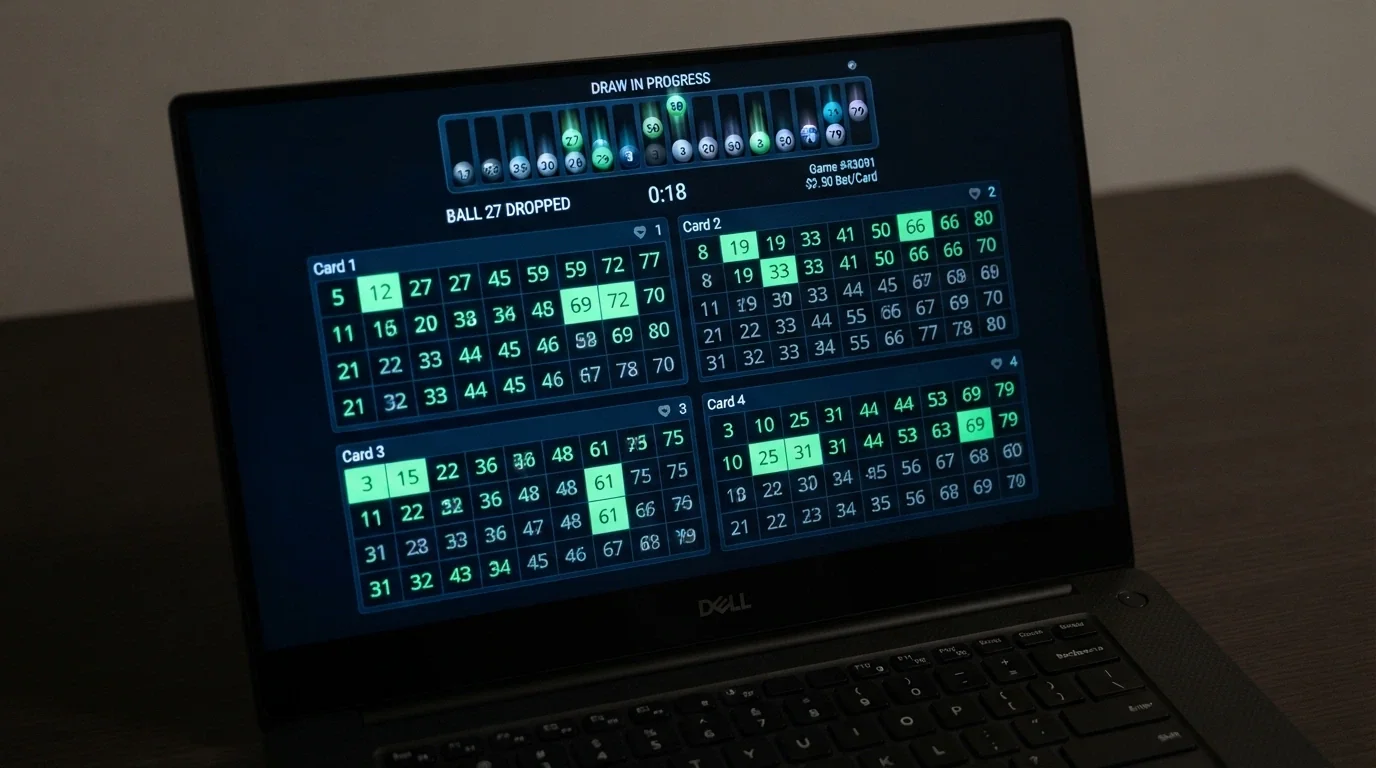
Multi-card keno: playing 4, 7 or 8 cards at once
Multi-card formats let a player run several number sets through the same draw. Keno MultiPlay, the Light & Wonder variant, runs one to four simultaneous draws at 93.55% RTP with a 14,000x top prize. Disco Keno runs one to eight cards at 93.51% RTP, with cards purchasable from $0.25 to $10.00 each.
More cards multiply the action — and the cost — per draw. Four cards at $1 each cost $4 per round. Eight cards at $5 each cost $40. The variance spreads across more number sets, but the budget per draw rises in proportion. A session that runs eight cards at the maximum stake is a session that spends forty times as much per round as a one-card player at the minimum stake.
Super Keno, Power Keno and the multiplier variants
Super Keno changes the rules mid-draw. If the first ball drawn matches one of the player’s picks, every subsequent win is multiplied by four. The format turns the early balls into a multiplier trigger, and a single early catch into a 4x boost on whatever follows.
Power Keno runs a different mechanic. The player purchases up to seven tickets before the draw, and the seven tickets ride the same draw independently. A player who wants seven chances at the same 20-number draw buys seven tickets.
Both variants shift the volatility profile. Super Keno concentrates the variance around the first ball; Power Keno concentrates it around the ticket purchase. Neither changes the underlying RTP band materially, and neither changes the basic fact that the house edge is built into the paytable.
Video keno and jackpot keno: the high-stakes end of the shelf
Video keno runs faster than lounge keno and returns more. House edge on video keno typically sits at 5% to 15%, a sharp drop from the 25% to 40% edge on lounge keno. The 85% to 95% RTP band on online keno is mostly video keno’s RTP band, with the best variants reaching 95% to 96%.
Jackpot keno attaches a progressive top prize to the same draw mechanic. KenoGO Jackpot runs the licensed version to AU$40,000,000 from a AU$1 ticket. Offshore jackpot variants attach smaller progressive pools, but the mechanic is the same: a portion of every ticket funds a top prize that pays rarely and pays large when it does.
The average RTP across mainstream keno sits near 94.5%, with high volatility and a variance index around 150. That is the median experience. The high-RTP titles — VIP Keno at 98.1%, Book of Keno at 97.1% — sit above it. The lounge keno at the bottom of the band sits well below.
Keno-Themed Slots — When the Pokies Meet the Numbers Board
A keno-themed slot is not keno. It is a slot machine wearing keno graphics — numbered reels, keno-ball symbols, a payline highlight, a bonus round that looks like a draw. The game underneath runs on reels, paylines and an RNG, not on a ball draw, and the RTP is set by the slot provider, not by any keno paytable.
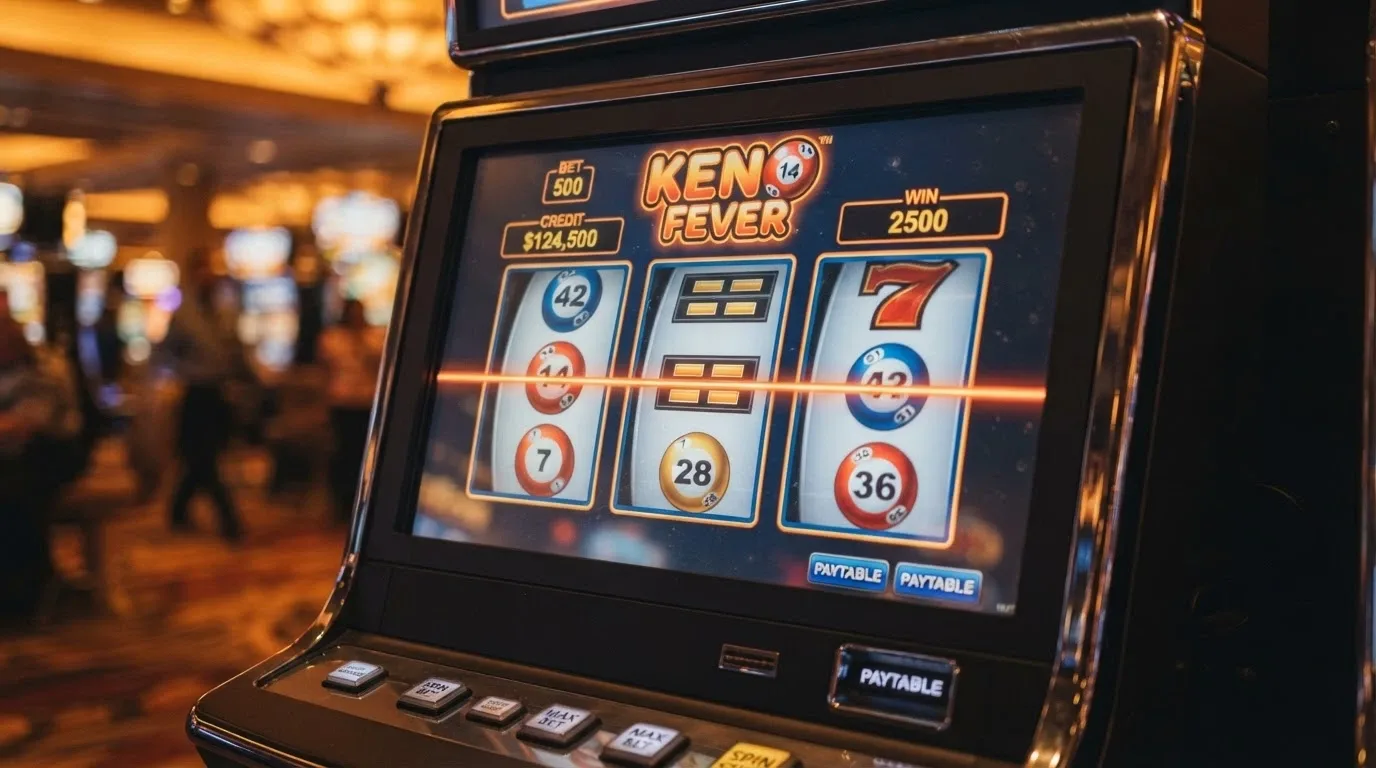
That distinction is what makes a 97.1% Book of Keno a fundamentally different game from a 94% standard keno draw. The slot returns more on average. The slot also behaves like a slot — small wins often, big wins rarely, and a bonus round that can chain or fall flat in ways a keno draw never does.
What makes a keno slot different from a standard pokie
The keno theme is a skin. The reels, the RNG and the paytable are slot mechanics. A player who picks a keno-themed slot over a fruit-themed slot is buying a different visual and a different bonus mechanic; they are not buying a different return profile in the way one keno variant offers over another.
The RTP figures below illustrate the range of what the keno-skin slot market publishes. The widest spread runs from VIP Keno at 98.1% down to Keno by Play’n Go at 92.09% — a six-percentage-point gap between the highest and lowest returns on the shelf.
The keno slot machines worth knowing by name
| Game Title | Provider | RTP | Volatility |
|---|---|---|---|
| VIP Keno | Smartsoft Gaming | 98.1% | — |
| Book of Keno | Evoplay | 97.1% | — |
| Xmas Kenocat | Evoplay | 96.68% | — |
| Keno Deluxe | Realistic | 96.2% | Low |
| The Candy Keno | Mascot Gaming | 95.15% | High |
| Keno MultiPlay | Pixiu Gaming / Light & Wonder | 93.55% | — |
| Disco Keno | — | 93.51% | — |
| Keno | Play’n Go | 92.09% | Variable |
Five of the eight titles have no volatility rating in the data this page could confirm. Three do: The Candy Keno runs high, Keno Deluxe runs low, and Keno by Play’n Go runs variable volatility that shifts with the number picks. A player who values steady losses over the alternative to losing streaks has one obvious choice on this list. A player who wants the volatility at the other end has another.
Free Keno Games Let You Test the Waters — Here’s What the Demo Doesn’t Show
Every featured operator runs a demo mode on its keno games. The numbers on the screen — the RTP, the paytable, the catch probabilities — are the same numbers the real-money game will publish. What the demo does not show is the player on the other side of the screen.

A demo session with unlimited practice credits plays differently from a real-money session. A real-money player reloads reluctantly, chases reluctantly, leaves reluctantly. The demo player reloads freely and leaves when they want to. The RTP band is identical. The decision-making is not.
Demo mode vs real-money play: what the free version hides
The behavioural gap is the lesson the demo does not teach. A demo player who catches two numbers on a ten-spot card and reloads for free is not learning anything about the 93% of draws that pay little or nothing — they are learning the buttons, not the variance. The catch-probability distribution is the same in both modes. The player’s reaction to it is not.
The useful test a demo offers is interface-level: which variant has the buttons where a player expects them, which paytable reads clearly, which keno format the player actually prefers. A session that answers those questions is a session worth running. A session that treats the demo as a predictor of real-money outcomes is a session that has misunderstood what an RNG game is.
Live Keno Brings a Real Drawer to Your Screen, but Not to Every Casino
Live keno exists — a physical ball draw streamed to a player on the other end of a connection, with a real caller announcing the numbers as they drop. It is rarer than live roulette or live blackjack among the featured operators. The exact live-keno availability on each featured operator was not confirmed in this round of research.
What the live format changes is the pace. RNG keno draws instantly. A live draw runs on the operator’s schedule, often every few minutes. A player who wants the social texture of a real draw gets it; a player who wants to play twenty draws in two minutes does not.
The same rules apply — pick one to ten numbers, twenty drawn, paid by catches — and the same RTP bands govern the payout. The variable is the cadence, not the odds. For a player who values the live cadence over the RNG pace, the question is which operator runs live keno, and this page cannot answer that with the data it has.
Crypto Keno Casinos Trade Australian Protections for Bitcoin Deposits
Crypto casinos let a player deposit in Bitcoin, settle in Bitcoin, and withdraw in Bitcoin. The transaction is faster than a bank transfer, the operator often does not require identity documents for small balances, and the house edge is the same as any other casino — except where the operator publishes a higher RTP to attract crypto players. Stake Originals keno, the only crypto keno product on this list with a confirmed RTP, runs at 96%.
The legal frame makes the rest clear. Credit cards and crypto are banned for online wagering in Australia since 11 June 2024. An operator asking for Bitcoin is, by definition, not operating inside Australian rules.
Bitcoin deposits and the payment ban: what a crypto ask tells you
The ban covers credit cards, credit-related products and digital currency. An operator that accepts Bitcoin is not complying with Australian payment rules. The practical consequence is threefold: no PayID, no Osko, no BPAY; no Australian bank acting as intermediary if a withdrawal stalls; and no recourse to an Australian consumer protection body if the operator refuses to pay.
The legal routes for a licensed Australian wagering platform are debit card, bank transfer, PayID/Osko and BPAY. Identity verification is required. A player who wants to use one of those routes cannot use a crypto casino, and a player who wants the protections those routes offer cannot get them at a crypto casino.
The penalty for an operator that fails to enforce the payment ban runs to AU$247,500. The penalty is paid by the operator, not the player. The player who deposits at a crypto casino does so outside the system the penalty is meant to protect.
Keno Rules, Real Odds and the Strategy That Does Not Pretend You Can Beat the House
Keno is a game of pure chance. The house edge is built into the paytable, not the game mechanic. No pick pattern, no spot count, no betting progression changes the long-run return. The strategy that works is the strategy that manages the bankroll.
The rules every keno player needs to know before the first draw
The mechanics are simple. The player picks between one and ten numbers (sometimes up to fifteen) from a field of one to eighty. The game draws twenty balls at random. The player is paid based on how many of their picks — catches — match the draw.
Each ball carries a one-in-eighty chance of being drawn per game. The draws are independent. A ball that did not appear in the last draw is no more or less likely to appear in the next. The pick-and-catch pattern is decoration over an RNG.
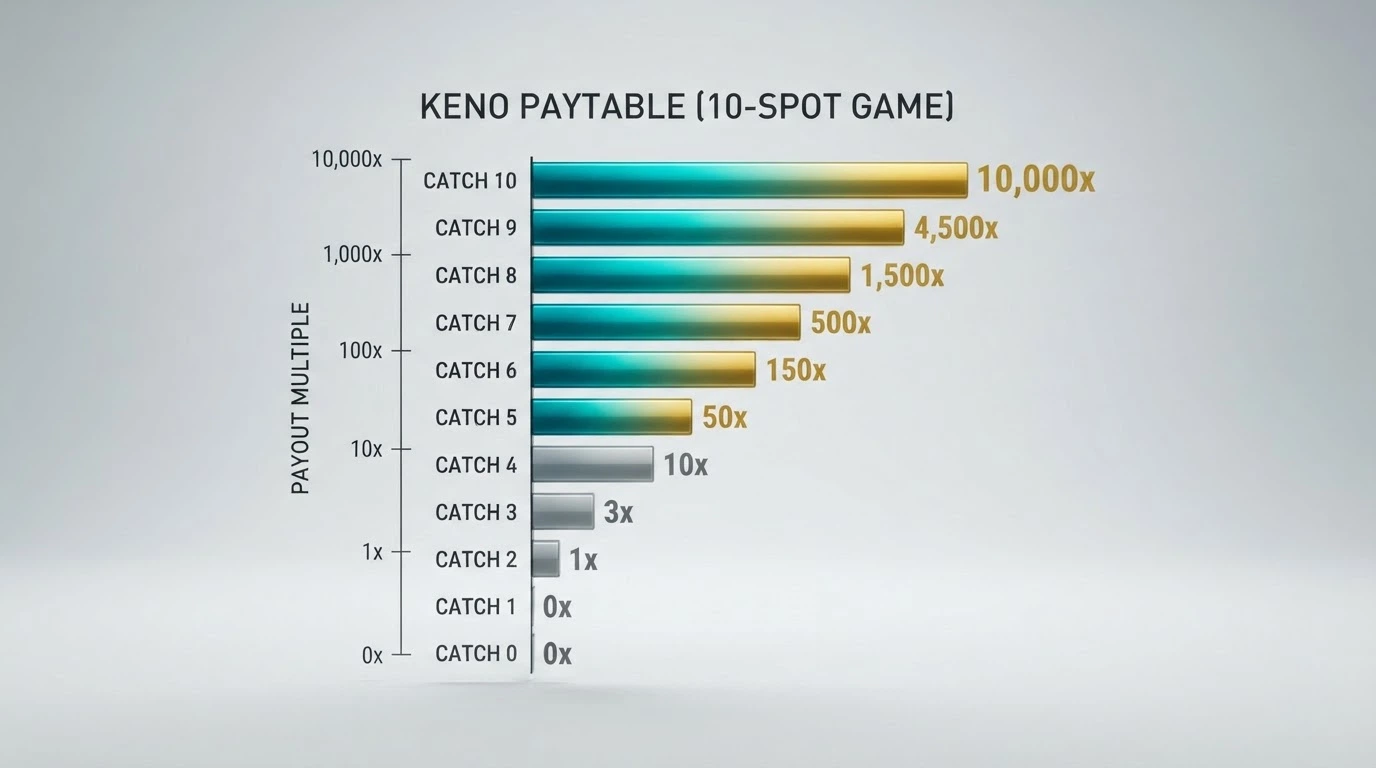
The paytable varies by variant and by spot count. A 1-spot pays 1:1 on a hit. A 10-spot match pays up to 10,000:1. Most catches pay nothing or close to nothing, and the meaningful payouts land rarely.
Keno odds: why most catches pay nothing and what the RTP actually means
The RTP figure on the game page is an average over millions of draws. The session lives in the variance, where the most likely outcomes — two, three or four catches on a ten-spot card — pay little or nothing. Five or more catches in a ten-spot game land less than 7% of the time collectively. Below that threshold, the player is grinding the paytable for small returns.
The best individual titles sit above the average. VIP Keno at 98.1%. Book of Keno at 97.1%. The licensed KenoGO product does not publish a per-format RTP, but operates on a lottery framework with a defined prize structure and a defined take. The mainstream keno average sits near 94.5%, with high volatility and a variance index around 150 — the median experience, not the best-case one.
The honest reading of a 94.5% RTP is that the house keeps 5.5 cents of every dollar wagered, on average, over infinite play. The honest reading of a session is that a player can run above or below that average, with the size of the deviation set by the variance and the session length.
The Law Australian Keno Sites Never Mention
No page in the top search results for “best keno online casino Australia” mentions the Interactive Gambling Act 2001. They present Curaçao-licensed operators as Australian options and omit that online casino is prohibited. This section fills the gap.
The Interactive Gambling Act 2001 and what it actually prohibits
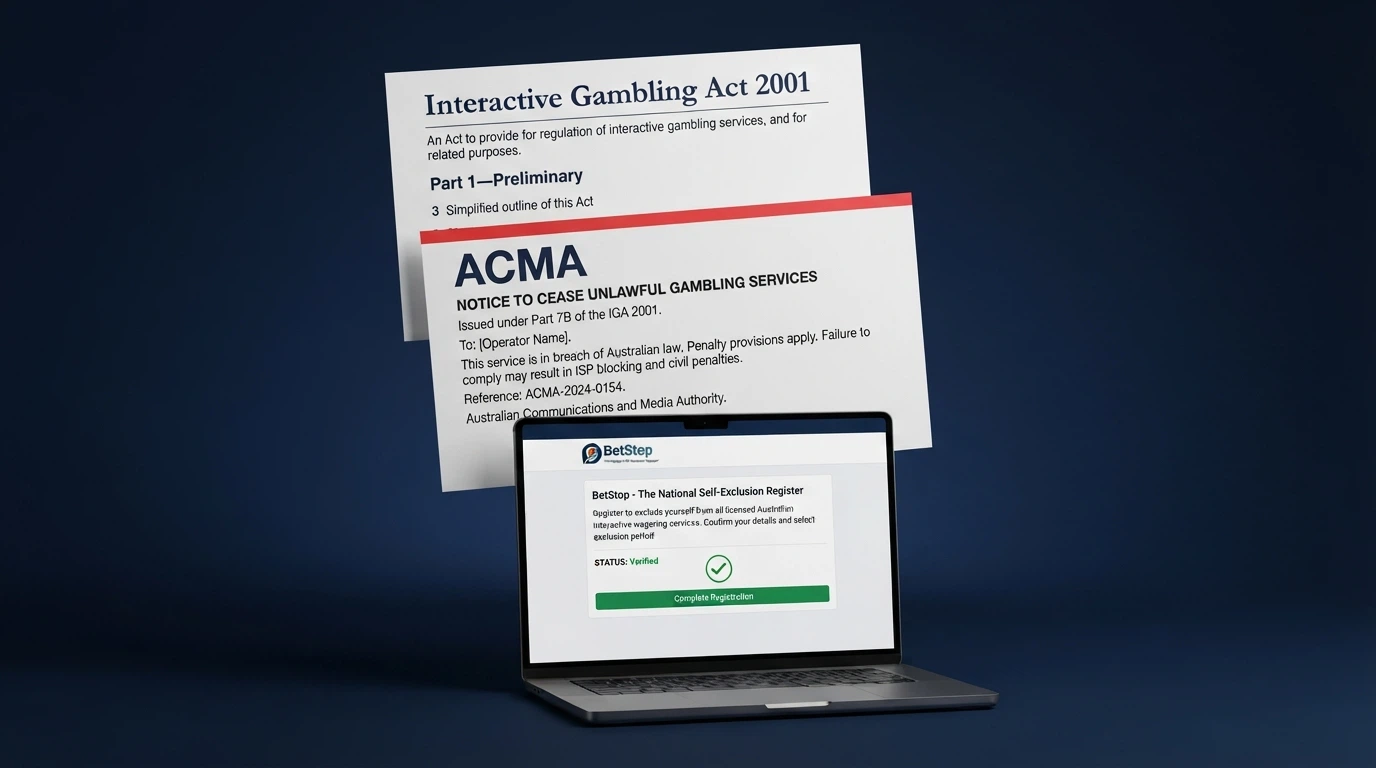
The IGA prohibits providing a prohibited interactive gambling service — which includes online casino games — to a person in Australia. It is an offence. There is no federal or state licence for online casino anywhere in the country, and there is no path for one to be issued. The ACMA, the Australian Communications and Media Authority, is the federal regulator that enforces the prohibition.
The IGA permits three categories of interactive gambling: wagering (betting on racing and sports placed before the event begins), lotteries (including keno as a lottery product, which the IGA names explicitly), and pre-event wagering. In-play sports betting is prohibited.
Since November 2019, the ACMA has blocked 1,564 illegal gambling and affiliate websites and over 225 illegal services have withdrawn from the Australian market since 2017. The penalties for providing a prohibited service run to AU$247,500 for operators that fail to enforce the credit card and crypto payment ban. The individual player is not prosecuted — the IGA targets the provider, not the customer.
The 2026 reform: online keno banned from January 2027
The Interactive Gambling Amendment (Gambling Reform) Bill was introduced on 2 July 2026. Commencement is 1 January 2027. From that date, online keno is prohibited outright in Australia — the licensed lottery product remains, the casino-embedded version does not.
The reform carries advertising restrictions that reshape how wagering services reach Australian players. No more than three wagering ads per hour between 6:00 am and 8:30 pm. A live-sport blackout from 15 minutes before an event until 5 minutes after it ends. No athletes, celebrities or influencers promoting wagering products. No odds broadcasting. No direct marketing of inducements for fourteen days after a customer signs up, three months after a person deregisters from BetStop, and indefinitely for customers identified as at risk of gambling-related harm.
Communications Minister Michelle Rowland has called the growth and availability of online keno and foreign-matched lotteries “particularly concerning”, and described the reform as part of a comprehensive agenda to minimise online wagering harms.
What the ACMA does — and what it cannot do for you
The ACMA blocks illegal gambling and affiliate sites. It enforces the payment ban. It pursues operators, not players. What it cannot do is recover money from an offshore casino, compel a withdrawal, or enforce a bonus term at a Curaçao-licensed operator. No Australian consumer protection body has jurisdiction over an offshore casino, and no offshore casino is connected to BetStop. The licence an offshore operator holds is the licence that matters to the player who deposits there, and the recourse that licence offers is the recourse the player has.
Where to Get Help When the Numbers Stop Being Fun
About 2.1% of Australian adults — roughly 430,000 people — experience problem gambling. The Australian Institute of Health and Welfare put high-risk gambling at 1.8% in 2022. The help infrastructure is free, confidential and one phone call away.
The National Gambling Helpline is 1800 858 858 — free, confidential, staffed 24 hours a day, 7 days a week. Online chat and email counselling are available through Gambling Help Online at gamblinghelponline.org.au. Both are free, both are confidential, and both are staffed by people who understand what a player is calling about.
Setting limits before you play: what the licensed platforms offer
Licensed Australian wagering platforms offer customer-set deposit limits, activity statements, take-a-break and self-exclusion options. The tools exist because the regulator requires them and the licence makes them enforceable. The legal deposit routes — debit card, bank transfer, PayID, Osko and BPAY — come bundled with identity verification and the protections that flow from it.
Offshore casino sites do not offer these tools. A player who wants a deposit limit at an offshore casino is asking an operator that has no Australian obligation to honour it. The gap is the gap between a licensed product and an unlicensed one, and the gap is the reason this page exists.
BetStop: the self-exclusion register that offshore casinos ignore
BetStop — the National Self-Exclusion Register — went live in August 2023. One registration excludes a person from every Australian-licensed online and phone wagering service in a single step. As at 31 July 2026, BetStop had 67,480 registrations, of which 41,290 exclusions were still active — more than 60% of everyone who ever signed up. 78% of registrants were under 40. 38% chose lifetime exclusion.
BetStop covers approximately 150 licensed wagering providers. An offshore casino is not licensed, not connected to the register, and will keep accepting a self-excluded person’s money. A statutory review found a critical regulatory gap allowing Australians to spend up to $1,000 every three minutes on online keno despite being self-excluded from other gambling platforms. That is the single most concrete harm of playing outside the licensed system, and it is the harm the offshore market does not solve.
How We Chose and Ranked These Keno Sites
The operators on this list come from the live search results for this topic and were checked against the ACMA register of blocked services and the Curaçao Gaming Control Board licence registry. The Australian licensed baseline — KenoGO, operated by The Lottery Corporation — is included as the regulatory benchmark. Every offshore operator is included because Australian players encounter it, not because it is licensed to serve them.
The ranking criteria, in the order they matter to an Australian player making a real-money decision, are these: licence status (confirmed licence number versus unconfirmed jurisdiction versus Australian licensed), keno format count and variety, welcome-offer terms and wagering requirements, and RTP data availability per title. No weightings or percentages are assigned. The criteria are qualitative, and the ranking reflects what the data shows — a confirmed Curaçao licence ranks above an unconfirmed jurisdiction, a keno shelf of fourteen formats ranks above a keno shelf of four, a 95% RTP ranks above a 70% lounge RTP.
A reader who disagrees with the order is welcome to use their own weighting. The data behind every cell in the comparison table is in the public record, and the operator’s own terms page is the next place to look.
Your Money, Your Numbers — What You Should Actually Know Before You Play
The gap between what the search promises and what Australian law permits is the gap this page has spent its length laying out. The licensed Australian keno product exists, and it offers a four-format keno game with draws every three minutes and jackpots to AU$40,000,000. The offshore operators exist, and they offer fourteen-format keno shelves, welcome bonuses up to AU$15,000, and no Australian consumer protection.
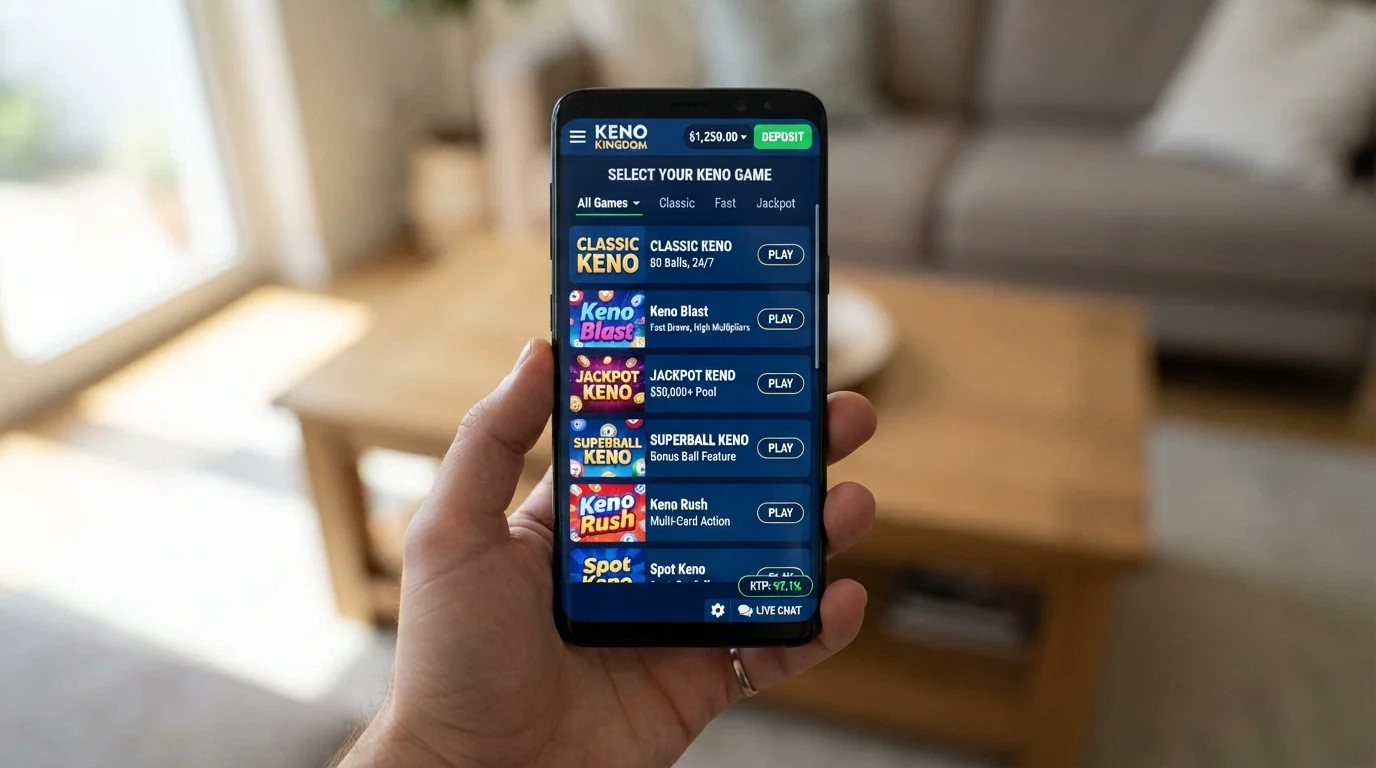
The trade-off is real on both sides. The licensed product offers legality, regulated payouts and BetStop coverage, but no casino-style welcome bonus, no wagering requirement to clear, and no Curaçao-style keno shelf. The offshore sites offer higher RTPs, more formats, and bigger headline numbers, but no recourse if a withdrawal stalls, no BetStop coverage if a player wants to stop, and no guarantee the site is there tomorrow.
The arithmetic behind every welcome bonus is the same arithmetic this page walked through above. A 40x wagering requirement on a bonus is a turnover threshold that has to be cleared before a dollar becomes withdrawable, and the expected loss on that turnover at 95% RTP is 5% of it. A player who treats a welcome bonus as free money is treating the house edge as if it does not exist.
The questions a reader should ask before depositing a dollar are not the questions the lobby asks. Is the operator’s licence jurisdiction confirmed? Does it accept payment methods that are banned in Australia? What is the real cost of the welcome bonus after wagering? What happens to the balance if the site is blocked tomorrow? None of these questions has a one-line answer. Each one has the answer the rest of this page has laid out.
The reader’s own circumstances and risk tolerance are the final filter. The page describes the market. The choice belongs to the reader.
Frequently Asked Questions
Is online keno legal in Australia?
Online casino games — including casino keno embedded in an offshore platform — are prohibited under the Interactive Gambling Act 2001. There is no Australian licence for online casino anywhere in the country. The licensed Australian keno product is KenoGO, operated by The Lottery Corporation under state and territory lottery licences. From 1 January 2027, online keno will be banned outright under the reform passed in 2026. The individual player is not prosecuted; the IGA targets the provider, not the customer.
What are the best online keno games available to Australian players?
By RTP, VIP Keno at 98.1% and Book of Keno at 97.1% lead the keno-skin slot market. In actual keno draws, the Stake Originals variant at 96% RTP is the highest confirmed figure on this list. The mainstream keno average sits near 94.5%, with high volatility. Land-based keno in Australian pubs and clubs returns about 70%, a 25-percentage-point gap to the best online variants.
What is the RTP of online keno and how does it compare to land-based keno?
Online keno returns 85% to 95% on average, with the best variants reaching 95% to 96% and a few keno-skin slots reaching 97% to 98%. Land-based keno in Australian pubs and clubs returns about 70%, a house edge of roughly 30%. Video keno machines in the same venues sit between the two, typically at 5% to 15% house edge. The RTP is calculated as total returned divided by total wagered over infinite play; the figure is an average, not a guarantee of any single session.
How do I deposit and withdraw at an online keno casino from Australia?
Licensed Australian platforms accept debit card, bank transfer, PayID, Osko and BPAY. Credit cards and crypto have been banned for online wagering since 11 June 2024. Offshore casinos accept a wider range, including crypto and sometimes credit cards, but those methods fall outside Australian rules. The deposit route signals the regulatory frame: an operator accepting crypto is not complying with Australian payment rules, and the protections those rules provide do not apply.
What is the difference between classic keno, super keno, and video keno?
Classic keno is the baseline — pick one to ten numbers from a field of eighty, twenty balls drawn, paid by catches. Super Keno adds a multiplier: if the first ball drawn matches one of the player’s picks, every subsequent win is multiplied by four. Power Keno runs multiple tickets on the same draw, up to seven per game. Video keno is the faster, machine-based version with a tighter house edge of 5% to 15%. Jackpot keno attaches a progressive top prize to the same draw mechanic — KenoGO Jackpot runs the licensed version to AU$40,000,000.
Are online keno casinos safe for Australian players?
No Australian licence exists for online casino, so “safe” has to be read as “what protections apply if something goes wrong”. On a Curaçao-licensed operator, the protections are those the Curaçao regulator offers, and they are limited in practice compared with Australian regulation. There is no BetStop coverage offshore. There is no ACMA recourse. A withdrawal dispute is resolved under the operator’s terms and the Curaçao framework, not Australian consumer law. The licensed alternative, KenoGO, sits inside Australian regulation and offers the protections that come with it.
What happens to my money if an offshore keno casino blocks Australian access?
The ACMA has blocked 1,564 illegal gambling and affiliate websites since November 2019. When a site is blocked, Australian players lose access but typically still hold a balance. The ACMA cannot compel the operator to refund the balance, and no Australian consumer protection body has jurisdiction over a Curaçao-licensed operator. The player is left to negotiate with the operator under the operator’s own terms, and money on a blocked site is recoverable only if the operator chooses to return it. The licensed alternative, KenoGO, is not subject to ACMA blocking and removes this risk entirely.
Keno’s legal grey area: lottery product or casino game?
The same word — keno — describes a licensed lottery product and a casino game embedded in an offshore platform, and the law is still catching up.
The IGA explicitly notes that “a keno-type lottery is an example of a lottery”. KenoGO, operated by The Lottery Corporation under state and territory lottery licences, sits on the licensed side of that line. Casino keno — keno games embedded in a Curaçao-licensed casino platform — sits on the prohibited side because the platform is a prohibited service, regardless of the game it offers.
The Australian Government has launched a formal review into online keno and foreign-matched lotteries, examining whether the current Section 8D definitions remain effective against newer digital models. The review is the regulatory answer to a market that has been moving faster than the statute.
Written by the editors at Best Casino Sydney.