
What “Instant Payout” Really Means When You Play from Australia
Online casino is prohibited in Australia. No licence exists — not federally, not in any state or territory. Yet every casino that surfaces in any “best instant payout” search reaches an Australian player from outside the country: Curaçao, Malta, Tobique, the Kahnawake reserve, or an address the operator’s footer only half-explains. The phrase instant payout casino Australia describes a category the regulator does not recognise. What it actually means is an offshore operator that processes cashouts faster than its peers — faster than the bank after it, faster than the card network before it, and faster than any Australian complaints body, which has no jurisdiction over the site in the first place.
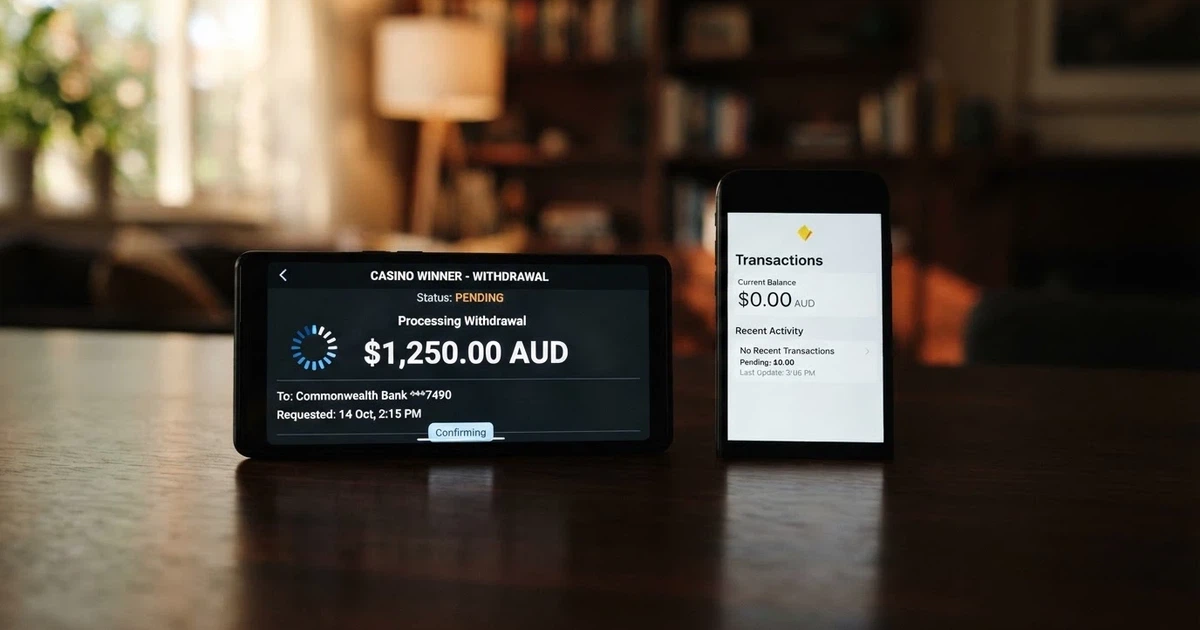
Verified against PayoutVerdict real-money withdrawal tests (February–May 2026), ACMA enforcement data current as at 30 October 2026, and operator licence records where accessible.
Table of Contents
- Why “Instant Payout” Rarely Means What You Think
- Real-Money Play — What Happens When You Hit Withdraw
- Pokies Are Built for Instant Payouts — Here’s Why
- PayID — The One Fiat Rail That Actually Delivers Speed
- Crypto Casinos Cut the Payout Queue — at a Price
- No-Deposit Bonuses with Instant Payout — The Catch Nobody Mentions
- Every “Australian” Instant Payout Casino Is Offshore — Here’s What That Costs You
- The 10 Offshore Casinos Australians Use — Ranked by Verified Payout Speed
- Is Online Casino Legal in Australia? — What the Law Actually Says in 2026
- Responsible Gambling — Tools That Work and the One That Won’t Protect You
- How We Evaluated These Instant Payout Casinos
- Your Money, Your Call — What This Means for Your Next Withdrawal
- FAQ
Why “Instant Payout” Rarely Means What You Think
“Instant” is a marketing word, not a settlement word. It describes the moment an operator clicks “approve” on a withdrawal request — the internal review queue, the anti-fraud check, the bonus-wagering verification. What it does not describe is the time your Australian bank takes to land the funds, or the time the crypto exchange takes to convert USDT into AUD into your offset account. Two clocks. Only one of them belongs to the casino.
At the faster end of the offshore market in testing conducted this year, Wild Fortune cleared a crypto withdrawal in 5 hours 24 minutes on average, BitStarz in 4 hours 18 minutes, and Stake.com in 1 to 2 hours when its Sydney DNS routing cooperated. On the fiat side, SkyCrown’s PayID withdrawals tested at under 15 minutes operator-side. None of these figures, even the best of them, measure the time between “approved” and “spendable in your bank account”. Most PayID cashouts at Australian-facing offshore casinos run 24 to 48 hours end-to-end, with 12 to 18 hours of that consumed by the operator’s own processing queue before the PayID instruction even leaves the building.
The cleanest way to read a casino’s payout-speed claim: take the number they advertise, halve it for the operator’s internal delay, then add a banking-window estimate that the casino has no control over. The result is what your wallet actually sees.
What the Label Actually Promises
When an operator advertises “instant withdrawals”, it is almost always describing its own approval speed — how quickly a staff member or an automated system releases the request from the queue. In testing this year, the actual spread looked like this. Wild Fortune averaged 5 hours 24 minutes across crypto cashouts, including its internal review. BitStarz sat at 4 hours 18 minutes for crypto and ran operator-side processing in 12 to 30 minutes. SkyCrown delivered PayID withdrawals in under 15 minutes in Wildfish’s runs, the fastest fiat figure recorded across the featured set. None of these constitute money in the bank. They constitute the operator’s half of the journey.
The reasonable minimum a player should expect from any “instant” claim at an Australian-facing offshore casino in 2026 is somewhere between 15 minutes and several hours for crypto, and somewhere between an hour and two days for PayID. Anyone promising faster than that is describing a sandbox demo, not a real cashout.
Approval vs Money in Your Account — Two Different Clocks
Operator approval and banking settlement are independent pipelines. The first runs inside the casino, against its own fraud rules, its own bonus-wagering check, and its own KYC queue. The second runs against a payment rail the casino does not own — the New Payments Platform for PayID, the Tron network for USDT TRC20, the Bitcoin mempool for BTC.
In tested PayID cashouts at Australian-facing offshore brands, the typical end-to-end window was 24 to 48 hours. Roughly 12 to 18 hours of that belonged to the operator’s internal review queue, and the remainder to the receiving bank’s PayID batch window. The bank is not slow; it is just doing what the New Payments Platform tells it to do — credit the account during the next clearing window, not instantly. The operator cannot eliminate this delay, and it rarely explains it.
Crypto shrinks the second clock. USDT on Tron (TRC20) confirms in 1 to 3 minutes with network fees under A$2. Bitcoin transactions cost A$3 to A$8 in fees. Ethereum gas at peak US trading hours can hit A$15 to A$25 — a figure that, for a punter withdrawing a few hundred dollars, can be the difference between a worthwhile cashout and an uneconomic one. Solana sits between Tron and Bitcoin on the speed-feasible-cost spectrum, with Rolling Slots recording a fastest cashout of 10 minutes via Solana in independent testing.
The takeaway is that no Australian-facing casino delivers truly instant end-to-end settlement. The crypto rails come closest. Every other method adds hours at minimum, sometimes days.
Real-Money Play — What Happens When You Hit Withdraw
Real-money play and demo play behave differently at the withdrawal screen. A demo account never has to prove who you are, where your money came from, or whether your winnings are real. The moment real AUD or USDT moves into a casino account, the operator’s compliance queue activates. This is the part of the cashout that the marketing page never mentions and that accounts for the single biggest cause of withdrawal delays anywhere in the market: incomplete KYC.
KYC stands for Know Your Customer. It is the verification process by which the operator satisfies itself — and its anti-money-laundering obligations under its offshore licence — that you are who your account says you are. Standard KYC requests a government-issued photo ID, a proof of address dated within three months, and confirmation of the payment method you used to deposit. Operators reach for these documents only when a withdrawal is requested. That is by design. They are not waiting to clear your deposit; they are waiting to clear the money you want to take out.
The fastest way to speed a real-money withdrawal at an offshore casino serving Australian players is to complete KYC before you ever request a cashout. Most operators accept the documents on signup, through a profile page that looks like dead UI until you actually need it. Upload them there. Once the verification stamp is on your account, the operator has no reason to hold your withdrawal for review, and PayID or crypto cashouts approach the figures the marketing pages promised.
Demo-mode operators — sites that let you play without depositing — are a different category entirely. They have no KYC queue because they have no money to release. They are useful for evaluating a game library or testing a site’s mobile layout, and useless for understanding what the cashout will actually feel like.
Games That Pay Out Fastest — What You Play Affects When You Get Paid
Game type interacts with withdrawal speed through the wagering-contribution rule. Every bonus carries a turnover requirement: a multiplier of the bonus amount you must wager before the balance becomes withdrawable. The percentage of each bet that counts toward clearing that requirement depends on the game you play. At most offshore casinos serving Australian players, pokies contribute 100% of each bet toward wagering. Table games and live dealer titles contribute between 0% and 20%, depending on the operator and the title.
The practical effect is that a player trying to clear a bonus on blackjack may move the balance a fraction of the speed of a player clearing the same bonus on a high-RTP pokie. The blackjack player wagers the same nominal amount but only a sliver of it counts. The bonus clock does not pause for game choice — it ticks on the calendar — and the max-bet rule during active wagering (typically A$5 to A$10, with anything over voiding winnings) limits how aggressively a player can chase the wagering target regardless of the game.
Game-provider identity matters too, though less directly. Studios like Pragmatic Play, Push Gaming, BGaming and Hacksaw Gaming are all present in the featured set’s libraries and all run standard 96%ish RTPs. There is no meaningful payout-speed advantage to one provider over another at the operator level. The advantage is in the RTP figure on the title you choose and the volatility profile you accept, which together determine how your balance behaves between deposit and withdrawal.
Pokies Are Built for Instant Payouts — Here’s Why
Pokies dominate the instant-payout conversation for Australian players because they are the game type the offshore casinos’ bonuses are designed around. A 100% welcome match with 40x wagering on pokies has a calculable cost to the operator — the expected loss to the player across the wagering playthrough — and the operator can price that offer because it knows what pokies return on average. Table games and live dealer titles, with their contribution rates of 0 to 20%, are harder to price, so operators either exclude them from bonus play or discount them sharply.

The Australian preference for “pokies” rather than “slots” is more than dialect. It is a category with its own history, its own naming conventions, and a player base that expects Hold & Spin mechanics, free-spin rounds with retriggers, and progressive jackpots denominated in AUD. Offshore sites serving the market use both terms — “pokies” for the titles the audience recognises and “slots” as the umbrella label — and the same games populate both menus.
RTP and volatility are the two numbers that actually decide how a pokie behaves between deposit and withdrawable balance. RTP, return to player, is the long-run percentage of every dollar wagered that the game returns to players as winnings. A 96.50% pokie returns A$96.50 of every A$100 wagered across enough spins to be statistically meaningful. Volatility is the distribution shape: high-volatility games return less frequently but in larger lumps, low-volatility games return more often but in smaller chunks. For a player chasing a withdrawable balance on a bonus, a high-RTP, medium-volatility title is the most efficient compromise — it keeps the balance moving in the right direction most of the time, and it gets the wagering target crossed before the bonus expiry window closes.
The Pokies with the Highest RTP — What Returns More Means for Your Withdrawal
The table below lists the ten highest-RTP pokies in this review. Higher RTP shrinks the wagering hurdle in a meaningful way: a player clearing a 40x bonus on a 96.70% pokie loses 3.30% of every turnover dollar to the house, while the same bonus on a 94% pokie loses 6%. Over A$40,000 in turnover, that is a A$1,080 difference in expected loss — meaningful at any bankroll.
| Slot Title | Provider | RTP | Volatility | Max Win |
|---|---|---|---|---|
| Bigger Bass Splash | Pragmatic Play / Reel Kingdom | 96.50% | High | 5,000x |
| Wolf Gold | Pragmatic Play | 96.01% | Medium | 2,500x |
| Gates of Olympus | Pragmatic Play | 96.50% | High | 5,000x |
| Sugar Rush 1000 | Pragmatic Play | 96.53% | Very High | 25,000x |
| Razor Shark | Push Gaming | 96.70% | Extremely High | 50,000x |
| Gold Rush with Johnny Cash | BGaming | 96.80% | Medium-to-High | 5,624x |
| Aztec Gold | — | 96.00% | High | 9,600x |
| Majestic Express Gold Run | Pragmatic Play | 96.50% | High | 20,000x |
| Pirots 4 | ELK Studios | 94.00% | High | 10,000x |
| Lucky Penny | 3 Oaks Gaming | 96.10% | Medium | 20,000x |
The spread is real but narrow at the top. Five titles sit between 96.50% and 96.80% — the band where most high-quality releases land in 2026. Below that, Pirots 4 at 94% is the outlier, a newer ELK release with a feature-rich expanding grid that costs the player return rate in exchange for the bigger hit potential.
Volatility is where the table actually separates winners from losers. Razor Shark at 96.70% RTP and “extremely high” volatility is a punishing game for a player chasing a bonus — long dry stretches punctuated by occasional large payouts. A player can be technically up on EV after thousands of spins and still bust their balance before the bonus window closes. For a fast-cashout player, medium-to-medium-high volatility is the right shape.
PayID — The One Fiat Rail That Actually Delivers Speed
PayID is Australia’s real-time payment rail, layered on top of the New Payments Platform. It links a bank account to a recognisable identifier — typically a mobile number or an email — and routes transfers through the Osko network, which settles in near-real-time between participating banks. For an Australian-facing offshore casino, PayID is the fastest fiat withdrawal method available in 2026, and it is also the most consistently fast across the operator set.

In Wildfish’s verification runs, SkyCrown delivered PayID withdrawals in under 15 minutes — the fastest fiat cashout in the entire featured set. Hell Spin tested at 25 minutes, Goldenbet at 28 minutes, and Lucky7 at 35 minutes. These figures are operator-side only. End-to-end — including the receiving bank’s PayID batch window — most PayID cashouts at offshore operators run 24 to 48 hours, with around 12 to 18 hours of that belonging to the operator’s internal review. Still faster than bank transfer, faster than card, and a long way ahead of BPAY.
The reason PayID works where other fiat methods fail is that it was designed for real-time settlement between Australian accounts. Banks cannot delay it the way they can hold an international wire. POLi, the previous Australian real-time option for online gambling, shut down on 30 September 2023 after BPay withdrew support. Every operator that still lists POLi as a deposit method in 2026 is running outdated payment documentation, and any player selecting it on a deposit form is likely to find the option non-functional at the cashier.
PayID’s one limitation for offshore play is that not every featured operator lists it as a withdrawal rail. Stake.com, for instance, is crypto-only — no PayID, no AUD accounts, no fiat rail of any kind. For operators that do offer PayID, the practical guidance is to expect the operator’s internal queue to take most of the wait time, and to have the funds in your bank within a working day if KYC is already cleared.
Crypto Casinos Cut the Payout Queue — at a Price
Crypto is the fastest withdrawal rail at any offshore casino serving Australian players. Most crypto payouts clear in 30 minutes or less when network conditions cooperate. The mechanism is straightforward: the casino sends the funds to the player’s wallet address, the network confirms the transaction, and the player converts to AUD through an exchange or holds the position. There is no bank in the loop. There is no PayID batch window. There is no card network imposing a settlement timeline.

The bottleneck in crypto withdrawals is not the network. It is the casino’s own approval queue, which behaves the same way regardless of payment rail. A casino that takes 12 hours to release a PayID request will take 12 hours to release a USDT request — and once released, the crypto leg is minutes rather than hours. In testing this year, Wild Fortune averaged 5 hours 24 minutes end-to-end for crypto, BitStarz 4 hours 18 minutes, and Stake.com 1 to 2 hours when access was not being throttled. None of these figures match what the marketing page promises, but all of them are faster than any fiat option the same casino offers.
The price of that speed is the loss of every safeguard a fiat payment carries. There is no chargeback on a blockchain transaction. There is no bank that can reverse the transfer if the operator turns out to be fraudulent. There is no Australian consumer protection regime that touches a USDT transfer. And the exchange through which a player converts crypto back to AUD is itself a regulated financial entity that may flag the source of funds, freeze the account, or require its own KYC review before releasing the proceeds.
Bitcoin vs USDT vs Solana — Which Network Actually Wins on Speed
Three networks dominate Australian-facing crypto casino withdrawals in 2026. USDT on Tron (TRC20) is the fastest in the testing data: confirmations in 1 to 3 minutes, network fees under A$2, and no banking-side review queue to wait through. Bitcoin is the most widely accepted but the slowest of the three at the network level — confirmations taking longer, fees in the A$3 to A$8 range, and a mempool that can stall under load. Ethereum gas at peak US trading hours can hit A$15 to A$25 per transaction, which makes ETH uneconomic for small withdrawals and a marginal call for medium ones.
Solana sits between Tron and Bitcoin on the trade-off curve. Rolling Slots recorded a fastest verified cashout of 10 minutes via Solana in independent testing. Its fees are lower than BTC or ETH, and its confirmation times are competitive with TRC20. The downside is narrower operator support — not every featured casino in this review offers a Solana withdrawal option, and the ones that do often require the player to specifically select it at the cashier.
For a punter choosing between the three on a single withdrawal, the practical answer is USDT TRC20 unless the operator does not support it. The fee-to-speed ratio is the best of any network an Australian player can use in 2026. Bitcoin is the fallback when the casino offers no TRC20 option. Ethereum is best avoided for withdrawals under A$500 unless the gas market is unusually quiet. Solana is worth selecting if the operator lists it, especially for smaller withdrawals where fees matter more than the network’s brand recognition.
The Downside — No AUD, No Chargeback, No Safety Net
Every safeguard a fiat deposit carries disappears the moment a player funds an offshore casino account in crypto. There is no AUD account — every deposit passes through a crypto exchange or a direct wallet transfer, and every withdrawal returns as crypto that the player must then convert to AUD themselves. There is no chargeback mechanism. A blockchain transaction, once confirmed, is final. There is no Australian consumer body with jurisdiction over the transfer, because the transfer never touched Australian rails.
The legal backdrop sharpens the cost. Credit cards, credit-related products and digital currency have been banned as payment for online wagering in Australia since 11 June 2024. Penalties for non-compliance reach A$247,500. The ban targets licensed Australian wagering operators — there is no licensed Australian online casino to target — but the signal is clear: the Australian government considers crypto wagering transactions outside the regulated perimeter. An offshore casino accepting crypto from an Australian player is doubly outside Australian rules, both on the product prohibition and on the payment ban.
The exchange risk is the part most players miss. A casino withdrawal arrives as USDT or BTC in the player’s wallet. Converting it to AUD requires a crypto exchange — and the exchange is itself regulated under Australian anti-money-laundering law. A player who has been transacting with multiple offshore casinos, who has accumulated balances in different tokens, and who is moving meaningful sums through a single exchange account is a candidate for an exchange-side source-of-funds review. Those reviews are slow, intrusive, and occasionally end with the exchange freezing the account pending further documentation. It does not happen to every player. It happens often enough that anyone moving serious money through crypto should know it can.
No-Deposit Bonuses with Instant Payout — The Catch Nobody Mentions
A no-deposit bonus is exactly what it sounds like: a casino credits a small amount of bonus money or free spins to a player’s account without requiring a deposit first. The marketing language around these offers uses every word in the incentive vocabulary: free, instant, no risk, real money, fast payout. What the marketing does not lead with is the wall of conditions standing between the bonus and a withdrawable balance.

Four conditions, applied in combination, determine whether the bonus ever converts to actual cash. Wagering requirements typically sit in the 30x to 60x range on the bonus amount. Anything above 50x is practically unclearable for most players — the expected loss through the wagering playthrough exceeds the bonus value before the turnover is complete. Maximum withdrawal limits from no-deposit bonuses typically cap at A$50 to A$200. Max bet during active wagering sits at A$5 to A$10, with anything over voiding winnings. And expiry clocks run from 7 to 30 days on the bonus itself, and 3 to 7 days on free-spin winnings.
The arithmetic is unforgiving. Take a A$50 no-deposit bonus at 50x wagering. That means A$2,500 in total turnover before the balance becomes withdrawable. At 96.50% RTP on a typical high-RTP pokie, the expected loss across A$2,500 in turnover is roughly A$87.50 — already more than the bonus value. Add the max-cashout cap of A$100 to A$200, and the player is mathematically behind before the bonus is fully cleared. The expected outcome of a high-wagering no-deposit bonus is that the player loses the bonus money to the wagering playthrough without ever reaching a withdrawable balance.
Take a wider example. Rocket Play’s A$1,000 welcome bonus at 40x wagering, with 96.50% RTP on a typical pokie, requires A$40,000 in turnover. The expected loss on that turnover is A$40,000 multiplied by the 3.50% house edge — A$1,400 in expected losses to clear a A$1,000 bonus. That is the bonus’s real cost in statistical terms: an estimate across many spins under the stated assumptions, not a guaranteed outcome for any single player, but a meaningful average for anyone choosing to claim.
The Wagering Wall — Why Most Players Never See the Money
The mechanics of a typical no-deposit bonus walk through four stages, and most players fail at stage three. Stage one: the bonus lands in the account. Stage two: the player wagers the bonus, attempting to clear the turnover requirement before the expiry clock runs out. Stage three: the player attempts to withdraw a balance that meets the wagering target. Stage four: the cashout hits the casino’s KYC queue, where the verification the player skipped on signup suddenly becomes the gating factor.
The game-contribution trap is what kills most attempts at stage two. The bonus says wagering on pokies contributes 100%. The player plays blackjack because they prefer the game. Every dollar wagered on blackjack contributes maybe 5% to the wagering requirement — the bonus clock runs out long before the target is reached. Pokies are not optional; they are the only path through the bonus at any reasonable pace.
The expiry clock resets everything. A 7-day bonus window on a 50x requirement is mathematically impossible for almost any player to clear, regardless of bet size. The max-bet rule — A$5 to A$10 during wagering, with overages voiding winnings — prevents the player from rushing the wagering by raising stakes. The max-cashout cap takes the rest: a A$5,000 win on a no-deposit bonus becomes a A$100 withdrawal at a casino with a A$100 cap.
The honest framing is that no-deposit bonuses exist to give the player a chance to try the casino, not to deliver a withdrawable payout. The marketing language around “instant payout no deposit” describes a search term the product rarely delivers on. A player who treats the bonus as a free trial of the casino’s software — and reads the terms before claiming — is making the only decision the offer rewards.
Every “Australian” Instant Payout Casino Is Offshore — Here’s What That Costs You
There is no licensed online casino in Australia. No licence exists federally, none exists in any state or territory, and none has existed since the Interactive Gambling Act 2001 came into force. Every casino that markets itself as “Australian” or accepts Australian players without blocking them is doing so from offshore, on an offshore licence, and outside the reach of every Australian regulator, complaints body, and consumer protection law.
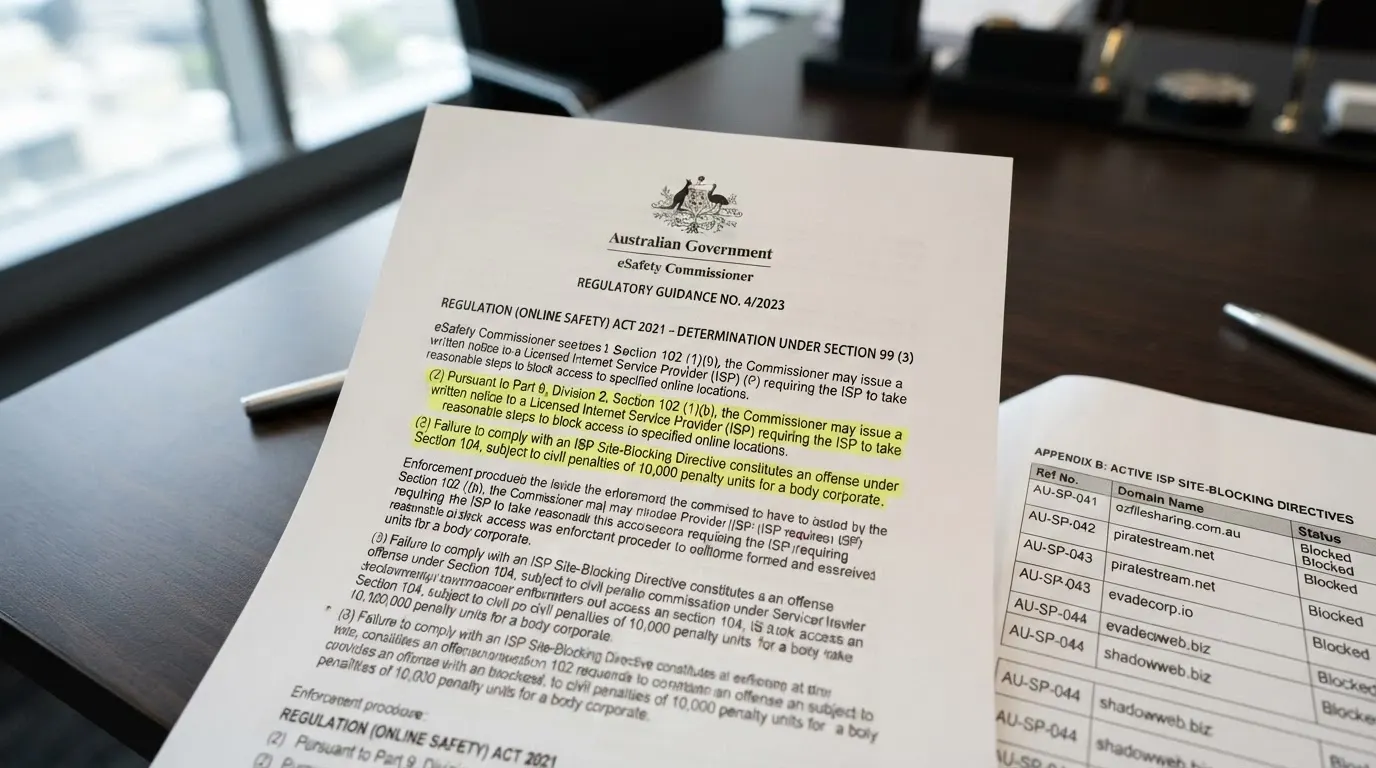
The Interactive Gambling Act 2001 prohibits the provision of online casino games, online pokies, and in-play sports betting to people in Australia. The 2017 amendment closed the loopholes offshore operators had been exploiting and gave the Australian Communications and Media Authority the enforcement and site-blocking powers that now define the regulator’s relationship with the offshore market. As at March 2026, ACMA has directed Australian ISPs to block 1,564 illegal gambling and affiliate websites since the first blocking request in November 2019. More than 225 illegal services have withdrawn from the Australian market since enforcement was strengthened.
The offshore licences behind the operators in this review are real licences, in the jurisdictions that issued them. The Tobique Gaming Commission licence held by Wild Fortune’s parent company is a direct regulator relationship, not a sub-licence. BitStarz’s Curaçao GCA licence is a reformed-format licence under the new GCA framework. Bizzo Casino holds both a Curaçao GCB and a Kahnawake Gaming Commission licence simultaneously, the only dual-licensed operator in the featured set. These are not fake credentials. They are also not Australian credentials, and they do not give the holder any standing before an Australian regulator.
What You Lose — Consumer Protections, BetStop and Recourse
The moment an Australian player signs up to an offshore casino, four protections they would have at a licensed Australian wagering provider disappear. There is no Australian consumer body that can recover a disputed balance — ACMA cannot compel an offshore operator to pay a player. There is no BetStop coverage — the National Self-Exclusion Register binds approximately 150 licensed Australian wagering providers, and an offshore casino is not connected to it. There is no legal recourse if the operator voids a win, closes the account, or refuses a withdrawal on terms the player disputes. And the site itself can be blocked by ACMA at any time, with a balance still on it.
The offshore gap on self-exclusion is the most concrete harm in the set. A player who registers with BetStop is excluded from every Australian-licensed online and phone wagering service in a single step. As at 31 July 2026, 67,480 registrations have been made, with 41,290 exclusions still active. But that exclusion does not reach an offshore casino. A self-excluded player can register and deposit at an offshore site the same day, with no barrier at all. For an instant-payout casino where the product works fast, this gap matters more than for any other product category, because the friction between impulse and deposit is lower.
The ACMA blocking record is the regulator’s bluntest instrument. ISPs block the domains ACMA directs them to block. The operator responds by spinning up new domains on different TLDs. ACMA blocks those. The cycle continues. It is not a strategy that protects individual players; it is a strategy that limits the total addressable surface of illegal gambling to Australian consumers. A player with a balance at an offshore casino that gets blocked can find their account unreachable overnight, with the funds held by an operator they can no longer contact.
The Payment Squeeze — How Australian Banks Are Closing the Door
The payment environment around offshore casinos is tightening from two directions at once. The first was the credit card and crypto ban for licensed online wagering, which commenced on 11 June 2024. Credit cards, credit-related products and digital currency are now banned as payment methods for licensed wagering in Australia, with penalties of up to A$247,500 for non-compliance. The ban targets licensed Australian operators — again, no licensed Australian online casino exists — but its signal is unmistakable: Australian regulators consider crypto wagering transactions outside the regulated perimeter, and any operator accepting them is doubly out of bounds.
The second squeeze is the Interactive Gambling Amendment (Gambling Reform) Bill 2026, which passed Parliament on 19 August 2026 and whose measures commence on 1 January 2027. From that date, banks and payment providers in Australia gain express authority to block transactions to illegal gambling operators. The blocking power sits with the bank and the payment provider, not with ACMA. It applies to deposits and to withdrawals. The reform was passed by Parliament; the infrastructure is being built into Australian banking systems ahead of the commencement date.
The practical meaning for a player holding a balance at an offshore casino on 31 December 2026 is that the route the winnings take to reach an Australian bank account narrows sharply the next morning. PayID withdrawals may continue to flow where the operator’s banking partner is cooperative. Crypto withdrawals to Australian exchanges are likely to receive enhanced source-of-funds scrutiny as the reform comes into force. A player who has been transacting with offshore operators without considering the payment-route risk is making a choice their bank may soon make for them.
The 2026 reform also tightens advertising and inducement rules. From 1 January 2027, wagering advertising is capped at no more than three wagering ads per hour between 6:00 am and 8:30 pm, with a live-sport blackout from 15 minutes before until 5 minutes after a live event. Direct marketing of inducements is prohibited for 14 days after signup, for three months after BetStop deregistration, and indefinitely for at-risk customers. These rules apply to licensed Australian operators; offshore casinos ignoring them face the ACMA blocking process.
The 10 Offshore Casinos Australians Use — Ranked by Verified Payout Speed
The table below ranks the ten offshore brands Australian players actually reach by tested withdrawal performance, with the licence, fastest method, welcome offer and wagering terms alongside. Tested payout speed is the primary signal — a figure taken from PayoutVerdict real-money withdrawal tests (February–May 2026), Pokies Australia PayID verification runs, and Wildfish’s PayID timing checks. Where a verified payout speed is not available for an operator in this run’s data, the cell is left blank rather than estimated. Welcome offer and wagering figures come from the operator’s own bonus page where accessible, and from casino-affiliate confirmation where the operator’s page was not reachable.

| Operator | Offshore Licence | Tested Payout Speed | Fastest Method | Welcome Offer | Wagering |
|---|---|---|---|---|---|
| Wild Fortune | Tobique Gaming Commission #0000064 (Metlait SRL) | 5h 24min (crypto) | Crypto | 100% up to €2,000 + 250 FS across deposits | 45x bonus / 0x FS |
| BitStarz | Curaçao GCA OGL/2024/165/0185 (Gareton B.V.) | 4h 18min (crypto) | Crypto | Up to 5 BTC + 180 FS across 4 deposits | 40x |
| SkyCrown | Offshore, jurisdiction not confirmed | Under 15 min (PayID) | PayID | Up to A$8,000 + 400 FS across 4 deposits | 40x bonus / 30x FS |
| Rocket Play | Offshore, jurisdiction not confirmed | — | — | 100% up to A$1,000 + 100 FS on Aztec Magic | 40x bonus + FS |
| Royal Reels | Offshore, jurisdiction not confirmed | — | — | 100% up to A$500 + 50 FS (1st dep); A$10 no-deposit chip | 30x (1st); 35x (pack) |
| Stake.com | Curaçao (per SERPs) | 1–2 hours (crypto) | Crypto | No welcome bonus | N/A |
| Hell Spin | MGA (per affiliate claim — verify) | 25 min (PayID) | PayID | 100% up to A$500 + 50 FS | 30x deposit + bonus |
| Bizzo Casino | Curaçao GCB 8048/JAZ2017-067 + Kahnawake | — | — | Up to A$7,750 + 175 FS across 4 deposits | 40x |
| Fair Go | Curaçao eGaming (Deckmedia N.V.) | — | — | 100% up to A$200 × 5 = A$1,000 total | 30x–40x |
| Goldenbet | Offshore, jurisdiction not confirmed | 28 min (PayID) | PayID | — | — |
What the table does not say is at least as important as what it does. Four operators carry no verified payout speed in this run’s data — Rocket Play, Royal Reels, Bizzo and Fair Go — and their entries reflect bonus terms and licence information only. Two operators’ offshore jurisdictions were not confirmed in research: SkyCrown and Rocket Play. Both are well-known Australian-facing offshore brands, but the specific licence issuer was not in the available data. Hell Spin’s MGA claim rests on a single affiliate source; the operator’s own site did not corroborate the licence in this run. These are verification states, not defects — they are flagged so a reader can weight the entries accordingly.
Wild Fortune — Tobique-Licensed with 0x Free Spin Wagering
Wild Fortune is the only operator in the featured set with a direct Tobique Gaming Commission licence (#0000064), held by Metlait SRL rather than borrowed through a sub-licence. The distinction matters: a direct regulator relationship gives the operator a primary accountability line to its licence issuer, which most Curaçao GCA-licensed operators do not have under the reformed GCA framework.
Tested crypto withdrawals averaged 5 hours 24 minutes in PayoutVerdict’s runs between February and May 2026 — mid-pack for crypto and not the headline figure of the set. What is the headline is the welcome-offer structure: 250 free spins across the first four deposits carry 0x wagering. That is, the free-spin winnings are credited as real, withdrawable cash with no turnover requirement. In an industry where 30x to 45x is normal and 50x is the practical ceiling, zero is a genuine outlier. The deposit bonuses, by contrast, carry 45x wagering on the bonus amount with a 7-day expiry — among the tighter windows in the set.
The game library runs to 3,800+ pokies across 90+ providers, which puts Wild Fortune in the top tier for catalogue depth among the featured operators. PayID is supported alongside crypto, though the PayID path was not separately timed in the available testing.
The verdict: a strong fit for a player who values free-spin value over deposit-bonus size and is comfortable with the Tobique licence as a regulatory backstop. Less suitable for a player chasing the fastest crypto cashout — Wild Fortune’s 5h 24min average sits behind BitStarz and Stake.com in this run’s data.
BitStarz — The Longest-Running Crypto Casino with a Reformed Curaçao Licence
BitStarz is the longest-running operator in the set, online since 2014, and one of the few Curaçao-licensed brands that has carried the same licence issuer through to the reformed GCA framework — OGL/2024/165/0185, held by Gareton B.V., running on Softswiss. A 2014 track record is unusual in this market and worth noting for the implied operational continuity.
Tested crypto withdrawals averaged 4 hours 18 minutes in 2026 testing, with operator-side processing measured in the 12-to-30-minute band. The end-to-end figure is solid rather than spectacular — faster than Wild Fortune on crypto, slower than Stake.com — but the consistency matters: across the testing window, BitStarz’s variance was lower than most peers.
The library is the deepest in the set: 4,500+ titles across 70+ providers and 19 game categories. The welcome package is up to 5 BTC plus 180 free spins across the first four deposits at 40x wagering on the bonus. The free-spin count is competitive, though the 0x wagering on free spins that Wild Fortune offers is not matched here.
The verdict: a safe middle-of-the-pack pick for a crypto-funded player who values game-library depth and a long operating track record over the fastest possible cashout. BitStarz is the operator a player picks when they want a known quantity, not the one they pick to win a payout-speed contest.
SkyCrown — The Fastest Tested PayID Withdrawal in the Set
SkyCrown holds the single fastest verified PayID withdrawal in the featured set: under 15 minutes in Wildfish’s independent testing. That figure is operator-side — it measures the time from withdrawal request to PayID instruction issued — but it is the cleanest fiat speed on record for an Australian-facing offshore casino in 2026.
The welcome package is the largest in the set by total bonus value: up to A$8,000 plus 400 free spins across the first four deposits, structured as 100% / 75% / 50% / 150% matches with 100 free spins credited on each deposit. Wagering is 40x on the bonus and 30x on free-spin winnings — the 30x on free spins is the friendlier end of the market. Min deposit is A$20, free-spin value is A$0.20 per spin, and the welcome bonus carries a 10x winnings cap on the free spins component. Bonus validity runs 14 days, free-spin validity 7 days.
SkyCrown’s offshore licence jurisdiction was not confirmed in this run’s data — it appears in the table as “Offshore, jurisdiction not confirmed” rather than carrying a licence number. This is a verification gap, not a red flag — the brand is well known in the Australian market — but it is the kind of gap a player should know about before depositing.
The verdict: the right pick for a fiat-funded Australian player who values payout speed over licence transparency. The 30x free-spin wagering is the most generous in the set, and the PayID under-15-minute figure is the headline reason to look at SkyCrown first.
Rocket Play — BGaming Exclusive with a Tight Bonus Window
Rocket Play’s standout figure is not a payout speed — it is the bonus-validity window. Five days from activation. Across the featured set, that is the shortest. Combined with a 100% match up to A$1,000 and 100 free spins on Aztec Magic (a BGaming title), the offer is competitive on paper and punishing in practice: a player who does not clear the wagering in five days loses the bonus.
Wagering is 40x on both the deposit-match bonus and the free-spin winnings. Free spins credit at 20 per day over five days, which means a player has to log in each day to collect the allocation — and once collected, each batch carries its own expiry. Free-spin winnings are capped at A$5,000 max win. Min deposit is A$30 on the first deposit and A$75 on the second for the second-deposit 200% match.
The game library centres on BGaming, Pragmatic Play and Fugaso, confirmed in research. The library size was not separately verified in this run. Like SkyCrown, Rocket Play’s offshore licence jurisdiction was not confirmed.
The verdict: only a fit for a player who can commit to daily logins for five consecutive days to claim and clear the bonus. For anyone whose play pattern is weekend-only or casual, the five-day window turns a competitive welcome offer into a forfeit. Choose on schedule, not on size.
Royal Reels — The Only Operator with a No-Deposit Free Chip
Royal Reels is the only operator in the featured set offering a no-deposit entry point: a A$10 free chip credited on signup, with 30x wagering. The 30x is joint-lowest among no-deposit offers in the Australian-facing offshore market and is meaningfully clearer than the 50x+ offers elsewhere.
The first-deposit match is 100% up to A$500 plus 50 free spins at 30x wagering on the bonus amount — also joint-lowest in the set. The three-deposit welcome pack totals A$2,500 plus 50 spins at 35x wagering on the bonus only, with a A$5 per-spin cap during wagering. The library runs to approximately 1,800 titles, of which roughly 1,400 are pokies-format, with the top 50 most-played pokies averaging 96.4% RTP. Providers confirmed in the catalogue include Pragmatic Play, Play’n GO, Nolimit City and Hacksaw Gaming.
The honest framing: the no-deposit chip is a real entry point and the 30x wagering is a real rate. A player who treats the chip as a chance to test the cashier, the support channel and the KYC flow before depositing is making the most of what the offer rewards. A player who treats the chip as a path to a withdrawable balance is reading the wrong page — the maths of any no-deposit offer at any rate under 50x is still tilted against the player.
Royal Reels’ offshore licence jurisdiction was not confirmed in this run. The verdict is positive on the no-deposit entry and on the wagering rates, neutral on everything else until the licence issuer is verified.
Stake.com — Crypto-Only with No Welcome Bonus and Sub-2-Hour Payouts
Stake.com is the most unusual operator in the set: a crypto-only platform with no AUD accounts, no PayID, no fiat rails of any kind, no traditional welcome bonus or deposit match. The product is built entirely around cryptocurrency deposits, gameplay and withdrawals — which means a player signing up needs to already hold crypto and be comfortable converting AUD into and out of it independently.
The tested crypto payout speed is the headline figure: 1 to 2 hours in PayoutVerdict’s runs, with sub-2-hour sessions observed in some cases. That is the fastest verified crypto cashout in the featured set, and the difference between Stake.com and BitStarz’s 4h 18min average is meaningful at the bankroll level — a punter moving several withdrawals a week saves hours every week across the year.
The trade-off is that there is no welcome bonus. There is no deposit match to convert to bonus cash. The product is the game library and the rakeback structure, not the introductory offer. For a player who has decided to play at offshore crypto casinos and who values cashout speed above everything else, Stake.com is the obvious pick.
The access caveat is real: AU access to Stake.com has been intermittent in 2026, with some Sydney ISPs applying DNS-level blocks. A punter signing up from a Sydney IP may find the site unreachable on certain networks and reachable on others. The Curaçao licence is referenced in search results but was not separately verified in this run.
Hell Spin — MGA-Licensed with 30x Wagering
Hell Spin carries a Malta Gaming Authority licence claim — the only MGA licence assertion in the featured set. The claim is sourced from a single affiliate review and was not corroborated by the operator’s own site in this run’s research. A player weighing Hell Spin should treat the MGA claim as a single-source assertion rather than a verified fact, and should check the MGA public register directly before depositing if the licence status matters to the decision.
The PayID withdrawal tested at 25 minutes in Pokies Australia’s verification runs — the second-fastest PayID figure in the set after SkyCrown’s under-15-minute result. The welcome offer is 100% up to A$500 plus 50 free spins with 30x wagering on both the deposit and the bonus. The 30x is joint-lowest in the set, tied with Royal Reels’ first-deposit match.
The game library was not separately verified in this run. The provider mix includes the standard offshore-market portfolio but specific numbers were not in research.
The verdict: a fit for a player who values the MGA regulator framing and a 30x wagering rate, contingent on the MGA claim being verified against the regulator’s own register. If verification fails, the operator drops from a regulator-credible pick to an unverified-jurisdiction pick with a PayID advantage.
Bizzo Casino — Dual-Licensed with the Largest Withdrawal Cap
Bizzo Casino holds two gambling licences simultaneously — Curaçao Gaming Control Board (8048/JAZ2017-067) and Kahnawake Gaming Commission — the only dual-licensed operator in the featured set. Dual licensing is not double the protection for an Australian player, because neither regulator has Australian jurisdiction, but it does indicate a higher operational compliance bar than most Curaçao-only peers.
The welcome package runs up to A$7,750 plus 175 free spins across four deposits, structured as tiered first-deposit matches (50% / 75% / 125% by deposit amount) plus a second-deposit 50% match with 50 free spins. Wagering is 40x. The max bet during active wagering is A$6.50 — exceeding it voids winnings, a standard but easy-to-trip rule.
The headline figure for the operator is the withdrawal ceiling: A$100,000 maximum per transaction. For a high-roller clearing a large bonus balance in a single withdrawal, no other operator in the set comes close to that figure. For most players, the ceiling is irrelevant — they will never approach it — but its presence signals that the operator is set up for serious bankrolls.
The game library runs to 3,000+ titles from 70+ providers. Tested payout speed was not separately captured in this run’s data.
The verdict: the right pick for a player moving larger sums who values withdrawal-ceiling flexibility over payout speed. The dual licence is a meaningful differentiator if verification confirms both regulator relationships. The 40x wagering and tiered first-deposit structure are competitive without standing out.
Fair Go — RTG-Only with a Modest AU-Focused Package
Fair Go is the smallest and most explicitly Australia-branded operator in the set, running exclusively on RealTime Gaming software and holding a Curaçao eGaming licence through Deckmedia N.V. The “AU-focused” framing is marketing rather than regulatory — there is no Australian licence behind it — but it does shape the product: AUD denominated throughout, deposit methods that suit Australian banking, and a smaller, RTG-only catalogue.
The library runs to 280 games, all from RTG — the smallest catalogue in the featured set. RTG is a long-established studio with a solid pokie catalogue, but 280 titles is a fraction of what the larger operators offer. For a player who knows which RTG titles they want to play and is not interested in browsing thousands of alternatives, the focused library is a feature rather than a limitation.
The welcome package is 100% up to A$200 on each of the first five deposits, totalling A$1,000 — modest compared to the A$8,000-class packages elsewhere, but structured for sustained play rather than a single large bonus. No free spins are included in the welcome pack, which is unusual for the market. Wagering is in the 30x to 40x range based on the operator’s general bonus terms; the exact welcome-offer wagering was not publicly stated in this run.
The verdict: a fit for an RTG-loyal player with a smaller bankroll who prefers a focused catalogue and an Australian-themed brand. Not the right pick for a player chasing catalogue depth, fast crypto payouts, or a headline-grabbing welcome offer.
Goldenbet — PayID Tested at 28 Minutes
Goldenbet makes the set on a single verified data point: PayID withdrawals tested at 28 minutes in Pokies Australia’s runs, competitive with the top PayID performers and faster than most of the offshore market. Everything else about the operator — licence jurisdiction, game library size, welcome bonus terms — was not confirmed in this run’s research.
The honest framing: Goldenbet is included here because its PayID speed is genuinely fast, and a reader comparing withdrawal options deserves to see it. A reader who chooses Goldenbet on the basis of the 28-minute figure is choosing on partial information. The operator’s bonus terms, game library, and licence status should be verified directly before any deposit. What is confirmed is the PayID timing. What is not confirmed is everything else.
Is Online Casino Legal in Australia? — What the Law Actually Says in 2026
Online casino is prohibited in Australia. There is no online casino licence anywhere in the country — not federally, not in any state or territory. The Interactive Gambling Act 2001 makes it an offence to provide online casino games, online pokies, or in-play sports betting to a person physically in Australia. The Interactive Gambling Amendment Act 2017 closed the loopholes offshore operators had been using and gave the Australian Communications and Media Authority the enforcement and site-blocking powers it now exercises.
The current reform cycle closed a chapter this year. The Interactive Gambling Amendment (Gambling Reform) Bill 2026 passed Parliament on 19 August 2026, with its key provisions commencing on 1 January 2027. From that date, banks and payment providers gain express authority to block transactions to illegal gambling operators, and the advertising and inducement rules tighten across the board. The reform does not change the underlying prohibition — that has been in force for 24 years — it adds new instruments around it.
A punter reading the law honestly sees two facts. The product is prohibited. The prohibition is enforced through site blocking, payment restrictions and — from 1 January 2027 — direct transaction blocking by banks. The product is also widely accessible, because offshore operators continue to reach Australian players through domains that have not yet been blocked and through payment routes the banks have not yet restricted. The law says one thing; the market does another.
What Is Licensed and What Is Banned — Know the Difference
Australian gambling law draws a clear line between licensed wagering and prohibited online casino. What is licensed, at state and territory level, is pre-event wagering on races and sport, lotteries, and keno. Licensing is technically state and territory business, but in practice it concentrates in the Northern Territory through Licensing NT and the Northern Territory Racing and Wagering Commission, which acts as the de facto national licensor for online wagering. The minimum age for all commercial gambling in Australia is 18.
What is banned is online casino games, online pokies (the same product, called by its Australian name) and in-play sports betting. The ban covers both the provision of these services to people in Australia and the advertising of them. Offshore operators that accept Australian players are in breach of the prohibition — the Act targets the provider, not the punter, but the provider is the entity the regulator pursues.
The credit card and crypto ban for licensed wagering — in force since 11 June 2024 — adds a payment-rail restriction on top of the product prohibition. Credit cards, credit-related products and digital currency cannot be used to fund licensed online wagering in Australia. Penalties reach A$247,500. Because there is no licensed online casino, the ban in practice constrains the licensed wagering market (sports and race bookmakers), but the signal it sends about crypto wagering is unambiguous.
The Player’s Position — No Prosecution, No Protection
The IGA targets the operator, not the individual player. A punter does not face prosecution for depositing at an offshore casino. Offshore operators lean on this fact in their marketing — “no Australian has ever been prosecuted for online gambling” is a familiar line — and it is technically accurate. It is also a deflection from the four concrete protections the player does not have at an offshore site.
There is no Australian consumer body that can recover a disputed balance. ACMA cannot compel an offshore operator to pay a player who has been denied a withdrawal. There is no legal recourse under Australian law if the operator voids a win, closes the account, or refuses a withdrawal on terms the player disputes. The licence the operator holds — Curaçao, Tobique, Kahnawake, Malta — sits in a jurisdiction the player cannot easily access, with complaint mechanisms that operate in languages and legal systems unfamiliar to most Australians. And the site itself can be blocked by ACMA at any time, with the player’s balance still on it.
The position is honest, not reassuring. The IGA does not prosecute the player. It also does not protect them.
Responsible Gambling — Tools That Work and the One That Won’t Protect You
Australia has a world-class harm-minimisation infrastructure for licensed wagering. BetStop, the National Self-Exclusion Register, has recorded 67,480 registrations as at 31 July 2026, with 41,290 exclusions still active. The National Gambling Helpline on 1800 858 858 operates 24 hours a day, seven days a week, free and confidential, with online chat and email counselling through Gambling Help Online. The Australian Institute of Health and Welfare’s 2022 survey put problem gambling at approximately 2.1% of Australian adults — roughly 430,000 people — with high-risk gambling at 1.8%.

These tools work for licensed wagering. BetStop binds approximately 150 licensed Australian wagering providers — every Australian-licensed online and phone bookmaker — and excludes a registered person from all of them in a single step. The minimum exclusion period is three months; the maximum is lifetime. 38% of registrants chose lifetime exclusion. 78% of registrants were under 40.
The tool that will not protect an offshore casino player is BetStop itself. The register does not connect to offshore operators. A self-excluded player can register and deposit at an offshore casino the same day, with no barrier and no cooling-off period. This is the single most concrete harm of the offshore route for someone who has decided they need to stop gambling: the infrastructure exists, and it does not reach them.
BetStop — What It Covers and the Offshore Gap
BetStop is a national, single-registration self-exclusion system. One application excludes a person from every Australian-licensed online and phone wagering service. The exclusion is enforced by the licensed operators themselves, who are required to refuse service to any registered person and to close any existing accounts. Marketing material from licensed operators is also required to stop: a self-excluded person should not be receiving bonus offers or deposit-match emails from Australian-licensed bookmakers.
The gap is that the offshore casino market sits outside BetStop’s reach entirely. There is no technical mechanism for BetStop to push an exclusion list to an offshore operator, and no obligation on the offshore operator to honour it if it did. A person who registers with BetStop and then deposits at an offshore casino the same day has not defeated their own exclusion — BetStop does what it says it does — but they have found a route around it that the regulator cannot close.
For a player reading this page because they have already decided they want to play at an offshore casino, the offshore gap matters more than the BetStop registration itself. If the decision to play is one you have made confidently, the gap is irrelevant. If it is a decision you are reconsidering — or one you are making on a day when stopping would have been the better choice — the gap is the reason the support tools listed below matter as much as the casino list above.
Practical Help, Real Numbers and Where to Call
The support services available to any Australian affected by gambling harm, regardless of where they play:
- The National Gambling Helpline on 1800 858 858 — free, confidential, staffed 24 hours a day, with online chat and email counselling available through Gambling Help Online.
- Gambling Help Online — free 24/7 live chat and email counselling, the digital front door to the same support network.
- BetStop at betstop.gov.au — self-exclusion from all licensed Australian wagering providers in a single step. Minimum exclusion three months, maximum lifetime.
- Deposit limits, time-outs and take-a-break tools available at most licensed operators and at several offshore operators, set through the responsible-gambling page of the casino account.
- AIHW harm-prevalence data — the Australian Institute of Health and Welfare publishes the national gambling-harm survey every few years, the most recent being 2022.
How We Evaluated These Instant Payout Casinos
The ranking on this page rests on three sources of data. The primary source is PayoutVerdict’s real-money withdrawal tests, conducted between February and May 2026, which produced verified average payout times for crypto at Wild Fortune, BitStarz and Stake.com, and operator-side processing times where they were separable from the end-to-end figures. Secondary sources are Wildfish’s PayID verification runs, which produced the SkyCrown under-15-minute figure and confirmed the PayID speeds at Hell Spin (25 minutes) and Goldenbet (28 minutes), and Pokies Australia’s testing, which added Hell Spin, Goldenbet and Lucky7 PayID timings.
Operator licences were checked against regulator registers where the register was accessible in research. The Tobique Gaming Commission licence held by Wild Fortune’s Metlait SRL is sourced from PayoutVerdict’s verification. BitStarz’s Curaçao GCA licence (OGL/2024/165/0185) is sourced from ClearCasinos. Bizzo Casino’s dual Curaçao GCB and Kahnawake licences are sourced from CasinoNodepositCodes. Hell Spin’s MGA licence is sourced from a single affiliate claim and is flagged as needing verification. SkyCrown’s and Rocket Play’s specific offshore licence issuers were not confirmed in this run’s data, and the table reflects that gap.
Bonus terms and game-library figures come from operator bonus pages where accessible, and from casino-affiliate confirmation where the operator’s page was not reachable in research. Where research did not carry a specific figure — a tested payout speed, a welcome-offer percentage, a wagering multiple — the cell is left empty rather than estimated. Empty cells are information in their own right: they tell the reader what this run’s research did not cover, not what the operator lacks.
What this evaluation did not cover is as important as what it did. It did not test every operator with real-money deposits; only the operators with verified testing data carry a tested-payout-speed figure in the table. It did not verify every bonus term against the operator’s live T&Cs; the headline structure is sourced, but a player claiming any offer should re-read the terms on the day. And it did not confirm the licence status of SkyCrown, Rocket Play or Goldenbet against their respective regulators — the gap is real and flagged, not hidden.
Operators were checked against the official ACMA prohibition and the absence of any Australian online casino licence. The prohibition is the dominant fact about this market. Every ranking on this page sits inside it.
Your Money, Your Call — What This Means for Your Next Withdrawal
Three facts sit at the centre of this page, and an Australian player weighing an offshore casino needs all three visible at once. First, “instant payout” is a marketing term that describes operator approval speed, not money-in-your-account speed; the cleanest fiat figures from independent testing are 15 minutes operator-side and 24 to 48 hours end-to-end, while the cleanest crypto figures are 1 to 3 minutes on the network and 1 to 6 hours once the operator’s queue is included. Second, every casino reaching Australian players is offshore, on an offshore licence, outside the Australian regulator’s reach, and outside BetStop’s reach — there is no licensed Australian online casino to choose instead. Third, the payment environment is tightening: the credit and crypto ban is already in force, and from 1 January 2027 Australian banks gain authority to block transactions to illegal operators, which means the route your winnings take to reach your account may narrow overnight.
The honest trade-off this page describes is simple. A player who chooses an offshore casino is choosing speed over protection. The crypto rails deliver cashouts in hours rather than days, and the PayID rails deliver them in under an hour operator-side. None of that speed comes with an Australian complaints body behind it, a BetStop exclusion that reaches the site, or a banking system that will necessarily release the funds on the other side of the reform.
The practical steps for a player who has decided to play anyway. Complete KYC before depositing — every operator in the set accepts the documents on signup, and uploading them then eliminates the single biggest cause of withdrawal delay. Choose the fastest verified withdrawal method for the operator — USDT TRC20 for crypto, PayID for fiat — and read the bonus terms before claiming any offer, paying particular attention to the wagering multiple, the max-bet rule, the expiry window and the max-cashout cap. The page equips the reader to make an informed choice. No specific brand is recommended. No operator is endorsed here. The list above describes the operators Australian players actually reach; the decision of which one to use is the player’s.
FAQ
Are instant payout casinos legal in Australia?
No online casino is licensed in Australia. The Interactive Gambling Act 2001 prohibits the provision of online casino games, online pokies and in-play sports betting to people in Australia, and no licence exists at federal or state level. Every “instant payout casino” reaching Australian players operates from offshore on a Curaçao, Malta, Tobique, Kahnawake or unstated licence, and is not regulated by any Australian authority. The IGA targets the operator, not the player.
What is the fastest payment method for withdrawals at Australian online casinos?
Crypto is the fastest overall, with USDT on Tron (TRC20) confirming in 1 to 3 minutes and most casino withdrawals settling in under 30 minutes once the operator’s approval queue is included. PayID is the fastest fiat method, with tested operator-side figures from SkyCrown under 15 minutes, Hell Spin at 25 minutes and Goldenbet at 28 minutes; end-to-end PayID times at offshore casinos typically run 24 to 48 hours.
Can I win real money from a no deposit bonus at an Australian casino?
Yes, but the maths is tilted against most players. No-deposit bonuses at Australian-facing offshore casinos typically carry 30x to 60x wagering requirements, max withdrawal caps of A$50 to A$200, max bet limits of A$5 to A$10 during wagering, and expiry windows of 7 to 30 days. At a 50x wagering rate on a A$50 bonus, expected loss through the playthrough exceeds the bonus value before turnover is complete.
Is crypto the best way to get fast withdrawals from Australian casinos?
Crypto is the fastest rail in absolute terms, with sub-30-minute cashouts the norm once the operator approves the request. The trade-off is the loss of every safeguard fiat carries: no chargeback on a blockchain transaction, no AUD account, no Australian consumer protection, and exchange-side source-of-funds scrutiny on the AUD conversion. The 11 June 2024 ban on crypto as payment for licensed wagering signals that Australian regulators treat crypto wagering as outside the regulated perimeter.
What are typical wagering requirements for no deposit bonuses in Australia?
No-deposit bonuses at Australian-facing offshore casinos typically carry wagering requirements in the 30x to 60x range, with anything above 50x practically unclearable for most players. Free-spin no-deposit offers usually grant 20 to 50 spins with withdrawal caps of A$50 to A$100, and free-spin winnings expire in 3 to 7 days. Bonus money itself expires in 7 to 30 days, with max bets during wagering limited to A$5 to A$10.