
$20 Minimum Deposit Casinos in Australia — The Honest Version
Search “20 dollar minimum deposit casino Australia” and you find glossy lists. Most of them rank offshore brands and skip the single fact that matters most: providing online casino games to Australians is prohibited under the Interactive Gambling Act 2001. Every casino a real-money Australian punter reaches at a $20 floor sits offshore, runs without an Australian licence, and offers none of the protections Australian wagering law sets up for residents.
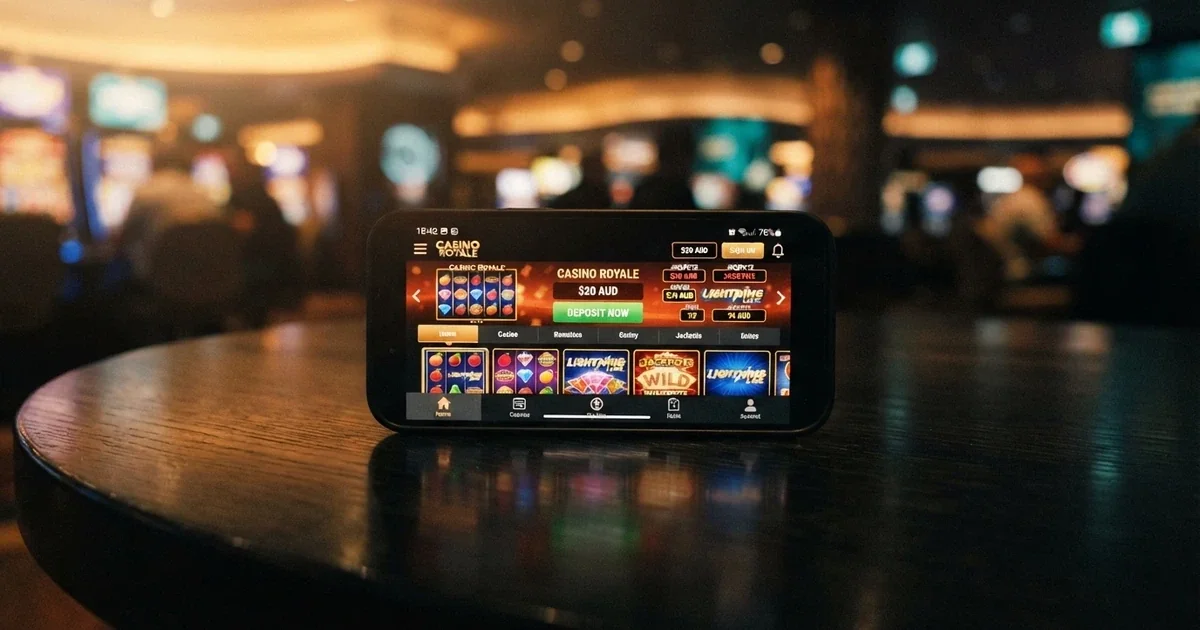
This page works through that gap. It ranks the ten offshore brands Australian players actually access at a $20 minimum, walks through the law every reader needs to read first, lays out which payment methods work and which the law now blocks, and explains what a $20 bankroll actually buys on the reels. The aim is not to send a reader to a brand. It is to give the reader the picture they need before any $20 leaves their account.
Data current as of 30 October 2026, checked against the Interactive Gambling Act 2001 and Australian Communications and Media Authority enforcement records.
Table of Contents
- Why a $20 Minimum Deposit Is the Entry Point Australian Players Actually Use
- 10 Offshore Casinos Accepting $20 Deposits From Australian Players
- The Law Every Australian Needs to Read Before Depositing $20
- Getting Your $20 Deposit to an Offshore Casino — Payment Methods That Work (and Those the Law Blocks)
- The Pokies You Can Play With a $20 Deposit — What a Low-Stakes Bankroll Actually Buys
- Mobile Pokies With a $20 Deposit — Playing on the Go
- New $20 Deposit Casinos and First-Deposit Offers
- Responsible Gambling — The Tools That Protect You and the One That Does Not
- How We Evaluated and Ranked These $20 Deposit Casinos
- What You Should Actually Do Before Depositing Your First $20
- Frequently Asked Questions
Why a $20 Minimum Deposit Is the Entry Point Australian Players Actually Use
The $20 floor sits at the practical intersection of three forces: the price of a real spin, the price of any welcome offer worth claiming, and the price a casual punter is willing to lose in a session. A $5 minimum buys almost nothing worth playing. A $50 minimum prices out the player who only wants an evening on the pokies. $20 clears both bars — it is high enough to trigger the welcome offer most offshore casinos gate at that exact line, and low enough to feel disposable.
What a $20 deposit actually buys depends on the stake. At a minimum bet of $0.20 a spin, $20 covers a hundred spins — long enough for a pokie to show its shape. At $1 a spin, the same twenty dollars lasts twenty spins, and the session is over before any bonus feature is likely to surface. The $20 floor is, in practice, the smallest deposit that lets a casual player feel they have actually played rather than sampled.
It also sits below the bonus eligibility line for many offshore casinos, which often gate match offers and free-spin bundles at exactly $20. Drop in $10 and the welcome offer may not unlock at all. Drop in $50 and you have paid for headroom the casual player will never use. $20 is the line where the offer and the bankroll meet.
What $20 does not buy is Australian consumer protection. The product online casinos sell is prohibited in Australia. No offshore brand holds an Australian licence, and none can. The choice every Australian player faces is not between a licensed casino and an unlicensed one. It is between playing at an unlicensed offshore casino or not playing online casino at all. $20 is the cheapest way to make that choice; it is not the safest.
What a $20 Deposit Actually Unlocks — Thresholds Compared
A $5 deposit buys almost nothing at an offshore casino. Many welcome offers are gated above that floor, and the bankroll itself is small enough that a single bonus round of a high-volatility pokie can wipe it. $10 begins to clear those gates, but most match bonuses still exclude it. $20 is where the offshore casinos tend to draw the line — the welcome offer typically unlocks, the bankroll survives long enough for a session to play out, and the player has enough credit that a single bad spin doesn’t end the evening.

A $50 deposit is where a player starts to think in bonus-clearance terms. A 100% match on $50 is another $50 in bonus credit, and the wagering requirement attached to it usually demands several hundred dollars in turnover. That is real money committed to clearing bonus conditions, and at minimum stakes it takes time. A player who deposits $50 to chase a match bonus is making a different decision from one who deposits $20 to play — they are committing to the bonus, not the pokies.
The $20 floor suits the player whose interest is in the pokies themselves rather than in clearing bonus conditions. It unlocks enough to claim a welcome offer if one exists, but it does not commit the player to a long clearing run. The threshold is the lowest one at which a player can feel they have played seriously without feeling they have signed up to a programme.
Real-Money Play vs Free-Play Demo Mode — What a $20 Deposit Changes
Demo pokies are useful but they are not the game. The reels spin, the bonus features trigger, the on-screen balance rises and falls — and none of it is money. A player who has spent an hour on a pokie in demo mode has watched the game; they have not played it. The volatility they will experience on real money is the same volatility they watched in demo, but the psychological weight of a $0.20 spin that costs actual money is different from the weight of a $0.20 spin that costs nothing.
A $20 deposit closes that gap. The player is now risking real money, and the session acquires a structure demo mode never gives it: a bankroll to manage, a stop-loss a sensible player sets in advance, a target balance at which they will walk away. Demo mode lets a player decide whether they like a pokie. Real-money play lets them decide whether they like what the pokie does to their evening.
The other thing a $20 deposit changes is jurisdiction. Demo mode is what the pokie studio publishes — same RTP, same volatility, same reels. Real-money play at an offshore casino is what the offshore casino serves, on its own terms, to an Australian player the Australian regulator cannot reach. The reels may be the same; the framework around them is not.
10 Offshore Casinos Accepting $20 Deposits From Australian Players
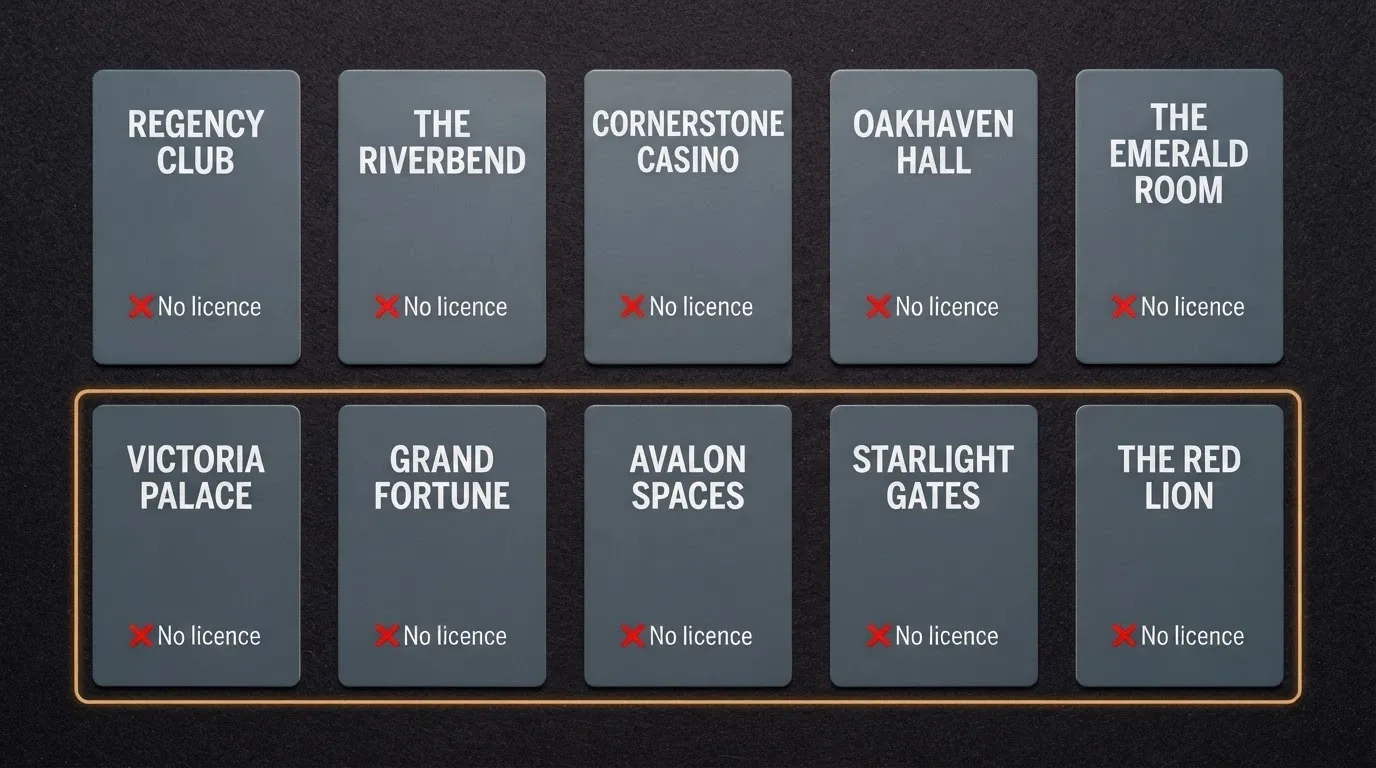
There is no Australian-licensed online casino. None can exist under the Interactive Gambling Act 2001. The ten brands below are the offshore casino operators with the largest Australian player bases — the ones a $20-deposit player in Australia is most likely to find, sign up with, and play at. Every one operates outside Australian law. None is connected to BetStop. None offers the consumer protections a player would have at an Australian-licensed wagering operator.
The table summarises the ten brands by the only two facts that matter for the decision a player is about to make: whether the casino holds an Australian licence, and whether the casino is connected to BetStop. Market position within this set reflects Australian player traffic — how many Australian residents are reaching each brand — not bonus size, not game catalogue, not payment speed. A brand’s position in the ranking reflects how visible it is to Australian players, not whether it is the right one for any individual reader.
| Operator | Australian Licence? | BetStop Connected |
|---|---|---|
| Rocket Play | No — offshore | No |
| Skycrown | No — offshore | No |
| Royal Reels | No — offshore | No |
| WinSpirit | No — offshore | No |
| Stake | No — offshore | No |
| Rainbet | No — offshore | No |
| Scream Casino | No — offshore | No |
| FairGO | No — offshore | No |
| Bizzo Casino | No — offshore | No |
| Rocket Casino | No — offshore | No |
What this table does not say is what welcome bonus each brand runs, what the wagering multiple is, what the maximum cashout is, or what game providers the casino carries. Those details are volatile, change month to month, and could not be verified for this page from authoritative sources. Any specific figure attached to a particular brand’s welcome offer on this page would be invented. The honest answer to “what does Brand X offer” right now is to check the brand’s own terms page at the moment of signing up.
Rocket Play
Rocket Play sits at the top of this ranking by Australian player traffic — more Australian residents reach this offshore brand than any other casino on the list. That makes it the most likely first stop for a $20-deposit player who has not already chosen a brand, and the most likely place an Australian punter signs up without realising they have signed up with an unlicensed operator.
The brand’s market position is real but it does not convert into a recommendation. High traffic among Australian players is not a quality signal — it is a reach signal. Rocket Play is where many Australian players go because it is the most visible, not because it is the safest or the most generous. A player who finds Rocket Play at the top of a search result is finding the brand with the largest Australian footprint, which is also the brand the ACMA’s enforcement machinery is most likely to know about.
What a $20 deposit buys at Rocket Play is, in principle, the same thing it buys at any other offshore casino at this floor: access to the casino’s pokie catalogue, eligibility for whatever welcome offer the brand is currently running, and a session measured in dozens to low hundreds of spins depending on stake size. The actual specifics of the welcome offer — match percentage, wagering multiple, cashout cap — were not verifiable for this page. The category of experience is the same as the other nine brands in this set: offshore, unlicensed in Australia, and outside BetStop.
For a $20-deposit player, Rocket Play is the most-accessed offshore option in Australia. It is also, by virtue of that access, the most likely to draw enforcement attention. That is not an argument for or against the brand — it is a fact about where the brand sits in the market.
Skycrown
Skycrown is the second-most-accessed offshore casino among Australian players. The brand has a sizeable Australian footprint, though smaller than Rocket Play’s, and is the next most likely place a $20-deposit player will land if they bypass the market leader.
Skycrown’s standing is that of a sizeable alternative rather than a smaller copy of the leader. The brand carries the same fundamental profile as every operator in this ranking: offshore, no Australian licence, not connected to BetStop, no Australian consumer protection framework. A player who chooses Skycrown over Rocket Play is making a choice between two offshore casinos of comparable category, not a choice between licensed and unlicensed.
What a $20 deposit unlocks at Skycrown follows the same pattern as the wider set. Welcome-offer specifics were not verifiable for this page from authoritative sources. The bankroll mechanics — the spin count at minimum stakes, the session length at higher stakes — apply equally here. A player reading this who plans to deposit $20 at Skycrown should plan to check the brand’s own current terms before claiming any welcome offer.
The verdict on Skycrown is that it sits where its traffic rank puts it: the second-most-accessed offshore casino among Australian players, with the same gap between itself and the licensed Australian market that every brand on this page carries.
Royal Reels
Royal Reels sits a step below the top two. The brand has a smaller Australian player base than Rocket Play or Skycrown but a meaningfully larger one than most of the rest of this set. It is a mid-tier offshore casino by Australian traffic, with a recognisable Australian-facing brand presence.
The brand profile fits the rest of this ranking. Offshore, unlicensed in Australia, not connected to BetStop, no recourse to Australian consumer protection if a withdrawal is delayed or a bonus term is interpreted against the player. The welcome offer currently running at Royal Reels could not be verified for this page from authoritative sources; the category of offer — match bonus, free spins, or a combination — is the same pattern most offshore casinos at this floor run.
What Royal Reels offers a $20-deposit player is mid-tier visibility among Australian players. It is a brand that has carved out a recognisable position in the Australian-facing offshore market without reaching the scale of the top two. A player who chooses Royal Reels is choosing one of the more established mid-tier offshore options — still offshore, still outside Australian law, still without BetStop coverage.
The honest verdict is that Royal Reels is a legitimate part of this set by Australian player traffic. It is not a safer option than Rocket Play or Skycrown — none of these brands are safer than any other, because none is licensed in Australia at all.
WinSpirit
WinSpirit is a smaller but growing offshore brand in the Australian-facing market. Australian player traffic at this brand sits below the top three but above the bottom of the ranking. It is a brand a $20-deposit player will encounter on comparison pages and in search results, though less frequently than the top-tier names.
What the brand offers a $20-deposit player follows the same offshore-casino pattern as the rest of this set: a pokie catalogue, some form of welcome offer at the $20 floor, and the same lack of Australian consumer protection every operator in this ranking carries. The current welcome offer could not be verified from authoritative sources; the wagering multiple, cashout cap and validity window are not stated on this page because they could not be confirmed.
WinSpirit’s appeal is that of a smaller, more recent brand in the Australian-facing offshore market. A player who lands on WinSpirit is likely to find a casino with a less crowded lobby than the market leaders, and a welcome offer designed to attract exactly the kind of player who has not yet chosen a brand. The same offshore-status caveat applies in full: unlicensed in Australia, not connected to BetStop, no Australian recourse.
The verdict on WinSpirit is that it is a smaller brand in this ranking by Australian player traffic. It is not a recommendation — none of these are — but it is a real option a $20-deposit player will encounter.
Stake
Stake is a globally recognised gambling brand with a substantial Australian audience. The brand is known well beyond Australia and carries an international profile that the rest of this ranking does not match. For an Australian punter who has heard of Stake and is looking for a $20-deposit casino, the brand is a familiar name in an unfamiliar market.
Stake’s category is the same as every brand on this page: offshore, no Australian licence, not connected to BetStop. The international recognition does not change the legal status. A player who deposits $20 at Stake from Australia is depositing at an offshore casino that the IGA 2001 prohibits from providing the service, and Stake has no greater Australian-law protection than any other operator on this list.
What Stake offers a $20-deposit player is a brand-name entry into the offshore casino market. The welcome offer specifics are volatile and not verifiable for this page. The pokie catalogue at Stake runs into the thousands; the brand’s international reputation is built on a broad game library and a payment setup that accepts crypto. For an Australian player, crypto is a banned payment method for online wagering as of 11 June 2024 — using it at an offshore casino does not change that.
The verdict on Stake is that it is the most internationally recognised brand in this ranking. It is not licensed in Australia. The brand recognition is a familiarity signal, not a safety signal.
Rainbet
Rainbet is one of the smaller offshore casinos in this ranking by Australian player traffic. The brand has an Australian-facing presence but operates well below the scale of the top names. A $20-deposit player is more likely to encounter Rainbet through a specific search than through general brand visibility.
Rainbet’s profile matches the rest of this set: offshore, unlicensed in Australia, not connected to BetStop. Current welcome offer details at Rainbet are also unavailable. The smaller scale means the brand is less likely to be the subject of ACMA enforcement action than the market leaders, though “less likely to be blocked” is not the same as “safer to play at”.
The verdict on Rainbet is that it is a smaller offshore casino in this ranking. It sits in the Australian-facing offshore market at a lower traffic tier than the top brands. None of the offshore-status caveats change: no Australian licence, no BetStop coverage, no Australian consumer protection.
Scream Casino
Scream Casino is a smaller offshore brand in this ranking, with a niche Australian audience. The brand sits toward the lower end of this set by player traffic — a $20-deposit player is more likely to find Scream Casino through a specific comparison page or affiliate link than through general market visibility.
Scream Casino’s profile follows the same offshore-casino pattern as every brand on this page. No Australian licence, no BetStop coverage, no Australian consumer protection. The welcome offer could not be verified from authoritative sources. The smaller scale is not a meaningful differentiator within the offshore market — a smaller offshore casino is still offshore, still unlicensed in Australia, still outside BetStop.
The verdict on Scream Casino is that it is one of the smaller offshore casinos Australian players access. The same caveats apply as to every other brand on this list.
FairGO
FairGO carries a name that speaks directly to the Australian market. The brand has built its positioning around Australian-facing identity, and that positioning shows in the brand’s name, its language, and the way it markets to Australian players. For a $20-deposit player who notices an Australian-coded name on a comparison list, FairGO is the obvious read.
FairGO’s positioning as an Australian-facing brand does not change its legal status. The brand is offshore, unlicensed in Australia, not connected to BetStop, and offers none of the protections an Australian-licensed wagering operator would offer. The Australian-facing brand identity is a marketing choice, not a regulatory one — no Australian regulator has licensed FairGO, because no Australian regulator can.
What FairGO offers a $20-deposit player is the same category of offshore casino experience as the rest of this set, with a brand identity that may feel more familiar to an Australian player than the international names above it. Welcome offer specifics could not be verified from authoritative sources for this page. The smaller market position relative to the top brands reflects lower Australian player traffic, not a different legal status.
The verdict on FairGO is that it is an Australian-facing offshore casino. The familiar name is a marketing signal, not a licensing signal.
Bizzo Casino
Bizzo Casino is a compact offshore brand in the Australian-facing market. The brand sits near the bottom of this ranking by Australian player traffic — present in the market but not a market leader. A $20-deposit player is more likely to encounter Bizzo Casino through an affiliate list or a comparison page than through general brand recognition.
Bizzo Casino’s profile matches the rest of this set: offshore, unlicensed in Australia, not connected to BetStop, no Australian consumer protection framework. The welcome offer currently running at Bizzo Casino could not be verified from authoritative sources for this page. The smaller scale is the only meaningful differentiator within the offshore market, and it does not change the legal status.
The verdict on Bizzo Casino is that it is a smaller offshore casino in this ranking by Australian player traffic. The same legal caveats apply as to every other brand on this page.
Rocket Casino
Rocket Casino shares naming territory with Rocket Play but operates as a separate brand. The two are not the same casino; they share a “rocket” naming convention and a position in the Australian-facing offshore market, but they are distinct operators with distinct terms, distinct lobbies and distinct welcome offers. A player who confuses the two will not find what they were looking for.
Rocket Casino sits at the smaller end of this ranking by Australian player traffic — present, but well below the scale of the market leaders. The brand profile follows the same offshore-casino pattern as every operator on this page: no Australian licence, no BetStop coverage, no Australian consumer protection. The welcome offer could not be verified from authoritative sources.
The verdict on Rocket Casino is that it is a separate brand from Rocket Play, not a smaller version of it. A player who reaches Rocket Casino expecting Rocket Play will find a different casino with a different lobby, different terms and a different welcome offer. The same offshore-status caveats apply.
The Law Every Australian Needs to Read Before Depositing $20
The single most important fact about $20 deposit casinos in Australia is the one most comparison pages skip: providing online casino games to Australians is illegal. The Interactive Gambling Act 2001 prohibits it. The Interactive Gambling Amendment Act 2017 closed the loopholes offshore operators were using and gave the ACMA the power to block them. No online casino holds an Australian licence, because no online casino can.

The table below shows what is and is not legal under Australian gambling law, and what the key restriction is for each category. The licensed product set is narrow: pre-match sports wagering, lotteries and keno. The prohibited product set is wider: online casino, online pokies, in-play sports betting. The offshore casino market — every brand on this page — falls entirely in the prohibited column.
| Product Category | Legal in Australia? | Regulator | Key Restriction |
|---|---|---|---|
| Online casino games | No — prohibited | ACMA | Providing to AU residents is an offence under the IGA 2001 |
| Online pokies (slots) | No — prohibited | ACMA | Providing to AU residents is an offence under the IGA 2001 |
| In-play sports betting | No — prohibited | ACMA | Providing to AU residents is an offence under the IGA 2001 |
| Pre-match sports wagering | Yes — licensed | NTRWC / state regulators | Operator must hold an Australian wagering licence |
| Races wagering | Yes — licensed | NTRWC / state regulators | Operator must hold an Australian wagering licence |
| Lotteries and keno | Yes — licensed | State and territory regulators | Operator must hold an Australian lottery licence |
The legal categories do not overlap. An offshore casino is not a partially-licensed product; it is a prohibited one. The fact that an offshore casino accepts Australian players does not mean the casino is legal in Australia. The fact that a casino accepts a PayID deposit from an Australian bank account does not mean the casino is licensed in Australia. The framework that determines legality is the IGA 2001, and under it every casino on this page is on the prohibited side of the line.
The IGA 2001 — Why Every Casino on This Page Operates From Offshore
The Interactive Gambling Act 2001 makes it an offence to provide a prohibited interactive gambling service to a person in Australia. Online casino games, online pokies and in-play sports betting are prohibited interactive gambling services. The penalty applies to the provider — the company running the casino, not the player sitting at it. A punter in Australia who deposits $20 at an offshore casino has not committed an offence under the IGA. The casino offering them the service has.
The 2017 amendment closed the loopholes offshore operators had been using. Before 2017, several offshore brands structured their Australian-facing operations to argue they fell outside the IGA’s reach. The Interactive Gambling Amendment Act 2017 ended those arguments and gave the ACMA the enforcement tools it now uses — formal warnings, civil penalty proceedings, and the power to direct Australian ISPs to block illegal sites.
The framework has one practical consequence for any Australian player considering a $20 deposit: no consumer protection. The IGA targets the provider, and once a player is at an offshore casino, they have stepped outside any framework that would protect them. A refused withdrawal cannot be appealed to the ACMA. A voided bonus cannot be disputed through Australian consumer law. A blocked site cannot be reported for return of funds, because the funds were never held under Australian supervision in the first place.
The IGA does not cap deposits, losses or stakes, because the product those caps would govern is banned outright. Australia’s approach to online casino is not to license and regulate; it is to prohibit and enforce. Every $20 deposit at an offshore casino is a deposit into a product the law says should not exist.
ACMA Enforcement — 1,564 Sites Blocked and Counting
The ACMA has directed Australian ISPs to block 1,564 illegal gambling and affiliate websites since November 2019. More than 225 illegal services have withdrawn from the Australian market since 2017 enforcement was strengthened. Those are the headline numbers, and they tell a story most comparison pages do not tell: the offshore casino market is not just operating outside Australian law — it is operating in active conflict with the regulator that enforces it.
Enforcement works through three channels. Formal warnings to operators that the ACMA considers in breach of the IGA. Civil penalty proceedings against operators that continue after a warning. ISP-level blocking of sites the ACMA has determined are providing prohibited services to Australians. Each channel takes time, and the ACMA’s enforcement record shows the regulator uses all three.
What blocking means for a player is straightforward. A blocked site becomes unreachable through Australian ISPs. A player with a balance at a blocked site cannot access the site, cannot withdraw the balance through the normal interface, and has no Australian framework that will help them recover funds. DNS-level blocking is not unbeatable — a determined player can route around it — but the ACMA’s blocking record is not aimed at the determined player. It is aimed at the casual one who has not yet committed, and the casual player is exactly the audience this page is written for.
The ACMA’s own statement is unambiguous. “Providing a prohibited interactive gambling service to a person in Australia is illegal, and the ACMA pursues it.” The market a $20-deposit player is about to enter is one the regulator has spent seven years and over 1,500 blocks trying to shut down.
What the 2026 Gambling Reform Changes From 1 January 2027
The Interactive Gambling Amendment (Gambling Reform) Bill 2026 passed Parliament on 19 August 2026. Its measures commence 1 January 2027. This is law with a start date, not speculation. The package is the largest reform of Australian gambling advertising and payments in a decade.
The advertising caps are the most visible change. From 1 January 2027, wagering advertising on television and radio is limited to no more than three ads per hour between 6:00 am and 8:30 pm. A live-sport blackout bans wagering ads from fifteen minutes before an event until five minutes after it ends. Athletes, celebrities and influencers are barred from promoting wagering products outright. Radio ads are banned during school drop-off and pick-up times. Broadcasting sporting odds during play is banned entirely.
The payments change is the one with the most direct impact on this page. From 1 January 2027, banks and payment providers gain express authority to block transactions to illegal gambling operators. A $20 PayID deposit to an offshore casino is a transaction to an illegal gambling operator. A bank exercising the new authority can refuse to process it. The reform does not require banks to block — it gives them the power to do so.
The inducement restrictions are aimed squarely at the welcome offers offshore casinos use to attract Australian players. From 1 January 2027, direct marketing of inducements is prohibited for fourteen days after a customer signs up, for three months after a person deregisters from BetStop, and indefinitely for customers identified as at risk of gambling-related harm. An offer that lands in an Australian player’s inbox the morning after their first $20 deposit is, from January 2027, in breach.
What the reform does not change is the core prohibition. Online casino remains illegal to provide to Australians. The reform strengthens enforcement and tightens the framework around it; it does not legalise the product. Every brand on this page is still offshore, still unlicensed in Australia, still outside BetStop.
Getting Your $20 Deposit to an Offshore Casino — Payment Methods That Work (and Those the Law Blocks)
The payment methods that work at an offshore casino are not the same as the payment methods Australian law permits for licensed wagering. The list below shows what an Australian $20-deposit player can actually use, and what the law blocks:
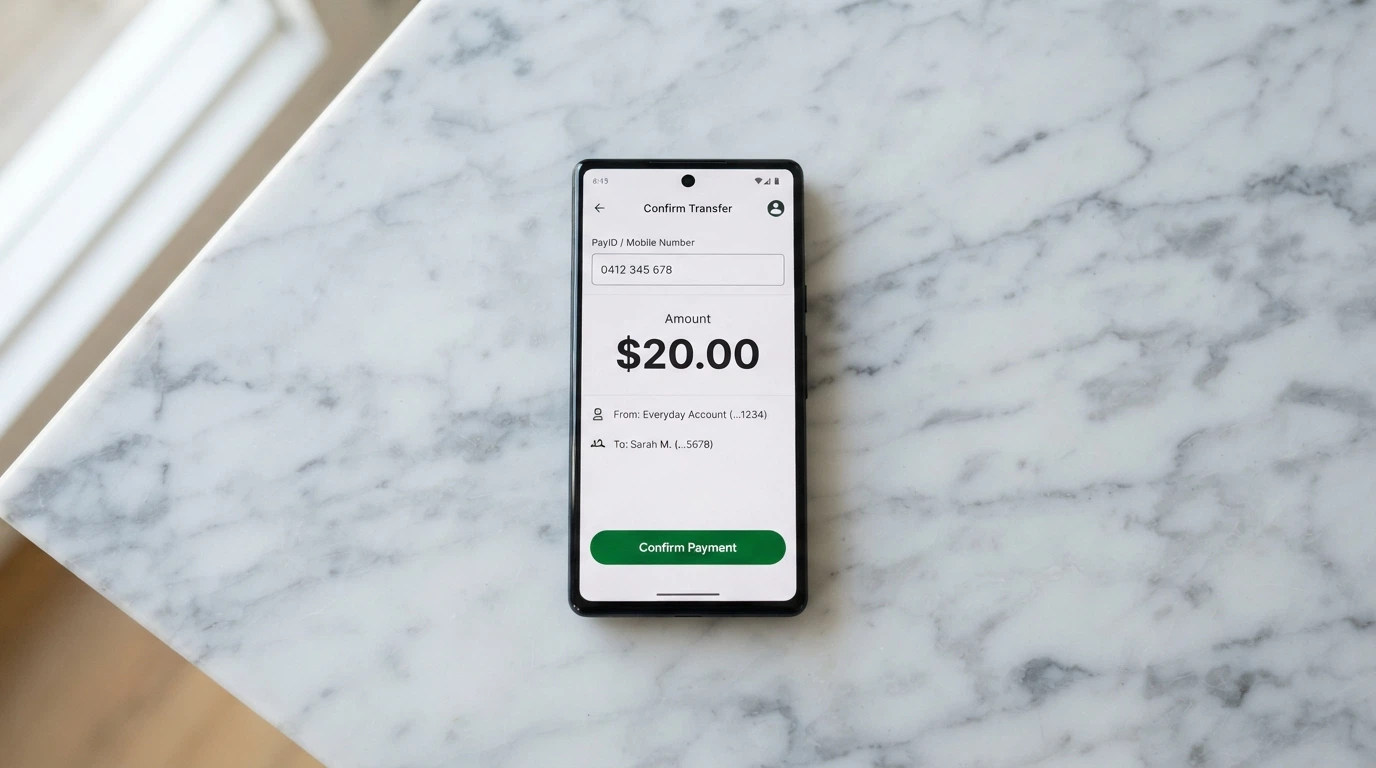
- PayID / Osko — the fastest deposit route from an Australian bank account; near-instant; widely available at offshore casinos; legal for licensed wagering under the IGA framework.
- Debit card — Visa and Mastercard debit cards issued by Australian banks remain a legal deposit route; processing time depends on the bank and the casino.
- Bank transfer — direct transfer from an Australian bank account; the highest-limit option; slower than PayID.
- BPAY — bill-payment method familiar to most Australian account holders; available at some offshore casinos; slower than PayID and bank transfer.
The list above does not include credit cards or cryptocurrency, because both are banned for online wagering in Australia from 11 June 2024. An offshore casino that accepts a credit-card deposit or a crypto deposit from an Australian resident is breaking Australian law, and the payment method itself is the tell.
PayID and Osko — The Fastest Way to Get $20 Into Your Casino Account
PayID deposits clear in seconds. A player with an Australian bank account linked to a PayID — typically their mobile number or email — sends $20 from their banking app to the casino’s PayID, and the balance appears in the casino account in the time it takes to switch apps. PayID/Osko is the preferred deposit method for $20-floor players because the speed of the deposit matches the speed of the decision.
PayID is a legal deposit route for licensed wagering. Using PayID at an offshore casino does not make the casino legal — it makes the payment method legal. The distinction matters. The IGA framework caps the payment method, not the casino receiving it, and a legal payment method sent to an illegal recipient is still a legal payment method sent to an illegal recipient.
What PayID means for a $20-deposit player in practice is the lowest-friction way to fund an offshore casino from an Australian bank account. There is no card number to enter, no processing delay, and no third-party processor in the loop. The casino’s PayID is typically published in the deposit screen; the player enters the amount, confirms in their banking app, and the deposit is done. The bank has no reason to refuse the transaction under current rules; from 1 January 2027, banks gain authority to refuse transactions to illegal gambling operators, and PayID deposits to offshore casinos fall within that authority.
Credit Cards and Crypto Are Banned for Australian Wagering — Here Is Why That Matters
From 11 June 2024, credit cards, credit-related products and digital currency are banned as payment for online wagering in Australia. An operator that fails to enforce the ban faces penalties of up to $247,500. The ban applies to licensed wagering operators, and it applies by extension to any offshore casino that wants to look as if it follows Australian rules.
The practical consequence for an Australian $20-deposit player is that a casino accepting credit-card or crypto deposits from Australians is demonstrably operating outside Australian law. The credit-card ban is a clear marker — a casino that takes a credit-card deposit from an Australian resident has decided to ignore the most visible rule in the framework. Crypto is the same: an Australian-facing crypto casino is an Australian-facing illegal casino, by definition.
What the ban means for the player is that credit-card deposits and crypto deposits, if accepted at all, come with no Australian framework behind them. A dispute over a credit-card charge at an offshore casino is not a dispute an Australian bank will entertain — the bank blocked the transaction type precisely because the regulator told it to. A crypto deposit is, by design, unrecoverable once sent. The payment method is not just banned; it is the ban that tells the player the casino is outside the law.
Debit Card, Bank Transfer and BPAY — The Slower But Reliable Routes for $20
Debit card deposits work at most offshore casinos but they take longer than PayID. The casino’s payment processor treats the deposit as a card transaction, and the time from “deposit” to “balance showing in casino account” can range from a few minutes to several hours depending on the casino and the card issuer. A $20 debit card deposit is legal under Australian law; the casino accepting it is not, but the player’s use of a debit card is not in breach of the IGA.
Bank transfer is the highest-limit option. A direct bank transfer can move sums well above $20 in a single transaction, and the limit is set by the bank rather than by the casino. The cost is speed — a bank transfer typically clears in one to three business days, and an Australian punter who wants to play tonight is not waiting for a bank transfer to clear.
BPAY is the slowest of the three but the most familiar to Australian account holders. A player who pays their phone bill through BPAY knows exactly how the interface works. The deposit shows up at the casino when the casino’s billing system processes it, which can take longer than PayID or bank transfer. For a $20 deposit, the friction is rarely worth the familiarity.
The trade-off between the three is speed versus familiarity versus limit. PayID is the fastest and most $20-friendly. Bank transfer handles the highest limits. BPAY is the most familiar Australian bill-payment method. None of them changes the legal status of the casino receiving the deposit.
The Pokies You Can Play With a $20 Deposit — What a Low-Stakes Bankroll Actually Buys
A $20 bankroll on a pokie is a small bankroll. It is enough for a session — long enough to feel the rhythm of the game, short enough that one bad streak will end it. The pokies a $20-deposit player should choose are the ones that stretch that bankroll furthest: low minimum bets, low-to-medium volatility, and bonus features that trigger often enough to keep the balance moving.

Per-pokie RTP figures could not be verified for this page. That is a real limitation. RTP — return to player — is the headline number a reader comparing pokies would want, and the page cannot give specific figures for specific titles because authoritative sources did not return verifiable numbers this run. The pokies section below explains the bankroll mechanics qualitatively — what $20 buys at minimum stakes, how volatility shapes the session, why low-volatility titles suit a small bankroll — without inventing figures.
The absence of verified per-title RTP is itself information for the player. A reader who plans to deposit $20 and choose a pokie should treat any RTP figure quoted on the casino’s own page as the casino’s claim, not an independent measurement. The pokies a casino publishes RTP for are not necessarily the pokies the player should trust without checking.
Low-Stakes Pokies That Make a $20 Deposit Last
The minimum bet on a pokie is what determines how far $20 goes. A classic three-reel pokie with a $0.01 minimum coin size and a single payline turns $20 into two thousand spins. A five-reel video pokie with twenty-five paylines at a $0.01 coin and a $0.25 minimum total bet turns $20 into eighty spins. A “feature buy” pokie at $1 per feature turn turns $20 into twenty feature rounds. The shape of the session is set by the minimum bet before the first spin.
Low-volatility pokies are the rational choice for a $20 bankroll. Volatility is the measure of how unevenly a pokie pays out — a low-volatility pokie returns small amounts often, a high-volatility pokie returns large amounts rarely. On a $20 bankroll, low volatility means the balance moves slowly enough that the player has time to enjoy the session. High volatility means the balance can halve in a single streak of dead spins, and the session is over before it begins.
Progressive jackpot pokies are the trade-off. The headline prize is large — sometimes life-changing — and the minimum bet is often $1 or more to qualify. A $20 bankroll at a progressive pokie buys twenty jackpot-eligible spins. The probability of hitting the headline prize is tiny. The probability of losing the $20 in twenty spins is high. A player who chooses a progressive pokie with $20 is paying for the chance, not the session.
RTP and Volatility — What They Mean When You Only Have $20
RTP is the share of total wagered money a pokie returns to players over the long run. A pokie with a 96% RTP returns, on average, $96 for every $100 wagered across millions of spins. The figure is a long-run average, not a session guarantee — a player who deposits $20 and plays one hundred spins on a 96% RTP pokie is not guaranteed to end the session with $19.20. They are guaranteed, on average, to be close to that figure if they play long enough. On a $20 bankroll, “long enough” is short.
Volatility is what determines whether the $20 bankroll survives to that long-run average. A low-volatility pokie at 96% RTP will return close to $19.20 over a hundred spins with relatively few dramatic swings. A high-volatility pokie at 96% RTP will produce wildly variable results — some hundred-spin sessions end well above $20, others end at $0. The RTP is the same; the experience is not.
The combination a $20-deposit player wants is high RTP and low volatility. That combination stretches the bankroll, returns close to the long-run average, and gives the player a session that feels like a session rather than a coin-flip. The combination a $20-deposit player should avoid is medium RTP and high volatility — the bankroll will drain in dead spins before the long-run average has a chance to express itself.
The figure to remember is that the house always has an edge. A 96% RTP pokie keeps, on average, $4 of every $100 wagered. A $20 session at 96% RTP is, on average, a $19.20 session — and “on average” is the operative phrase. The session a player has on any given evening is one session, not the average.
Mobile Pokies With a $20 Deposit — Playing on the Go
Every offshore casino in this ranking works in a mobile browser. A $20 deposit at a desktop is the same $20 deposit on a phone — the casino’s deposit screen renders to the device, the PayID field works the same way through the phone’s banking app, and the pokie lobby is the same lobby with a smaller layout. Mobile play is not a separate product; it is the same product on a smaller screen.

The mobile experience differs from desktop in three places. The screen is smaller, so a five-reel pokie occupies less of the player’s visual field and the reel symbols are smaller. The data usage is higher, because pokie graphics are heavier than text-heavy casino pages and a session of a hundred spins will use more mobile data than a session of browsing. The deposit flow goes through the phone’s banking app rather than a desktop browser, which is faster on mobile than on desktop because the player is already holding the banking app.
What does not change is the legal status. The casino is still offshore, unlicensed in Australia, and outside BetStop. The $20 is still real money. The session is still governed by the same volatility the player would have faced on desktop. Mobile play at an offshore casino is the same product, and the same caveats apply in full.
A player who plans to play on a phone should treat the casino’s mobile site the same way they would treat the desktop site — check the terms of any welcome offer before claiming it, set a deposit limit before depositing, and use the responsible-gambling tools the casino provides if any are available. The fact that the casino is reachable on a phone does not change the fact that the casino is unlicensed in Australia.
New $20 Deposit Casinos and First-Deposit Offers
New offshore casinos enter the Australian-facing market regularly. A $20-deposit player looking at a comparison page will see brands they have not seen before, with welcome offers designed to attract exactly the player who has not yet chosen. First-deposit offers in the offshore market typically take the form of a match bonus — the casino matches some percentage of the first deposit — combined with a free-spins bundle on a named pokie. The headline figure on a welcome offer is the marketing; the wagering requirement and cashout cap are the reality.
The terms a player should check before claiming any first-deposit offer are the ones that determine what the offer is actually worth. The wagering multiple is the largest — a 40x wagering requirement on a $20 bonus is $800 of required turnover before the bonus converts to withdrawable cash, and at minimum stakes that is thousands of spins. The cashout cap is the second — a $100 maximum withdrawal from a “match bonus” offer means a player can clear the wagering and still walk away with less than they deposited. The validity window is the third — an offer that expires in seven days is, for a $20-deposit player who plans a slow session, an offer that expires before the session does.
No featured brand on this page carries a verified no-deposit bonus for Australian players. That is not a verdict on whether such offers exist at individual brands — it is a statement about what this page could verify from authoritative sources. Any no-deposit offer advertised to an Australian player at an offshore casino should be checked at the brand’s own terms page at the moment of signing up.
The honest framing for new-casino offers is that they need closer scrutiny, not less. A new offshore brand is a brand with no track record under Australian enforcement, no established player-protection framework, and no recourse through Australian consumer law. A welcome offer at a new brand is a marketing decision designed to attract sign-ups, not a sign that the brand is more generous than the established names. The wagering requirement hidden in the terms is what the offer is worth; the headline match percentage is what the offer looks like.
Responsible Gambling — The Tools That Protect You and the One That Does Not
Australia has world-class player-protection infrastructure for licensed wagering — and none of it reaches a single casino on this page. BetStop, the National Self-Exclusion Register, is the strongest single tool. The National Gambling Helpline, on 1800 858 858, is free and available around the clock. State and territory regulators handle complaints about licensed operators. None of it applies to an offshore casino, because an offshore casino is not a licensed operator.

The figure that frames the stakes is harm prevalence. About 2.1% of Australian adults — roughly 430,000 people — experience problem gambling. The Australian Institute of Health and Welfare put high-risk gambling at 1.8% in 2022. Those figures do not describe “problem gamblers” as a separate population; they describe a share of the adult population, and the share includes people who read this page, people who know people who read this page, and people who would not describe themselves as problem gamblers but whose play fits the AIHW’s high-risk profile.
The tools that protect an Australian punter at a licensed operator are designed to be friction. BetStop is a one-step exclusion from every licensed wagering service. Deposit limits cap how much can be wagered in a session. Reality checks interrupt play to remind the player how long they have been at it. Time-out tools let a player suspend their account for a cooling-off period. Self-exclusion lets a player lock themselves out for months or years. Each tool is, by design, hard to undo.
The tools that protect an Australian punter at an offshore casino depend entirely on the casino. Some offshore casinos offer deposit limits and session reminders. Most do not. None of them is connected to BetStop. A player who has registered with BetStop and then deposits $20 at an offshore casino is a player BetStop cannot help, because BetStop never reached the casino they chose.
BetStop — Australia’s Self-Exclusion Register and the Offshore Blind Spot
BetStop has been live since August 2023. One registration excludes a person from every Australian-licensed online and phone wagering service in a single step. As at 31 July 2026, BetStop recorded 67,480 registrations, of which 41,290 exclusions were still active — more than 60% of everyone who has ever registered. 78% of registrants are under 40. 38% chose lifetime exclusion. The register is, by every measure, heavily used.
The offshore blind spot is the gap the register does not cover. BetStop binds only Australian-licensed wagering services. An offshore casino is not licensed in Australia, is not connected to the register, and will keep taking a self-excluded person’s money. A player who has registered with BetStop to protect themselves, and then deposits $20 at an offshore casino, has stepped outside the framework they registered to use.
The practical consequence is that BetStop protects a player who stays within the licensed wagering market. A player who steps outside it — to any of the ten brands on this page — is unprotected by the strongest single tool Australia has built. The tool is real; the gap is also real; and a $20 deposit is a step into the gap.
Deposit Limits, Reality Checks and Where to Get Help
Offshore casinos vary in the responsible-gambling tools they offer. Some publish deposit-limit settings, session reminders, and time-out options in the account menu. Others publish none of these. A $20-deposit player who plans to play at an offshore casino should check the responsible-gambling section of the casino’s own site before depositing, and treat the absence of those tools as information about the casino rather than as a neutral feature gap.
The tools that work regardless of where a player chooses to play are the Australian help services. The National Gambling Helpline, on 1800 858 858, is free, confidential, and staffed around the clock. Online chat and counselling are available through Gambling Help Online at gamblinghelponline.org.au. Both services are Australian, both are independent of any casino, and both are reachable by any Australian resident regardless of where they play.
The list below summarises what an Australian player can use regardless of which casino they choose:
- National Gambling Helpline — 1800 858 858 — free, confidential, 24/7, with online chat and counselling through Gambling Help Online.
- Gambling Help Online (gamblinghelponline.org.au) — online chat and professional counselling for Australian residents.
- BetStop (betstop.gov.au) — the National Self-Exclusion Register; binds only Australian-licensed wagering services and does not cover any offshore casino.
The harm-prevalence figure is the one to weigh against any decision to deposit. 2.1% of Australian adults — roughly 430,000 people — experience problem gambling. A $20 deposit at an offshore casino is, for most Australian adults who make it, an evening’s entertainment. For the 2.1%, it is the start of a pattern that the framework they have chosen cannot interrupt.
How We Evaluated and Ranked These $20 Deposit Casinos
The ranking on this page is built on one piece of evidence: Australian player traffic. Each brand in the ten is an offshore casino that real Australian residents reach in measurable numbers, and the position in the ranking reflects that reach. A brand at the top of this ranking is the brand the most Australian players access; a brand at the bottom is the brand fewer Australian players access.
The legal baseline for every brand on this ranking is the Interactive Gambling Act 2001. No online casino holds an Australian licence, and none can. Every brand on this page operates outside Australian law by the act of providing online casino games to Australian residents. The ranking does not filter for legal status because no brand in the offshore casino market passes that filter; the ranking orders brands within the offshore market.
The regulator used as the verification authority is the ACMA — the Australian Communications and Media Authority. The ACMA’s blocked-sites list and enforcement record are the public evidence of which brands are operating illegally in Australia. None of the brands on this page holds an Australian licence against any register, because no register of Australian online casino licences exists.
The player-protection criterion is BetStop connectivity. A brand connected to BetStop binds itself to the Australian self-exclusion framework. None of the brands on this page is connected, because none is licensed to be connected. BetStop coverage is, by design, the dividing line between the licensed Australian wagering market and the offshore casino market — and every brand on this page is on the offshore side of that line.
The scope limitation of this ranking is that it covers only offshore casino brands. Licensed Australian wagering operators — Sportsbet, TAB, bet365, Ladbrokes and others — offer sports and races wagering, not online casino games, and are not relevant to a $20-deposit casino page. The ranking does not include them because the product they offer is not the product on this page.
What this methodology does not do is rank by bonus size, game catalogue, payment speed, or subjective quality. Those measures would require verified operator-specific data this page does not carry. The ranking is a reach ranking — a measure of which offshore casinos Australian players actually access — and a reader should read it as such.
What You Should Actually Do Before Depositing Your First $20
Three checks stand between a $20 deposit and a regret. The first is the legal status: every casino on this page is offshore, unlicensed in Australia, and outside the Australian consumer-protection framework. The second is the payment method: credit cards and crypto are banned for Australian wagering, and a casino accepting either is operating visibly outside the law. The third is the BetStop gap: no casino on this page is connected to the Australian self-exclusion register, and the strongest single tool the country has built for at-risk players does not reach any of them.
The honest framing is that depositing $20 at an offshore casino means playing without Australian consumer protections. A refused withdrawal cannot be appealed to the ACMA. A blocked site cannot be reported for return of funds. A self-excluded person will still be able to deposit. The protections an Australian punter would have at a licensed wagering operator — dispute resolution, fund recovery, mandatory responsible-gambling tools — are not available at any of the ten brands on this page.
The alternative is the licensed Australian wagering market. Pre-match sports wagering and races wagering are legal, licensed, and connected to BetStop. A player who wants full Australian consumer protection can place wagers through a licensed Australian operator — Sportsbet, TAB, bet365 AU, Ladbrokes, TABtouch, PointsBet, Neds, Betr, Picklebet, Betfair and others — and the deposit will be AUD, the wagering market will be Australian, and the responsible-gambling framework will reach the operator. The product is different — sports and races rather than pokies — but the protection is complete.
For a player who decides to deposit $20 at an offshore casino anyway, the course of action is straightforward. Verify the payment method is one of the four Australian-legal routes — PayID, debit card, bank transfer or BPAY. Set a deposit limit before depositing, and stick to it. Set a stop-loss for the session before the first spin, and stop at it. Check the welcome-offer terms before claiming any offer, and pay attention to the wagering requirement and cashout cap. Treat the session as entertainment with a fixed cost, not as a way to make money.
The National Gambling Helpline, on 1800 858 858, is free and available around the clock. Gambling Help Online, at gamblinghelponline.org.au, offers online chat and counselling. BetStop, at betstop.gov.au, is the National Self-Exclusion Register and the strongest single protection available to Australian residents. The help is real. The framework is real. The offshore gap is also real, and a $20 deposit is a step into it.
Frequently Asked Questions
Can I legally play at a $20 deposit online casino in Australia?
Providing online casino games to Australians is prohibited under the Interactive Gambling Act 2001. No online casino holds an Australian licence. Every casino on this page is an offshore operator, and providing its services to Australian residents is what the IGA prohibits. The individual player is not prosecuted — the Act targets the provider — but no Australian consumer protection framework applies at any offshore casino.
Are $20 deposit casinos safe for Australian players?
“Safe” in the sense of fair games and prompt payouts is what reputable offshore casinos aim to provide, though none of them are subject to Australian supervision. “Safe” in the sense of Australian consumer protection is not — there is no ACMA dispute resolution, no fund recovery, and no BetStop coverage at any offshore casino. A $20-deposit player is taking the casino at its word on every withdrawal, every bonus term and every game outcome.
Do $20 deposit casinos offer welcome bonuses or free spins?
Most offshore casinos at this floor run a welcome offer — typically a deposit match combined with a free-spins bundle on a named pokie. The specific offer at each brand on this page could not be verified from authoritative sources for this run. A player should check the casino’s own current terms before claiming any welcome offer, and pay particular attention to the wagering multiple, the validity window and the maximum cashout.
What is the minimum age to gamble online in Australia?
The minimum age for all commercial gambling in Australia is 18, under both the Interactive Gambling Act 2001 and state and territory legislation. Every offshore casino on this page should enforce an 18+ age requirement; whether each one does in practice is not something this page can verify, and an Australian player under 18 should not deposit at any offshore casino regardless of what the site’s age gate claims.
Are my winnings from an offshore casino taxable in Australia?
Betting and gambling winnings are not assessable income for an ordinary Australian punter under section 6-5 of the Income Tax Assessment Act 1997, and gambling losses are not deductible under section 8-1. No Australian case has held the winnings of an ordinary punter assessable. A player who carries on a business of betting is treated differently, but a $20-deposit casual player is not carrying on a business.
How does BetStop protect Australian online gamblers?
BetStop is the National Self-Exclusion Register, live since August 2023. One registration excludes a person from every Australian-licensed online and phone wagering service in a single step. As at 31 July 2026, the register held 67,480 registrations with 41,290 still active. The protection is real for licensed Australian wagering operators — and it does not reach any offshore casino, because no offshore casino is connected to the register.