
Tether Casinos for Australian Players in 2026: An Honest Offshore Market Guide
A Tether casino is, in practical terms, an online casino whose cashier accepts USDT instead of (or alongside) credit cards and bank transfers. Australian players end up at these operators for a reason the marketing pages skip over: online casino is prohibited in Australia under section 15 of the Interactive Gambling Act 2001, and no licence for it exists federally or in any state or territory. With licensed routes closed, the credit-card and crypto payment ban imposed in 2024 has pushed the offshore market further toward stablecoins, and Tether is the one that works the most reliably across the brands Australians actually reach.

This guide is current as of 22 October 2026 and was checked against the Australian Communications and Media Authority (ACMA) and the Department of Social Services registers. The ranking covers ten offshore operators, the games they carry, what the bonuses actually cost, and the consumer protections an Australian player forfeits the moment a deposit is sent. Nothing here is a recommendation to play. Online casino is prohibited in Australia, and every operator in this ranking is unlicensed in the country.
Table of Contents
- Why Australian Players Turn to Tether Casinos in 2026
- The Offshore Casinos Australians Access With Tether in 2026
- The Games You Can Play With Tether at Offshore Casinos
- Why Your Tether Casino Bonus Is Smaller Than It Looks
- How Fast Your USDT Deposit Actually Lands (and Leaves)
- What Tether Casinos Get Right — and What They Hope You Won’t Ask
- Tether Casino Gaming on Your Phone
- The Legal Reality Every Australian Tether Player Needs to Know
- New Tether Casinos Worth Watching in 2026
- What Australian Protections You Leave Behind at an Offshore Casino
- How We Evaluated These Tether Casinos
- Is an Offshore Tether Casino Worth the Risk for an Australian Player?
- Frequently Asked Questions
Why Australian Players Turn to Tether Casinos in 2026
The shift toward Tether in Australia’s offshore market is not fashion. It is the result of two policies landing in sequence: the credit and crypto payment ban for licensed wagering that took effect on 11 June 2024, and the way that ban interacts with a market that has never had a legal online casino product. Stablecoins solved a problem the offshore operators were already struggling with — how to move Australian money past the card networks without the banks refusing the transaction.
What a Tether Casino Actually Is
A Tether casino is a casino that accepts USDT for deposits and pays withdrawals in USDT, sometimes alongside fiat options. Tether (USDT) is a stablecoin pegged to the US dollar; one USDT trades close to one US dollar at all times, which means the bankroll on the screen does not move with the volatile swings that hit Bitcoin and Ethereum balances. USDT is not a single coin living in one place. It runs on TRC-20 (Tron), ERC-20 (Ethereum), BNB Chain, Solana and Polygon, and the network a player picks is the single biggest factor in fees and confirmation speed.
The operator types that dominate this corner of the market are offshore-licensed brands — Curaçao, Anjouan — that have built their cashier around crypto from the start. The classic bankrolled-by-fiat, deposit-by-Visa casino is a different animal; the Tether-first operator assumes you have a wallet and know which network your exchange sent the token on. That is part of the trade: speed and, sometimes, the absence of identity checks, in return for stepping outside every Australian safeguard.
How USDT Deposits Changed Offshore Casino Access for Australians
Before the payment ban took effect, offshore casinos that wanted Australian business could still take Visa, Mastercard and a handful of e-wallets. The card networks and the major banks became reliable choke points: a transaction flagged as gambling would often decline, and a player whose bank had policies against gambling would find their card simply stopped working. Crypto sidestepped the card network, and USDT in particular sidestepped volatility: a player funding an account in Australian dollars no longer had to watch Bitcoin drop 10% overnight before they got a hand of blackjack in.
The official enforcement picture is large. Since November 2019, ACMA has directed Australian ISPs to block 1,564 illegal gambling and affiliate websites, and more than 225 illegal services have withdrawn from the Australian market since 2017. None of that is theoretical for the offshore brands: when ACMA names them, the local ISPs take them offline. The brands that remain reachable for an Australian in 2026 are the ones with enough mirror domains, enough crypto payment routes, and enough tolerance for enforcement risk to stay open. Tether is part of that survival kit.
The direction of travel is more enforcement, not less. From 1 January 2027, banks and payment providers gain express authority to block transactions to illegal gambling operators. A player funding an offshore account from an Australian bank will be one more step removed from the transaction by then; the bank is the one writing the block, not the card network.
Trust Signals Australian Players Should Check at a Tether Casino
Four checks that take ten minutes and tell you most of what you need to know before you send any USDT anywhere.
- Licence jurisdiction. Curaçao is the default. Anjouan licenses a smaller cluster. Neither licence gives an Australian player recourse at ACMA or in an Australian court, but a licence is still a better signal than a homepage with no licence footer at all. “Licence not specified” is itself a red flag — the operator is hiding what the page is hiding.
- Operator track record and withdrawal history. A casino that has been paying out for two years is a different bet from a brand that launched last month. Withdrawal times are the most falsified number in the industry, so a third-party test (CasinoRevisor, PokieKing, Payout Verdict, SlotsDudes) carries more weight than the operator’s own claims.
- Provably fair or RNG certification. Provably fair is a cryptographic check that the casino did not alter the result after a bet; RNG certification is an audit of the random number generator. Both are real; provably fair is the stronger one because the player can verify each bet themselves.
- Community reputation. How a brand handles a complaint in public, on a forum or a watchdog site, predicts how it will handle a complaint from you in private. Long complaint threads that the operator has answered are a better signal than a clean Trustpilot page that is mostly affiliate-driven.
Two facts to keep beside those checks. Providing a prohibited interactive gambling service to a person in Australia carries civil penalties of up to A$247,500. And the individual player is not prosecuted under the IGA — the Act targets the provider, not the punter. Neither point makes the product legal, but the second one answers the question most Australians actually ask.
The Offshore Casinos Australians Access With Tether in 2026
Ten operators, ranked by the mix of bonus value, wagering terms and Tether support. None are licensed in Australia. The table is the comparison; the operator profiles underneath it are what those figures cost you in practice.

| Operator | Licence | Welcome Bonus | Wagering Requirement | Tether Deposit |
|---|---|---|---|---|
| SkyCrown | Curaçao | A$8,000 + 400 FS (4 deposits) | 40x bonus / 30x FS | Yes (TRC-20, ERC-20) |
| RocketPlay | Curaçao | 100% up to A$1,000 + 100 FS | 40x | Yes (USDT) |
| Royal Reels | Not specified | 100% up to AUD 500 + 100 FS | 35x | Not confirmed |
| WinSpirit | Not specified | AU$600 + 100 FS (2 deposits) | 40x | Not confirmed |
| Rainbet | Anjouan | 250% up to $2,100 + 60 FS (3 deposits) | 40x or no-wager | Yes (5 networks) |
| FairGo | Curaçao | 100% up to $200 x5 | Not specified | Not confirmed (Bitcoin yes) |
| Stake | Curaçao | No welcome bonus | N/A | Yes |
| Winz.io | Curaçao | No-wager free spins | None on FS | Yes |
| Thunderpick | Curaçao | 100% up to €600 (crypto) | Not specified | Yes (TRC-20, ERC-20) |
| Bizzo Casino | Not specified | Up to $5,000 + 150 FS | Not specified | Yes (converts to USDT) |
Three things the table already tells you. First, “Curaçao” is the modal licence; none of the ten hold an Australian licence, because none exists. Second, the wagering multiples that do appear sit at 35x–40x on the bonus amount, and 30x on the free-spin winnings. Third, two operators in the set (Royal Reels and WinSpirit) list welcome bonuses that look attractive but have not confirmed Tether support — a player who arrived here to deposit USDT would land on a site that does not take their currency.
SkyCrown — A$8,000 Across Four Deposits, If You Can Clear It
SkyCrown is the largest welcome package in the set on paper: A$8,000 plus 400 free spins spread across four deposits, with 40x wagering on the bonus and 30x on the free-spin winnings. The minimum deposit is A$20, the bonus validity is 14 days per tier, and the brand is Curaçao-licensed with Pragmatic Play, BGaming, NetEnt and Microgaming titles in the lobby. Tether deposits are confirmed on TRC-20 and ERC-20, and the operator’s TRC-20 withdrawal was tested at 12 minutes.
The “if you can clear it” in the section header is the wagering. A player who deposits A$1,000 and claims a A$1,000 bonus at 40x has A$40,000 of required turnover in front of them, with 14 days to do it. That is roughly A$2,857 of qualifying bets per day, every day, for two weeks, and the expected loss on a 96.5% RTP slot is around A$1,400 of that turnover before any withdrawal is possible. SkyCrown is for the high-volume player, not the casual punter who wants to spin a few hundred dollars and walk away.
RocketPlay — A Straightforward Match With a Tight Window
RocketPlay is the cleanest match in the set: 100% up to A$1,000 plus 100 free spins, 40x wagering, A$20 / USDT 20 minimum deposit. The catch is the clock. The bonus validity is five days, and the 100 free spins release at 20 per day on Aztec Magic from BGaming. Maximum cashout from the free spins is A$300. Curaçao-licensed, USDT accepted, withdrawal window within 24 hours.
A five-day clearance window on a A$1,000 bonus means the player is running A$8,000 of turnover a day — eight grand of qualifying bets every day, for five days, on top of the A$40,000 total. That is a workload only an experienced high-volume player would commit to. The smaller A$200 deposit, generating A$8,000 of total turnover, is the realistic use of this offer; the headline A$1,000 ceiling is the marketing number.
Royal Reels — Lower Wagering, But Tether Deposit Unconfirmed
Royal Reels carries the set’s lowest wagering multiple at 35x, on a 100% match up to AUD 500 plus 100 free spins on Book of Dead. The free spins are valued at AUD 0.20 per spin (AUD 20 total) and the maximum cashout from them is AUD 200. Bonus validity is 14 days. The offer is genuinely friendlier on paper than the 40x bonuses around it.
The trade-off is on the payment side. Royal Reels has not confirmed Tether support; the operator accepts AUD via cards, PayPal and Apple Pay. A player who arrived at this page specifically to deposit USDT would land on a site that does not take the currency. The wagering edge is real, but only if the player is willing to fund in fiat.
WinSpirit — Two-Tier Bonus With Limited Operator Transparency
WinSpirit offers AU$600 plus 100 free spins across two deposits, with 40x wagering. The first deposit minimum is AU$30 and the second is AU$60. The free spins split across Royal Piggy Hold the Spin and Diamonds Power.
The transparency gap is the problem. Licence is not specified on the operator’s published terms, and Tether support is not confirmed. A player who is comparing operators on a single page would hesitate here on the same grounds they’d hesitate at Royal Reels: the bonus is competitive, but the missing specifications are the ones a careful player checks first.
Rainbet — Five Tether Networks and a 250% Match
Rainbet is the most crypto-native operator in the set. USDT deposits on five networks — TRC-20, ERC-20, Solana, Polygon and BSC — with a $15 USDT minimum and withdrawals tested at around 15 minutes. The welcome is 250% up to $2,100 plus 60 free spins across three deposits, with 40x wagering on the bonus or a no-wager gradual release option on winnings. Anjouan-licensed, 5,000+ games, Pragmatic Play, Hacksaw, Nolimit City, Relax Gaming and Thunderkick in the provider mix.
The no-wager option is the unusual clause. A player who picks it gets a slower payout as their winnings release, but no playthrough requirement — the equivalent of a cashback drip rather than a bonus to clear. That suits a player with a smaller bankroll who values certainty over speed. The 5,000+ game library is also the largest in the set.
FairGo — The Only Operator With a No-Deposit Free Spin Offer
FairGo is the only operator in the ranking that offers anything for no deposit at all: 30 free spins on Fu Long Treasures, valid until 25 August 2026, with a $180 maximum cashout. The main offer is 100% up to $200 claimable five times, RTG-powered with 150+ games, Curaçao-licensed, $10,000 AUD weekly cashout limit, and Bitcoin confirmed as a payment method.
Tether is not confirmed at FairGo. The player who needs USDT specifically is back to a fiat or Bitcoin route. The no-deposit offer is the genuine point of difference: it is the only offer in the set where a player can try a casino before sending any money, even if the upside is capped at $180.
Stake — A Tether Casino Without a Welcome Bonus
Stake is the highest-profile brand in the ranking and the only one that does not advertise a welcome bonus or free spins at all. Curaçao-licensed, USDT confirmed, brand recognition is the offering. The trade-off is explicit: a player chooses Stake for the brand, the live dealer depth and the community, not for a sign-up incentive.
The honest reading is that a sign-up bonus is a marketing cost recovered from the player through wagering terms. Stake’s absence of one is not generosity; it is a different product positioning. The player who values a clean bankroll — deposit, play, withdraw — gets that here without the wagering arithmetic to clear.
Winz.io — No-Wager Free Spins and Eight-Minute Withdrawals
Winz.io is built around wager-free bonuses. USDT withdrawals tested at 8 minutes, with a $100,000 USD weekly and $400,000 USD monthly limit that is comfortably above what any individual punter will hit. Minimum deposit 20 USDT, BTC, ETH, USDT, LTC, DOGE and XRP all accepted, Curaçao-licensed, 5,000+ games.
The cashout limits are the relevant comparison: Winz.io will let a player withdraw up to A$150,000 in a week without flagging anything, where the smaller Curaçao brands cap withdrawals at a few thousand. The wager-free free spins are the other edge. A 50-spin win at a 40x bonus costs the player their stake-multiplied turnover to clear; a 50-spin win at no wagering is theirs to withdraw.
Thunderpick — No-KYC Withdrawals in Under Five Minutes
Thunderpick is the privacy-first pick. No-KYC crypto casino, withdrawal tested at 4 minutes, 5,000+ games, Curaçao-licensed, USDT on TRC-20 and ERC-20, max cashout €100,000 per week. The welcome is 100% up to €600 on the crypto deposit route.
The speed comes from the absence of identity verification. A player who does not submit documents gets paid faster, but also gets less recourse if the operator closes the account: there is no record tying the player to a verified identity that an Australian court could be asked to enforce against. The 4-minute tested withdrawal is the fastest in the ranking, and the trade-off behind it is the one the player has to weigh.
Bizzo Casino — A Crypto-First Bonus With a High Entry Point
Bizzo offers up to $5,000 plus 150 free spins as a welcome package, with a 50 USDT minimum deposit for the crypto-specific bonus. USDT is accepted, with the operator converting on the way in. Licence is not specified in the published terms.
The high minimum is the practical issue. A 50 USDT entry to claim a welcome is roughly A$75 — a higher floor than every other operator in the set. The player who is happy to commit that to a bonus they will clear on the wagering terms is the one this offer targets; a casual punter depositing A$20 to try the lobby is locked out of the headline package.
The Games You Can Play With Tether at Offshore Casinos
The product mix across the ranking is mostly pokies (the Australian term for slots), with table games and live dealer filling the rest. The relevant comparison is not which operator has the most games — Rainbet and Thunderpick both advertise 5,000+, and the gap is in provider depth rather than raw count. The relevant comparison is which games return enough of every dollar to make the math worth thinking about.

High-RTP Pokies You Can Play With Tether
Six titles with verifiable return-to-player data that appear across the featured operators. A higher RTP means the game returns more of every dollar wagered to the player pool over the long run, but the long run is millions of spins and the short run is variance.
| Slot Title | RTP | Provider | Volatility | Max Win |
|---|---|---|---|---|
| Mega Joker | 99.00% | NetEnt | High | — |
| Book of 99 | 99.00% | Relax Gaming | High | 12,075x |
| Blood Suckers | 98.00% | NetEnt | Low | 900x |
| Money Train 3 | 96.40% | Relax Gaming | Extreme | 100,000x |
| Sweet Bonanza | 96.51% | Pragmatic Play | High | 21,100x |
| Gates of Olympus | 96.50% | Pragmatic Play | High | 5,000x |
Three observations. Mega Joker and Book of 99 are the rare 99% RTP slots, available at the NetEnt and Relax Gaming operators (SkyCrown, Rainbet, Thunderpick, Winz.io). Blood Suckers at 98% with low volatility is the steady game — the slot that pays small amounts often enough to grind through a wagering requirement without cratering the bankroll. Money Train 3 at 96.40% with extreme volatility is the long-shot, with a 100,000x max win that pays nothing on most spins and a small fortune on the rare one.
For a player working through a 40x bonus, Blood Suckers is the arithmetic choice. For a player playing with their own money who wants a shot at a payout that matters, Money Train 3 is the one that delivers it. The two games exist for different reasons and a Tether casino player should know which one they are sitting down to.
Table Games and Live Dealer: Tether Stakes Compared
Blackjack and roulette are available at every operator in the ranking, RNG versions at the smaller brands and live-dealer studios at SkyCrown, Rainbet, Stake, Winz.io and Thunderpick. The live studios take USDT stakes through the same cashier as the pokies — the chip denomination on the felt is the only thing that changes.
The RTP story differs by game. Blackjack sits at 99.5% or higher with basic strategy, which is the closest thing to an even bet a player will find in the casino. Roulette varies by wheel: European single-zero is 97.3%, American double-zero is 94.7%, and the difference is a 2.6% house edge a player is paying for the privilege of betting on 0 and 00. Live dealer versions follow the same math; the human dealer and the physical wheel do not change the return, they only change the format.
Specific stake ranges per operator are not in the published terms in a way that is comparable across the set. A conservative estimate is that the minimum live-dealer blackjack hand is 0.20 USDT and the maximum is several thousand USDT, but the player should check the specific table on the specific operator before sitting down. The deposit, not the game, is where the operator’s house rules bite.
Demo Mode and Free Play at Tether Casinos
Demo mode is the feature that lets a player spin a pokie without risking USDT — the casino loads the game with a play-money balance, and the player sees the bonus rounds and the volatility before any real money is on the line. Most RTG and Pragmatic Play titles run a demo version, and the major studios (NetEnt, Relax Gaming, Hacksaw) include demo modes in their standard integration.
Two reasons to use it. First, a player who is choosing between Sweet Bonanza and Gates of Olympus at 96.51% and 96.50% RTP will not feel a meaningful difference in the long-run return, but they will feel a difference in bonus frequency and visual style. Demo mode answers which one they would rather look at for an hour. Second, a player who is testing a new casino’s lobby before depositing USDT can confirm the games load, the cashier shows the right currency, and the support chat is staffed — none of which can be checked before an account is funded.
Why Your Tether Casino Bonus Is Smaller Than It Looks
The headline number is the marketing number. The wagering multiplier is the real number. A A$1,000 bonus at 40x means A$40,000 of qualifying bets before a withdrawal is possible, and the expected loss from a 96.5% RTP slot is around 3.5% of that turnover — roughly A$1,400 — before the player sees any of their own money back. The “free” in “free bonus” is a misprint.

Welcome Bonuses: The Real Cost in Turnover and Expected Loss
Five offers in the set carry a published wagering multiple, and the spread tells the story. RocketPlay’s A$1,000 at 40x is A$40,000 in required turnover; SkyCrown’s A$8,000 across four deposits at 40x is A$320,000 in cumulative turnover; WinSpirit’s AU$600 at 40x is A$24,000; Royal Reels’ AUD 500 at 35x is AUD 17,500, the lowest turnover burden in the set; Rainbet’s $2,100 at 40x is A$84,000 of turnover in Australian dollar terms, or no turnover at all under the no-wager gradual release option.
The expected loss from clearing one of these offers is calculated as turnover multiplied by the house edge. On a 96.5% RTP slot, the house edge is 3.5%, so a A$40,000 playthrough (RocketPlay at the A$1,000 ceiling) carries an expected loss of A$1,400. SkyCrown at the A$8,000 ceiling would carry an expected loss around A$11,200 if the player worked through every tier, which is why the package is split across four deposits — the player is unlikely to clear all four at the ceiling, and the casino is pricing for that.
The arithmetic is a statistical average over many spins at the stated RTP, not a guarantee for any individual player. A player can run above or below the 3.5% house edge in the short run, especially on a high-volatility slot. Over the thousands of spins a 40x bonus requires, the average is the only number that matters, and the average is the operator’s edge.
For a player weighing the offers: Royal Reels’ 35x is the set’s lowest turnover burden, and the AUD 500 ceiling is realistic for a small bankroll. Rainbet’s no-wager option is the only offer where the player is not paying an expected loss to clear the bonus; the trade is a slower payout as winnings release. SkyCrown’s A$8,000 is the largest package on paper and the largest expected loss to clear, and only makes sense for a player planning to commit the volume.
No-Deposit Bonuses and Free Spins: What Is Actually Available
FairGo’s 30 free spins on Fu Long Treasures, with a $180 maximum cashout, is the only no-deposit offer in the set. The terms are standard: any winnings from the spins are subject to a playthrough, and the player cannot withdraw more than $180 from the offer regardless of what the spins produce. The offer is valid until 25 August 2026.
For funded players, free-spin terms vary. Winz.io’s wager-free free spins are the cleanest: any winnings are the player’s to withdraw, no playthrough. RocketPlay’s 100 free spins release at 20 per day over five days, capped at A$300 total winnings. Royal Reels’ 100 free spins on Book of Dead release at 10 per day over ten days, valued at AUD 0.20 per spin with a AUD 200 cap. SkyCrown’s 400 free spins are the largest count but spread across four deposits with 30x wagering on the winnings.
The pattern is clear. Wager-free spins are the player-friendly option and the rare one. Capped free-spin winnings are the norm. And the headline “400 free spins” at SkyCrown is not the same prize as 100 wager-free spins at Winz.io; the wagering on the winnings is what converts a free-spin bundle from a player-friendly offer into a marketing line.
How Fast Your USDT Deposit Actually Lands (and Leaves)
USDT speed is determined by two things: the network the player picks, and the operator’s processing time once the funds arrive. The network is the player’s choice and a 10x cost difference; the operator’s processing is the variable the player cannot control until they have tested the brand.

Depositing USDT: Networks, Fees and Confirmation Times
| Network | Typical Fee (AUD) | Deposit Speed | Withdrawal Speed | Supported By |
|---|---|---|---|---|
| TRC-20 (Tron) | Under A$2 | 1–5 minutes | 1–5 minutes | SkyCrown, Rainbet, Thunderpick, Winz.io, Stake |
| ERC-20 (Ethereum) | A$3–A$15 | 1–5 minutes | 1–5 minutes | SkyCrown, Rainbet, Thunderpick, Winz.io, Stake |
| BNB Chain | Under A$2 | 1–5 minutes | 1–5 minutes | Rainbet |
| Solana | Under A$1 | 1–5 minutes | 1–5 minutes | Rainbet |
| Polygon | Under A$1 | 1–5 minutes | 1–5 minutes | Rainbet |
TRC-20 is the default choice for any player who is paying their own network fees: under A$2 per transaction in normal conditions, and a confirmation in minutes. ERC-20 is the fallback when the operator does not support TRC-20, and the A$3–A$15 fee range reflects Ethereum gas prices during busy periods. Rainbet is the only operator in the set that supports all five networks; the others support TRC-20 and ERC-20.
The deposit flow is consistent across operators. The player opens the cashier, picks USDT, picks a network, copies the casino’s deposit address, sends from their wallet, and waits for the network confirmations — typically one on TRC-20 and Polygon, several on ERC-20 — to land. A player who sends on the wrong network (USDT on ERC-20 to a TRC-20 deposit address) loses the funds; this is the most common avoidable loss at a Tether casino.
Withdrawal Speed: What the Tested Times Actually Show
The fastest tested operator in the ranking is Thunderpick at 4 minutes, with no KYC required. The cashout runs through the cashier, the operator signs the transaction, and the funds land in the player’s wallet in under five minutes. Winz.io at 8 minutes is the second-fastest, with a $100,000 USD weekly and $400,000 USD monthly limit that comfortably exceeds any individual withdrawal. SkyCrown at 12 minutes on TRC-20 is the third-fastest in the set, and its test was on the cheapest network.
The slow end is RocketPlay, with a stated withdrawal window of up to 24 hours. The brand does process crypto withdrawals faster than that in practice, but the published window is the operator’s commitment and the worst-case timing a player should plan around. Several operators in the set — Royal Reels, WinSpirit, FairGo, Stake, Bizzo — have no published or tested withdrawal time, which is itself information: a player who chooses one of those brands is choosing a withdrawal window they cannot predict in advance.
The other ceiling is the per-transaction limit. The high-volume operators (Winz.io, Thunderpick, SkyCrown) cap withdrawals at a level an individual punter will not hit. The smaller brands (FairGo’s $10,000 AUD weekly limit) cap faster, and a player with a large win will receive it in instalments.
What Tether Casinos Get Right — and What They Hope You Won’t Ask
USDT’s marketing is built around two claims: speed and privacy. Both are real, and both come with conditions the marketing copy skips.
No-KYC Casinos: The Privacy Trade-Off
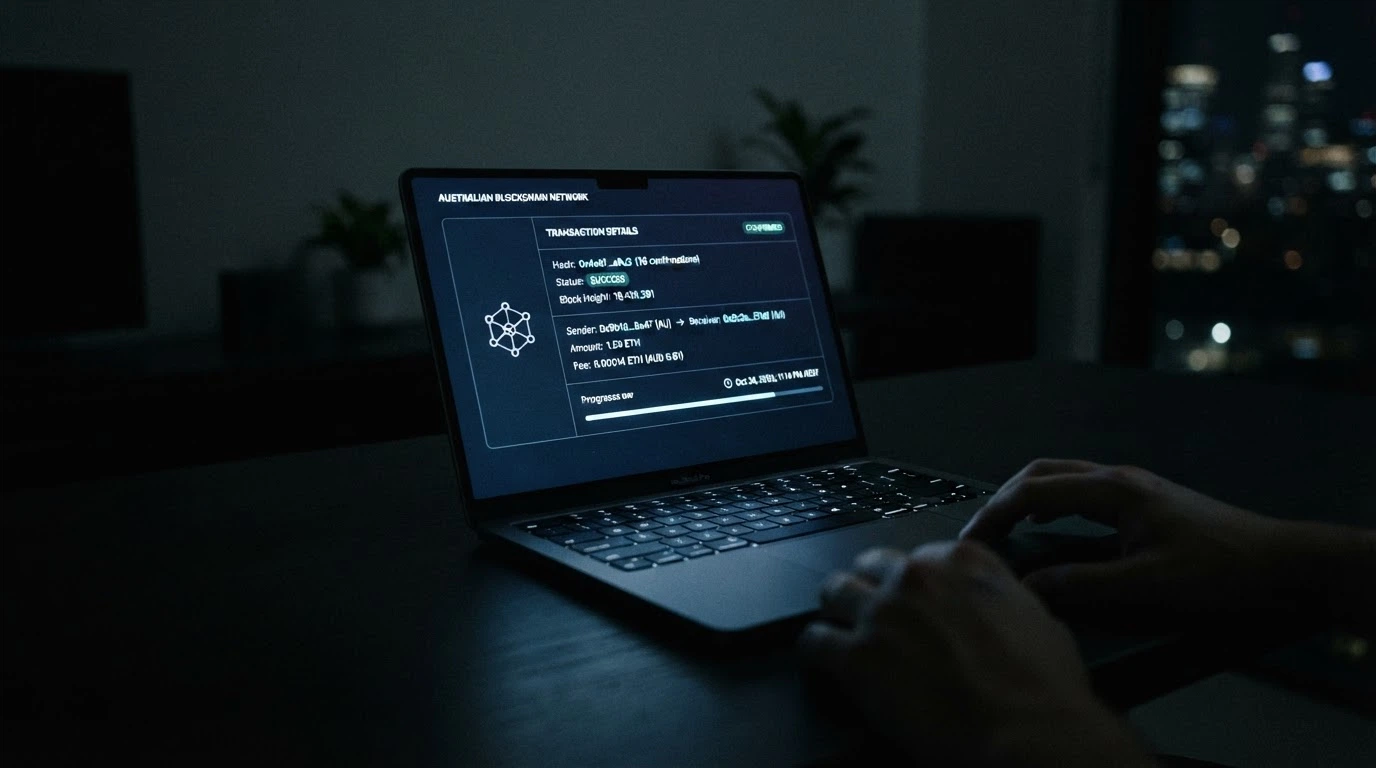
Thunderpick is the set’s no-KYC operator, with a 4-minute tested withdrawal that requires no identity documents. The trade-off is the dispute-resolution gap. A licensed operator that holds a player’s verified identity is also one an Australian court could, in principle, order to act; an operator that does not hold verified identity is also one a player cannot locate in a legal proceeding. The same omission that makes the withdrawal fast makes the complaint hard to escalate.
The Australian regulatory frame still touches the player. AUSTRAC oversees AML/CTF compliance for crypto exchanges, and a player who buys USDT on a local exchange is already inside that frame. A casino that accepts USDT without verifying the player is choosing not to extend that frame to the gambling side. The result is a one-sided privacy: the player is anonymous to the casino, but the on-chain transactions are visible to anyone who can read the blockchain, including AUSTRAC and the casino’s own analytics.
For a player considering a no-KYC brand, the practical question is what they would do if the operator refused a withdrawal or closed the account. The answer, in most cases, is nothing — no Australian regulator has jurisdiction, no licence authority can be complained to, and the operator knows it.
Provably Fair Games: What the Term Actually Means
Provably fair is a cryptographic mechanism that lets a player verify, after a bet, that the operator did not change the result. The operator publishes a server seed before the bet; the player’s browser generates a client seed; the two combine with the bet’s nonce to produce the result. After the bet, the operator reveals the unhashed server seed and the player can re-derive the result and confirm the numbers match.
The mechanism is real, and crypto-native operators (BGaming, Hacksaw, Pragmatic Play’s Provably Fair titles) are the most likely to implement it. RNG certification is the weaker form: an auditor has tested the random number generator at a point in time, but the player cannot verify any individual spin after the fact. Both are real, and provably fair is the one that survives the operator having an incentive to cheat — which is the relevant case at an offshore casino with no AU regulator.
Tether Casino Gaming on Your Phone
The Australian offshore market is mobile-first. Most punters reach a Tether casino through a phone browser, not a desktop, and the operators have built their sites accordingly.
Mobile Web Apps vs Native Downloads
Offshore Tether casinos do not appear on the Australian App Store or Google Play. Apple’s and Google’s content policies block real-money gambling apps in jurisdictions where the product is unregulated, and Australia’s prohibition puts every offshore casino in that category. The workaround is a browser-based mobile site that runs from the URL: open Safari or Chrome, navigate to the operator, and the site behaves like a native app without the app-store middleman.
The practical experience is comparable to a downloaded app for most purposes. The cashier, the live-dealer lobby, the bonus tracker and the support chat all run in the browser. The differences are the ones a phone user notices: push notifications are absent, the home-screen icon is a bookmark rather than a downloaded app, and the game library loads slightly slower the first time each title is opened. For a player who deposits USDT, withdraws USDT, and plays pokies in between, the browser experience is functionally equivalent to the desktop one.
The mobile cashier is where the experience differs from the desktop one in ways that matter. Pasting a TRC-20 deposit address from a wallet app into a phone browser, then opening the wallet to scan the QR code, is the standard flow. A player who has the wallet and the casino open in the same browser is asking for confusion; separate apps, side by side, are the workflow that works.
The Legal Reality Every Australian Tether Player Needs to Know
The offshore Tether market exists because the licensed market does not allow online casino, not because the offshore market is unregulated. It is regulated elsewhere, under someone else’s rules, and an Australian player inside it has no Australian recourse when something goes wrong.

The Interactive Gambling Act and What It Actually Prohibits
Section 15 of the Interactive Gambling Act 2001 prohibits the provision of online casino, online pokies and in-play sports betting to a person in Australia. The Act targets the provider, not the player, and the ACMA has been explicit on that distinction: “The individual player is not prosecuted. The IGA targets the provider.” No licence for online casino exists federally or in any state or territory; the licensable products are wagering on races and sport before the event begins, lotteries and keno, through operators licensed by a state or territory body (most commonly the Northern Territory Racing and Wagering Commission).
The distinction matters for a reader weighing options. A player at a SportsBet or a TAB is inside the Australian regulatory frame, with BetStop coverage, deposit limits and a complaint path to the state regulator. A player at any operator in this ranking is outside it, with none of those protections, and the only legal consequence attached to that choice falls on the operator providing the service. A civil penalty of up to A$247,500 attaches to that provision, not to the punter.
ACMA Enforcement: Blocked Sites, Penalties and the 2027 Reforms
The enforcement record is significant. Since November 2019, ACMA has had 1,564 illegal gambling and affiliate websites blocked by Australian ISPs, and more than 225 illegal services have withdrawn from the Australian market since 2017. ACMA’s enforcement power runs through the ISPs: when the regulator names a brand, the local carriers take the domain offline. The brands that remain reachable for Australian players in 2026 are the ones with enough mirror infrastructure and crypto payment routes to stay open through the blocks.
The 2027 reform extends the enforcement reach. From 1 January 2027, banks and payment providers gain express authority to block transactions to illegal gambling operators. A player funding an offshore account from an Australian bank account will face a new block at the bank level, on top of the ISP-level block on the casino’s domain. The reform also tightens advertising: an hourly cap of three wagering ads between 6 am and 8:30 pm, a live-sport blackout, and a ban on athletes, celebrities and influencers promoting wagering products.
The direction of travel is more enforcement, not less. The Interactive Gambling Amendment (Gambling Reform) Bill 2026 passed Parliament on 19 August 2026, with the measures commencing on 1 January 2027. A player who is choosing between offshore and licensed in 2026 is choosing before the next tightening, not after it.
New Tether Casinos Worth Watching in 2026
The offshore market turns over fast. A brand that was reachable twelve months ago is blocked today, and a brand that launched last quarter is the one running the largest welcome bonus. The pattern across the year has been consistent: newer operators support more Tether networks out of the box, advertise larger headline bonuses, and carry less of a public track record than the established names.
Recent Launches Accepting USDT From Australian Players
Rainbet is the closest example in the ranking itself: a relatively new Anjouan-licensed brand that supports USDT on five networks, advertises a 250% match and a 5,000+ game library, and has a tested ~15-minute withdrawal time. That profile — multi-network USDT, large bonus, fast withdrawal, recent launch — is the template newer casinos are following.
The due diligence gap is the corresponding risk. A new operator has no public complaint history, no established track record on withdrawal times, and no third-party testing that an older brand has accumulated. The checks that take ten minutes at an established brand (licence lookup, withdrawal history, community reputation) take longer at a new one because the data does not yet exist. A player who is willing to be the first to test a brand is the one newer operators target; a player who prefers to be the second should wait six months.
What Australian Protections You Leave Behind at an Offshore Casino
The Australian consumer-protection frame for gambling is built around licensed wagering. Offshore casinos are not part of that frame, and the protections a player is used to from a SportsBet or a TAB do not extend.

BetStop, Deposit Limits and the Helpline: What You Lose
Three Australian safeguards an offshore Tether casino does not honour.
- BetStop is the National Self-Exclusion Register, with 67,480 registrations as at 31 July 2026 and 41,290 active exclusions. One registration excludes a player from every Australian-licensed online and phone wagering service. The register is binding on the licensed operators; offshore casinos are not connected to BetStop, and a self-excluded Australian can still deposit, play and lose at any operator in this ranking. The Department of Social Services has put the point plainly: an offshore casino will keep taking a self-excluded person’s money.
- Customer-set deposit limits and activity statements are state-level licence conditions on Australian-licensed wagering operators. A player who sets a A$200 weekly deposit limit at a licensed brand has that limit enforced. An offshore casino has no such obligation, and the deposit limit a player “sets” in their account settings is only as binding as the operator’s terms of service.
- The National Gambling Helpline at 1800 858 858 is free, confidential, and staffed 24 hours a day, seven days a week. It is available to anyone in Australia, including players at offshore casinos. The helpline does not solve the offshore-protection gap; it is the resource a player calls once the gap has already cost them. Gambling Help Online is the web-based companion service, with online counselling, live chat and email support.
About 2.1% of Australian adults — roughly 430,000 people — experience problem gambling, and the rate is higher in some demographic groups. The licensed market’s protections exist because the regulator decided the product was dangerous enough to need them. The offshore market has no equivalent obligation, and the protections do not follow the player across the border.
How We Evaluated These Tether Casinos
The ranking is built on a fixed set of sources and a fixed set of criteria, and the methodology is the same for every operator in the table.
Operator sourcing. Each operator was cross-checked against the ACMA licence whitelist (every operator in the ranking is offshore; none hold an Australian licence, because none exists). Operator websites and published terms were the source for bonus amounts, wagering multiples, minimum deposits, free-spin terms, game provider lists and stated withdrawal windows. Where the published terms did not carry a figure, the cell in the table is blank or marked accordingly.
Evaluation criteria. Five dimensions: licence status (where stated), welcome bonus and wagering terms, Tether network support and minimum deposit, withdrawal speed (tested where a third-party test was available), and game selection. Operators were ranked by the mix of those five, with bonus value and wagering weight most heavily.
Third-party sources. CasinoRevisor, PokieKing, Payout Verdict and SlotsDudes were the third-party sources for tested withdrawal times, slot RTP and volatility data, and game provider verification. The Federal Register of Legislation was the source for the IGA citation; ACMA was the source for the blocked-sites count and the BetStop registration figures; the Department of Social Services was the source for the helpline and the BetStop coverage scope.
What this ranking does not measure. The ranking is not a measure of fairness, of game quality beyond the named high-RTP titles, of complaint resolution in individual cases, or of long-term operator solvency. A brand that has been paying out for two years and a brand that has been paying out for six months both rank by the same criteria; the older brand carries less unmeasured risk, and that risk is not in the table.
Is an Offshore Tether Casino Worth the Risk for an Australian Player?
The question the page has been building toward is also the question the data does not answer on its own. The legal position, the enforcement trajectory and the consumer-protection gap are facts; whether they are worth absorbing is a reader’s call. Three conclusions the data does support, and one it does not.
Online casino is prohibited in Australia, and no licence exists. Section 15 of the Interactive Gambling Act 2001 is the prohibition, ACMA is the enforcement body, and the 1,564 blocked sites since November 2019 are the operating record. The “offshore” status of every operator in this ranking is not a grey area; it is the product category itself.
The enforcement direction is more pressure, not less. Bank-level transaction blocking from 1 January 2027, advertising caps, the 2026 reform bill passed on 19 August 2026. A player choosing an offshore operator in 2026 is choosing before the next tightening, with the knowledge that the bank may be the next layer of enforcement.
The consumer-protection gap is real and total. No BetStop, no enforced deposit limits, no Australian recourse on a closed account or a refused withdrawal. The licensed wagering path (SportsBet, TAB, the state-licensed bookmakers on races and sport) is the one with the protections the page describes. It is also the one without online casino, online pokies or in-play betting, because those products are not licensable in Australia.
The data does not support a recommendation to play at any operator in this ranking. The ranking describes the market and what it costs; the call is the reader’s. For a player who has decided to proceed, the minimum verifications are the licence jurisdiction, the published bonus terms, the supported Tether network, the tested withdrawal time, and a third-party reputation check. For a player who has not, the licensed wagering path is the one that does not require any of those checks. The National Gambling Helpline at 1800 858 858 is free, confidential and available 24/7, regardless of which path the player is on.
Frequently Asked Questions
Is it legal to play at Tether casinos from Australia?
Online casino is prohibited in Australia under section 15 of the Interactive Gambling Act 2001, and no Australian licence for it exists. The Act targets the provider, not the player, and the individual player is not prosecuted. Offshore Tether casinos operate outside the Australian regulatory frame, and an Australian player using one forfeits Australian consumer protections, BetStop coverage and recourse.
Do Australian-licensed casinos accept Tether or USDT payments?
No. Australian-licensed wagering operators are subject to the credit and crypto payment ban that took effect on 11 June 2024, which prohibits credit cards and digital currency as payment for online wagering. Tether support is a feature of offshore operators only; no Australian-licensed brand accepts USDT deposits.
Are Tether casino winnings taxable in Australia?
Betting and gambling winnings are not assessable income under section 6-5 of the ITAA 1997, and gambling losses are not deductible under section 8-1, unless the person is carrying on a business of betting or gambling. The standard recreational player does not owe tax on casino winnings; record-keeping is still sensible, because the ATO can ask.
How do wagering requirements work at Tether casinos?
A wagering requirement is a multiple applied to the bonus amount (and sometimes to the deposit) that determines the total qualifying bets a player must place before a withdrawal is possible. A A$1,000 bonus at 40x means A$40,000 in turnover; the expected loss on a 96.5% RTP slot is around A$1,400 of that turnover before the player sees any of their own money back.
Can I self-exclude from offshore Tether casinos through BetStop?
No. BetStop binds Australian-licensed wagering services only; offshore casinos are not connected to the register, and a BetStop registration does not exclude a player from any operator in this ranking. An offshore casino has no obligation to honour a self-exclusion request, and the Department of Social Services has been explicit on the point: an offshore casino will keep taking a self-excluded person’s money.
What is the minimum USDT deposit at Australian-facing casinos?
The minimums across the ranking range from 15 USDT at Rainbet to 50 USDT at Bizzo Casino for the crypto-specific welcome bonus, with 20 USDT the common floor at SkyCrown, RocketPlay and Winz.io. The minimum is set by the operator and applies to the deposit that triggers the welcome package; subsequent deposits often have lower minimums.
What happens if an offshore Tether casino blocks Australian access?
ACMA has had 1,564 illegal gambling sites blocked by Australian ISPs since November 2019, and the operator’s domain can be taken offline at any time. A player with a balance on a blocked site has limited recourse: the operator may process the withdrawal on request, or may not, and there is no Australian regulator to escalate to. The risk is part of the offshore proposition and one reason withdrawal speed and operator track record matter more than headline bonus size.