
Casinos That Accept Litecoin in Australia: The Offshore Reality in 2026
Australia is one of the world’s biggest gambling markets per capita, and the country has built an elaborate, well-funded player-protection system around licensed wagering. None of that architecture reaches online casino games. Online pokies, online blackjack, online roulette, online craps and live-dealer casino tables are prohibited to people in Australia under the Interactive Gambling Act 2001. No online casino licence exists anywhere in the country, which is why every brand a player types into a search engine is, without exception, an offshore operator. Litecoin does not change that. It changes the way the money moves.

Data current as of 22 October 2026, verified against the ACMA register and current operator terms.
Table of Contents
- Australia’s Litecoin Casino Reality: What the IGA Actually Means for Players
- Where Australian Law Stands on Litecoin Gambling in 2026
- Why Litecoin Changes the Privacy Game at Online Casinos
- The 10 Offshore Litecoin Casinos Australians Are Using in 2026
- Why Your Litecoin Casino Bonus Costs More Than It Looks
- How Fast Your Litecoin Deposits and Withdrawals Really Arrive
- The Games Worth Playing with Litecoin — and Which Ones Pay Best
- Litecoin Casino Gaming on Your Phone: What Works in 2026
- Try Before You Stake: Demo Mode at Litecoin Casinos
- New Litecoin Casinos Worth Watching in 2026
- How to Pick a Litecoin Casino You Will Not Regret
- How We Evaluated These Litecoin Casinos
- Your Move: What the Litecoin Casino Landscape Means for an Australian Player
- Frequently Asked Questions
Australia’s Litecoin Casino Reality: What the IGA Actually Means for Players
A “Litecoin casino” in the Australian context means an offshore gambling site that accepts LTC deposits and offers slots, table games and live dealer to people who happen to be in Australia. The product is illegal to provide. The site is not licensed in Australia and the ACMA can ask Australian ISPs to block it at any time. The IGA targets the provider, not the player. That distinction is real, but it is not a shield. It means no Australian consumer protection law applies, no Australian complaints body can recover a disputed balance, and BetStop — the National Self-Exclusion Register that Australian-licensed wagering brands are required to honour — does not extend to offshore sites at all.
The cleanest signal that a casino sits outside Australian rules is the payment method. Since 11 June 2024, credit cards and digital currency have been banned as a way to pay for licensed online wagering in Australia. Penalties for non-compliance reach A$247,500. An Australian who is asked for a credit card or a crypto deposit by a gambling site is being served by someone outside the Australian rules. The payment method is itself a tell. On every page of this article, that is the starting position.
What a “Litecoin Casino” Actually Is in the Australian Context
The label covers any offshore casino — Curaçao-licensed, Anjouan-licensed, or unlicensed entirely — that lists Litecoin among its deposit methods. The site still runs on the same software any other online casino runs on: RealTime Gaming, Pragmatic Play, Evolution for live dealer, BGaming, Hacksaw, Nolimit City, the same studios that supply the licensed European market. The crypto angle is at the cashier, not in the games. A pokies player depositing with LTC sees the same reels as a player depositing with USDT or a credit card. The difference is the rail the money travels on, and the regulatory roof that is missing above the casino.
Access for Australian residents happens because the operators run their businesses from Curaçao, Anjouan or similar jurisdictions and accept signups from anywhere they are not blocked. AUD conversion is not done inside the casino. It is done at the exchange, when the player buys Litecoin with Australian dollars, and again on the way back out, when winnings are sold for AUD. The casino itself operates in crypto.
The Offshore Reality: Every LTC Casino Australians Find Sits Outside the Law
The dominant licence on the offshore LTC casino market is Curaçao eGaming. The regulator has licensed thousands of operators over two decades and is the de facto home for crypto-friendly casino brands. A Curaçao licence is a real licence — it carries rules, dispute resolution through the licensing authority, and a degree of oversight that an unlicensed site lacks. It is not an Australian licence. It does not give an Australian player any of the protections that an Australian licence would: no ACMA recourse, no BetStop binding, no guarantee the operator will still be operating next month, no requirement to keep player funds in segregated accounts in Australia.
The ACMA has had 1,564 illegal gambling and affiliate websites blocked by Australian ISPs since its first blocking request in November 2019. More than 225 illegal services have withdrawn from the Australian market since enforcement was strengthened in 2017. The blocking is ongoing, the withdrawals are ongoing, and any brand on this list can be added to the block list at any time. If a casino is blocked with a balance sitting in it, the player has limited practical recourse.
The fund-at-risk question is the one most listicles about crypto casinos skip past. Offshore status means an LTC casino can refuse a withdrawal, change its terms mid-promotion, or vanish — and the player has nowhere in Australia to complain. This is the cost of the convenience, and it is the same cost at every operator on the market.
Where Australian Law Stands on Litecoin Gambling in 2026
The Interactive Gambling Act 2001, as amended in 2017, is the foundation. It prohibits the provision of online casino games, online pokies and in-play sports betting to people in Australia. The 2017 amendments gave the ACMA formal blocking power, the ability to issue formal warnings, and civil penalty provisions against operators. The Interactive Gambling Amendment (Credit and Other Measures) Act 2023 added the credit card and crypto ban for licensed wagering, in force since 11 June 2024, with penalties of A$247,500 per breach. A separate reform — the Interactive Gambling Amendment (Gambling Reform) Bill 2026 — passed Parliament on 19 August 2026 and commences on 1 January 2027. It introduces an hourly cap on wagering advertisements, a live-sport blackout on wagering advertising, a ban on athlete and influencer promotion, and the most consequential change for offshore operators: express authority for banks and payment providers to block transactions to illegal gambling operators.
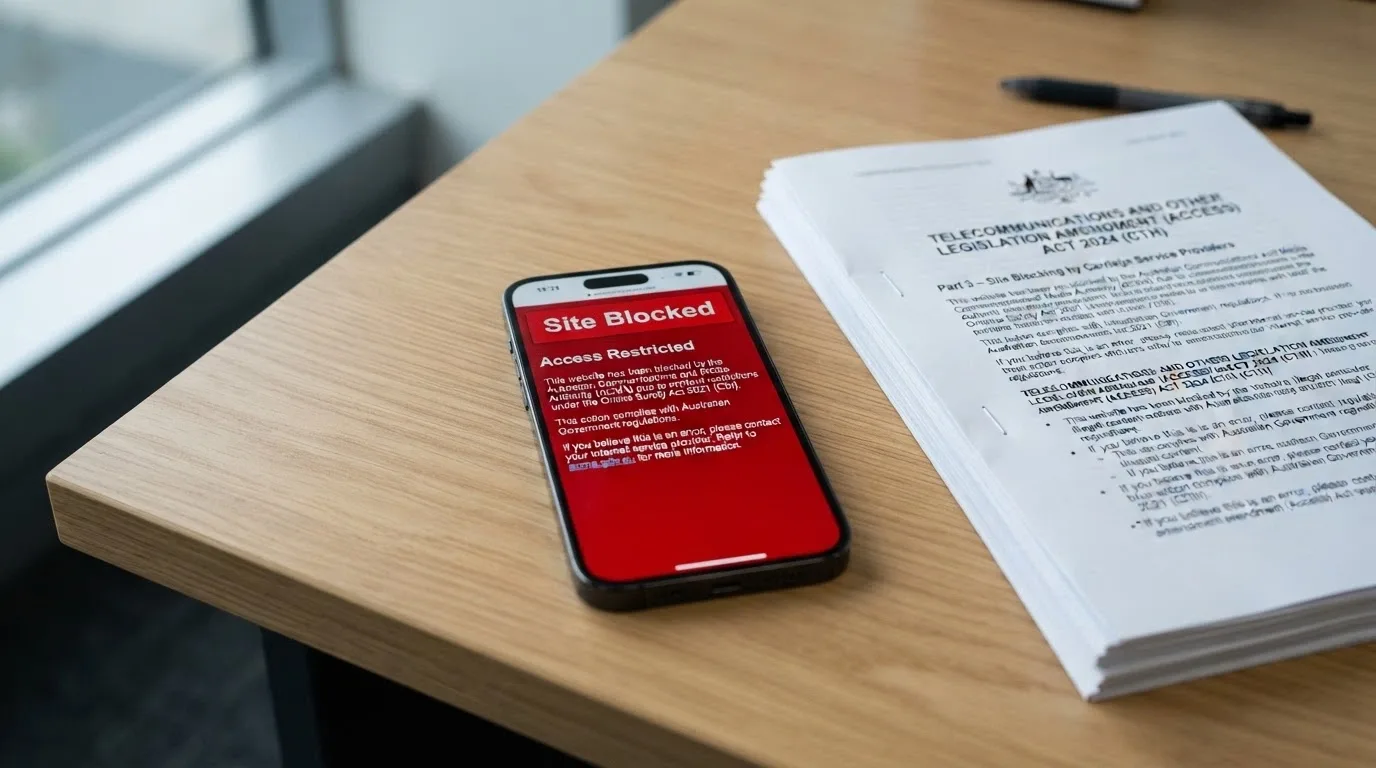
That last measure is the one that reaches the LTC casino market. Once banks can refuse to process a transaction to an offshore casino — even an indirect one routed through a crypto exchange — the friction of depositing rises sharply. The reform is passed but not yet in force. From 1 January 2027 it will be.
The Interactive Gambling Act 2001: What It Prohibits and What It Does Not
The IGA’s prohibition list is precise. Online casino games — slots, table games, live dealer — are prohibited. Online pokies, by any name, are prohibited. In-play sports betting — placing a wager after an event has started — is prohibited. The prohibition is on the provider. It is a criminal offence to supply a prohibited interactive gambling service to a person in Australia.
What remains legal is narrower than most readers expect. Pre-event wagering on races and sport, through operators licensed by a state or territory, is legal. Sportsbet, bet365, Ladbrokes and around fifty other brands hold Northern Territory Racing and Wagering Commission licences and supply legal wagering to Australian residents. Lotteries and keno sit in the same licensed column. The Northern Territory is the de facto national licensor for online wagering, with licence terms running up to twenty years. Minimum age for any commercial gambling is eighteen.
No federal deposit, loss or stake ceiling exists. Australia caps how a player can pay for licensed wagering (no credit, no crypto) but does not cap how much can be wagered. The product those limits would govern is banned outright, so the limit structure was never built. A player using LTC at an offshore casino sits outside both the prohibition and the protection.
ACMA Enforcement: 1,564 Sites Blocked and Counting
The enforcement picture, in plain numbers:
- 1,564 illegal gambling and affiliate websites blocked by Australian ISPs since November 2019, as of March 2026.
- More than 225 illegal services withdrawn from the Australian market since 2017.
- 67,480 BetStop registrations in three years of operation, with 41,290 exclusions still active as at 31 July 2026 — more than 60% of everyone who has ever registered.
- 78% of BetStop registrants were under 40; 38% chose lifetime exclusion.
- About 2.1% of Australian adults — roughly 430,000 people — experience problem gambling; the AIHW put high-risk gambling at 1.8% in 2022.
- The National Gambling Helpline — 1800 858 858 — is free, confidential, staffed 24 hours a day, every day, with online chat and counselling through Gambling Help Online at gamblinghelponline.org.au.
The blocking number is the one that matters for the LTC casino market. The ACMA does not need to prosecute a player. It needs to ask an ISP to add a domain to a block list, and the brand becomes inaccessible to Australian residents. Some sites respond by spinning up mirror domains; some withdraw from the market entirely. Either way, the player holding a balance when the block lands has a problem no regulator will solve.
The 2026 Gambling Reform: What Changes on 1 January 2027
The 2026 reform package is the biggest change to the Australian gambling framework since 2017. It was passed on 19 August 2026 and most of its measures commence on 1 January 2027. The headline changes:
- A cap of three wagering advertisements per hour between 6:00 am and 8:30 pm across all media.
- A live-sport blackout on wagering advertising — 15 minutes before to 5 minutes after a live event.
- A ban on athletes, celebrities and influencers promoting wagering products.
- Express authority for banks and payment providers to block transactions to illegal gambling operators.
- Direct-marketing restrictions: wagering providers cannot send inducements to a new sign-up for 14 days, to a former BetStop registrant for three months after deregistration, and cannot target at-risk customers at all.
The bank payment-blocking authority is the line that reaches offshore LTC casinos. A bank refusing a transaction to a known illegal operator is not a new idea; the reform gives it express statutory cover. A crypto exchange transaction that routes to a casino on the ACMA’s blocked list will, in principle, become a flaggable event. The reform does not ban crypto; it gives the financial system permission to refuse the specific transactions that fund offshore casino play.
The package is passed but not yet in force. As of writing, the bank-blocking authority has not yet commenced. From 1 January 2027 it will.
Why Litecoin Changes the Privacy Game at Online Casinos
Litecoin is to Bitcoin what a faster train is to an older one. The block time is about 2.5 minutes, roughly four times faster than Bitcoin’s 10-minute average. The network fee is typically under A$0.10 — small enough that an LTC deposit is cheaper to send than a PayID transfer. For a casino player, those two numbers translate into the same experience: a deposit that confirms in minutes, a withdrawal that clears in minutes, and a fee that does not eat into a small bankroll. The trade-off is that the underlying privacy story is more complicated than the marketing suggests.
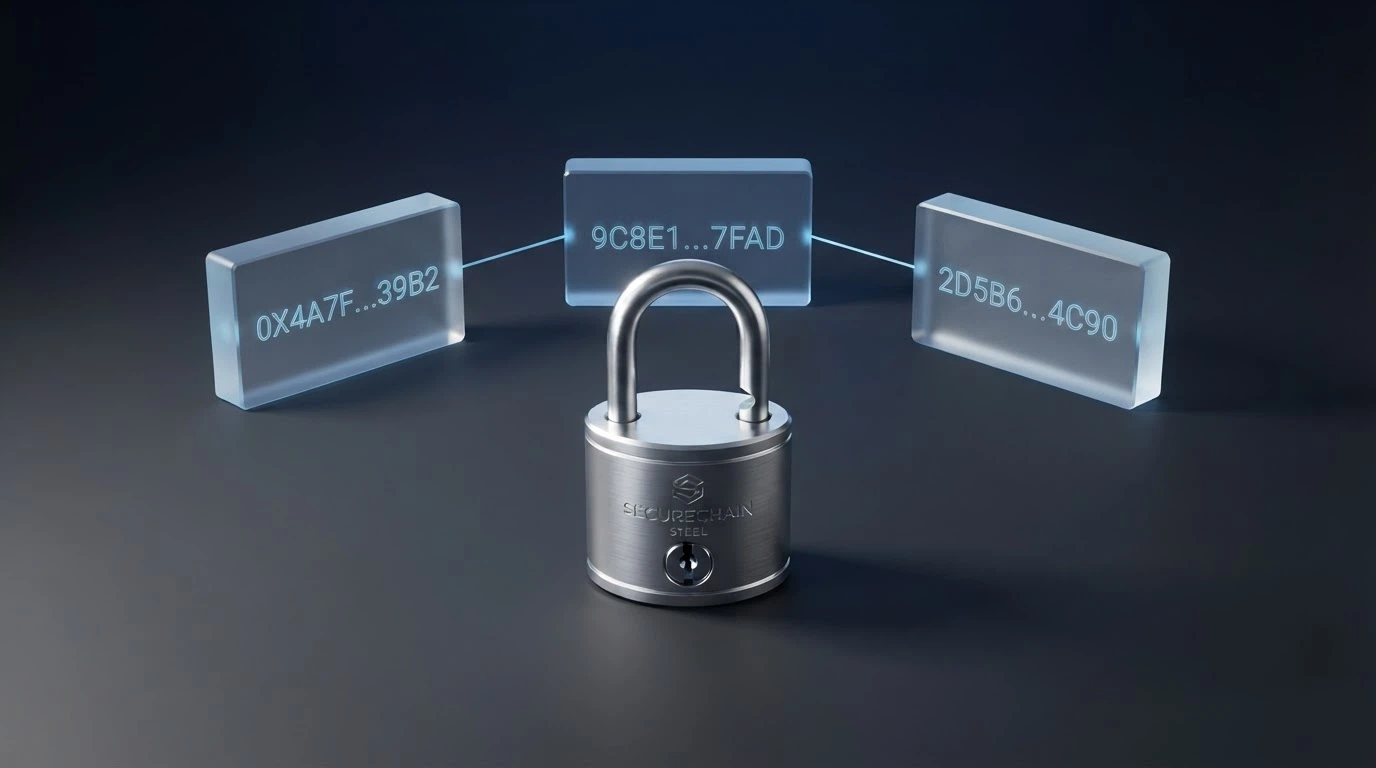
The pitch — “anonymous Litecoin casino” — rests on a misunderstanding of where the identity check happens. An Australian player who buys LTC on CoinSpot, Swyftx, Independent Reserve or Coinbase AU is identified at the exchange. AUSTRAC requires every Australian-registered Digital Currency Exchange to verify customer identity as a condition of registration, which means the player’s name is attached to the wallet address the LTC leaves the exchange from. The blockchain itself is public; the exchange is the door. The casino does not need to ask for ID to know who the player is — the exchange has already told the chain.
True anonymity requires a non-AU exchange, a peer-to-peer purchase, or a freshly minted wallet funded without going through an AUSTRAC-registered on-ramp. Most Australian players will not bother. The promise of crypto anonymity is real in theory and narrow in practice. Provably fair gaming is the second piece of the privacy-and-trust puzzle: a cryptographic system that lets the player verify each round’s outcome independently, without trusting the operator. It is real, and it is the closest thing the offshore LTC market has to a substitute for regulation.
What Player Identity Checks You Actually Face with LTC
The identity layer is two-sided. On the casino side, most offshore operators ask for KYC documents on withdrawal, not on deposit. The trigger varies — a cumulative withdrawal threshold, a single withdrawal over a certain size, a flag from the payment system — but the request, when it comes, is for the same documents an Australian bank would ask for: government ID, proof of address, sometimes a selfie. On the exchange side, the identity check is already complete by the time the LTC reaches the casino. CoinSpot, Swyftx, Independent Reserve and Coinbase AU all hold AUSTRAC DCE registration, which means they have already verified the player’s name, address and date of birth.
The “no KYC” casinos that appear in crypto-gambling guides sit in an awkward position with Australia. Several explicitly list Australia among their restricted jurisdictions in terms of service — they do not want the legal exposure of an IGA enforcement action — but their signup forms remain open to Australian IP addresses, and deposits clear. The brand is not a member of an Australian self-exclusion register, is not bound by Australian advertising rules, and accepts LTC deposits from a wallet that an Australian exchange funded. That is the grey zone, and it is where most of the no-KYC LTC casino market sits.
The honest read: an Australian player who wants genuine anonymity at both layers needs a non-AU exchange, a freshly generated wallet, and a casino that does not request documents on withdrawal. The combination is achievable. It is not the path of least resistance, and the player pays for it in convenience.
How Cryptographic Fairness Checks Work at LTC Casinos
Provably fair gaming replaces the regulator with a hash. The casino publishes a hashed server seed before a round begins. The player provides a client seed. After the round, the casino reveals the unhashed server seed, and the player can verify that the hashed value matched, that the round’s outcome was derived from the combination of server seed and client seed, and that the operator could not have changed the result mid-play. The verification is done on a separate page, with the player’s own input, and the math is auditable. The player does not need to trust the casino. The player needs to trust the hash.
The catch is scope. Provably fair applies to in-house games — dice, crash, plinko, mines, roulette, limbo. Third-party slots from Pragmatic Play, BGaming, Hacksaw and similar studios are not provably fair. Their random number generators are controlled by the provider, not the casino, and the player has no way to verify an outcome after the fact. A casino that runs both — provably fair titles alongside provider slots — gives the player a choice: trust the math, or trust the studio. A casino that runs only provider slots gives the player only the second option.
Bitcasino.io and BC.Game both offer provably fair titles alongside certified provider games. The two are not exclusive. A sharp player picks provably fair for the games that offer it — dice, crash, plinko — and accepts the trust-the-studio model for slots and live dealer. That is the practical shape of the LTC casino fairness landscape in 2026.
The 10 Offshore Litecoin Casinos Australians Are Using in 2026
Every operator on this list accepts Litecoin. None holds an Australian licence. The differences in bonus terms, withdrawal speed, game library and licence jurisdiction are the things that separate a useful offshore casino from a costly one. The table below is the comparison; the write-ups after it are the judgements.

| Casino | Licence | Welcome Bonus | Wagering |
|---|---|---|---|
| Fair Go | Curaçao (Deckmedia N.V., 2017) | 100% up to A$200 × 5 deposits (A$1,000 total) | — |
| Bizzo | Curaçao | Up to A$7,250 + 175 FS + 1 bonus game (4 deposits) | 40× |
| SkyCrown | Curaçao | Up to A$8,000 (5 deposits) + 400 FS (4 deposits) | 40× |
| Royal Reels | Curaçao | 100% / 75% / 100% up to A$500 / A$750 / A$1,250 (3 deposits) | 35× (bonus only) |
| WinSpirit | Not confirmed | 200% up to A$1,000 + 50 FS | — |
| Rainbet | Not confirmed | 40× wager across 3 deposits OR no-wager-lock on 1 deposit | 40× or none |
| RocketPlay | Curaçao | — | — |
| Stake | Curaçao | — | 40× |
| Oshi | Curaçao | — | — |
| Goldex | Not confirmed | Bonus boost up to A$57,000 | — |
Three caveats the table makes plain. First, the licence column has three em dashes: WinSpirit, Rainbet and Goldex all had their licence status unconfirmed in this research pass. They may hold Curaçao or Anjouan licences, but the source did not return a number to verify. Second, the wagering column is empty wherever the operator’s specific multiple was not returned — most often because the bonus amount itself was not returned. Where a number exists, it is the figure research confirms; where it does not, the cell is honest about it. Third, the bonus types are not interchangeable. SkyCrown’s A$8,000 package excludes crypto deposits from eligibility entirely. Royal Reels’ A$10 no-deposit bonus is the only confirmed free offer in the set. The table tells the reader which brand pays out on the same terms and which one does not.
Fair Go Casino: Five Deposit Bonuses and RTG Pokies Since 2017
Fair Go is the long-running Australian-facing brand in this set — Curaçao-licensed under Deckmedia N.V. since 2017, with a tightly focused 280-game RTG library. The welcome package is a five-tier 100% match up to A$200 on each of the first five deposits, totalling A$1,000. The wagering multiple is not specified in the operator’s public bonus terms as returned by research, which is a gap the player needs to read the T&Cs to close.
The deposit side is the better part of the offer. Fair Go accepts Bitcoin, Ethereum and Litecoin with zero confirmation requirements, and crypto withdrawals are processed in minutes rather than days. The library is small by the standards of the set — 280 RTG titles, no Pragmatic Play, no Evolution — but RTG is the studio that built the offshore-Australian market, and its pokies catalogue is the one Australian players recognise from the pre-crypto era. A punter who knows what they want and wants it fast will find Fair Go more comfortable than a 14,000-game mega-casino. A player hunting the latest Pragmatic Play release will not.
Bizzo Casino: A$7,250 Welcome Package and a Separate Crypto Bonus
Bizzo is built for size. The headline number is up to A$7,250 in bonus money across four deposits, plus 175 free spins and a bonus game on top. The crypto angle is separate: a standalone 200% crypto welcome bonus up to A$800 on the first deposit, with 40× wagering and an A$6.50 maximum bet during clear-down. A player depositing with LTC at Bizzo has two offers to choose between — the multi-deposit fiat package and the single-deposit crypto package — and the choice depends on whether they plan to stay past the first deposit.
The wagering sits at 40× and the validity window is 14 days. Both are at the stiffer end of the market norm (35×–40× is typical; above 50× is poor), and 14 days is the shortest combined window in the set. A player who takes the full A$7,250 package and plays casually will not clear it inside two weeks. The max bet during wagering is A$6.50, which keeps the bonus out of reach for high-stakes players on a long-shot run. Bizzo suits a player who deposits regularly, plays the slots heavily in the first two weeks, and treats the bonus as a planned campaign rather than a casual add-on.
SkyCrown: The A$8,000 Bonus Package That Crypto Deposits Cannot Claim
SkyCrown is the trap of the set. The welcome package is the largest in the table — up to A$8,000 and 400 free spins across four deposits — and 40× wagering across all stages. Minimum qualifying deposits start at A$30 and rise to A$50 for the fourth tier. The catch is in the bonus terms: cryptocurrency deposits do not activate standard bonuses. An LTC player at SkyCrown is depositing into a casino that pays out at 12 minutes via USDT TRC20 — the fastest withdrawal tested in the set — but cannot claim the headline A$8,000. The standard package is a fiat offer, and the only realistic deposit method that triggers it is a card or e-wallet that may itself be restricted at an Australian bank.
Betsquare’s payment testing put SkyCrown at the top of the speed table for USDT TRC20. A player who values speed above bonus size and is happy to play on a clean balance will find SkyCrown excellent. A player chasing bonus value is looking at the wrong casino. The two facts cancel out the marketing.
Royal Reels: 5,400+ Pokies and the Only Confirmed No-Deposit Bonus
Royal Reels is the only operator in the set with a confirmed no-deposit bonus: A$10 credited after phone verification, no deposit required. The main welcome package is a three-deposit structure — 100% up to A$500 on the first, 75% up to A$750 on the second, 100% up to A$1,250 on the third — with 35× wagering on the bonus only (not bonus + deposit) and a 7-day bonus validity window. The max bet during wagering is capped at A$5 per spin, which is tight.
The library is the other selling point: 5,400+ pokies from 40+ providers, including the major studios. Royal Reels is also the only operator in the set that is confirmed blocked by ACMA — the brand is on the regulator’s list, which means Australian ISPs are blocking access. The site operates via mirror domains and the block does not always stick, but the regulatory signal is unambiguous. A player who values the A$10 free play, the broad library and the cleaner 35×-bonus-only structure is paying for it with the most regulator-flagged brand in the set. The 10-tier VIP program is the long-game pitch.
WinSpirit: 200% Match and 39 Payment Methods — But a Very Low Safety Score
WinSpirit is the wide-roster brand. The casino accepts 39 payment options including Litecoin, runs 50+ brand-exclusive games, advertises instant LTC withdrawal, and offers a 200% match up to A$1,000 plus 50 free spins. The 200% headline is larger than any other single-deposit match in the set. The offset is the safety score: WinSpirit carries a Safety Index of 3.2, classified as “Very low” on casino.guru. The licence was not confirmed in this research pass, which is itself a yellow flag at this end of the market.
A player attracted to a 200% match needs to read the T&Cs carefully and understand what the safety score reflects. Casino.guru’s Safety Index aggregates complaint volume, licence status, withdrawal speed history, and terms fairness; a “Very low” score is not a marketing opinion. The 50 brand-exclusive games are also worth a second look — “exclusive” at a small offshore casino can mean “in-house games with no external audit” as easily as it can mean “titles you cannot find anywhere else.” The two together put WinSpirit in the part of the table where the offer looks generous and the operator’s track record does not.
Rainbet: Choose Between a Wager-Locked Bonus or Zero Wagering
Rainbet is the only operator in the set offering a structural choice. A player can take a 40× wager-locked bonus across three deposits, or opt for a no-wager-lock promotion on a single deposit. Both are on the table before the first deposit, and the choice shapes every other term: max bet during wagering is 2% of the deposit amount, the minimum deposit is around A$23, and any crypto deposit carries a 1× turnover requirement before withdrawal — even on the no-wager bonus. The platform supports 25 crypto tokens including LTC.
The exclusions are the part a player needs to see before committing. Hacksaw Gaming and Nolimit City slots are excluded from bonus play, and any game with an RTP above 97.4% is also excluded. The two studios named are the high-volatility, high-RTP end of the market; excluding them narrows the bonus play to lower-RTP titles where the house edge is wider. The jurisdiction was not confirmed in this research pass, and Australia is listed as a restricted region in Rainbet’s terms — the same pattern several no-KYC brands follow. The structural choice is real, but it comes with a smaller game pool than the headline suggests.
RocketPlay: Fast LTC Withdrawals with a 5-Day Bonus Clock
RocketPlay is the tightest clock in the set. The bonus validity is 5 days from receipt — the shortest in the table — and the maximum bet during wagering is A$7.50, or LTC 0.045. Slot bets count 100% toward wagering; live games count only 5%. The game weighting is the part that matters: a player who likes live dealer and takes a RocketPlay bonus is clearing 5% of every dollar they stake, and the 5-day window will not survive a slow live-dealer session.
The welcome bonus amount was not specified in research, which leaves a gap the player has to close in the operator’s terms. The Curaçao licence is confirmed, the slot-and-live weighting is clear, and the 5-day validity is the kind of clock that rewards a planned play session and punishes a casual one. A player who knows they will play heavily for a long weekend can clear it. A player who treats bonuses as a casual add-on will see the bonus expire with most of the wagering still outstanding.
Stake: The 8,700-Title Giant That Officially Excludes Australia
Stake is the biggest name in crypto gambling — 8,700+ titles including Pragmatic Play, Evolution and Play’n GO, Curaçao-licensed, with the kind of brand recognition and live-dealer catalogue the rest of the set cannot match. The terms, however, are explicit. Australia is listed as a restricted jurisdiction in Stake’s Terms of Service, verified in May 2026. Stake.com is an offshore gambling site and is officially blocked in Australia by the ACMA under the Interactive Gambling Act 2001.
A player reaching Stake from an Australian IP is doing so against the operator’s stated terms. The 40× wagering on bonuses and the 30-day validity are competitive; the 1% of deposit maximum eligible bet is a tight cap on bonus play. The pragmatic read: Stake is the casino the rest of the set is measured against for game quality, and it is also the one most clearly closed to Australian residents. The mirror-domain access that the offshore market runs on is not the same as a player being welcome.
Oshi Casino: Daily Tournaments and a Curaçao-Licensed Crypto Library
Oshi is a Curaçao-licensed crypto-friendly casino with a large game library, daily tournaments and fast LTC payments. The bonus terms and game-count specifics were not confirmed in this research pass, which limits the table a player can build from the data. What is clear is the structural shape: Oshi is built for repeat play, with daily tournament structures that reward regular sessions more than one-off deposits. The Curaçao licence is a real licence, the crypto-friendly cashier is the same shape as the rest of the set, and the daily-tournament pitch suits a player who plans to play across weeks rather than over a weekend.
A player who likes a tournament structure and is happy to verify the bonus terms directly on the operator’s site will find Oshi the kind of platform that rewards that habit. A player who wants the bonus terms pre-verified before signing up is reading a write-up that does not have them.
Goldex Casino: A$57,000 Bonus Ceiling with an Unconfirmed Licence
Goldex is the highest bonus ceiling in the table. A bonus boost up to A$57,000 is the figure research returns, and the platform is crypto-focused with LTC accepted. The licence status was not confirmed in this research pass. A “bonus boost up to A$57,000” is also a figure that needs a closer read than the headline suggests — the maximum is the sum across the entire structure, not a single-deposit match, and the terms behind it are not in the data returned.
Goldex is the brand at the end of the table where the offer is loud and the verification is thin. A player attracted to a six-figure bonus ceiling needs to confirm the licence directly, read the maximum-cashout terms, and check the wagering multiple in the operator’s own T&Cs. The ceiling is not the offer. The terms behind the ceiling are the offer, and they are the part research did not return.
Why Your Litecoin Casino Bonus Costs More Than It Looks
A “100% match up to A$500” reads like the casino is giving the player free money. It is not. The casino is giving the player A$500 in bonus funds that cannot be withdrawn until they have been wagered a multiple of times. At 40×, a player who deposits A$500 and takes the full match has to wager A$40,000 — bonus and deposit combined, or bonus only, depending on the operator — before the bonus balance becomes real money. At 35× on the bonus only, the same player wagers A$17,500. The headline figure is the bait. The wagering multiple is the price.
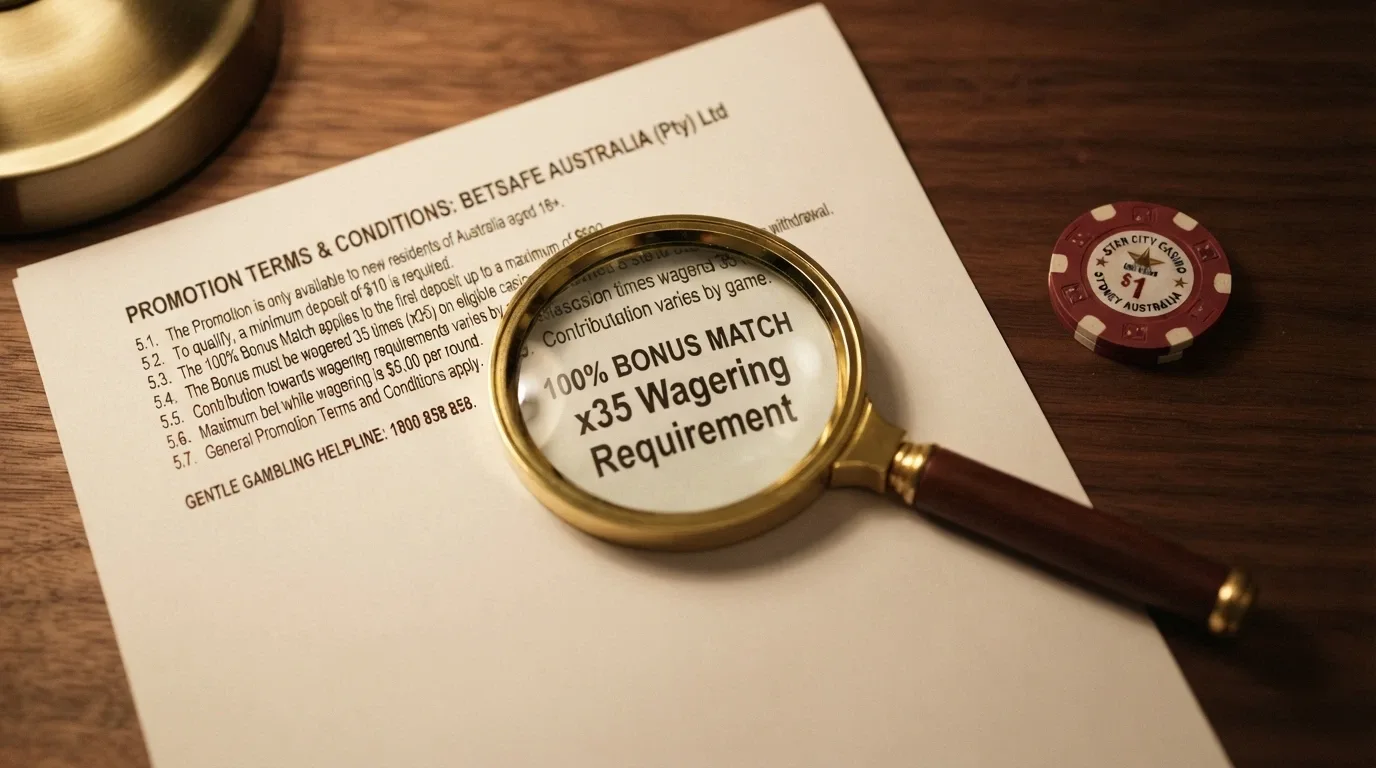
The market norm, as of 2026, is 35×–40× on bonus and deposit combined (or on bonus only at the cleaner operators). Anything above 50× is poor. The bonus-cost calculation below works through a representative scenario at the Royal Reels first-deposit terms: 100% up to A$500, 35× wagering on the bonus only, A$5 per-spin cap, an A$1 slot stake. A player who claims the full A$500 bonus, plays pokies at A$1 per spin, has a required turnover of A$500 × 35 = A$17,500, equating to 17,500 spins. At 5 seconds per spin, that is 87,500 seconds, or roughly 24.3 hours of continuous play. The clock is the hidden cost. The wagering multiple is the visible one. Both are paid in time.
Welcome Bonuses: How Match Deposits Work When You Pay with LTC
A match-deposit bonus is a percentage added on top of the qualifying deposit. “100% up to A$500” means the casino matches every dollar of the first deposit up to A$500, so a deposit of A$500 yields A$500 in cash plus A$500 in bonus funds. The bonus is not withdrawable until the wagering requirement is met. The LTC side of the deal is at the cashier: the player sends LTC to the casino’s deposit address, the casino converts at its prevailing rate to determine the AUD equivalent, and the bonus is calculated on the AUD figure. The exchange rate the casino uses is rarely the rate the player got at the exchange; the spread is part of the cost.
The two-track structure is what catches players out. Most fiat-facing welcome packages at offshore casinos do not treat LTC the same way as a card deposit. SkyCrown is the clearest example: the A$8,000 package is real, but crypto deposits do not activate it. Bizzo solves the same problem the other way — a separate 200% crypto bonus up to A$800 for crypto users, alongside the four-deposit fiat package. A player depositing with LTC needs to know which offer they are claiming before the deposit, because switching tracks after the fact is not how the terms work.
The Real Price of a Bonus: Wagering Requirements Explained
The arithmetic of a bonus is straightforward. Required turnover = bonus amount × wagering multiple. Spins to clear = turnover ÷ stake per spin. Hours of play = spins × average spin time ÷ 3600. Where the wagering is on bonus and deposit combined, both numbers are added before the multiple is applied. Where it is on bonus only, only the bonus is multiplied — which is the cheaper structure by half. Royal Reels’ 35× on bonus only is materially cheaper than Bizzo’s 40× on bonus and deposit combined, even though the multiple is lower, because the base is smaller.
The hidden costs live in the terms around the wagering. A max bet cap during wagering — RocketPlay’s A$7.50, Royal Reels’ A$5 — limits the speed at which a high-stakes player can clear. Game contribution percentages — RocketPlay’s 100% slots and 5% live games — mean a live-dealer player is clearing 1/20th as fast as a slots player, and the bonus validity window becomes the binding constraint. Rainbet’s exclusion of Hacksaw and Nolimit City slots from bonus play, plus any title with an RTP over 97.4%, narrows the eligible game pool. Each of these is a real term that changes the real cost of the bonus. None of them is on the headline.
The fair way to read a bonus is as a marketing budget the casino will pay out only if the player plays enough to clear the terms. A 100% match at 35× on bonus only, with a 7-day window, a A$5 max bet, and 100% slot contribution is the cleanest version of this offer in the set. A 200% match at 40× on bonus and deposit, with a 14-day window, a A$6.50 max bet, and 175 free spins is a bigger headline and a longer grind. The size of the headline is not the size of the value.
No-Deposit Offers and Free Spins: What Is Actually Available with LTC
Royal Reels is the only operator in the set with a confirmed no-deposit bonus: A$10 credited after phone verification, with 35× wagering. Phone verification is a soft KYC step, not a document upload, and the A$10 is small enough that the bonus serves as a try-before-you-stake rather than a meaningful bankroll. A player who treats it as a free trial and uses the time to learn the cashier flow is getting the value the bonus was designed to deliver. A player who treats it as a path to a real-money win is going to be disappointed by the wagering math.
Free spins are a different category, because they sit inside deposit packages rather than standing alone. Bizzo’s 175 free spins, SkyCrown’s 400, and WinSpirit’s 50 are all part of deposit-gated welcome offers, with wagering on the spin winnings typically running at 40×. The spin value, the contribution percentage, and the maximum cashout from spin winnings are the terms that decide whether the spins are a genuine free add-on or a marketing number. Standalone no-deposit offers in the LTC casino space are rare because the operators have learned that an A$10 free play attracts bonus hunters rather than depositors. Royal Reels is the outlier, and the A$10 is small enough that the strategy still mostly works.
How Fast Your Litecoin Deposits and Withdrawals Really Arrive
The speed story is the most concrete reason to choose Litecoin over a card. The table below lines up the major cryptocurrencies by deposit time, fee and withdrawal speed at the casino end. The numbers are what a player sees in practice; the underlying mechanism is the block time.
| Payment method | Typical deposit time | Typical network fee | Withdrawal speed |
|---|---|---|---|
| USDT (TRC20) / Solana | <5 min | <A$0.10 | Settled in 12 min (SkyCrown test, fastest overall) |
| Ethereum | 1–5 min | A$0.50–A$3 (variable) | 5–30 min |
| Litecoin | 2–10 min | Under A$0.10 | 18 min in Betsquare test (WestAce, A$0.08 fee) |
| Bitcoin | 10–60 min | A$1–A$5 (variable) | 30–60+ min |
| PayID (fiat) | Minutes | Free | Fastest fiat, usually <1 hour |
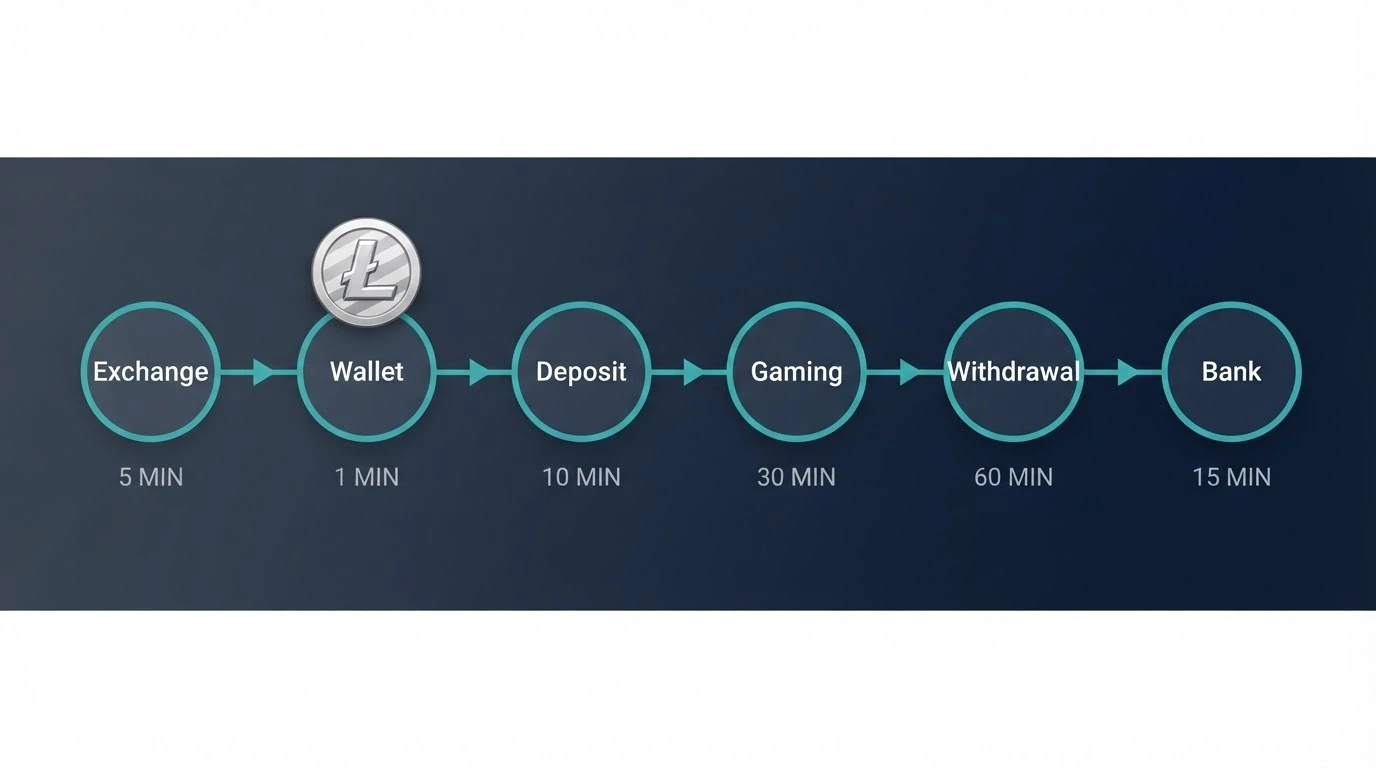
The block time is the floor. Litecoin’s 2.5-minute block means a deposit needs at least one confirmation — typically two — before the casino credits the balance, and that puts the floor at 5 minutes. A fast operator with a clean queue credits in 2–5 minutes. A slow operator under load can take the full 10. USDT on Tron settles faster because Tron blocks every 3 seconds; the table above reflects that. Bitcoin at 10 minutes per block is the slowest, and the network fee makes it the most expensive for a small deposit.
From Wallet to Casino Balance: How LTC Deposits Work
The deposit flow is the same at every operator on the list. The player opens the cashier, selects Litecoin, and the casino generates a deposit address. The player sends LTC from their wallet — exchange wallet or self-custody wallet — to that address. The transaction propagates to the Litecoin network, gets picked up by a mining pool, and is confirmed in the next block. The casino’s deposit system watches the address, sees the confirmation, and credits the player’s balance.
The minimum deposit is set by the casino. StoneVegas accepts from A$10 — one of the few LTC casinos with a sub-A$20 floor. Rainbet’s minimum is around A$23. Most of the set sits at A$20–A$30, the standard offshore market range. The credit time is 5–15 minutes at the slow end, 2–5 minutes at the fast end, and the network fee is under A$0.10. The deposit rail is the cheapest and fastest mainstream crypto option for casino play. There is no argument with that.
What “Instant Withdrawal” Actually Means for LTC Players
“Instant” at an LTC casino means the casino’s own processing step is measured in minutes, not days. The full withdrawal chain has more links than that. The casino approves the withdrawal — the part it controls. The transaction propagates to the Litecoin network. The network confirms the block in ~2.5 minutes. The transaction arrives at the player’s wallet. The player then sends the LTC to an exchange, the exchange credits the deposit, and the player sells for AUD. The exchange leg is the part that takes longest, and it is also the part where the AUSTRAC identity check lives.
The benchmark numbers from Betsquare’s testing set the realistic range. WestAce paid out a Litecoin withdrawal in 18 minutes with a network fee of A$0.08, tested 25 June 2026. SkyCrown paid out a USDT TRC20 withdrawal in 12 minutes — the fastest overall in the set. Crypto as a category is the fastest withdrawal method at Australian-facing casinos, with most transactions settling in 30 minutes or less. PayID is the fastest fiat option, usually clearing in under an hour, but PayID is a deposit method at licensed wagering operators, not at offshore casinos. The exchange leg is where the speed advantage of crypto gets eaten by the KYC step.
The Games Worth Playing with Litecoin — and Which Ones Pay Best
The game library is the part that varies the most across the set. Fair Go runs 280 RTG titles. Royal Reels runs 5,400+ pokies from 40+ providers. Vegas Now runs 14,000+ games. StoneVegas claims 100,000+. The headline numbers are not directly comparable because the operators count games differently — some count every variant of every slot as a separate game, some count only unique titles, some count lobby entries including live-dealer tables. The honest read is that a 5,400-title casino has a real library and a 100,000-title casino has padded its count, and the only way to know which is which is to log in and look.
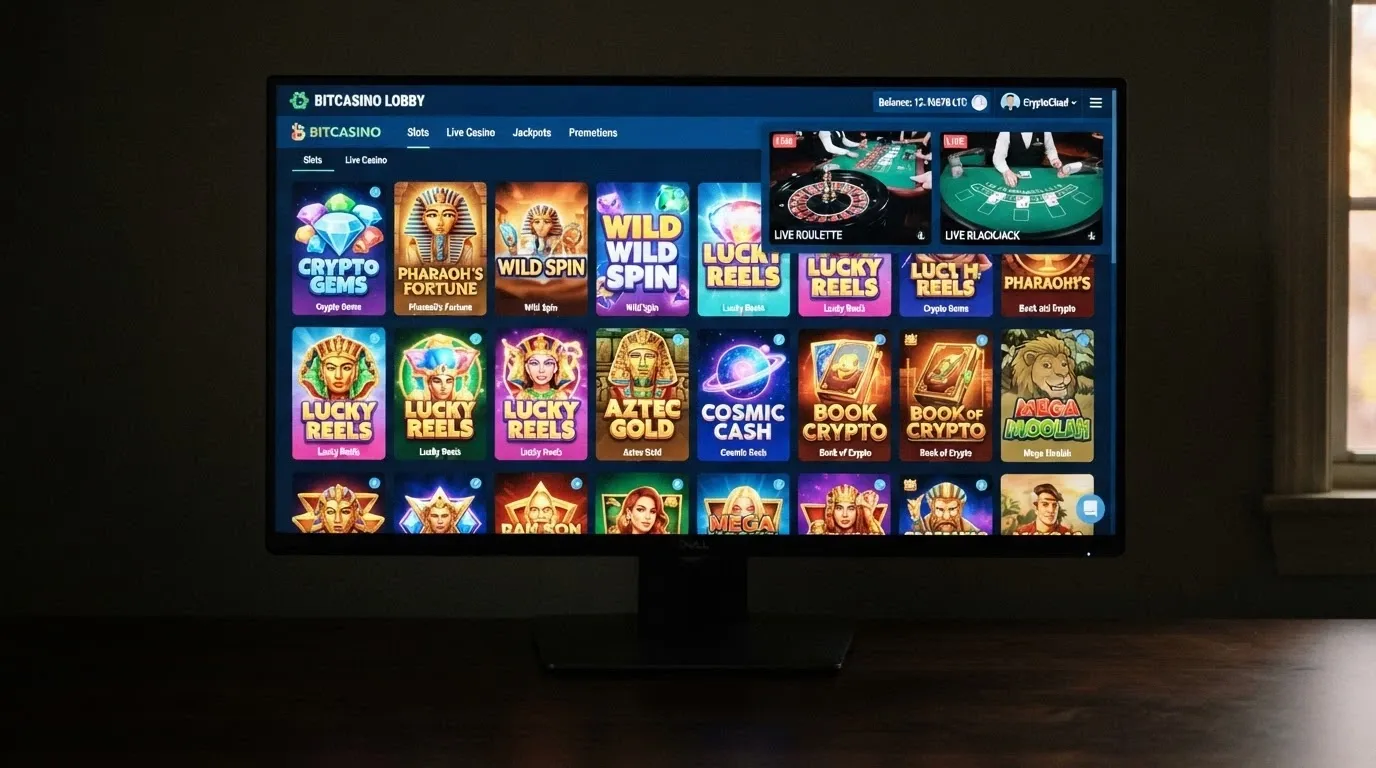
What matters more than the count is the studio behind the games. RTG is the studio that built the offshore-Australian market and is the only major provider with a long history of building specifically for Australian-facing brands. Pragmatic Play, Evolution, Play’n GO, BGaming and Hacksaw are the studios powering the modern offshore market. Evolution is the leader in live dealer. Pragmatic Play is the leader in slots by volume. BGaming and Hacksaw are the high-volatility, high-RTP end. Nolimit City sits in the same bracket. A player who knows which studio they want will find the casino that carries it faster than a player browsing by count.
Pokies: What Australian Players Should Know About RTP and Providers
Pokies — slots, by any other name — dominate the game library at every casino in the set. The honest read on RTP is that per-title data is thin. The major providers publish RTP ranges for their games, and most sit between 94% and 97%, with a few high-RTP titles above 97%. The 97.4% cutoff Rainbet applies to its bonus exclusion is meaningful: any game above it is excluded from bonus play, which is a sign that the operator is aware the high-RTP end exists. Most players never see per-title RTP unless they go looking for it. The slot menu in a typical LTC casino lobby does not display it.
Megaways, jackpot slots and branded titles are the categories that move the count. Megaways is a reel-mechanic licence, not a studio, and dozens of studios release Megaways titles — the same mechanic, different art and maths. Jackpot slots include progressive jackpots (a pooled prize that grows across a network) and fixed jackpots. Branded titles are slots built around a film, TV show, musician or band. None of these categories is provably fair. All of them run on the provider’s RNG. A player who wants cryptographic verification is in the in-house games section, not the slots lobby.
Table Games and Live Dealer: LTC Stakes at the Felt
Blackjack, roulette, baccarat and the dice games are the table staples, and every casino in the set carries them. The split is between RNG table games — automated, no dealer, fast play, eligible for provably fair in-house versions — and live dealer — real human dealer, real cards, streamed from a studio. Evolution and Pragmatic Play Live are the dominant live-dealer providers. The catalogues run to dozens of blackjack variants, multiple roulette wheels (European, American, French, speed, immersive), baccarat, and the game-show-style titles (Dream Catcher, Monopoly Live, Crazy Time) that have become the live-dealer category’s volume driver.
The wagering contribution split is the part a bonus player needs to know. RocketPlay’s 100% slots and 5% live games is representative. A A$1 live-dealer bet contributes A$0.05 toward wagering, against A$1 for a slots bet of the same size. A bonus cleared on live dealer at 5% contribution takes twenty times as long as the same bonus cleared on slots. The terms do not exclude live dealer from bonus play at every operator, but the contribution percentage makes the timing math unworkable in most cases.
The Game Providers Behind the Best LTC Casino Libraries
The studio is the brand. Pragmatic Play’s slots catalogue is the broadest in the market, with a few hundred titles covering every mechanic. Evolution is the leader in live dealer by a margin that has not been challenged in a decade. BGaming and Hacksaw are the high-volatility, high-RTP end of the slots market. Nolimit City sits in the same bracket with a smaller catalogue and a more distinctive visual identity. Play’n GO is the mid-volatility mid-RTP workhorse. RTG is the Australian-facing specialist. The provider the casino carries tells the player more about the kind of games they will find than the count does.
Stake’s 8,700-title library is the largest in the set, with Pragmatic Play, Evolution and Play’n GO all confirmed. Royal Reels’ 5,400-pokies library covers 40+ providers. Fair Go’s 280 RTG titles is a focused offering rather than a broad one, and the choice is a positioning one — Fair Go is the casino for a player who already knows what RTG pokies they want. Rainbet excludes Hacksaw and Nolimit City from bonus play, which is a signal that those two studios are where the high-RTP, high-volatility slots sit. The provider split is the same at every offshore LTC casino, and the differences between operators are in which of the major studios they have signed.
Litecoin Casino Gaming on Your Phone: What Works in 2026
Every featured LTC casino runs in a mobile browser. The deposit flow, the game library, the live-dealer streams and the withdrawal queue all work through a responsive web app, with no download required. The trade-off is that offshore casinos do not appear in the Apple App Store or Google Play Store — the platform policies prohibit real-money gambling apps from non-licensed operators, and an Australian App Store or Play Store user is not downloading a Curaçao casino app. The browser is the only path.
The mobile experience at a well-built offshore casino is not a degraded version of the desktop product. The same games load, the same cashier works, the same live-dealer streams run. The difference is the absence of native-app features: no push notifications, no offline play, no biometric login beyond what the phone’s browser supports. A player who values those features is in the licensed-wagering market (the AU-licensed bookmakers do offer native apps) and out of the offshore casino market. For most users, the browser-based experience provides the full casino functionality without the storage overhead or limitations of a native app.
Browser vs App: How Most LTC Casinos Handle Mobile Play
The responsive web app is the universal approach. The casino’s desktop site is built to adapt to a phone screen, the game providers build their games in HTML5 for exactly this scenario, and the cashier is a touch-optimised form. iOS Safari and Android Chrome are both well-supported. The deposit flow is the same address-generation-and-send-LTC process as on desktop. The withdrawal flow is the same queue. The live-dealer streams adapt to mobile bandwidth.
A few of the larger operators offer a progressive web app — a browser-based app that can be added to the home screen and behaves like a native app for basic navigation. None of the featured set is distributed through the Australian App Store or Google Play Store. A player who searches “casino app” in an Australian store will find licensed wagering apps and not much else. The path to an offshore LTC casino on mobile is the browser, and the browser experience in 2026 is close enough to native that the missing pieces are not what a player notices first.
Try Before You Stake: Demo Mode at Litecoin Casinos
Demo mode is the slot provider’s free-play toggle. Most slot providers — Pragmatic Play, BGaming, Hacksaw, Nolimit City, Play’n GO, RTG — build a demo version of every title, and most offshore casinos expose it in the game lobby. The player opens the slot, the casino offers real play or demo, and the demo version loads with a play-money balance. The maths, the reels, the bonus rounds and the volatility are the same as the real-money version. The only thing missing is the chance of a real payout.
The coverage is not uniform. Live dealer does not run in demo mode — the studio cannot afford to stream a real table for free play, and the player is not paying for the privilege. Provably fair in-house games sometimes do, sometimes do not, depending on the casino. Some jackpot slots do not have a demo because the progressive contribution is real-money-only. Table games in RNG form often do, and a player who wants to test a blackjack variant before committing LTC can usually do so. The transition from demo to real-money LTC play is the same one-click switch as the transition from a YouTube preview to a paid film — the player decides when they are ready to pay for the experience.
What You Can and Cannot Play for Free with LTC
The honest expectation is that most pokies offer a demo, most RNG table games offer a demo, and live dealer does not. A player who wants to test a strategy, learn a slot’s bonus round, or just play without risk can do so on the majority of the library. A player who wants to test a live-dealer table needs to deposit and play for real, or watch a stream on a casino-affiliated site that publishes live gameplay.
The relationship between demo mode and no-deposit bonuses is closer than it looks. Royal Reels’ A$10 no-deposit bonus is effectively a paid demo across the whole library — the player does not need to deposit, and the wagering on any winnings is the cost of the privilege. A no-deposit bonus is a wider, more expensive demo. A demo is a free, no-strings-attached look at one game. Both serve the same player need: to test before staking.
New Litecoin Casinos Worth Watching in 2026
Reelraven is the only confirmed recent launch in the data. The casino went live in 2025 under an Anjouan licence (ALSI-202502014-FI1), accepts Litecoin, runs 8,000+ pokies, and caps withdrawals at A$11,500 per month. The Anjouan licence is a newer jurisdiction than Curaçao, with a smaller roster of operators and a less established dispute-resolution track record. The monthly withdrawal cap is a real limit — a player who wins more than A$11,500 in a month at Reelraven cannot withdraw the full amount in one go, and the terms will spell out the pace. A A$11,500/month cap is workable for a casual player and a binding constraint for a high-stakes one.
The launch date and the licence jurisdiction are the two facts a player needs to weigh. A new operator on a new jurisdiction is a new platform with a clean regulatory start, an unproven dispute track record, and a limited history of payouts. A new operator on an established jurisdiction (Curaçao) is the same licensing structure as a hundred other casinos, with a short history of operating under it. Neither is a reason to avoid the brand; both are reasons to check the withdrawal terms and the bonus terms before depositing.
What a Fresh Licence Brings — and What It Does Not
A new licence jurisdiction is not Australian regulation. The Anjouan licence gives Reelraven the right to operate from Anjouan, not the right to serve Australian residents. The IGA prohibition is the same whether the licence is Curaçao, Anjouan or Maltese — Australian residents cannot be supplied with online casino games under Australian law, and the offshore licence does not change that. The player protection an Anjouan licence offers is whatever Anjouan’s regulator enforces; that protection is not Australian.
A modern platform with a clean start is a real benefit. New casinos tend to have cleaner interfaces, faster cashier flows, and better mobile experiences than legacy operators. They also tend to have shorter track records of paying out under pressure, fewer resolved complaints, and a smaller base of long-term players whose experience can be checked. The trade is not unique to Reelraven — it is the trade at every new casino, in every jurisdiction. A player who wants the modern platform accepts the shorter track record. A player who wants the track record accepts the older platform. The choice is not which is safer; it is which kind of uncertainty the player prefers.
How to Pick a Litecoin Casino You Will Not Regret
The decision framework is the same one the article has been building, applied in order. First, confirm the licence — Curaçao, Anjouan, or whatever the operator holds, and whether it is a real licence rather than a marketing claim. Second, read the bonus terms — wagering multiple, validity window, max bet cap, game contribution percentages, game exclusions. Third, check the withdrawal terms — minimum and maximum, processing time, identity verification triggers. Fourth, confirm the game library — is the studio the player wants on the platform, and are the player’s preferred titles available with the stakes they want to play? Fifth, check the exchange side — the AUSTRAC-registered exchange the player is using, the KYC status, the AUD conversion cost.
The order matters. The licence is the first filter because an unlicensed casino offers no recourse at all, and no bonus or game library compensates for that. The bonus terms are the second filter because they are the part most likely to turn a generous headline into a costly grind. The withdrawal terms are the third because they are the part that decides whether the player can actually get the money out. Game library and exchange side are the fourth and fifth, and a player who has the first three right will not lose much by getting the last two slightly wrong.
The Five-Point Checklist Before You Deposit LTC
The five checks, in order:
- Licence. Confirm the operator’s licence number and check it against the regulator’s public register. Curaçao licences can be verified through the Curaçao Gaming Control Board’s licensee search. Anjouan licences are verifiable through the Anjouan Gaming Authority’s register. A licence the operator refuses to name or that does not appear in the register is a red flag.
- Bonus terms. Read the wagering multiple (35×–40× is the market norm; above 50× is poor), the validity window (7 days is tight, 30 days is comfortable, anything under 7 days is a clock), the max bet cap (A$5–A$7.50 is typical), the game contribution percentages (slots at 100%, live dealer often at 5%), and the game exclusions (Rainbet’s Hacksaw, Nolimit City and RTP >97.4% exclusion is a model of what to look for).
- Withdrawal terms. Check the minimum and maximum, the processing time, and the identity verification trigger. Royal Reels’ A$5 per-spin cap during clear-down, RocketPlay’s 5-day bonus validity, and Reelraven’s A$11,500/month withdrawal cap are the kinds of limits that change the cost-benefit of a deposit. The AUSTRAC exchange identity check is part of the chain regardless of the casino’s own terms.
- Game availability. Confirm the studio the player wants and the titles they prefer. A player who likes Hacksaw needs a casino that does not exclude Hacksaw from bonus play if they plan to play with a bonus. A player who likes live dealer needs a casino with Evolution or Pragmatic Play Live, and needs to know the wagering contribution percentage.
- Exchange KYC readiness. The AUSTRAC-registered exchange is the door the LTC leaves through, and the player’s name is on the transaction before it reaches the casino. A player who has not completed the exchange’s KYC will hit a wall on the way out — the exchange will not credit a deposit from an unidentified wallet, and the LTC will sit in limbo. The exchange account needs to be in good standing before the first deposit.
How We Evaluated These Litecoin Casinos
The selection criterion was straightforward: the operator accepts Litecoin deposits and serves Australian residents, however reluctantly. The ranking criterion was fit to the topic — the operators with the most complete LTC-specific information were prioritised, and operators with confirmed licence, confirmed bonus terms, and a verifiable game library ranked above those with gaps in the data.
The evaluation drew on four source types. Operator sites were checked for current bonus terms, game counts, and the licence statement in the footer. Casino.guru’s Safety Index was checked for WinSpirit (3.2, “Very low”) and was not available for the rest of the set in this pass. Betsquare’s payment-speed testing was the source for the WestAce 18-minute LTC withdrawal, the SkyCrown 12-minute USDT TRC20 withdrawal, and the broader LTC-vs-BTC-vs-ETH comparison. The ACMA register was checked for blocking status — Royal Reels is confirmed on the block list; the other operators were not flagged in this pass but are subject to the same ongoing enforcement.
What the evaluation does not cover: no real-money playtests were conducted for this article, the rankings are based on the available data and not on first-hand play, and the absence of an Australian licence is the same at every operator — the ranking is among offshore options, not between offshore and licensed. A player treating this article as a complete picture of the LTC casino market will be missing the operators research did not return, and the operators that have launched or changed terms since the data was collected.
Your Move: What the Litecoin Casino Landscape Means for an Australian Player
Every LTC casino an Australian can reach is offshore. That fact does not change with the brand, the bonus, or the licence jurisdiction. The product is prohibited under the IGA, the site is not licensed in Australia, and the player has no Australian consumer protection, no BetStop coverage, and no guarantee the operator will still be operating next month. The choice is not between safe and unsafe offshore casinos. It is between informed play with eyes open and playing blind.
The practical version of informed play is short. Confirm the licence against the regulator’s register. Read the bonus terms in full before the first deposit, with attention to the wagering multiple, the validity window, the max bet cap and the game exclusions. Use a wallet the casino has not seen before, funded through a path that does not directly link the LTC to a name the casino already has. Set a deposit limit before the first session and stop at it. The 1× turnover requirement Rainbet applies to every crypto deposit is a real example: even a deposit the player does not bonus on has a wagering step before withdrawal.
From 1 January 2027, the landscape shifts. Banks and payment providers gain express authority to block transactions to illegal gambling operators, and the friction of depositing at an offshore casino rises. The reform does not ban crypto and does not change the IGA prohibition. It changes the willingness of the financial system to process the transactions that fund the offshore market. The LTC casino an Australian plays at in 2026 may be harder to fund in 2026+1. The bonus terms, the wagering multiples and the game libraries are all perishable. The offshore status is the constant.
If the offshore market is not where the player wants to be — and it is a fair position to take — the Australian-licensed alternative is wagering on races and sport through brands like Sportsbet, bet365 and Ladbrokes, where BetStop applies, the helpline at 1800 858 858 is part of the safety net, and the ACMA can recover disputed funds. The licensed market does not offer online casino games. The licensed market offers the protection the offshore market does not. The choice is the player’s, and the cost of the choice is on the player to read before they deposit.
Frequently Asked Questions
Do Litecoin casinos require KYC verification for Australian players?
Most offshore LTC casinos ask for KYC documents on withdrawal, not on deposit — usually triggered by a cumulative withdrawal threshold or a single large withdrawal. The AUSTRAC-registered exchange the player buys LTC through has already verified identity, so the casino often has a name before the player provides one. Genuine no-KYC play requires a non-AU exchange, a fresh wallet, and a casino that does not request documents at withdrawal. The combination is achievable but not the path of least resistance.
What is the minimum deposit amount when using Litecoin at an Australian casino?
Minimums vary by operator. StoneVegas accepts from A$10 — one of the few sub-A$20 floors in the set. Rainbet’s minimum is around A$23. Most of the featured operators sit between A$20 and A$30, with multi-deposit packages sometimes rising to A$50 by the fourth deposit (as at SkyCrown). The minimum is set by the casino and is checked in the cashier before the deposit is sent.
What happens if an offshore Litecoin casino refuses my withdrawal?
The blunt answer: the player has limited Australian recourse. The casino is not licensed in Australia, ACMA cannot recover funds on the player’s behalf, and the operator’s own dispute process is the only available path. A Curaçao-licensed operator can be complained about through the Curaçao Gaming Control Board; an Anjouan-licensed operator through the Anjouan Gaming Authority. The complaint process takes months, and the outcome is not guaranteed. This is the real cost of the offshore market, and it is the reason the licence check matters.
How does Litecoin compare to Bitcoin for casino deposits in terms of speed and fees?
Litecoin’s block time is about 2.5 minutes, roughly four times faster than Bitcoin’s 10-minute average. Network fees are typically under A$0.10 for LTC against A$1–A$5 for BTC at busy periods. A Litecoin deposit confirms in 2–10 minutes; a Bitcoin deposit takes 10–60 minutes. The practical difference is that LTC is cheaper for small deposits and faster at the cashier, and BTC is the more familiar asset for players who already hold it.
Does BetStop self-exclusion apply to offshore Litecoin casinos?
No. BetStop binds Australian-licensed wagering services only. An offshore casino is not licensed in Australia, is not connected to the register, and is not required to honour a BetStop exclusion. A self-excluded person who signs up at an offshore LTC casino will not be blocked, will not be flagged, and will be able to deposit and play. BetStop is a real safety net for the licensed market, and the offshore market sits outside it.