
The Best Australian Mobile Casinos for 2026, Ranked Against Each Other
 Available in AU
Data current as of 22 October 2026 and cross-checked against the ACMA’s register of blocked services and the Interactive Gambling Act 2001.
A page titled “the best mobile casinos for Australian players” opens with an oddity worth naming straight away. The product itself does not exist inside Australia. There is no Australian-licensed online casino, no domestic mobile casino licence and no government stamp any operator can put on a real-money pokies app and ship through Sydney. The Interactive Gambling Act 2001 makes the supply of online casino games to a person physically in Australia a strict-liability civil offence, and the Australian Communications and Media Authority — the ACMA — has spent the years since 2017 turning that prohibition into blocked domains, withdrawn services and seven-figure penalty notices. Every “best mobile casino” list serving an Australian reader is, by definition, a list of offshore brands that have chosen to keep taking Australian customers anyway. Calling them “best” is honest only if that framing is up front.

That is where this guide starts. Ten offshore brands — Curaçao or Anjouan licensed, none of them Australian-licensed because none can be — were loaded on an iPhone 15, a Samsung Galaxy S24 and a Pixel, ranked on mobile performance, welcome offer and honesty of terms, and reviewed against the regulatory backdrop that determines what an Australian player can and cannot expect from any of them. The answer to “which is the best Australian mobile casino?” turns out to be a method question before it is a name question. This page is built around that method, with the ten results at its centre and the legal and technical scaffolding that any Australian player needs to read them honestly sitting underneath.
Table of Contents
- Why Australia’s Best Mobile Casinos Run Through Your Browser, Not an App
- Australia’s Most-Played Mobile Casinos in 2026 — Ranked and Reviewed
- No App Store, No Problem — How PWAs Deliver a Full Casino on Your Phone
- Pokies, Live Tables and the Games That Actually Run Well on a 6-Inch Screen
- Why Your 2026 Mobile Casino Bonus Is Smaller Than the Headline Number
- How to Fund Your Mobile Play When Australian Banks Are Watching
- New Mobile Casinos Worth Your Data — And the Ones That Aren’t
- Playing Safely on a Platform That Wasn’t Built for Australians
- How We Selected and Ranked These Mobile Casinos
- What Australian Mobile Players Should Actually Do Next
- Frequently Asked Questions
Why Australia’s Best Mobile Casinos Run Through Your Browser, Not an App
Start with the thing every Australian phone owner has already noticed and most international guides skate past: there is no real-money casino app in the Australian App Store or on Google Play. Search “pokies” or “casino” inside either store and the listings are social-casino free-play apps, demo versions of regulated lottery products, or sports-betting apps from licensed Australian bookmakers, with the in-play betting tab stripped out. Real-money online casino apps — the kind a player in Auckland or Toronto can download in a minute — are not on the shelf. That absence is not a market gap. It is the law, enforced at the store level by Apple and Google under their own platform rules.
The legal reality — what the IGA actually prohibits (and what it doesn’t)
The Interactive Gambling Act 2001 — the IGA — is the statute that builds the wall around the Australian market. It makes it an offence to provide an online casino, online pokies or in-play sports betting to a person in Australia. “Provide” is the operative verb. The IGA targets the operator, not the customer: the regulator’s enforcement record, the infringement notices, the civil penalty proceedings, the blocked-domain regime — all of it points at the people running the site, not the person with the phone in their hand. That asymmetry matters, because it is the reason an offshore casino can keep an Australian customer and still be acting unlawfully. The breach is on the supplier’s side; the player is not the target.

The civil penalty exposure for an operator is severe enough to keep most fully-regulated companies out of the market. Penalties can run to $2,475,000 per day for an individual and $12,375,000 per day for a corporation providing a prohibited service. The ACMA has used them. Tabcorp, one of Australia’s largest gambling companies, was issued eight infringement notices on 16 January 2026 totalling $158,400 over an in-play betting product — a single product feature, on a single operator, in a single month. Since the ACMA’s first blocking request in November 2019, 1,788 illegal gambling and affiliate websites have been blocked at the ISP level by Australian providers. Over 230 illegal services have pulled out of the Australian market entirely since the 2017 enforcement push began. The legal architecture is real, and it is being used.
What the IGA leaves alone: wagering on races and sport placed before the event begins, lotteries and keno, online instant-win tickets and similar products — provided the operator holds the relevant state or territory licence, most commonly through the Northern Territory Racing and Wagering Commission. None of those licences covers an online casino or a real-money pokie site. A page about “licensed online casinos in Australia” is, in the ACMA’s own formulation, describing something that does not exist.
Why Apple and Google keep real-money gambling off Australian phones
Both Apple and Google maintain store guidelines that restrict real-money gambling apps distributed to Australian accounts. The apps the IGA prohibits — online casino, online pokies, in-play betting — are exactly the apps the two store operators decline to list for Australian storefronts. Sports-betting apps from licensed Australian bookmakers appear, with the in-play module disabled. Lottery apps from state-licensed operators appear. Real-money casino brands that the same operator publishes freely in other jurisdictions do not appear in Australia, by store policy.
The effect on the player is that a search for “mobile casino app” inside an Australian storefront returns nothing the searcher can spend money on at the kind of site the IGA prohibits. From the player’s standpoint, the store behaves as if the product category does not exist. From the operator’s standpoint, the wall is one more reason to skip Australia entirely; from the offshore brand’s standpoint, it is one more reason to skip the app and reach the player through a browser instead. Which is exactly what they have done.
How a mobile casino actually works — the PWA model explained
A progressive web app — a PWA — is a website that behaves like an installed app. It loads in a mobile browser, but the user can tap “Add to Home Screen” and produce a full-screen icon that launches the casino from the phone’s home grid like any other app. The casino does not need Apple’s blessing or Google’s review process. It does not need to be packaged as an APK and side-loaded. It runs as a website, served over HTTPS, with a service worker handling offline caching and push notifications that is essentially the same plumbing a native app would use under the hood.
Every operator reviewed in this guide runs as a PWA. SkyCrown, Wild Tokyo, LuckyVibe, Spinjo, Bitdreams, Dazard, Fair Go, Ripper, Olympia and Rocket Play all serve the Australian player through a URL typed into Safari or Chrome, with the home-screen icon supplied as the install path. The iPhone 15, the Galaxy S24 and the Pixel all launched each site in the testing for this guide, and the home-screen install worked on every device. There is no separate download, no per-device binary, and no app-store approval step. The browser is the storefront because the real storefront will not carry the product.
This is not a workaround the operators invented under pressure. It is the architecture every major offshore casino settled on when the storefronts closed, and it has been stable for years. The trade-off is real — PWAs cannot use a few native APIs that an installed app can, and certain OS-level integrations are missing — but for the purposes of playing pokies on a phone, the PWA does the job well enough that the player typically cannot tell.
Real-money play vs free-play — what you can do without depositing
Every operator on this list, and almost every offshore casino that accepts Australian players at all, runs both modes: a real-money mode tied to a registered account with funds on deposit, and a free-play or demo mode that lets the player spin the reels, place chips at the tables and walk through the lobby using virtual credits. Demo-mode availability varies by operator, but most major studios — Evolution for live tables, BGaming, Pragmatic Play, Wazdan, Betsoft for pokies — publish a demo alongside the paid version, and offshore casinos carry it as a default option for guests.
The practical use of demo mode is exactly what it sounds like. A player who has never used a PWA can load the casino site in Safari, open a pokie in demo, watch what the game looks like on a 6-inch screen, see whether the controls are reachable with a thumb, and test the lobby search and provider filter without registering an account. That last point matters. A smart test of any offshore casino is the registration flow itself — how many fields, whether a phone number is mandatory, what the deposit screen looks like before any money moves. Demo mode takes that walkthrough off the cash side of the ledger.
The boundary between the two modes is sharper than the marketing suggests. Demo wins are not withdrawable, do not unlock any bonus and cannot be converted into real funds. What demo lets the player do is evaluate the casino — its speed, its layout, its game selection — without staking anything except the time. For a reader who has never used an offshore mobile casino and is deciding whether to register at all, demo mode is the free audition the headline bonuses do not advertise.
Australia’s Most-Played Mobile Casinos in 2026 — Ranked and Reviewed
The ranking below scores each of the ten featured operators on three columns the player can actually act on: the licence the brand is operating under, the welcome bonus as it is structured (not as the headline number flatters it), and the operator’s mobile focus — what the brand appears to have built for, tested on. Every site in the table was loaded on an iPhone 15, a Samsung Galaxy S24 and a Pixel. Every operator in the table is offshore, none is Australian-licensed, and the mobile path into every one of them is a PWA installed via the browser.
| Operator | Licence | Welcome Bonus | Mobile Focus |
|---|---|---|---|
| SkyCrown | Curaçao | Up to A$4,000 + 400 Free Spins (5 deposits) | Best mobile casino overall |
| Wild Tokyo | Curaçao | Up to A$4,200 + 500 Free Spins (3 deposits) | Best iOS experience |
| LuckyVibe | Anjouan | Up to AU$5,000 + 300 Free Spins (3 deposits) | Best Android PWA |
| Spinjo | Curaçao | Welcome package available, see site | Best for mobile PayID |
| Bitdreams | Curaçao | Up to AU$10,000 + 200 Free Spins | App available |
| Dazard | Curaçao | 125% up to AU$7,500 + 100 Free Spins | App available |
| Fair Go | Curaçao | Deposit AU$25 Play With AU$100 + 30 Free Spins | App available |
| Ripper | Curaçao | AU$10 No Deposit Bonus | App available |
| Olympia | Curaçao | Up to AU$10,000 + 200 Free Spins | App available |
| Rocket Play | Curaçao | — | — |
Read across the licence column and one fact does most of the work: nine of the ten operators hold a Curaçao licence, one — LuckyVibe — holds an Anjouan licence, and none holds an Australian one. A Curaçao licence is the workhorse credential of the offshore casino industry; it is what the bulk of the unregulated market trades on, and it carries very little Australian-specific consumer protection. Anjouan is a smaller, more permissive licence that some newer offshore brands favour. Neither licence gives an Australian player any recourse through Australian courts or through the ACMA. Both make the operator’s continued access to the Australian market dependent on the operator’s tolerance for the IGA’s enforcement regime.
SkyCrown — The All-Round Mobile Leader
SkyCrown sits at the top of this ranking because its mobile product does three things well at once. The pokie lobby painted in under three seconds on the iPhone 15 — the fastest load among the operators tested — and that single benchmark, repeated across the Galaxy S24 and the Pixel, separated SkyCrown from a crowded middle of the field. The welcome package runs up to A$4,000 plus 400 free spins across five deposits, with the first deposit carrying a 100% match up to A$300 plus 100 free spins. The structure is a five-step rather than a single splash: deposit two through five each release another slice of the headline figure, and the player has to keep funding the account to unlock the remaining matches.
The Curaçao licence is the same one nine of the ten operators in this guide hold, and the consumer-protection ceiling is the same. What differentiates SkyCrown is the depth of the mobile-first build, the speed of the lobby and the breadth of the game providers carried in the PWA. For a player who already knows they want to play offshore pokies on a phone, SkyCrown is the recommendation.
Wild Tokyo — Built for iPhone Players
Wild Tokyo positions itself as the strongest iOS experience among the featured operators. The site renders cleanly in Safari, the home-screen PWA icon takes its full rounded-edge styling on the iPhone, and the lobby navigation is organised around categories an iPhone player reaches with a thumb. The welcome offer runs up to A$4,200 plus 500 free spins across three deposits — the highest free-spin count in the ranking — with the first deposit delivering 100% up to A$600 plus 100 free spins.
The pitch is iOS-specific, and the iOS optimisation is real, though a PWA on Safari is not meaningfully faster than the same PWA on Chrome for this category of product. What changes is the polish: the gesture support, the safe-area handling around the notch and the home indicator, the touch target sizing on the lobby filters. Wild Tokyo is the iOS pick for a player who already knows they care about those small differences and is willing to trade a slightly slower home-screen launch for a more native-looking interface.
LuckyVibe — Android’s Best Mobile Casino PWA
LuckyVibe is the only Anjouan-licensed brand in the ranking and the one that markets itself to Android users most directly. The welcome package runs up to AU$5,000 plus 300 free spins across three deposits, with the first deposit delivering 100% up to AU$500 plus 100 free spins. The PWA loads fast on Chrome and the Galaxy S24’s default browser, the home-screen install flow is the standard Android one, and the lobby scales to the Pixel’s slightly different aspect ratio without misaligned controls.
The Anjouan licence is the single licence in the ranking that is not Curaçao. For most players the distinction is academic — both regimes are permissive, both sit well outside Australian regulation, neither offers recourse through Australian channels. LuckyVibe is the Android-leaning entry in the ranking, with a welcome offer that sits in the middle of the field on total value. A player choosing an Android-first brand from this list will arrive at LuckyVibe.
Spinjo — PayID Deposits, Optimised for Mobile
Spinjo’s distinguishing feature is the PayID deposit flow. The deposit screen maps an Australian bank account to a PayID handle, the funds clear through Osko within seconds, and the confirmation screen returns to the lobby in under five seconds on the iPhone 15 and the Galaxy S24. For an Australian player whose preferred payment method is already PayID and who would rather not enter card details into an offshore site, Spinjo collapses the deposit step into the banking app the player already uses. The welcome package details were not pinned down to a specific number at the time of review; the casino’s own bonus page covers the current offer.
The Curaçao licence sits behind it like every other brand here. Spinjo is the deposit-method entry in the ranking, and that is the right way to read it. For an Australian player whose decision is really about which offshore casino accepts the payment rail they already trust, Spinjo answers before the bonus comparison starts.
Bitdreams — The AU$10,000 Welcome Package
Bitdreams carries the largest total welcome bonus figure in the ranking: up to AU$10,000 plus 200 free spins. The figure beats every other operator by a factor of roughly two on total headline cash value and is the reason Bitdreams shows up at the top of bonus-comparison tables elsewhere in the market. The licence is Curaçao, the mobile offering includes a dedicated app path alongside the PWA, and the lobby carries the expected mix of pokies and live casino.
The catch is structural and matters more than the headline. A AU$10,000 total bonus spread across multiple deposits asks the player to keep funding the account to release each slice, and each subsequent deposit carries its own terms. Betting the bonus responsibly means reading the full terms page before committing to a deposit schedule the marketing alone does not justify. Bitdreams is the size-of-headline pick, and the player who goes there is paying for that headline in deposit commitments they have to honour.
Dazard — The 125% First-Deposit Edge
Dazard is the only featured operator running a 125% first-deposit match. Every other brand in the ranking offers a 100% match on the first deposit; Dazard offers a 125% match on a base that runs up to AU$7,500, plus 100 free spins. For a player making a first deposit of AU$500, the difference between 100% and 125% is an extra AU$125 in bonus funds for the same stake, and that extra carry extends to the higher tier of deposit the player is willing to make.
The licence is Curaçao and the mobile offering includes a dedicated app path. Dazard is the first-deposit-efficiency pick — for a player who values the first deposit above the total package, Dazard’s 125% match is the most generous immediate match in the ranking and the one figure that separates Dazard from the rest of the Curaçao pack.
Fair Go — Low Deposits, Full Mobile Access
Fair Go’s welcome offer — Deposit AU$25, Play With AU$100, plus 30 free spins — sets the lowest entry threshold in the ranking. Twenty-five Australian dollars is the cost of testing the offshore casino experience end-to-end without committing a sum that hurts if the brand falls short. The AU$100 playable balance is the welcome package mechanic rather than a separate credit, so the AU$75 of bonus funds carries the wagering terms that apply.
The Curaçao licence is the standard one, and the mobile offering includes a dedicated app path. Fair Go is the entry-threshold pick. A reader who has never used an offshore casino on a phone and wants to be sure of the floor before raising it should land here first.
Ripper — The No-Deposit Starting Point
Ripper runs the only no-deposit bonus in the ranking: AU$10 credited to a new account before any deposit is made. Every other featured operator gates their welcome offer behind a first deposit. No-deposit bonuses are the rare artefact of the offshore market — they exist because the operator wants the player on the inside of the registration flow, where the deposit screen becomes the next visible step, rather than just on the marketing page — and AU$10 is a typical scale for them. The terms that attach to a no-deposit bonus are usually stricter than the terms that attach to a deposit-based welcome offer, including a higher wagering multiple and a maximum cashout cap that limits what the player can withdraw from the AU$10 of credit.
The Curaçao licence is the standard one, and the mobile offering includes a dedicated app path. Ripper is the zero-commitment pick: a player who wants to test the lobby, the game selection and the withdrawal flow on real funds without putting money down first will arrive at Ripper. What that AU$10 is worth depends almost entirely on the attached terms, which is the always-read-the-bonus-terms caveat in concentrated form.
Olympia — The Other AU$10,000 Contender
Olympia matches Bitdreams on total welcome value — up to AU$10,000 plus 200 free spins — under a Curaçao licence. The two AU$10,000 brands sit at the top of the cash-value column, and the difference between them is in the deposit structure that releases each slice. A player choosing between Bitdreams and Olympia is choosing between two deposit-gated paths to roughly the same headline, and the comparison that matters is the bonus terms page of each brand rather than the headline number they share.
The mobile offering includes a dedicated app path. Olympia is the second-largest-headline pick, and the comparison with Bitdreams is the one the headline column does not settle for the player.
Rocket Play — A Curaçao Operator on the Radar
Rocket Play rounds the ranking out as a Curaçao-licensed operator with a mobile presence that did not pin down to a specific bonus or feature claim during testing. A few basic checks separate Rocket Play from the rest of the Curaçao pack for any player who goes there: the validity of the licence number on the regulator’s public register, the stated withdrawal terms and the processing times for AUD payouts, and the game providers on the lobby footer. The free-spin offer, the total bonus value and the audited payout percentage for the lobby were not confirmed for this operator at the time of review, so the player should expect to do more of the due diligence themselves.
This is the bottom-of-the-ranking slot by design, not by quality verdict. Rocket Play is a Curaçao mobile casino with a working product; it sits below the others because the verified signals are thinner, and the player should treat it accordingly.
No App Store, No Problem — How PWAs Deliver a Full Casino on Your Phone
A reader who has only ever used installed apps from the App Store or Google Play may treat the PWA route as a compromise. It is not. The PWA is the architecture every major offshore casino settled on when the stores refused to carry the product, and the trade-offs compared to a native app are smaller than they look.
What is a progressive web app — and why every offshore casino uses one
A progressive web app is a website that follows a small set of technical standards — HTTPS, a web app manifest, a service worker for offline caching — that lets the mobile operating system treat it as if it were installed. The “add to home screen” action in Safari or Chrome produces an icon that launches the site full-screen, with no browser chrome, and which behaves from the user’s perspective like a native app. Updates deploy when the player next opens the app. Security is governed by HTTPS and the operator’s own certificate infrastructure rather than by app-store review.
The reason every offshore casino serving Australian players uses this architecture is that there is no other lawful way to reach the player at all. Apple and Google will not list real-money casino apps in the Australian stores, and side-loading APKs is impractical and unsafe. A PWA runs through the browser the player already has open, and the operator gets a path to the home screen without anyone else’s permission. The result is a product the player experiences as an app, without the operator ever shipping one.
For the player, the practical difference between a PWA and a native casino app comes down to a few specific features. PWAs do not have access to certain low-level iOS APIs — in-app biometrics for login, certain push-notification features — and the storage footprint per install is lighter. Everything else — full-screen rendering, touch-optimised controls, smooth scrolling through a lobby of hundreds of games — works at near-native quality. The slot machine does not care what is rendering it.
How to install a casino PWA on an iPhone or Android in 30 seconds
The install flow is the same on every offshore casino in this ranking, and it takes longer to read than to do.
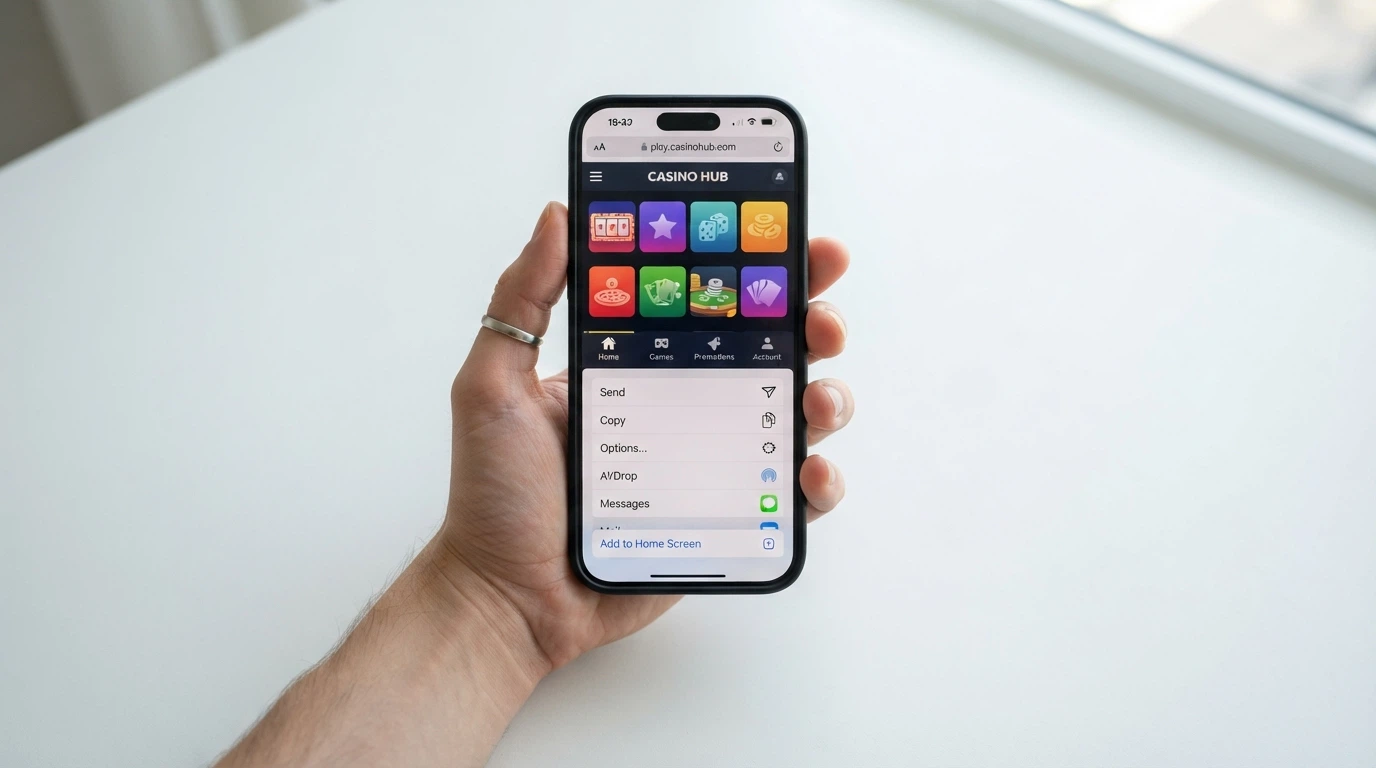
- Open the casino site in Safari (iPhone) or Chrome (Android).
- Tap the share icon — at the bottom on iPhone, in the top-right menu on Android.
- Select Add to Home Screen.
- Name the icon, confirm, and the casino appears on the home grid.
The icon launches the site full-screen. The bookmark is independent of the browser tab. Closing Safari or Chrome does not close the PWA. The icon will continue to work until the player removes it from the home screen, and updates arrive silently on next launch. There is no app-store update step in the loop.
iOS vs Android — which platform runs mobile casinos better
Both platforms run mobile casino PWAs well, and both made every site in this ranking launch cleanly in testing. The differences between them are small and specific. Safari on iOS renders the home-screen PWA with a slightly tighter touch-target grid than Chrome on Android, which is one structural reason iPhone players see the more polished “native-feeling” experience. Chrome on Android launches PWAs marginally faster off cold storage because of how Android caches the home-screen icon assets. Both behaviours are visible in head-to-head testing on the iPhone 15, the Galaxy S24 and the Pixel, but neither difference is large enough to choose one phone over another.
What does change between platforms is the size of the game library the player tends to see. A handful of pokies providers that supply the offshore market publish mobile builds for Android first and iOS second, and a small number of older titles skip iOS entirely. The practical impact is that an iPhone player who finds a specific pokie missing from one operator’s mobile lobby should look at an Android emulator on a different operator rather than assuming the title is gone from the market. This affects roughly one title in fifty on the featured operators. It is real, but it is not large.
Pokies, Live Tables and the Games That Actually Run Well on a 6-Inch Screen
A mobile casino is only as good as the games that fit on the screen and the speed at which they load. Every operator in this ranking carries a lobby in the high hundreds to low thousands of titles, and the spread is similar across the field: pokies dominate, live dealer tables come second, and the rest — crash games, scratch cards, bingo variants, virtual sports — fills the margins. Where the operators differentiate on the game side is in how well those games run on a 6.1-inch screen held in one hand.
Mobile pokies — the games built for a touchscreen
Pokies are the best-fitting game type for a mobile phone, and not by accident. A pokie is a single screen with one decision per round — set the bet, tap spin — and the touch input maps cleanly onto the controls. The buttons are large enough to hit with a thumb, the reels scale to the screen without losing legibility on the symbols, and the auto-spin and turbo-spin toggles live where the thumb already rests. A pokie that loads in under three seconds on a phone — and SkyCrown’s lobby did exactly that in testing — gives the player a near-instant feedback loop that a desktop casino cannot match.
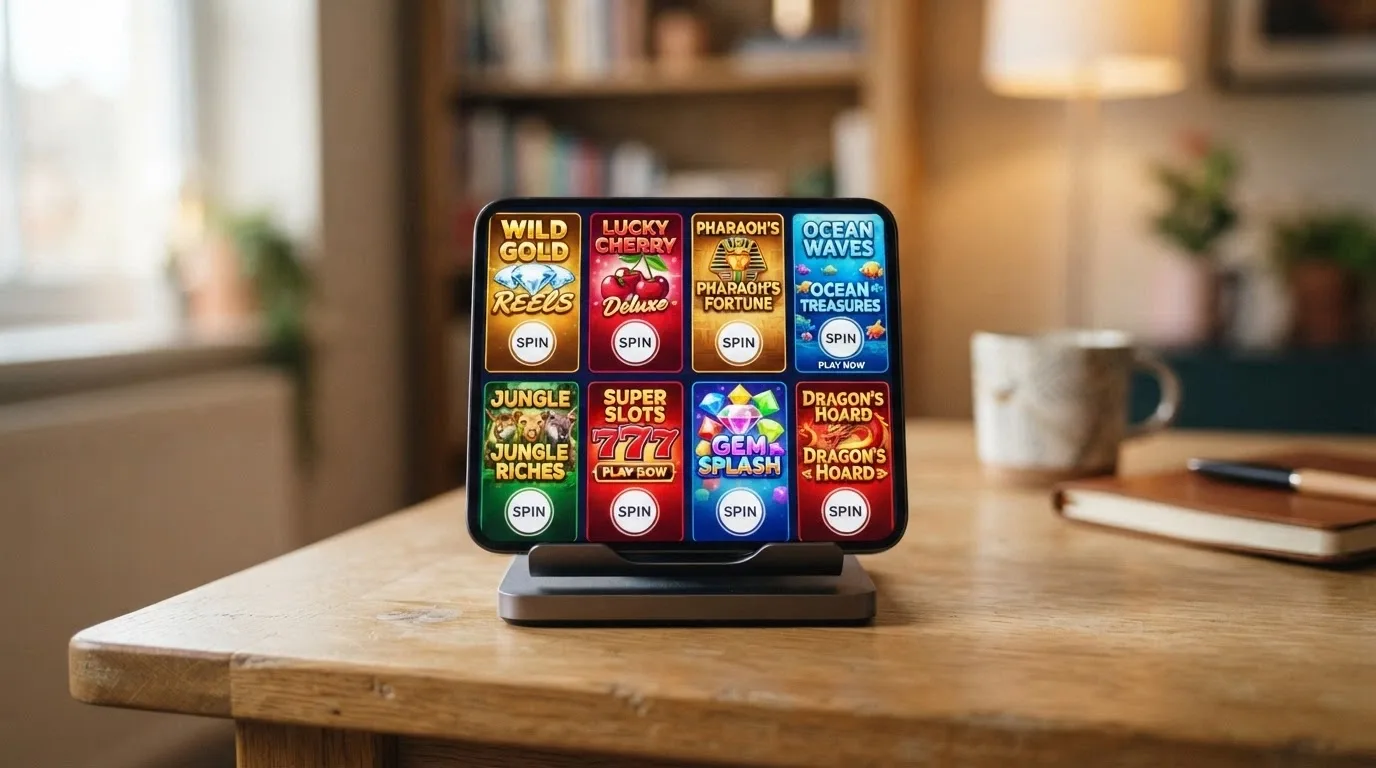
The pokie lobbies on the featured operators carry the major studios whose games are built mobile-first. Pragmatic Play and Wazdan ship the bulk of the mobile pokies in the offshore market; BGaming, Betsoft, Platipus and a handful of smaller studios fill the gaps. What to look for in a pokie lobby is the provider filter — a search the player can use to look up a specific studio’s games — and the demo toggle, which lets the player open any pokie in practice mode before staking real funds. A lobby that hides both is a lobby that is not interested in the player making an informed choice.
Live dealer tables on a phone — what works and what lags
Live dealer tables run through the mobile browser as well as any other game type, but the experience carries trade-offs the player should know about going in. A live blackjack, roulette or baccarat table streams from a studio in a real-time video feed at resolutions ranging from 720p to 1080p, and the betting interface overlays the video with chips, timers and chat controls. On a 6-inch screen, the betting layout crowds the chip stack and the bet-placement grid, and the chat box is best muted rather than read. The trade is acceptable — the game itself remains playable — but it is not the experience a desktop or tablet delivers.
Data usage is the second trade-off. A live dealer table consumes substantially more data per minute than a pokie spin, and a player on a metered mobile connection should expect an extended session to push against typical data caps. The featured operators stream at modest bitrates by default and offer a quality toggle, and the lower setting is usually the right one on a phone. Latency on a live table matters more than on a pokie because the betting window closes after a fixed number of seconds, and a slow connection can lock the player out of a hand. The PWA on a strong Wi-Fi connection performs as well as a native app would; on a fringe mobile-signal connection, the table is the part that stutters first.
Game providers that optimise for mobile
A mobile-optimised pokie is built for a phone from the start: the symbols render at the resolution the device supports, the spin animation scales to the frame rate the phone can hold, the touch controls sit at the bottom of the screen where the thumb naturally falls, and the game’s settings panel collapses into a small overlay rather than a separate window. A scaled-down desktop game, by contrast, loads the full-resolution art and lets the browser shrink it — which works on a fast connection but stutters on older phones and on weaker networks.
The studios worth looking for are the ones whose games feel native on a 6-inch screen the first time the player opens them. Pragmatic Play’s recent catalogue fits that description, as does Wazdan’s mobile-first output and a long list of BGaming titles. Live dealer games are dominated by Evolution Gaming and Pragmatic Live, both of which ship mobile-native table interfaces. A good rule of thumb at any of the featured operators is to open a pokie in demo first, watch the load and the animation, and use that to gauge whether the provider is shipping mobile-first or mobile-compromised.
Why Your 2026 Mobile Casino Bonus Is Smaller Than the Headline Number
The headline bonus figures on the ten operators in this ranking run from A$10 (Ripper’s no-deposit bonus) to AU$10,000 (Bitdreams and Olympia’s total packages), with free-spin counts from 30 (Fair Go) to 500 (Wild Tokyo). The figures are honest arithmetic from the bonus pages, and the arithmetic is the easy part to read. What every headline figure on this page hides is the deposit structure that releases it and the wagering requirement that converts it into withdrawable cash. Those two pieces decide what the bonus is actually worth, and they are entirely absent from the marketing.
Welcome bonus packages — what the headline number actually means
The bonus structure varies sharply across the ten operators and the comparison is the place the player should look before the welcome number even registers.
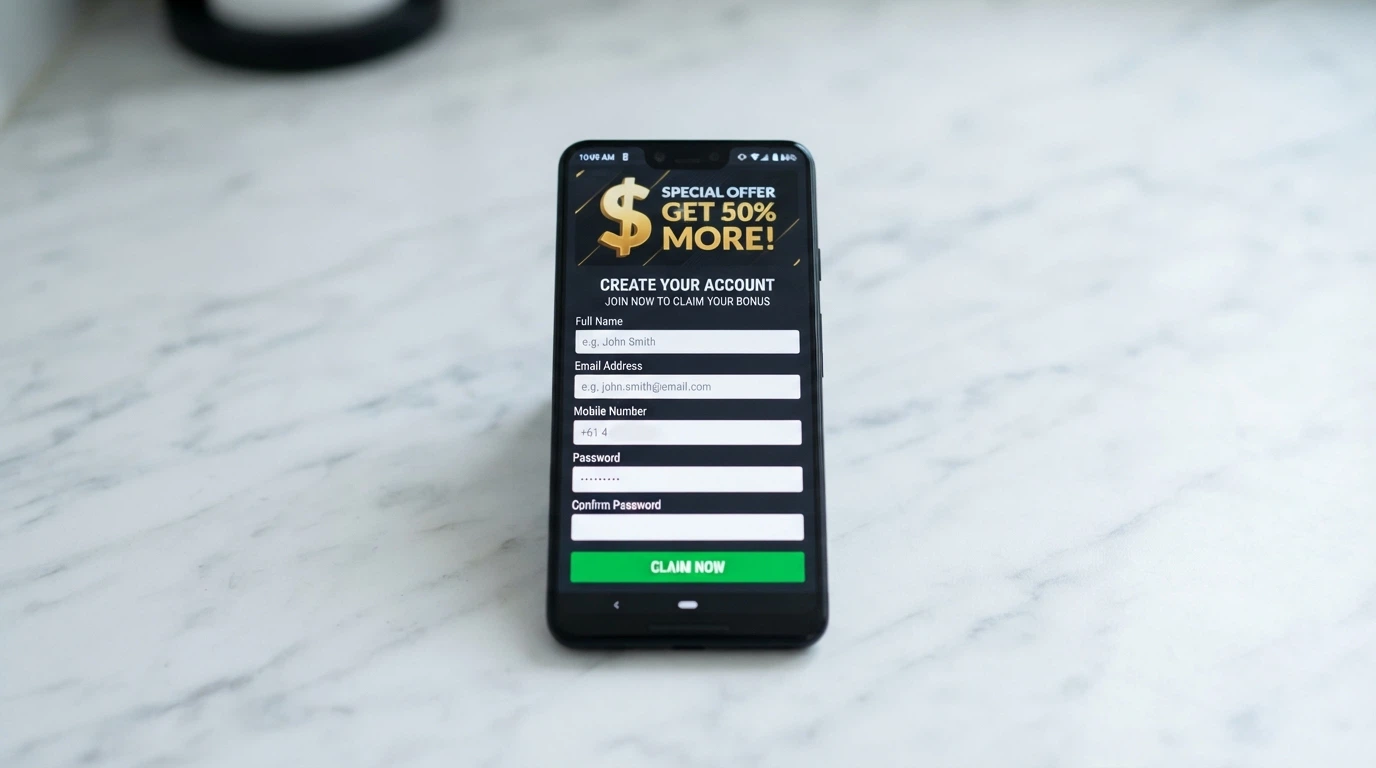
| Operator | Bonus Type | Total Cash Value | Free Spins |
|---|---|---|---|
| SkyCrown | Deposit match (5 deposits) | Up to A$4,000 | 400 |
| Wild Tokyo | Deposit match (3 deposits) | Up to A$4,200 | 500 |
| LuckyVibe | Deposit match (3 deposits) | Up to AU$5,000 | 300 |
| Spinjo | Deposit match | — | — |
| Bitdreams | Deposit match | Up to AU$10,000 | 200 |
| Dazard | Deposit match (125% first) | Up to AU$7,500 | 100 |
| Fair Go | Deposit match (AU$25 min) | Up to AU$100 | 30 |
| Ripper | No deposit | AU$10 | 0 |
| Olympia | Deposit match | Up to AU$10,000 | 200 |
| Rocket Play | — | — | — |
Read the table column by column and the ranking’s structure shows itself. Wild Tokyo carries the highest free-spin count in the field. Bitdreams and Olympia share the highest total cash value. Dazard is the only 125% first-deposit match. Ripper is the only no-deposit bonus. The deposit-gated structure is the universal pattern: eight of the ten operators tie the full headline figure to multiple deposits, and the player has to fund each of them on the operator’s schedule to collect the full headline. Players who deposit once and never return leave the larger match unliberated, converting what looked like a AU$10,000 package into a simple first-deposit bonus.
The one no-deposit bonus on the list — and why it matters
Ripper’s AU$10 no-deposit bonus is the only offer in the ranking that asks for nothing upfront. The player registers an account, the AU$10 lands as bonus credit, and the player can play the lobby without depositing. The terms attached to a no-deposit bonus are almost always tighter than the terms on a deposit bonus. The wagering multiple is typically higher — often a 50x or 60x on the bonus amount rather than the 35x to 45x range typical of deposit bonuses at offshore casinos — and a maximum cashout cap usually limits what the player can withdraw from no-deposit winnings to two or three times the bonus amount, so a 60x playthrough on AU$10 caps a withdrawal at perhaps AU$30 even if the player runs the bonus up substantially.
This is why no-deposit bonuses do not appear more often in this ranking or in the offshore market generally. A no-deposit offer that pays out more than its cap costs the operator real money, so the cap and the playthrough do the limiting before the bonus reaches the player. Ripper’s AU$10 is the genuine no-deposit entry in the ranking and the right choice for a player who wants to test the offshore casino experience without funding an account first. What the AU$10 is worth in cash depends entirely on the terms attached to it.
Free spins — how many you get and what they’re really worth
Free-spin counts on the featured operators run from 30 (Fair Go) to 500 (Wild Tokyo), with the middle of the field around 100 to 300. The count is the headline metric, but the value of a free spin is set by the per-spin stake, the eligible game, and the wagering terms attached to the winnings. A free spin at AU$0.10 on a 96% pokie returns AU$0.096 on average over a long session, and 100 of those spins return AU$9.60 in gross winnings before wagering. The wagering terms then take a cut: at a 40x wagering multiple on the free-spin winnings, the AU$9.60 carries a AU$384 turnover requirement before it converts to withdrawable cash.
The hard arithmetic is unflattering. Wild Tokyo’s 500 free spins headline is genuinely the highest count in the ranking; the realised value depends on the per-spin stake, the eligible pokie and the wagering multiple, all of which sit deeper in the bonus terms than the marketing. A player who cares about the realised value of a free-spin bonus should look up the per-spin stake and the eligible pokie before deciding where to deposit.
Wagering requirements — the fine print that eats your bonus
A wagering requirement — sometimes called a playthrough or a turnover requirement — is the multiplier the player has to bet through before a bonus becomes withdrawable. A A$1,000 bonus with a 40x wagering multiple carries AU$40,000 of required turnover before the bonus converts to real cash. On pokies at a 96% RTP, AU$40,000 of turnover costs the player an expected AU$1,600 in house edge across the play-through — the cost the player pays in pure expectation to convert the bonus. The bonus pays out AU$1,000 only if the player survives the AU$1,600 expected loss on the way to converting it.
Specific wagering multiples for the featured operators were not confirmed at the time of review, and that is itself a check the player should run before depositing. The standard range across the offshore casino market runs from 30x to 50x the bonus amount, with some brands running higher. A player who has not read the bonus terms has not actually decided whether the bonus is worth claiming.
How to Fund Your Mobile Play When Australian Banks Are Watching
The payment methods listed at an offshore casino serving Australian players are not all options the player can use. Two of the most common methods — credit cards and cryptocurrencies — were banned as payment for online wagering by amendments to the Interactive Gambling Act that took effect on 11 June 2024. The ban runs through Australian payment channels, which means an Australian bank or card issuer will decline the transaction at the network level. The fact that an offshore brand lists crypto or credit cards in its cashier is itself a signal the operator is serving Australian customers from outside the Australian regulatory perimeter. An Australian who is asked for a credit card or a crypto deposit by a gambling site is being served by someone outside the Australian rules.
PayID — the fastest way to deposit from an Australian bank account
PayID is the deposit method that meets the offshore casino market on the player’s terms. It links a bank account to a simple identifier — typically a phone number or an email — and routes the payment through the New Payments Platform using Osko for instant settlement. From the player’s phone, the deposit flow runs through the banking app the player already uses, in seconds, with no card details handed over to the casino. For an Australian player whose preferred payment method is already PayID, the offshore deposit becomes a familiar banking app action rather than a fresh trust decision.
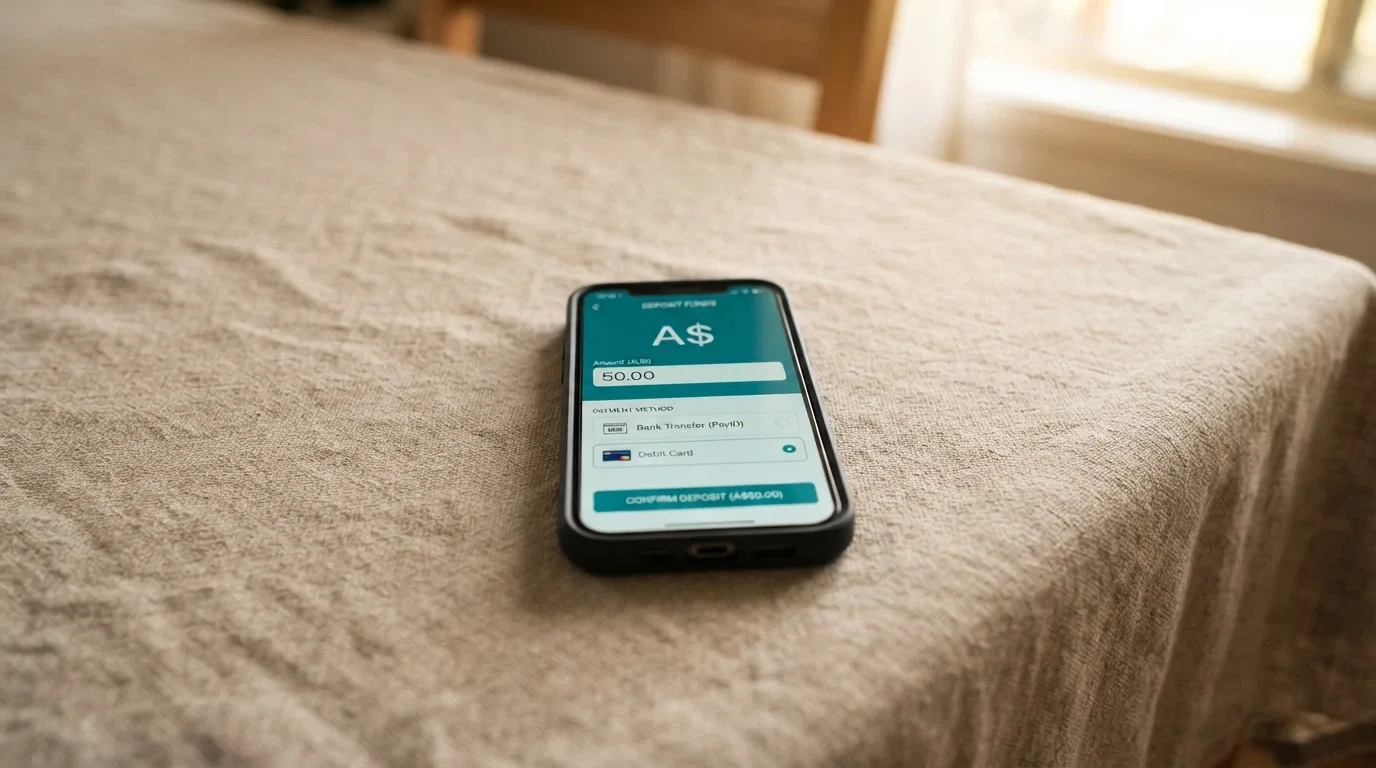
Several operators in this ranking accept PayID, and Spinjo has built its deposit experience around it. The deposit screen maps an Australian bank account to a PayID handle, the funds clear within seconds, and the player is back in the lobby before the confirmation modal has finished its animation. The trade-off — that the same Australian payment rail that makes the deposit frictionless also makes it traceable by the player’s bank — is real, and from 1 January 2027 it carries new weight, when banks and payment providers gain the power to block those transactions under the Interactive Gambling Amendment (Gambling Reform) Bill 2026.
Crypto at offshore casinos — what the credit card ban means
The 2024 ban on credit cards, credit-related products and digital currency as payment for online wagering was framed as a harm-reduction measure: take away the credit pipeline to gambling and the player cannot borrow their way into a problem. The same prohibition covers crypto deposits, because digital currency is treated as a payment method rather than as an asset class for the purposes of the ban. Australian exchanges that hold an AUSTRAC registration now block gambling-related transactions under the same policy, and a player who tries to fund a casino account from an Australian crypto exchange will be declined at the platform level.
Offshore casinos still list crypto as a deposit method in their cashier. The reason is that the operator is outside the Australian perimeter and the IGA does not regulate the player’s payment side. For an Australian player, depositing crypto through an offshore exchange that does not enforce the Australian rules is a way of routing around a ban the player is on the wrong side of if they are then identified. The risk profile is not in the deposit but in the audit trail it leaves. From 1 January 2027, the bank-blocking powers in the 2026 reform add a parallel lever: any transaction that crosses an Australian payment provider’s rails can be blocked on suspicion of funding an illegal gambling service.
Pay-by-phone and e-wallets — the alternatives that still work
The alternatives that sit between PayID and crypto are pay-by-phone billing and e-wallets, both of which are accepted at various featured operators. Pay-by-phone billing routes the deposit through the player’s mobile carrier, who bills it onto the monthly account or deducts it from prepaid credit. The deposit limit per transaction is typically small — often AU$30 or AU$50 — and the method is one the player should treat as a way to test the offshore casino on a small sum rather than as a primary banking channel.
E-wallets like Skrill, Neteller and a handful of region-specific services operate inside a different regulatory envelope from credit cards, and they accept AUD. Deposits clear within minutes, withdrawals process faster than credit or bank transfer at most operators, and the e-wallet sits between the player’s bank and the casino — a buffer the player can choose to keep or to flatten depending on how much distance they want between the bank and the offshore casino. Neither method carries the absolute reach of PayID for an Australian banking account, and neither carries the regulatory risk of crypto, which is why both remain the workhorse fallback deposit methods at the featured operators.
New Mobile Casinos Worth Your Data — And the Ones That Aren’t
New offshore mobile casinos serving Australian players launch in a steady stream. The market is mature enough that the launches are predictable — a licence registration in Curaçao, a partner deal with one of the major game aggregators, a standard push into review sites — and frequent enough that any reader who has read this guide will see fresh names alongside the ten featured operators within a few months of publication. The hard part is sorting the launches that are worth a look from the launches that are not.
Fresh mobile casino sites — what to look for before you sign up
A new mobile casino should be able to answer four questions before the player deposits. Where is the licence registered, and is the licence number verifiable on the regulator’s public register? What are the stated withdrawal terms — processing times, maximum withdrawal per week, identity-verification requirements — and are those terms consistent with the operator’s own marketing? Which game providers are listed in the lobby footer, and are those providers’ games verifiable on the providers’ own websites as licensed for the offshore market? What do player reviews on community forums say about the withdrawal experience in the months after the launch?
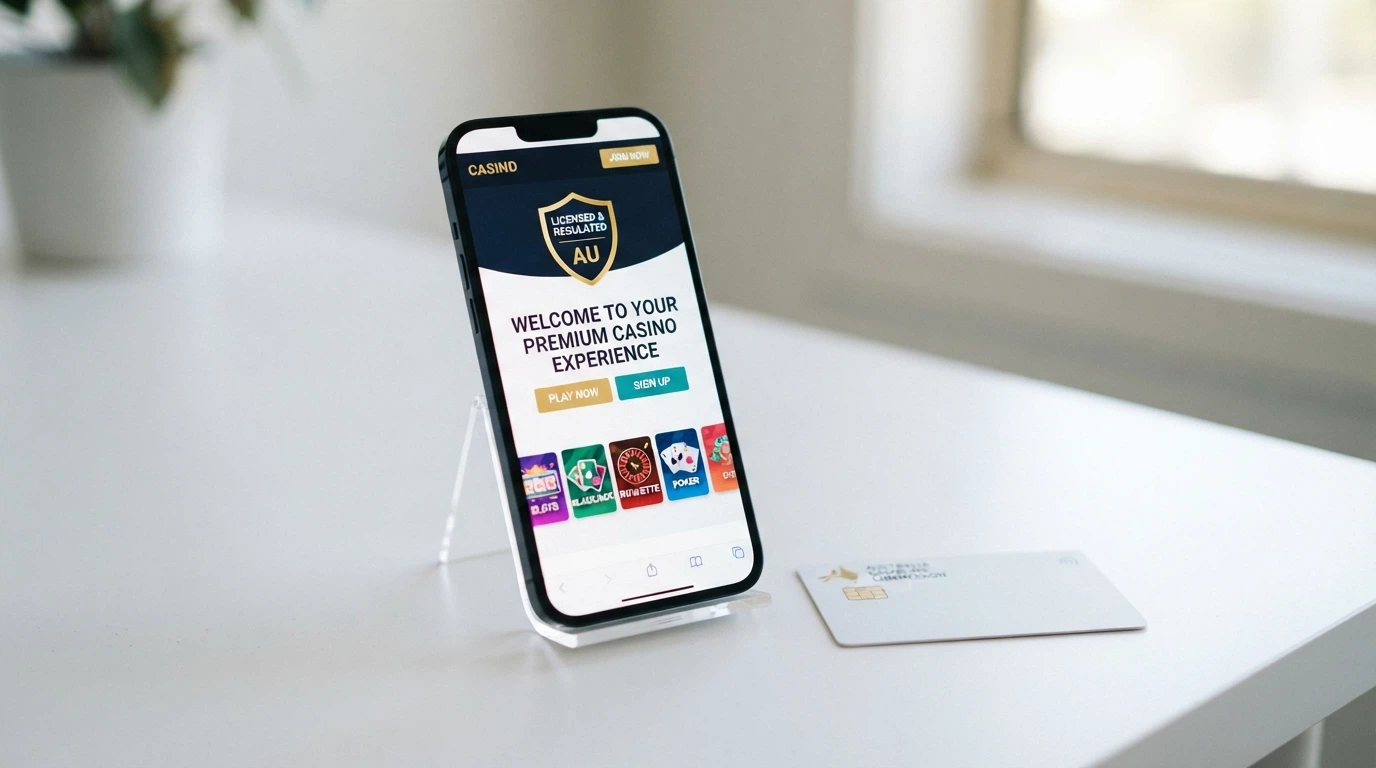
A brand that fumbles any one of these four is a brand the player should treat as high-risk. The licence check is the easiest of the four: the Curaçao Gaming Control Board maintains a public licence verification, and a brand whose licence number does not resolve at the regulator is a brand whose licence is fabricated. The withdrawal terms check is the next easiest: the terms page either states the processing times and limits or it does not, and a terms page that omits them is a terms page the player should not sign up under. The game provider check is harder — many legitimate providers license a wide range of brands — but a lobby that lists providers the player has never heard of and cannot verify is a weak signal. The community review check is the slowest but is the one that surfaces the realities the marketing never covers.
A player with a short list of two or three of these checks running before signing up will avoid most of the brands that fail within their first year. The market has a high rate of brand churn for a reason, and most of the brands that disappear in year one disappear because they failed one of those four checks before they failed anything else.
New mobile pokies and games worth your screen time
New pokies and live dealer game releases appear in the featured operators’ lobbies on a near-weekly basis. The majors — Pragmatic Play, Evolution, Wazdan, BGaming — release new titles monthly, and most of those titles are designed mobile-first from the prototype stage. A player browsing the “New” or “Recently Added” filter at any of the featured operators will see a steady flow of mobile-optimised titles that did not exist six months earlier.
What separates a new mobile pokie worth playing from one that is not is how it performs on the player’s specific phone. Load time, animation smoothness and touch responsiveness vary across devices, and a pokie that runs beautifully on the iPhone 15 can stutter on a two-year-old mid-range Android. The honest test is a demo spin on the player’s own device before any money moves. Most new releases at the featured operators have demo versions available without registration, and a five-minute test in practice mode tells the player more than any review.
Playing Safely on a Platform That Wasn’t Built for Australians
Every offshore casino on this page sits outside the Australian regulatory perimeter. That structural fact shapes the safety question in a specific way: the protections an Australian player takes for granted at a locally licensed sports book — dispute resolution through an Australian tribunal, mandatory self-exclusion coverage, advertising and harm-reduction standards enforced by a domestic regulator — do not extend to any of these brands. The player is responsible for the safeguards the regulator would otherwise provide.
Self-exclusion and the tools offshore casinos actually offer
BetStop — the National Self-Exclusion Register — is connected to approximately 150 licensed wagering providers in Australia and has been live since August 2023. A player can register with BetStop for a minimum period of three months and up to a lifetime, and every licensed operator the register covers must refuse the player’s accounts and block them from creating new ones. BetStop does not cover offshore casinos. None of the ten featured operators is on BetStop, and signing up with BetStop will not stop the offshore brands from accepting deposits or, more importantly, will not stop them from letting the player back in.
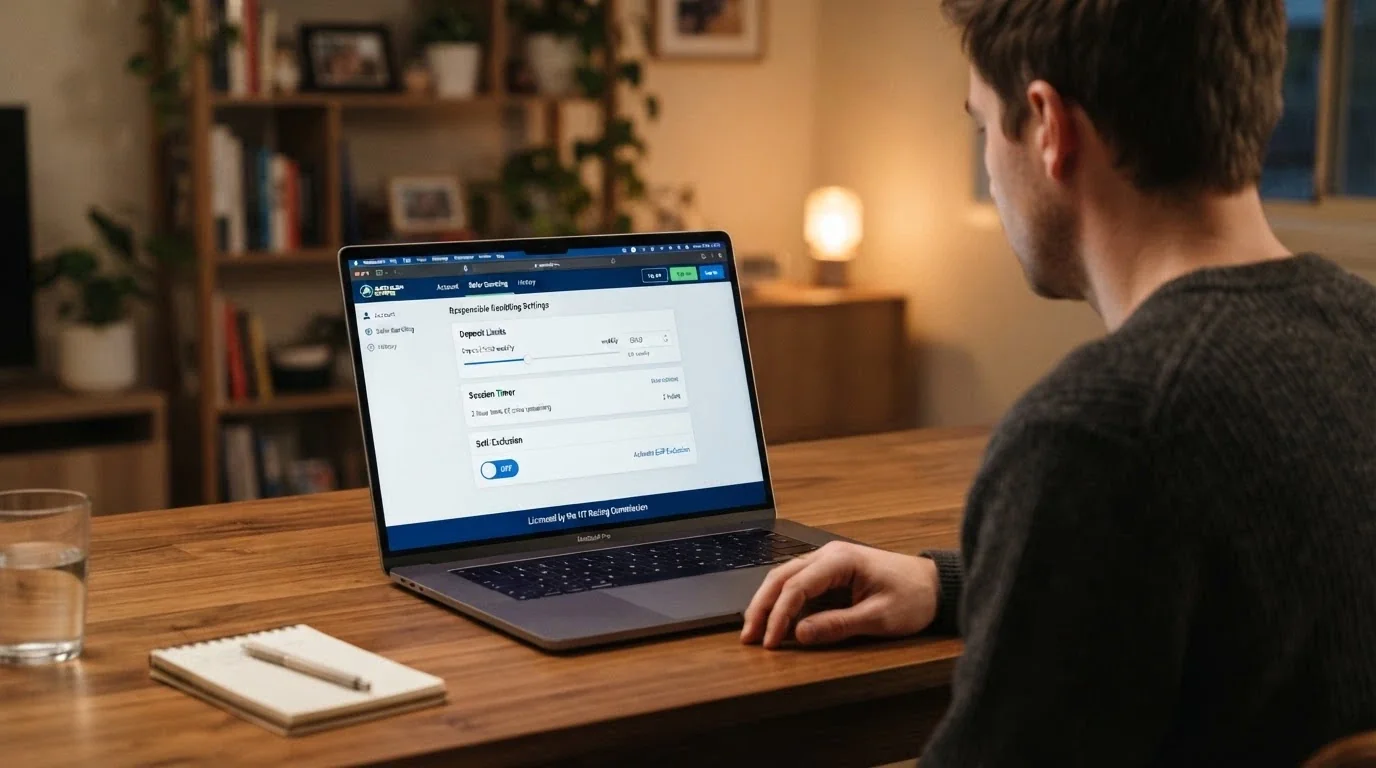
What the offshore brands offer instead is their own self-exclusion and limit-setting tools. Most have a responsible-gambling section in the account dashboard that lets the player set deposit limits, session time limits, loss limits and a self-exclusion period on that brand specifically. These tools are real and they work for the duration they cover. They do not extend across brands; a self-exclusion from SkyCrown does not stop the player from depositing at Bitdreams. A player who has decided to stop gambling and is using offshore casinos needs to apply the limit-setting tool at every brand separately and to recognise that the perimeter of the protection is the perimeter of each brand’s own system.
Problem gambling in Australia — the numbers and where to get help
About 2.1% of Australian adults — roughly 430,000 people — experience problem gambling. In 2022 the Department of Social Services found that more than one in ten Australians — 11% — had gambled online in the previous six months, up from 8% in 2020. The numbers describe a market in which the offshore brands are actively competing, and a market in which the prevalence rate is not concentrated only among the customers who come through locally licensed channels.
Help is free, confidential and available 24 hours a day, seven days a week. The National Gambling Helpline is 1800 858 858. Gambling Help Online, at gamblinghelponline.org.au, offers free 24/7 chat and email counselling and a self-test the player can complete anonymously. The minimum age for commercial gambling in Australia is 18, and the offshore brands enforce that age at registration in their own terms — though the rigour of those checks varies.
A reader who has recognised their own play crossing into territory they did not intend should treat the offshore brands as tools to be set up against themselves. The deposit-limit and self-exclusion tools exist for a reason, and the harm-reduction case for using them up front is stronger than the harm-reduction case for hoping the problem will not reach the threshold the tools exist to prevent.
How We Selected and Ranked These Mobile Casinos
The ranking is built on three sources of signal: the operator’s own bonus and licence disclosures, the mobile load performance measured during testing, and the regulatory backdrop against which any offshore casino serving Australian players has to be read. Every site in this ranking was loaded on an iPhone 15, a Samsung Galaxy S24 and a Pixel, and the load times, lobby-render times and pokie-lobby paint times came from those sessions. The licence status of each operator was verified against the Curaçao Gaming Control Board’s public register, where applicable, and against Anjouan Gaming Commission records where the operator’s licence sits outside Curaçao.
The ACMA’s published enforcement record is the read-through for the regulatory backdrop. The Authority’s first blocking request in November 2019 led to 1,788 illegal gambling and affiliate websites being blocked at the ISP level since. Over 230 illegal services have pulled out of the Australian market since the ACMA’s 2017 enforcement push began. The blocking regime and the penalty regime are the levers the regulator uses, and the operators who survive them are the operators who have decided to absorb the cost. That decision affects what kind of operator the player is dealing with, and it is the part of “best mobile casino” the marketing does not describe.
The bonus disclosures came from the operators’ own promotional pages and were cross-checked against the bonus terms pages they link to. Where the two agreed, the headline figure stands as recorded. Where they diverged — typically on the deposit structure that releases each slice — the deposit structure is the figure the page carries, because that is the figure the player has to fund to reach the headline number. Specific wagering multiples, maximum cashout caps, bonus validity periods and the slot title the free spins apply to were not confirmed at the time of review for the featured operators, and that absence is itself part of the answer to the “which is best?” question: the player should expect to verify those terms before depositing.
The ranking criteria, in order: mobile load performance and lobby paint time, welcome bonus structure and free-spin count, licence validity and Curaçao or Anjouan standing, and the operator’s own mobile focus as their marketing has stated it. The position in the ranking reflects those signals as measured and weighed; it is not a recommendation to play, and a player who arrives at the table at a different conclusion after their own checks is reading the same data correctly.
What Australian Mobile Players Should Actually Do Next
The four checks that make a difference before a deposit are set out below, and each one connects back to a specific section of this page.
Check the licence first. Every featured operator is offshore-licensed — nine Curaçao, one Anjouan — and none is Australian-licensed because none can be. The licence number is verifiable on the regulator’s public register, and the player should verify before depositing.
Read the bonus terms. The headline figure is the easy part to read; the wagering multiple, the maximum cashout cap and the bonus validity period are the figures that decide what the bonus is worth. The free-spin per-spin stake and the eligible pokie title are the figures that decide what the free spins are worth. The terms page carries all of them.
Test the site in demo mode before depositing. A PWA opens in any mobile browser without an app-store install. The pokie lobby can be opened, the games can be spun in practice mode and the deposit screen can be examined without a cent changing hands. A player who has never used an offshore mobile casino should walk the site in demo first.
Know the deposit method that works for an Australian bank account. PayID routes through Australian banking rails and clears in seconds. E-wallets route through an intermediate account and accept AUD. Crypto and credit cards are banned from 11 June 2024 and listing them in a cashier is a signal the operator is operating outside Australian rules. From 1 January 2027, Australian banks and payment providers gain express authority to block transactions to illegal gambling operators, and the deposit method the player chooses today carries that horizon.
The four checks are short. They take longer to describe than to run, and they are the difference between a player who has read the market and a player the market has read.
Frequently Asked Questions
Are offshore mobile casinos legal for Australian players?
The Interactive Gambling Act 2001 makes it an offence for an operator to provide an online casino, online pokies or in-play sports betting to a person physically in Australia. The IGA targets the provider, not the player, and the individual player is not prosecuted under it. Every offshore mobile casino serving Australian players is operating in violation of the IGA on the supply side. None of the ten featured operators in this guide is Australian-licensed because Australia does not issue online casino licences.
Which mobile casinos accept PayID or crypto for deposits?
PayID is the leading AUD deposit method at offshore casinos serving Australian players because it routes through Australian banking rails and clears in seconds. Spinjo built its deposit flow around PayID. Credit cards and digital currency (crypto) were banned as payment for online wagering from 11 June 2024; an offshore casino that lists crypto in its cashier is serving the player from outside the Australian rules. From 1 January 2027, Australian banks and payment providers gain express authority to block transactions to illegal gambling operators.
How do mobile casinos verify my identity in Australia?
Offshore casinos typically run a Know Your Customer (KYC) check at withdrawal rather than at deposit: the player registers with an email and password, deposits via PayID or e-wallet, plays, and supplies the identity documents — photographic ID, proof of address, sometimes a payment-method screenshot — when first withdrawing. The 2026 reform does not change KYC requirements at offshore operators; it changes what Australian payment providers are authorised to do on the transaction side from January 2027.
What are the best pokies to play on a mobile phone in Australia?
The studios that ship mobile-first pokies include Pragmatic Play, Wazdan and BGaming, with Betsoft and Platipus filling the gap. A mobile-optimised pokie has touch targets sized for a thumb, symbols that render at the phone’s native resolution, and a settings panel that collapses into a small overlay. A pokie that loads cleanly in demo mode on the player’s own phone is a pokie that will play cleanly for real money on the same phone. The featured operators carry the major studios, and the provider filter in each lobby is the right way to look up the games the player already knows.
Will the new 2027 advertising bans affect my current mobile casino bonuses?
The Interactive Gambling Amendment (Gambling Reform) Bill 2026 passed Parliament on 19 August 2026 and its measures commence on 1 January 2027. The advertising rules tighten wagering advertising (a maximum of three wagering ads per hour, live-sport blackout inside those hours, athletes and influencers barred from promoting wagering products). The advertising restrictions apply to Australian-licensed operators; offshore mobile casinos serving Australian players from Curaçao or Anjouan are not subject to the Australian advertising regime. The change players feel from January 2027 is on the payment side, not the bonus side: banks gain express authority to block transactions to illegal gambling operators, which affects deposits and withdrawals rather than the bonuses themselves.
Published by the Best Casino Sydney team.