
Australian no-wagering casino bonuses, honestly explained
Most casino bonuses are dressed up to look like gifts and priced to behave like products. A 40x wagering requirement on a A$100 bonus is A$4,000 of bets before any of it becomes cash; the house edge on those bets is what the operator keeps. A no-wagering bonus removes that step and pays out winnings directly. In Australia the offer sits inside a stranger architecture: every casino a player in Sydney, Melbourne or Perth can actually open an account with is offshore, unlicensed here, and out of reach of every consumer-protection tool the country operates for gambling.

Current as of 16 October 2026 · verified against ACMA public registers, the Interactive Gambling Act 2001 and the operator terms pages cited inline
Table of Contents
- What a no-wagering casino really is — and why it matters for Australian players
- Why your 2026 bonus is smaller than it looks
- The best no-wagering casinos accepting Australians in 2026
- No-wagering bonus types worth claiming (and the catches)
- The pokies and games that make wager-free bonuses work
- Playing for free before you deposit
- Depositing and cashing out at a wager-free casino
- Crypto casinos: anonymity meets no-wagering terms
- New no-wagering casinos launching in 2026
- When Australian law meets an offshore casino
- Staying in control while chasing wager-free offers
- How we selected and ranked these no-wagering casinos
- No-wagering casino bonuses: worth claiming or a trap dressed up as a gift?
- Frequently asked questions
What a no-wagering casino really is — and why it matters for Australian players
A no-wagering casino drops the playthrough condition from its bonus — what you win is what you keep, with no further multiplier to clear. The mechanic matters more in Australia than in most other markets because the regulatory layer that protects players in licenced jurisdictions does not exist here for casino products. Any casino a punter in Sydney, Melbourne or Perth can actually sign up with is offshore, unlicensed in Australia, and outside every consumer-protection tool the country’s gambling regime operates.
What a no-wagering casino actually is
A wagering requirement — also called a playthrough, rollover or turnover requirement — is the number of times a player must bet the bonus amount (or sometimes the bonus plus the deposit) before any winnings become real, withdrawable cash. Industry standard for a regular deposit bonus sits between 40x and 60x the bonus. A 50x rollover on a A$200 bonus is A$10,000 of bets before the bonus balance converts to cash, and the house edge on those A$10,000 of bets is what the casino collects.
A “no-wagering” or “wager-free” offer removes that condition. Whatever the player wins from the bonus — free spins, a no-deposit chip, or a matched deposit — is paid out as real money after the bonus is consumed, with no further playthrough. The simpler version is “keep what you win.” It sounds like free money, and for the player it is the cleanest offer a casino can make: a defined bonus with a defined payout ceiling, no hidden algebra in between.
A no-wagering bonus and a no-wagering casino are not the same thing. A casino can run a regular 40x deposit bonus alongside a one-off 50-spin no-wagering free-spins promotion. A wager-free casino runs that model as the default. Genuine zero-playthrough operators are rare: testing in early 2026 found that only 8 of 23 Australian-facing casinos claiming wager-free offers actually delivered genuine zero-playthrough spins, while the rest buried 15x to 35x requirements in sub-clauses.
How the Australian market makes no-wagering play different
Australia’s gambling law rests on a single federal split. The Interactive Gambling Act 2001 prohibits the provision of online casino games, online pokies and in-play betting to people in Australia — there is no federal licence for any of these products, and no state or territory issues one either. What is licensable, state by state, is wagering on pre-event sport and racing, lotteries and keno. The Northern Territory Racing and Wagering Commission is the de facto national licensor for the large online bookmakers that hold state and territory licences.
That split is the whole reason a page about no-wagering casino bonuses is a page about offshore operators. No Australian operator can offer this product, because none is licenced to offer any online casino product. Every bonus in this guide is offered by an operator whose licence is held in Curaçao, Anjouan or some other offshore jurisdiction — sometimes not even confirmed there. What the Australian player gains by playing with them is access to casino games and bonus mechanics no Australian site can legally offer. What they give up is everything Australian gambling law is built to provide: ACMA enforcement, Australian Consumer Law protections, BetStop coverage, an Australian complaints body, and any meaningful recourse when a withdrawal is refused or an account is closed.
The 2017 amendment to the Interactive Gambling Act closed the offshore loopholes that had let these operators advertise and process payments through Australian channels, and gave ACMA the power to request internet-service-provider-level blocking of illegal sites. By March 2026, ACMA had 1,564 illegal gambling and affiliate websites blocked, and more than 225 illegal services had withdrawn from the Australian market since 2017. The product is prohibited and the enforcement is real. The operators this page catalogues are still reachable, which is a feature of DNS-level blocking and offshore hosting rather than a sign the prohibition is not being enforced.
Mobile no-wagering play in Australia
Most Australians who play at offshore casinos do so on a phone. The desktop share of online casino traffic has been shrinking for years; offshore operators know this, and the mobile experience is usually where the product is most polished. In practical terms that means a browser-based mobile site rather than a native app — Apple and Google both restrict real-money casino apps in their Australian stores, and offshore brands route around that with a responsive website.
What that changes for the player is mostly cosmetic. The same bonus terms apply whether the player is on a laptop or a phone. A 40x wagering requirement on mobile is still 40x. A cashout cap on free-spin winnings is the same in the app or the browser. The mechanical reality of clearing a bonus is identical on both form factors. Where mobile does matter is pace — a punter playing on a phone in a queue can clear a no-wagering free-spin offer in a few minutes if the bet sizes are tiny, and that pace is part of why wager-free spin packages are small in dollar terms: the operator’s risk is capped because a player cannot lose much in a session that lasts only a few minutes.
Why your 2026 bonus is smaller than it looks
A bonus headline is a marketing number; what the player takes home is an arithmetic problem. A standard deposit bonus in this market — 100% up to A$1,000 with a 40x wagering requirement — looks like a thousand bucks of free play. Worked through the formula, the same offer asks the player to push A$40,000 of bets through games with a house edge, and the expected loss on that volume is what the bonus actually costs.

What wagering requirements actually mean in dollars
Take WinSpirit’s welcome package: 100% up to AU$1,000 plus 100 free spins, with a 40x wagering requirement on the matched bonus. A player who deposits A$1,000 and takes the full bonus is asked to wager A$1,000 × 40 = A$40,000 before the bonus and any remaining winnings become cash. The free spins sit on top of that obligation.
The math from there is the part the bonus page does not show. Suppose the A$40,000 of turnover is run through Gates of Olympus, a Pragmatic Play slot with a default 96.50% RTP. The house edge is 1 − 0.9650 = 0.035, or 3.5% of every dollar wagered. Multiply that edge by the turnover: A$40,000 × 0.035 = A$1,400 of expected loss across the wagering period.
The bonus’s face value is A$1,000. Its real cost to the player is A$1,400 — A$400 more than the headline. A player who clears the bonus at WinSpirit on a 96.50% RTP slot is, on average, A$400 lighter by the time the wagering requirement is satisfied. This is an average across many spins, not a guaranteed outcome for any single session, and it is the entire business model the bonus is wrapped in.
Low wagering vs no wagering: the middle ground most players overlook
Low-wagering bonuses — anything up to about 20x — sit in a different part of the cost curve. A 10x wagering requirement on a A$1,000 bonus asks for A$10,000 of turnover, which at 3.5% house edge works out to A$350 of expected loss — well below the A$1,000 face value, so the bonus is profitable in expectation. A 20x deal asks for A$20,000 of turnover and A$700 of expected loss, still below the bonus. The curve only crosses the bonus value somewhere in the high-30s for a 96.50% RTP slot, which is why a 40x offer is roughly break-even on average and a 50x offer is, on average, a loss.
The reason this matters is the comparison with a no-wagering offer. A genuine wager-free bonus with a A$50 cashout cap gives the player exactly A$50 if they win — no turnover, no house-edge drag, no bet-cap friction. A low-wagering 10x deal with no cashout cap gives the player the chance to convert a A$1,000 bonus into a much larger payout, at the cost of running A$10,000 of bets through a house edge. For a player who expects to win small and cash out small, the wager-free offer is mathematically cleaner. For a player who can absorb the volume and is hunting a bigger payout, the low-wagering deal has a higher ceiling.
The trap is paying 40x wagering on a no-wagering-looking bonus. That is what most of the “wager-free” claims in the early-2026 testing actually delivered when the fine print was read: a headline of “no wagering” sitting on top of 15x to 35x turnover buried in the bonus terms. The “wager-free” label on a 35x bonus is a marketing word doing no work.
The keep-what-you-win promise — and its fine print
“Keep what you win” is the most quoted phrase in no-wagering marketing. The phrase is accurate. The ceiling on the keeping is the part the marketing tends to omit.
Of the eight Australian-facing casinos that genuinely delivered zero-playthrough on tested offers in early 2026, six of them capped the winnings from the wager-free promotion at between A$50 and A$200, regardless of what the bonus actually produced. A 50-spin package at A$0.20 per spin is, in pure spin value, A$10 of play. Run those spins on a high-volatility slot and the result might be A$5 or it might be A$400 — the operator has decided the player will be paid A$200 at most, and the remaining A$200 (if it lands) is forfeited. The cap is not a suggestion; it is the payout rule.
Two other clauses do most of the rest of the work. First, a maximum bet with an active bonus — usually A$5 to A$10 per spin — prevents a player from clearing wagering in a few oversized wagers. Second, game eligibility: free-spin offers are typically locked to one named slot, and table games often contribute 5% to 20% toward wagering rather than 100%, so a player who wanders off the eligible game list either voids the bonus or grinds through a much larger turnover to clear it.
What you give up when you take a wager-free bonus
A genuine no-wagering bonus is usually a smaller package than the standard deposit match the same casino runs alongside it. The arithmetic is straightforward: every dollar of bonus the casino removes from the playthrough multiplier is a dollar it has already given up. The compensation is in the bonus structure — a smaller headline number, a tight cashout cap, a single named slot, sometimes all three.
The dollar value of wager-free spin packages in this market is small. Most packages run from A$0.10 to A$0.25 per spin. A 50-spin package at A$0.10 is A$5 of total play value; at A$0.25 it is A$12.50. Those are not figures that will produce life-changing wins, and the cashout cap on what they do produce is set accordingly.
Other restrictions are softer but still bite. Validity windows on no-wagering bonuses tend to be shorter than on standard offers — 24 to 72 hours on free-spin packages is common, after which unplayed spins expire. Game eligibility is tighter: the bonus is locked to one or two named slots and does not work on the rest of the lobby. A no-deposit chip usually cannot be used on live dealer or progressive jackpot games. None of these restrictions is hidden, but they are easy to miss when the headline is “100 free spins, no wagering.”
The best no-wagering casinos accepting Australians in 2026
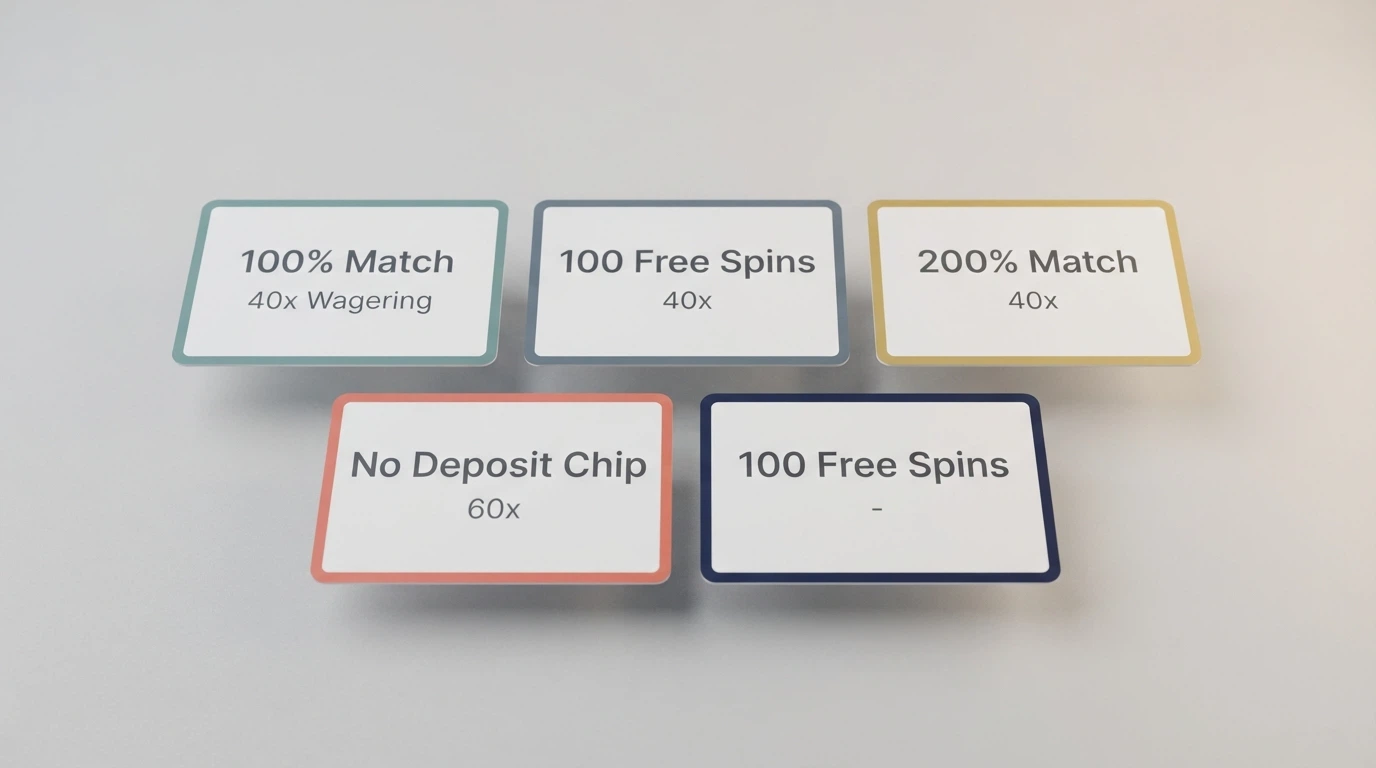
The table below lists the ten offshore operators that surface on Australian-facing no-wagering searches, with what the operator data actually supports. Five operators have primary-source-confirmed bonus terms; the other five have bonus claims that appear on comparison pages but were not confirmed against the operator’s own terms page this run. The licence column names the jurisdiction the operator claims to hold, with em dashes where the jurisdiction is not primary-source confirmed. No licence listed in this table is an Australian licence, because no such licence exists.
| Operator | Licence Jurisdiction | Welcome Bonus | Wagering |
|---|---|---|---|
| WinSpirit | — | 100% up to A$1,000 + 100 FS | x40 |
| FairGO | — | Deposit bonus (min A$20) | 30x (deposit) / 60x (no-deposit) |
| Bizzo Casino | — | 100 FS on Dig Dig Digger | x40 |
| RocketPlay | Curaçao | 200% up to A$1,000 | x40 |
| Rocket Casino | Curaçao (144359, Hollycorn N.V.) | — | — |
| Rainbet | Anjouan | First-deposit promotional balance (A$30 min, A$700 max) | x40 |
| Skycrown | Curaçao (referenced, not primary confirmed) | 100 FS (surfaced) | — |
| Stake | Curaçao (commonly cited, not primary confirmed) | — | — |
| Royal Reels | — | — | — |
| Scream Casino | — | — | — |
Australia has no licensed online casino to anchor to. The Northern Territory Racing and Wagering Commission licences online bookmakers for wagering, not casino products. Every operator in this table offers an unlicensed product to Australian players through an offshore licence.
WinSpirit
WinSpirit’s welcome package is the most fully documented offer in the set: 100% up to AU$1,000 on the first deposit plus 100 free spins released as 20 per day for five days, with a 40x wagering requirement and a A$3,000 win limit across the bonus. The minimum deposit is A$30. The second-deposit bonus reloads with 200% up to AU$1,000 under the same 40x wagering and the same A$3,000 win limit. A weekly cashback offer is also live, with up to 10% back every Thursday, a A$1.50 minimum cashback, a 5x wagering requirement and a maximum win of 25x the bonus sum, valid for two days.
The math is what the marketing language steps around. A player who takes the full A$1,000 first-deposit bonus and clears it on a 96.50% RTP slot runs A$40,000 of turnover with an expected loss of A$1,400 — A$400 more than the bonus’s face value. The A$3,000 win limit is what stops a hot streak from producing a payout the wagering math would not support on average. WinSpirit’s licence jurisdiction was not confirmed against a primary regulator source this run.
A player with the bankroll to clear a 40x bonus and the patience to grind through A$40,000 of turnover has the best documented entry on this page. Check the A$3,000 win limit before they start.
FairGO
FairGO is one of the few operators in this set with a surfaced no-deposit free-chip offer. Two variants appear: a A$15 chip with 60x wagering and a A$180 maximum cashout, and a A$100 chip headline with 60x wagering and roughly the same A$180 cashout ceiling. The deposit-bonus alternative carries a 30x wagering requirement on the combined deposit and bonus, with a A$20 minimum deposit.
The A$15 no-deposit chip is the closest thing to a free-spin-equivalent offer in this set, and it is also where the offer’s value is hardest to find. A A$15 chip with 60x wagering asks for A$900 of turnover before withdrawal, which at a 3.5% house edge is A$31.50 of expected loss on a A$15 bonus — the bonus itself is profitable in expectation, but the cashout cap of A$180 is what actually bounds what the player walks away with. A bonus that costs the player an average of A$31.50 to clear but pays out up to A$180 is a real offer; a bonus that costs more to clear than it pays out is not.
FairGO’s licence jurisdiction was not confirmed against a regulator register this run. The operator should be assumed offshore and unlicensed in Australia.
The cleanest no-deposit entry point on the page, with the cashout cap doing what cashout caps always do.
Bizzo Casino
Bizzo’s surfaced offer is 100 free spins on Dig Dig Digger with a 40x wagering requirement and a maximum bet of €/$5 with an active bonus. The wagering multiplier puts this offer in low-wagering, not no-wagering, territory. The headline of “free spins” without “no wagering” attached is the read: this is a standard free-spin package with the wagering that the no-wagering category is supposed to remove.
The bet cap is the term that does most of the work. A player cannot grind through the 40x requirement by spinning at €/$50 per spin and walking away; the bonus terms cap the wagering speed at €/$5 per spin, which is what makes the 40x multiple a real volume obligation rather than a fast-clearing formality. Dig Dig Digger’s RTP was not confirmed from a primary provider source this run, so the expected-loss math on this specific offer depends on the slot’s actual return-to-player rather than a published figure.
A defined bonus structure on a named title, with wagering attached. Not a wager-free offer.
RocketPlay
RocketPlay holds a Curaçao licence under number OGL/2024/1307/0748 and operates a claimed library of more than 3,000 games. A 200% match up to AU$1,000 is the surfaced welcome headline, with a 40x wagering requirement sitting underneath. A separate no-deposit offer of 20 free spins on Book of Pyramids has appeared on review-linked pages, with a 40x wagering requirement and an approximately A$85 maximum win — verification-gated, meaning the free spins are tied to an account-verification step rather than standard sign-up.
The verification gate is the catch. A no-deposit offer that requires the player to upload identification documents before the spins unlock is not really a no-deposit offer in the casual sense; it is a deposit-conditional promo that happens not to charge the deposit. The 40x wagering on those spins is what actually separates this from a genuine wager-free deal, and the roughly A$85 maximum win keeps the operator’s downside bounded.
The largest library in the set and a clear licence number. The “no wagering” label does not survive the verification step.
Rocket Casino
Rocket Casino holds a separate Curaçao licence from RocketPlay — number 144359, under operator Hollycorn N.V. — and claims a game library of more than 3,000 titles. No welcome-bonus terms, free-spin data or wagering information was confirmed this run, and the operator surfaces on Australian-facing comparison pages rather than through primary-source bonus terms.
Rocket Casino and RocketPlay share an operator family but are separately licensed, which is the reason this page treats them as distinct entries. A player comparing the two should read them as different products on the same corporate shelf, not as alternative URLs for one offer.
Included on the strength of the licence and the game-library claim. Bonus terms were not confirmed.
Rainbet
Rainbet is the only Anjouan-licensed operator in this set, holding licence ALSI-152406029-FI2 for Rainbet. Its first-deposit promotional balance requires a minimum A$30 deposit and accepts a maximum qualifying deposit of A$700, with a 40x wagering requirement on the promotional balance. First-deposit free spins apply to Sweet Bonanza.
The 40x wagering keeps Rainbet firmly in the low-wagering bracket — the same camp as WinSpirit, Bizzo and RocketPlay. The Anjouan licence is a different jurisdiction from the Curaçao licences that some other operators in this table hold. Rainbet is the only Anjouan-licensed operator in this set. Sweet Bonanza’s RTP was not confirmed from a primary provider source this run.
A useful data point on how a non-Curaçao offshore licence presents itself. Not wager-free.
Skycrown
Skycrown appears on Australian-facing no-deposit comparison pages with a 100 free-spin headline, and a Curaçao licence jurisdiction is referenced on third-party listings. The operator’s full terms and conditions and primary licence page were not captured this run, so the wagering multiple, the eligible slot and the cashout ceiling are not confirmed.
What is confirmed is that the 100-spin offer exists on at least one AU-focused comparison page, that the licence jurisdiction cited is Curaçao, and that the operator accepts Australian registrations. What is not confirmed is everything else.
Listed on the strength of the surfaced 100-spin headline. The rest is a gap.
Stake
Stake is one of the most recognised crypto-casino brands globally, and Curaçao is the licence jurisdiction commonly cited on its listings. No specific welcome-bonus terms, free-spin data or wagering information was surfaced for the AU-facing offer this run. The operator’s reputation in the broader market does not translate into specific bonus data on this page, and the data point that matters is exactly that gap.
A reader cross-referencing this set with another guide will find Stake named on most of them; they will not find specific bonus terms because Stake does not run a traditional welcome-bonus model in the way the other operators on this page do.
Included as a known operator in the AU-facing offshore space. The absence of confirmed bonus terms is the data point.
Royal Reels
Royal Reels appears in Australian-facing casino listings. No licence jurisdiction, no bonus terms, no wagering data and no free-spin information was confirmed this run. The brand exists in the AU-facing search results; the underlying offer does not surface from any primary source.
Surfaced in AU-facing listings, nothing else verifiable.
Scream Casino
Scream Casino rounds out the ten. No licence jurisdiction, no bonus terms, no wagering data and no free-spin information was confirmed this run. The operator is in the AU-facing listings and nothing else was verifiable.
Rounds out the set with no terms confirmed.
No-wagering bonus types worth claiming (and the catches)
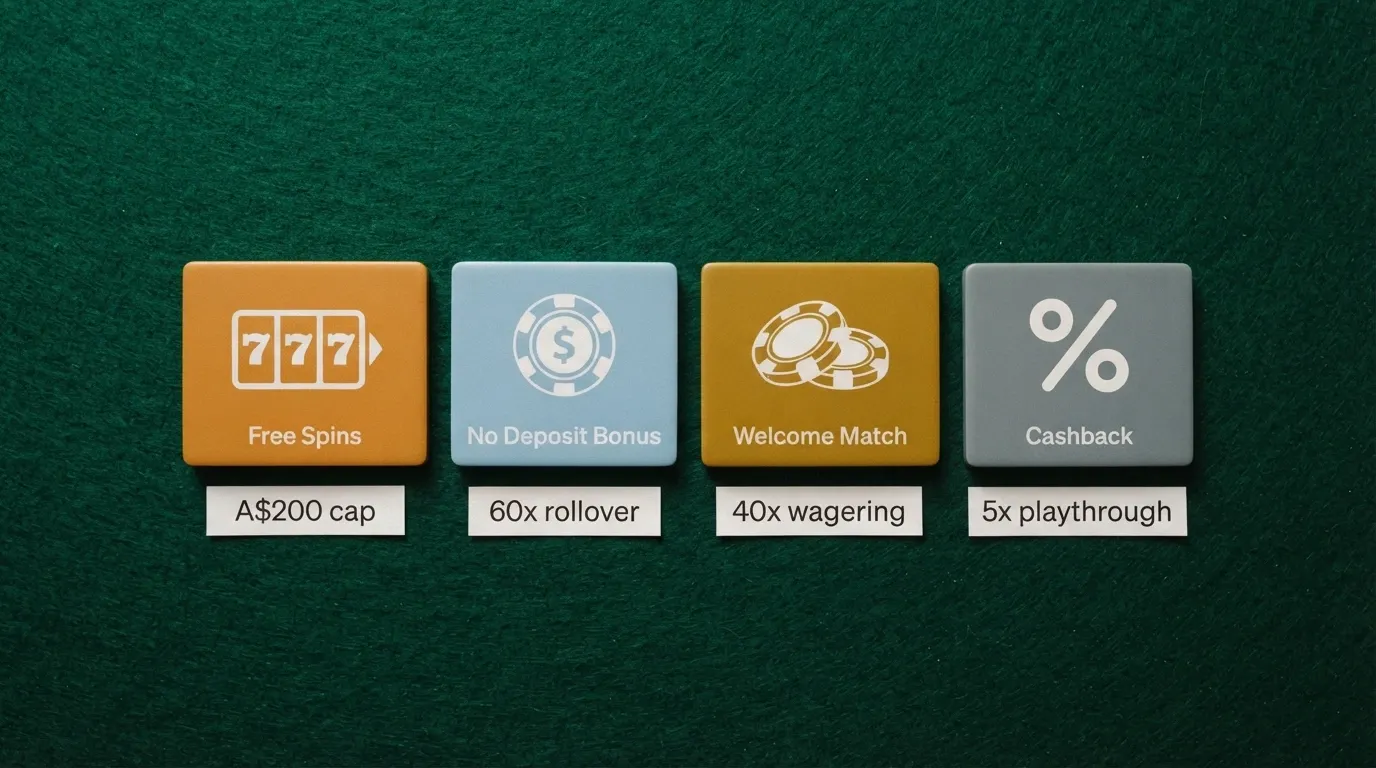
Four bonus structures dominate the wager-free and low-wagering space. Each one carries a cap or a turnover obligation the headline omits, and the player’s job is to work out which one applies before claiming.
Free spins with no wagering
Free spins are the most common wager-free offer in the market and the easiest to evaluate. The package is a defined number of spins at a defined per-spin value on a defined slot, with the win paid out as cash after the spins are consumed. The per-spin value in this market runs from A$0.10 to A$0.25, so a 50-spin package is between A$5 and A$12.50 of total play value. The cashout cap on the resulting win is the real ceiling on the offer, and on the genuine wager-free operators tested in early 2026, the cap ran from A$50 to A$200.
A 100-free-spin headline at A$0.10 per spin is A$10 of play value. Run that on a high-volatility slot and the result could be A$2 or it could be A$300 — but the cashout cap is what the player actually walks away with, and A$200 is the upper end of the cap range on this category. Keep-what-you-win free-spin deals are still much rarer than standard 30x to 50x bonus promos, which is the structural reason the headline numbers look so generous compared to the caps.
No-deposit no-wagering bonuses
A no-deposit bonus is the closest thing to free money a casino can offer — a credit to the player’s account that does not require a deposit first, on the understanding that the win from it is capped and the playthrough on it is heavy. The cashout cap is typically A$50 to A$180, with any remaining bonus balance automatically forfeited when the player requests a withdrawal. The rollover on a no-deposit bonus commonly runs from 40x to 60x, which is the same range as a standard deposit bonus — and is what most “no-deposit” headlines quietly include.
FairGO’s A$15 chip is the cleanest example in this set: 60x wagering, A$180 maximum cashout, no deposit required. The expected loss on A$900 of required turnover at 3.5% house edge is A$31.50 — well below the A$15 bonus’s face value, which is the arithmetic reason a no-deposit bonus with a cap is profitable in expectation for the player. The cap is what makes it profitable for the casino. Both sides win at the cap, and a player who lands above it walks away with A$180 and nothing more.
Welcome and first-deposit match offers
Welcome packages carry the largest headline numbers and the largest turnover obligations. A 100% match up to A$1,000 is the standard high-end structure: the player deposits A$1,000, the casino adds A$1,000 in bonus funds, and the combined balance has a wagering requirement applied to the bonus (or sometimes to the bonus plus the deposit, which doubles the volume). The 40x multiple on a A$1,000 bonus is A$40,000 of turnover.
The framing the marketing uses is “up to A$1,000 free.” The framing the bonus terms use is “up to A$1,000 in bonus funds subject to a 40x wagering requirement and a maximum win cap.” Those two framings describe different products, and the difference is the entire reason the bonus’s real cost exceeds its face value on standard 40x offers. WinSpirit’s structure — 20 free spins released daily for five days — is also a common workaround on welcome packages: the spins are dripped rather than dropped in one block, which extends the engagement window and reduces the chance a player converts the entire bonus in a single hot session.
The pokies and games that make wager-free bonuses work
Pokies dominate the wager-free bonus landscape because they count 100% toward wagering at most casinos and because the published RTPs let a player estimate the real cost of clearing the bonus. Live dealer and table games contribute far less — sometimes zero — and that contribution rate is the single biggest variable in the expected-loss calculation, far more than the choice of slot title.
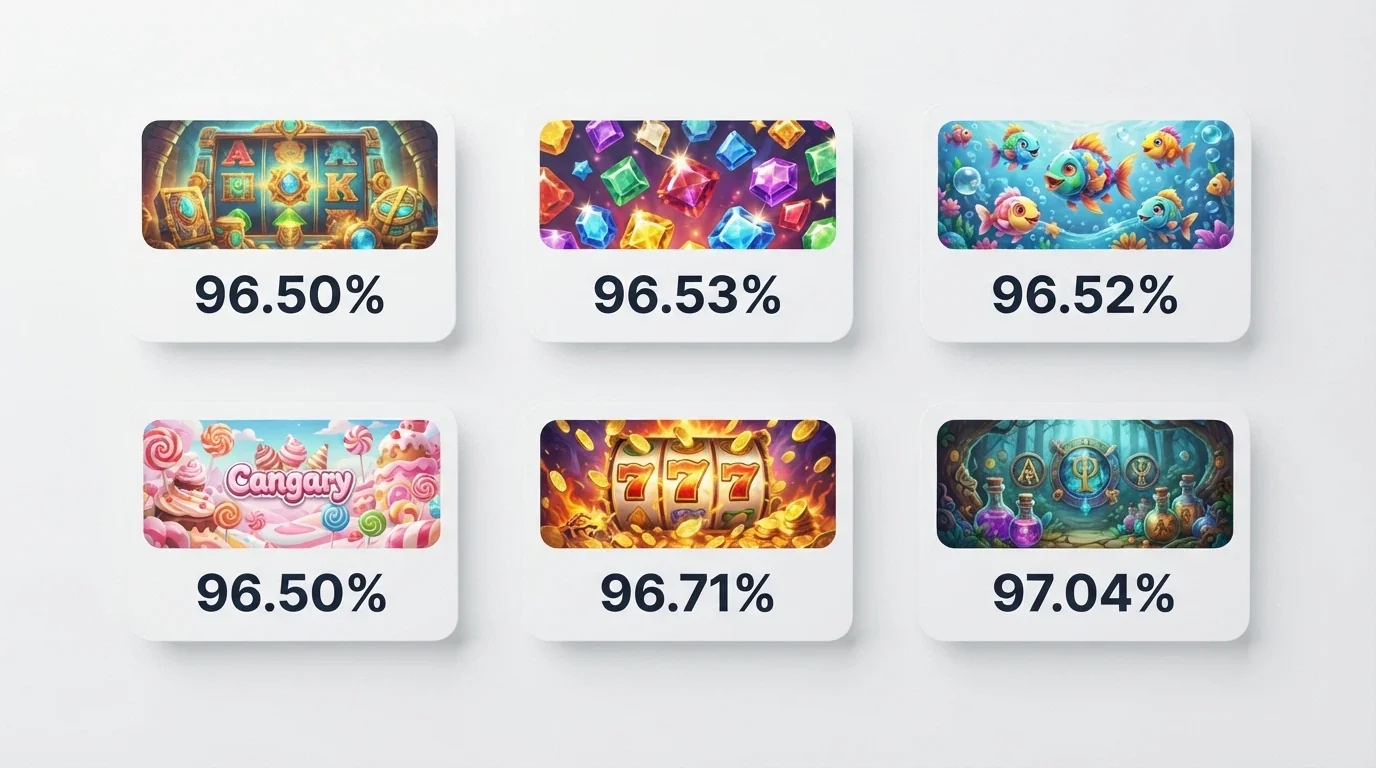
| Slot | Provider | RTP | Volatility | Max Win |
|---|---|---|---|---|
| Gates of Olympus | Pragmatic Play | 96.50% | High | 5,000x |
| Sugar Rush 1000 | Pragmatic Play | 96.53% | High | 25,000x |
| Bubble Up | Pragmatic Play | 96.52% | Medium | 10,000x |
| Gates of Olympus 1000 | Pragmatic Play | 96.50% | High | 15,000x |
| Big Bass Bonanza | Reel Kingdom / Pragmatic Play | 96.71% | High | 2,100x |
| Lokum Rush | Popiplay | 97.04% | Medium | 10,000x |
These six titles have RTPs and volatility confirmed from published provider or aggregator pages. Every other slot title on a bonus-eligible list is a guess for the player running the expected-loss math.
Pokies: the engine room of wager-free play
Pokies count 100% toward wagering at most offshore casinos, which is why they are the default game for clearing a bonus. The choice between titles within the pokie category is then a question of RTP and volatility — and the difference between the highest and lowest RTP in the table is half a percent, which over thousands of spins is hundreds of dollars in expected loss.
Lokum Rush, at 97.04%, is the highest-RTP slot in the table. Big Bass Bonanza at 96.71% sits second. The Pragmatic Play cluster — Gates of Olympus, Sugar Rush 1000, Bubble Up, Gates of Olympus 1000 — runs between 96.50% and 96.53%. The differences look small in isolation; they compound across A$40,000 of wagering. A player clearing a 40x bonus on Lokum Rush rather than Gates of Olympus 1000 keeps an extra A$216 in expected value on the same volume, which is roughly a fifth of the bonus’s face value recovered by choosing the better slot.
Volatility does not change the house edge. It changes the session. A high-volatility slot will produce longer losing runs and bigger wins when they land; a medium-volatility slot produces more consistent outcomes closer to the average. For a player clearing a bonus, the volatility choice is about tolerance for variance, not about whether the bonus is beatable.
Live tables and low-wagering casino games
Live dealer games and table games usually contribute far less toward wagering than pokies — the typical contribution rate is 5% to 20%, depending on the operator and the game. A player who tries to clear a 40x bonus on roulette or blackjack needs to push five to twenty times as much volume through the games to clear the same bonus, because every A$100 of table-game wagering only counts as A$5 to A$20 against the wagering requirement.
The practical effect is that a player who prefers table games to pokies cannot clear a bonus by playing what they like. The wagering contribution rate forces them onto the pokies, or it forces them to accept a much larger volume of play. Live dealer is the same: most live tables contribute at the reduced rate, and live game shows contribute at varying rates that the operator rarely publishes in a single place. The fine print on game contribution is the second thing a player should read after the wagering multiple.
Choosing games that give you the best chance of beating the wagering
The arithmetic says: pick the highest-RTP slot the bonus allows, then pick the lowest volatility that keeps the session tolerable, then respect the bet cap. The bet cap with an active bonus is usually A$5 to A$10 per spin, which limits how fast a player can grind through the turnover — and which means a low-volatility, high-RTP slot at A$5 per spin is the mechanically cleanest way to clear a bonus, even if it is also the most tedious.
What this looks like in practice: a 40x bonus on A$1,000 cleared at A$5 per spin on Lokum Rush is 8,000 spins. At a five-second interval that is roughly eleven hours of continuous play, which is the kind of volume that turns a bonus into a second job. The player who actually has eleven hours to spare on a bonus is a rarer creature than the marketing implies, and the operators know it.
Playing for free before you deposit
Demo mode is the part of the casino experience that costs nothing and changes nothing about the bonus terms. Most offshore casinos offer a free-play version of their pokies and table games that runs on the same RNG as the real-money version, with play-money credits replacing real deposits. The point of demo mode is to learn the slot’s volatility, the bonus round’s trigger frequency and the game’s feel before risking money — not to evaluate the casino’s bonus terms, because the bonus is not active in demo.
Demo access at offshore casinos is mostly registration-free: a player can usually load the lobby, pick a slot and play it without creating an account. Where the operator does require registration, the registration is the same form the real-money signup uses, and the player can decide whether to commit to a deposit afterwards. The line between demo play and a real-money no-deposit bonus is that a no-deposit bonus pays out cash (subject to a cap and a wagering requirement), while demo play pays out nothing at all.
The two are not interchangeable. Demo play tells the player whether they enjoy a slot; a no-deposit chip tells them whether the casino pays out. The latter is the only one of those questions a casino can be evasive about, which is why the no-deposit bonus is worth more than the demo even when both are technically free.
Depositing and cashing out at a wager-free casino
The payment story in Australia has a sharp edge. From 11 June 2024, credit cards, credit-related products and digital currency are banned as payment for online wagering in Australia — the Interactive Gambling Amendment (Credit and Other Measures) Act 2023 made that prohibition enforceable, with penalties of up to A$247,500 for an operator that fails to enforce it. Legal deposit routes for licensed Australian wagering are debit card, bank transfer, PayID/Osko and BPAY.
That prohibition applies to licensed Australian wagering. It does not apply offshore. An offshore casino asking for a credit card or a Bitcoin deposit from an Australian player is not bound by the Australian prohibition — which is the payment-tell that identifies the operator as outside Australian rules. A player who is asked for a credit card deposit at an offshore casino should treat the request as a marker that the operator is not licensed here, with the consumer-law consequences that follow.
The legal route at an offshore casino is whatever the operator accepts. Debit card and bank transfer usually work, as do a range of e-wallets and cryptocurrencies. The legal route in the licensed Australian market is one of the four listed above; the offshore route is whatever the operator decides to accept, with the operator’s dispute-resolution machinery being whatever it decides to provide.
From 1 January 2027, banks and payment providers in Australia gain express authority to block transactions to illegal gambling operators. The change is structural — it gives the banking system a lever the Australian Taxation Office and ACMA have been asking for, and it means an Australian player using an Australian-issued card at an offshore casino may see the transaction declined at the bank level rather than blocked at the DNS level. The offshore casino’s product does not change; the rails the player uses to reach it do.
Crypto casinos: anonymity meets no-wagering terms
The crypto ban that took effect for licensed Australian wagering on 11 June 2024 is part of the same architecture as the credit-card ban: the prohibition is on payment method, not on operator. An offshore casino that accepts Bitcoin, Ethereum or USDT is doing so because it operates outside Australian rules, and the Australian player using crypto at one of those operators is the same legal category as the player using a credit card — both are routing around a prohibition that exists for a reason.
Crypto’s pull at an offshore casino is the part that does not survive contact with the player-protection layer. No KYC, no ID upload, no bank statement — a crypto deposit can be made without the casino learning the depositor’s name, which is also why a crypto deposit cannot be reversed by a bank once it has cleared. The anonymity is genuine, and so is the absence of recourse when something goes wrong. A player who deposits Bitcoin, wins, requests a withdrawal and is refused has no Australian complaints body to escalate to, no ADRA-like dispute resolution service to file with, and no banking channel to reverse the deposit. The same anonymity that lets a player open an account is what locks them out of every channel that would let them complain.
Operators in this set that accept crypto were not confirmed individually this run. The general rule is what applies: a crypto deposit at an offshore casino is a transaction outside every Australian protection that exists for gambling.
New no-wagering casinos launching in 2026
New offshore casinos open every month, and the ones with wager-free welcome offers are over-represented in the AU-facing search results because the offers are the marketing hook. The trade is familiar: a fresh bonus, generous terms, an unproven operator.
Low-wagering newcomers vs established no-wagering brands
The incentive for a new casino is straightforward — they need players more than they need margin, and a low-wagering or wager-free welcome offer is the cheapest way to get them. The risk for the player is also straightforward: a new operator has a shorter withdrawal history, fewer player complaints on record and a licence jurisdiction that may or may not be the one it claims to hold. A casino that opened in the last six months and is offering 50 free spins with no wagering and a A$200 cashout cap is offering a real product; it is also offering that product from a position where the operator has not yet had to pay out many players.
The check is the same one a player should run on any offshore casino. Is the licence jurisdiction verifiable on the regulator’s register, or only on the operator’s own footer? Is the wagering multiple published on the bonus page, or only in a sub-clause of the terms? Is there an independent complaints thread — Reddit, AskGamblers, a casino-review aggregator — where real players describe withdrawals that landed? A no-wagering offer from a verifiable licence with a long enough operating history is the safer end of the category; a no-wagering offer from a brand launched this quarter is the riskier end.
The early-2026 testing that found 8 of 23 Australian-facing “wager-free” casinos actually delivered on the headline suggests the failure rate is high even at established brands. New entrants are not assumed to clear a higher bar.
When Australian law meets an offshore casino
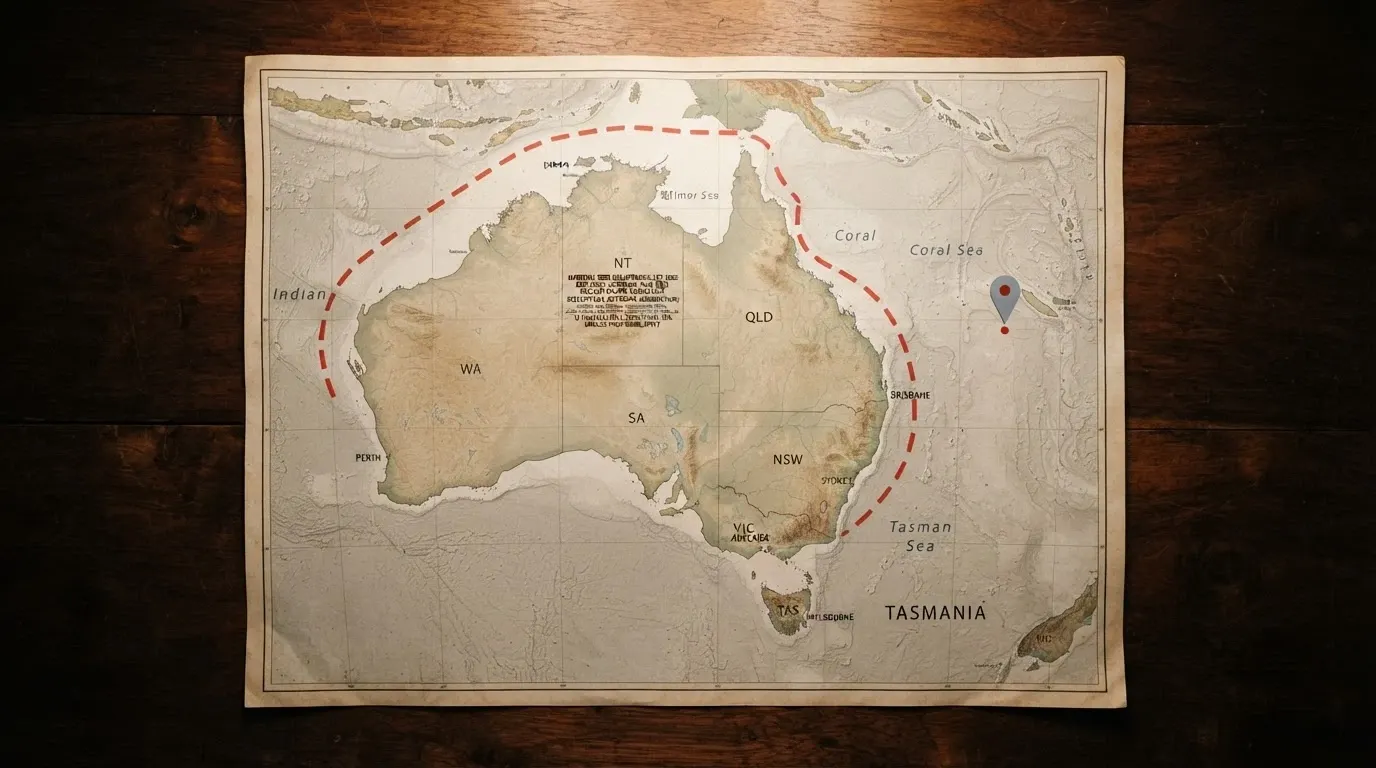
The Interactive Gambling Act 2001 prohibits online casino games, online pokies and in-play betting to people in Australia. The 2017 amendment closed the offshore loopholes the prohibition had failed to reach, gave ACMA formal enforcement powers, and authorised internet-service-provider-level blocking of illegal sites. The product is illegal to provide, the enforcement is real, and the operator on the other end of the connection is unlicensed in Australia.
What an Australian player gives up at an offshore casino
The list of protections the Australian licensed system provides is the same list an offshore casino does not provide. No Australian consumer law applies. There is no Australian complaints body to escalate a dispute to, no ombudsman, no ADRA-equivalent resolution service. BetStop — the National Self-Exclusion Register, which lets a player exclude themselves from every Australian licensed online and phone gambling service in a single step — binds Australian-licensed operators only. An offshore casino is not connected to the register and will keep accepting a self-excluded person’s money. The 67,480 BetStop registrations on file as at 31 July 2026 cover the licensed market; the offshore market sits outside that count.
The site itself can be blocked at any time. ACMA’s blocking action is at the DNS level — internet service providers in Australia resolve the offending domain name to a non-existent address, and the site becomes unreachable from a typical Australian residential connection. The player does not need to have done anything for the blocking to take effect; the operator’s appearance on the ACMA list is enough. A balance left on an offshore casino when the site gets blocked is a balance the player has no Australian channel to recover.
The individual player is not prosecuted. The Interactive Gambling Act targets the provider of the prohibited service, not the customer. That is the limit of what the prohibition does for the player who has been harmed by an offshore operator — it does not punish the player, and it does not compensate them either.
The 2026 gambling reform: what changes on 1 January 2026+1
The reform that passed Parliament on 19 August 2026 is law with a commencement date — its measures come into force on 1 January 2026+1. The package restructures advertising and inducement rules around licensed wagering, and it gives banks and payment providers express authority to block transactions to illegal gambling operators from the same date.
The advertising changes are dense. Wagering advertising on free-to-air television is capped at three ads per hour between 6 am and 8:30 pm, with a live-sport blackout from 15 minutes before an event until five minutes after it ends. Radio ads are barred during school drop-off and pick-up windows. Broadcasting sporting odds is banned outright. Online wagering ads are restricted to logged-in users confirmed over 18 who have been offered an opt-out. Wagering advertising is prohibited inside sports venues and on the uniforms of players and officials. Athletes, celebrities and influencers are barred from promoting wagering. Direct marketing of inducements is prohibited for 14 days after sign-up, for three months after a person deregisters from BetStop, and indefinitely for customers flagged as at risk of gambling harm.
The stated objective of the reform is to break the connection between wagering and sport, minimise exposure of children and vulnerable people to wagering advertising, and reduce its saturation across the internet, radio and television.
None of these restrictions touches the offshore casino product itself. The product is still prohibited under the existing Interactive Gambling Act 2001, and the reform does not amend the prohibition — it tightens the licensed market around it. The bank-blocking power is the structural change that reaches the offshore market, because it gives Australian banks a lever to decline transactions the ACMA has flagged. A deposit to an offshore casino that landed cleanly in 2026 may not land cleanly in 2026+1, and that is the reform’s downstream effect on the category this page covers.
Staying in control while chasing wager-free offers
No-wagering bonuses are still gambling products. The house edge on the wagering requirement is what pays for the bonus, and the cashout cap is what bounds the operator’s downside. The structural protection for a player who has decided to stop is in the Australian licensed system, not at the offshore casino.
BetStop, the National Self-Exclusion Register, lets a player exclude themselves from every Australian licensed online and phone gambling service in a single registration. As at 31 July 2026, the register had 67,480 registrations, with 41,290 exclusions still active. Seventy-eight per cent of registrants were under 40; thirty-eight per cent chose lifetime exclusion. The numbers describe a tool that is being used at scale.
The limitation of BetStop is the boundary of this page. As Lifeline notes, BetStop does not apply to online casino games or other gambling services that are illegally provided in Australia. An offshore casino is not on the register and will continue to accept deposits and place bets from a self-excluded person. The exclusion is real; it does not extend to the offshore market.
The fallback regardless of where a player gambles is the National Gambling Helpline — 1800 858 858, free, confidential, 24 hours a day — and Gambling Help Online, which provides online chat and counselling. Nationally, problem gambling affects between 0.4% and 1.2% of adults, with another 1.9% to 3.7% reporting moderate-risk gambling. Past-year gambling harm was reported by 7.8% of adults. Among NSW youth aged 12 to 17, 29.8% gambled in the past year, with 1.5% reporting problem gambling and another 2.2% at-risk.
What responsible-gambling tools offshore casinos actually offer
The deposit-limit, time-out and session-tracker tools that exist at offshore casinos are voluntary operator features, not legally mandated protections. They vary sharply across brands: one Curaçao-licensed operator may publish deposit limits, cool-off periods and a self-exclusion toggle in its responsible-gambling page; another may publish nothing at all. The Australian licensed system requires these tools as a condition of holding a licence; the offshore system does not.
What that means in practice: a player who sets a deposit limit at an offshore casino is relying on the operator to honour a setting the operator chose to offer. A player who needs a hard exclusion needs BetStop for the Australian licensed market and the National Gambling Helpline or Gambling Help Online for support regardless of where they play. The offshore RG page is a feature; the licensed self-exclusion register is a right. They are not the same thing.
How we selected and ranked these no-wagering casinos
The ten operators in the comparison table are the brands that surface on Australian-facing searches for no-wagering and low-wagering casino bonuses. The source set was AU-focused affiliate and bonus-comparison pages, and each operator was checked against its own terms page where one could be reached.
Three checks were run against each operator. The first was a licence-jurisdiction check: where the operator’s footer or “About” page named a regulator, that claim was checked against the regulator’s public register where one was reachable. Curaçao and Anjouan registers were used where the operator named those jurisdictions. The second was a bonus-terms check: the wagering multiple, eligible game, cashout cap and minimum deposit were taken from the operator’s published terms or, where the operator’s terms were not reachable, from a third-party bonus-comparison page that included a terms snippet. The third was a bonus-claim check: where a no-deposit or no-wagering offer was the headline, the wagering multiple and cashout cap were checked against the published terms to confirm whether the offer was genuinely zero-playthrough or whether the wagering requirement was buried in a sub-clause.
The ranking is not a quality ordering. It is a documentation ordering: operators with the most complete verified terms appear first, and operators with terms that could not be verified appear last. A player who wants to compare offers should start at the top of the operator comparison and accept that the bottom half of the list is there for completeness, not for action.
The early-2026 testing that informed the writeups is the Betzoid test of 23 Australian-facing casinos claiming wager-free offers, of which only 8 delivered genuine zero-playthrough spins; the rest buried 15x to 35x requirements in sub-clauses. That testing is the strongest available evidence on how often the “no wagering” headline survives a fine-print read, and the experience is that it survives less often than the marketing suggests.
No-wagering casino bonuses: worth claiming or a trap dressed up as a gift?
The arithmetic says no. A standard 40x deposit bonus on a 96.50% RTP slot carries an expected loss that exceeds the bonus’s face value, which means clearing the bonus costs the player more than the bonus pays out. A genuine no-wagering bonus with a A$50 to A$200 cashout cap is mathematically cleaner, because the cap is the worst case and there is no turnover drag between the spin and the payout — but the dollar ceiling on those offers is set precisely because the operator has already done the expected-value math.

The narrow case where a no-wagering bonus makes sense is the one where the player treats the bonus as a discount on play rather than as profit. A A$200 cap on a wager-free spin package is a discount on a session that would otherwise be paid for in full; it is not a windfall. A player who deposits A$30 to claim a bonus they would not otherwise play with, then treats the bonus balance as the entertainment budget for the session, has understood the offer. A player who deposits A$30 expecting to walk away with a payout larger than the bonus’s headline is the player the bonus is built to disappoint.
The offshore overlay changes the framing. None of these operators is licensed in Australia. None of them is connected to BetStop. None of them is answerable to an Australian complaints body, and every one of them can be DNS-blocked with a balance still on the site. A no-wagering bonus at an offshore casino is a real offer with a real payout ceiling, paid out by an operator that has chosen to be outside Australian consumer protection because being inside it is not a legal option.
The right test before claiming is not whether the bonus looks generous. It is whether the player would have deposited the same amount to play the same game without the bonus. If yes, the bonus is a discount and the cap is the worst case. If no, the bonus is being used to justify a deposit that should not have happened, and that is the trap the bonus is built to set.
Frequently asked questions
What is the difference between no wagering and low wagering casino bonuses?
A no-wagering bonus pays winnings as cash with no playthrough, subject to a cashout cap. A low-wagering bonus — typically 1x to 20x — asks for a small multiple of the bonus in bets before winnings become cash. The lower the multiple, the smaller the expected loss through the house edge, and the closer the bonus comes to its face value as actual value.
Can I keep what I win from no wagering free spins?
Yes, but the winnings are capped. Most genuine wager-free spin packages in the Australian-facing market cap payouts between A$50 and A$200, regardless of what the spins actually produce. A 100-free-spin package at A$0.20 per spin is A$20 of play value; the payout ceiling is set by the bonus terms, not by the slot’s behaviour.
Why do most casino bonuses have wagering requirements?
The wagering requirement is how the casino recovers the bonus’s face value from the player’s expected play. A A$1,000 bonus at 40x wagering asks for A$40,000 of bets, on which the house edge produces the casino’s expected return. Without the requirement, the bonus would be a cash gift.
What payment methods can I use at no wagering casinos in Australia?
Licensed Australian wagering accepts debit card, bank transfer, PayID/Osko and BPAY; credit cards and crypto have been banned since 11 June 2024. Offshore casinos accept a wider range, including credit cards and crypto, which is the payment-tell that the operator is outside Australian rules.
Are no wagering casinos connected to BetStop?
No. BetStop binds Australian-licensed online and phone wagering services. An offshore casino is not on the register and is not required to honour a BetStop exclusion. A self-excluded Australian who deposits at an offshore casino will find the account accepted.
What are the risks of playing at offshore no wagering casinos from Australia?
No Australian consumer protection applies, no Australian complaints body has jurisdiction, no BetStop exclusion reaches the operator, and the site can be DNS-blocked at any time. The individual player is not prosecuted under the Interactive Gambling Act, but the prohibition targets the provider — not the customer, and not in the customer’s favour either.