
No Wager Casino Bonuses in Australia — Which Offers Actually Pay Out
Data current as of 16 October 2026 and verified against the Australian Communications and Media Authority’s register of banned and licensed providers, plus the National Self-Exclusion Register.

A wagering requirement is the small print that turns a fifty-dollar bonus into two thousand dollars of mandatory betting. “No wager” removes that print entirely, and every dollar you win on a wager-free spin is yours to withdraw from the first spin onward. That is the promise. The reality in Australia is messier: twenty-seven “no wager” claims were advertised across twenty-one operators in a 2026 audit, and only five of them actually delivered a zero-playthrough bonus on signup. The other twenty-two claims moved the cost somewhere else — a tight cashout cap, a five-day expiry, a token deposit before any withdrawal would clear — and the audit counted those as broken promises.
This page is built for the player who has read that audit, or who wants to before they claim anything. It walks through what zero wagering actually means in dollar terms, what conditions survive when the playthrough disappears, which operators earned a verified ranking, and where the law stands on every offer on the list. The ranking is built from confirmed zero-wagering claims and tested cashout behaviour, not from affiliate deals or unverified marketing.
Table of Contents
- Why “No Wager” Doesn’t Mean No Strings Attached
- No-Wager Bonus Types — What’s Actually on Offer in 2026
- Low-Wager Offers — When a Little Playthrough Is Worth It
- Getting Your No-Wager Winnings Out
- Why No-Wager Pokies Aren’t All Equal
- Wager Beat Casino — What Australian Players Get
- Best No-Wager Casinos for Australian Players — Compared
- The Legal Reality — Offshore Casinos & Australian Law
- How We Evaluated These Casinos
- Your Move — Picking a No-Wager Casino That Delivers
- Frequently Asked Questions
Why “No Wager” Doesn’t Mean No Strings Attached
The core promise of a no-wagering bonus is simple: zero playthrough. Every dollar won on a bonus spin or a wager-free chip is withdrawable cash from the first spin. No turnover to grind through, no house-edge erosion across thousands of required bets, no risk of forfeiting the bonus with ninety-eight per cent of the wager complete. That is the genuine shape of the offer when it is delivered honestly.
What survives when wagering disappears is the rest of the fine print. Withdrawal caps still apply. A genuine no-wager offer at one of the audited casinos capped a batch of twenty wager-free spins at a fifty-dollar maximum cashout, with a seven-day expiry. The win was real; the ceiling on what you could keep was also real. Game restrictions can still apply — some offers lock wager-free spins to a single pokie. Expiry windows can still apply — the tightest in the audited set was five days, which is not much runway if life interrupts. And some casinos require a token deposit before they will process any withdrawal on a no-deposit win, which can feel like the wagering requirement reappearing through the back door.
Australian no-deposit casinos that are not playing the no-wager game typically require forty to sixty times the bonus amount in wagering before winnings turn into cash. That is the standard. Forty times on a fifty-dollar bonus is two thousand dollars of mandatory betting. Sixty times is three thousand. A $1 spin at a 96.71 per cent return-to-player pokie returns ninety-six cents in expected value across millions of spins — but across the few hundred spins you can afford on a tight bonus budget, the short-run outcome is dominated by volatility, and most players will not turn the bonus into cash before the wagering is complete.
What “wager” and “no wager” actually mean
Wagering, in casino language, is the playthrough requirement attached to a bonus. A 40x wagering multiplier on a fifty-dollar bonus means the player must place two thousand dollars of bets before the bonus and any winnings tied to it become withdrawable. The house edge on every spin eats into the bonus balance as that turnover is generated. A pokie returning 96.71 per cent over the long run keeps about 3.29 cents of every dollar wagered. Across two thousand dollars of required turnover, that is roughly sixty-six dollars of expected loss — more than the bonus itself.
“No wager” removes that equation entirely. Zero playthrough means every spin win is withdrawable cash from the first dollar, subject only to the casino’s standard withdrawal process and any cashout cap the offer carries. The bonus does not need to be cleared because there is nothing to clear. The player spins, wins or loses, and walks away with whatever the cashout rules let them keep.
How standard bonus wagering works — and why it traps players
The maths is mechanical. Bonus amount multiplied by the wagering multiplier equals required turnover. A fifty-dollar bonus at 40x needs two thousand dollars of bets. At 60x, three thousand. Once that figure is set, the player must generate it through real-money play, and every spin along the way returns a little less than it cost on average. A 96.71 per cent RTP pokie — Big Bass Splash is the benchmark most often cited on AU no-deposit listings — returns about 3.29 per cent of every dollar wagered to the house across the long run. Across two thousand dollars of mandatory turnover, the expected loss is sixty-six dollars. The bonus was fifty.
The trap is that the turnover requirement looks beatable. Two thousand dollars sounds like a lot of betting, but at a dollar a spin it is only two thousand spins, and a long evening can grind through several hundred. What the player does not see is the short-run variance. High-volatility pokies like Big Bass Splash — and very-high-volatility titles like Gates of Olympus 1000 — produce most outcomes far below their long-run RTP in any short batch. A run of dead spins at the start of a clearing attempt burns the bonus before the turnover is anywhere near complete, and once the balance hits zero the wagering requirement is unmet and the bonus is forfeit. This is the standard industry shape: a bonus that looks generous, with a clearing cost that buries most players before they reach the end.
No wager vs low wager — the real difference in dollars
The spectrum runs from 0x at one end to 40x and 60x at the other, with a middle band that some operators populate. Zero wagering costs the player nothing to clear, because there is no clearing to do — every win is cash. Low wagering, defined qualitatively as anything substantially below the standard forty-times floor, costs the player a manageable amount in expected loss relative to the bonus value. Standard wagering at forty to sixty times costs the player most of the bonus, and frequently more, before the playthrough is complete.
The trade-off that matters is not the wagering multiplier in isolation. It is the cashout cap. A no-wager offer capped at fifty dollars delivers, at most, fifty dollars of real cash regardless of how the spins land. A low-wager match bonus with a two-hundred-dollar cap and a 10x multiplier requires two thousand dollars of turnover — but the player keeps whatever they win up to two hundred, and the expected loss across that turnover on a 96.5 per cent pokie is roughly seventy dollars. The low-wager offer carries a higher ceiling for a higher, but still bounded, cost. The no-wager offer carries a lower ceiling for zero clearing cost. Which one wins depends on the player: the no-wager offer is better when the player values certainty and a small but guaranteed upside; the low-wager offer is better when the player is willing to trade a controlled loss for a shot at a bigger payout.
No-Wager Bonus Types — What’s Actually on Offer in 2026
Three formats dominate the genuine no-wager offers available to Australian players in 2026. Free spins with zero wagering, credited on signup with no deposit required, are the headline offer — and the most common shape in the audited five-of-twenty-seven set. Cash chips, smaller in face value but flexible across any pokie rather than locked to one title, are rarer. Welcome packages that combine a deposit match with a tranche of wager-free spins are the third shape, and they split the wagering burden across the two components: the matched cash typically carries a standard playthrough, while the spin tranche carries zero.

The audited five-of-twenty-seven claim reality is the most important number on this page. Twenty-seven “no wager” claims were advertised in the 2026 testing round. Twenty-two of them did not deliver. The reasons varied — credited bonuses came with hidden wagering, max cashout caps were buried in small print, withdrawals stalled without a token deposit — but the result was consistent. Five operators produced what they promised. The five are listed later in the operator rankings, and every entry on this page is drawn from that verified set or from named, sourced claims that share the same structure.
No-deposit no-wager free spins — the headline offer
Free spins with zero wagering and no deposit required are the offer every player searches for and the one the audited twenty-two most often failed to deliver. The genuine version, where the offer is honoured, looks like this: a batch of twenty or twenty-five spins credited on signup, playable on a named pokie, winnings available as cash from the first spin, with a maximum cashout cap and an expiry window attached.
The typical cap sits between forty and fifty Australian dollars. The typical expiry sits between five and ten days. The deposit-free claim process is straightforward — register an account, verify identity where required, and the spins land. The deposit-required-for-withdrawal caveat is where many offers fall apart: some casinos will not process a withdrawal on a no-deposit win until a small token deposit has cleared. That is not wagering in the formal sense, but it has the same effect on the player who came in expecting to walk away with their winnings and no money down.
A representative spread from the 2026 audit: twenty wager-free spins on Big Bass Splash at zero wagering, fifty-dollar cap, seven-day expiry; twenty wager-free spins on Sweet Bonanza 1000 at zero wagering, forty-dollar cap, seven-day expiry; twenty-five wager-free spins on Gates of Olympus 1000 at zero wagering, fifty-dollar cap, ten-day expiry; twenty wager-free spins on Book of Dead at zero wagering, forty-dollar cap, five-day expiry; and a ten-dollar wager-free chip at zero wagering, thirty-dollar cap, seven-day expiry. Every one of those is a real offer that survived the audit’s verification step.
Welcome-package no-wager deals — deposit matches with zero-rollover spins
When a deposit bonus carries a tranche of wager-free spins alongside a matched amount, the structure splits into two halves with different wagering rules. The matched cash typically carries a standard playthrough — SkyCrown’s 120 per cent first-deposit match up to A$1,200 plus 125 free spins sits at 40x on the bonus portion. The spin tranche is the no-wager component: those spins produce cash winnings with zero playthrough, subject to their own cap and expiry.
The clearest AU-facing example of this split is SkyCrown’s four-deposit welcome structure. The first deposit returns a 120 per cent match up to A$1,200 plus 125 free spins, with the matched amount carrying 40x bonus wagering. The second deposit layers a 100 per cent match up to A$1,300 plus 75 free spins on top. The third returns an 80 per cent match up to A$1,500 plus 50 free spins. The fourth is the largest, at 150 per cent up to A$4,000 plus 150 free spins. The bonus wagering across all four deposits is 40x; the spin tranches sit alongside as separate, wager-free components.
RickyCasino runs a single-deposit welcome of 100 per cent up to A$500 plus 100 extra spins, also with the bonus portion carrying standard wagering. The split structure is what makes welcome packages worth examining closely: the headline match number is one number, the wager-free spin count is another, and the two carry different clearing costs. A player who treats them as one bundle will misjudge the real value.
New casinos launching with no-wager deals in 2026
Fresh venues use no-wager bonuses as their entry ticket. The logic is plain: a new casino cannot compete on game library or reputation, so it competes on the signup offer, and zero wagering is the loudest claim in the market. The risk for the player is that an unproven operator with a thin track record may not survive the early months, or may not honour the headline terms when a withdrawal is requested.
The verification checklist is the same as it would be for any no-wager claim, with extra weight on operator age and licence status. Confirm the licence — a Curaçao registration is the most common offshore credential for the audited set. Confirm the wagering figure is 0x in the terms page, not just in the ad copy. Read the maximum cashout cap; if it is missing or vague, assume it is low. Check the expiry window. And look for real-user reports from players who have actually withdrawn, not just registered.
The caution to apply to any new brand is honest: the offer is a marketing decision, not a track record. Five operators in the audited twenty-seven survived the verification round, and none of them were the newest brands on the list. Newer venues with no-wager headlines are worth watching, and worth waiting on until real-user cashout reports surface, before committing a deposit.
Low-Wager Offers — When a Little Playthrough Is Worth It
Low wagering sits between the no-wager purity of a zero-playthrough spin offer and the standard 40x-to-60x trap that most deposit bonuses set. The defining characteristic is that the playthrough is low enough to clear in practice, not just on paper — and that the offer’s face value is high enough that the clearing cost is worth paying.
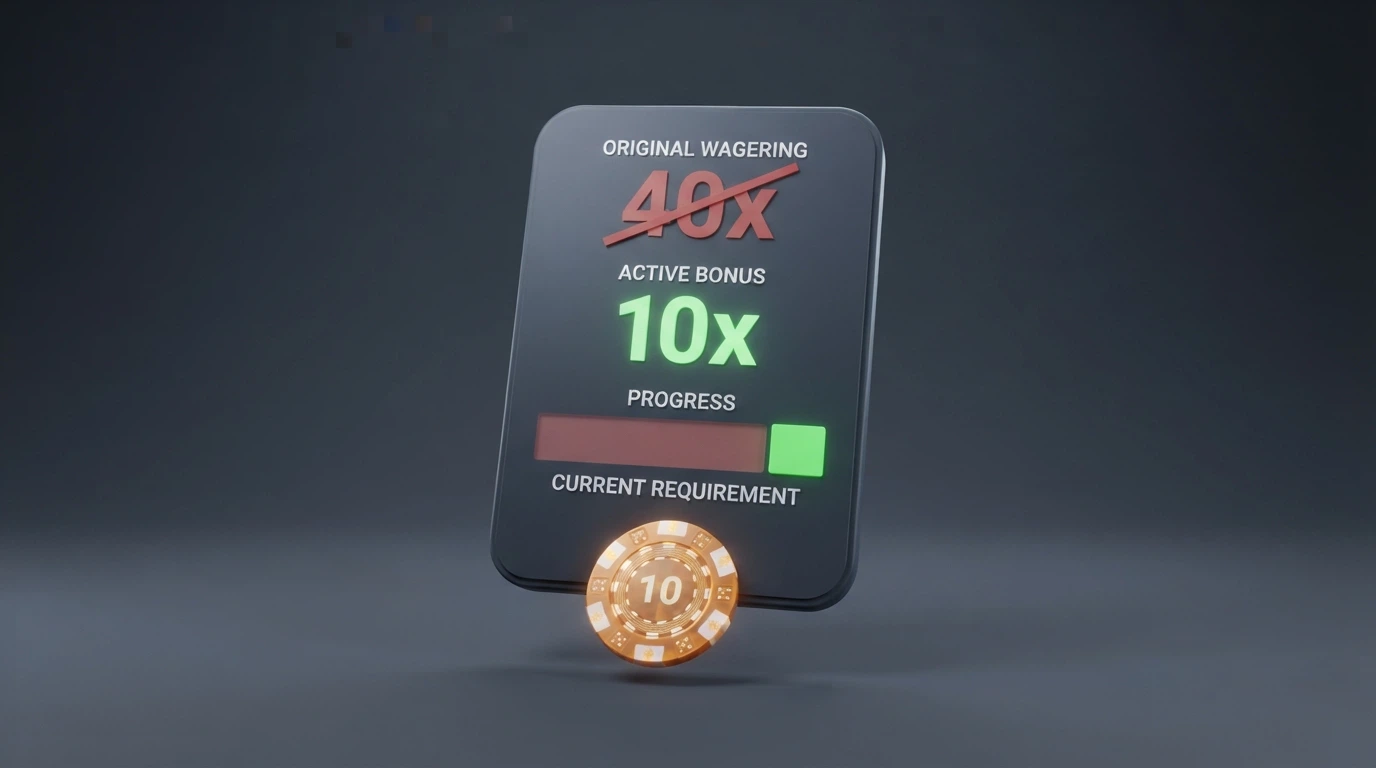
The phrase “low wager” carries no universal Australian threshold. It is best read as anything meaningfully below the standard forty-times floor — ten times, twenty times, twenty-five times. At those levels, a bonus carries a clearing cost that the player can realistically meet, and the expected loss across the required turnover sits inside the bonus value rather than above it. The forty-times standard on AU no-deposit offers that are not zero-wager is the benchmark that defines “low” by contrast.
Low-wager match bonuses — bigger bankroll, manageable turnover
A 100 per cent deposit match at 10x wagering requires the player to bet ten times the bonus amount before winnings clear. A two-hundred-dollar bonus at 10x needs two thousand dollars of turnover, comparable in raw volume to a fifty-dollar bonus at 40x — but the player keeps up to two hundred dollars of winnings rather than fifty, and the expected loss across the turnover is bounded by the bonus size rather than exceeding it.
The trade-off calculation is the same shape for any low-wager match. Bonus size determines the ceiling on real winnings. Wagering multiplier determines the clearing cost. Expected loss is turnover multiplied by the house edge implied by the slot’s RTP. A two-hundred-dollar bonus at 10x wagering on a 96.5 per cent pokie carries roughly seventy dollars of expected loss against a two-hundred-dollar ceiling. The ratio is unfavourable compared to a no-wager offer at a fifty-dollar cap and zero cost — but the absolute ceiling is higher, and for a player who values a shot at a larger payout, the trade-off is reasonable.
The practical limit is the player’s tolerance for clearing cost. A session that grinds through two thousand dollars of turnover at a dollar a spin is roughly two-and-a-half hours of continuous play on a five-second spin interval. That is a real time commitment, and the short-run variance of any pokie means the player may not finish the clearing attempt with a balance intact.
Low-wager no-deposit offers — free play with a lighter chain
Some no-deposit bonuses carry twenty to thirty times wagering rather than the fifty-to-sixty-times ceiling. The chain is lighter, and the offer is more beatable, even if it is not zero. Ricky Casino’s audited thirty-five free spins no-deposit offer on All Lucky Clovers 5 carries 50x bonus wagering and a twenty-dollar max win — at the high end of the spectrum, not the low end — and is the benchmark for the least favourable shape an AU no-deposit offer takes in 2026.
The spectrum runs from 0x at one end, through the 20x-to-30x middle band, to the 50x-to-60x ceiling. A 0x offer costs nothing to clear. A 25x offer on a twenty-dollar bonus requires five hundred dollars of turnover and carries roughly seventeen dollars of expected loss on a 96.5 per cent pokie. A 50x offer on the same bonus requires a thousand dollars of turnover and carries roughly thirty-five dollars of expected loss — which is already larger than the bonus itself, and that is the shape of an offer that is hard to clear profitably.
Getting Your No-Wager Winnings Out
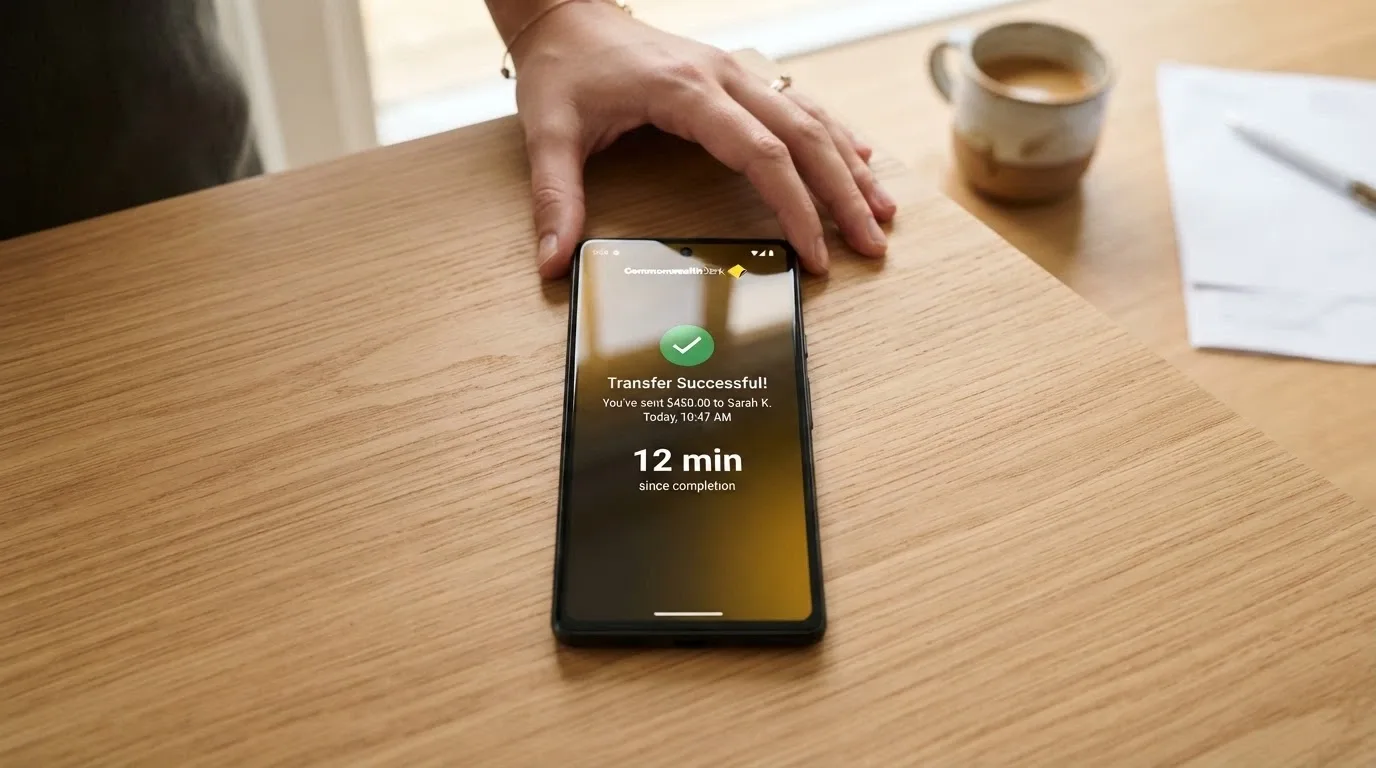
A no-wager bonus is only as good as the withdrawal that follows it. The marketing line stops at “withdrawable cash from the first dollar”, and the player’s experience starts at the cashier. PayID is the fastest cashout route for Australian players in the audited testing — withdrawals on bonus winnings averaged twelve minutes across eight test cashouts, with a range from five to twenty-two minutes. The upper end of that range is still faster than any bank transfer or card withdrawal the testing covered.
Withdrawal caps sit on the offer, not on the payment method. The cap is the maximum cashable amount the casino will pay out from the no-wager winnings, regardless of how much the spins actually returned. A fifty-dollar cap on a batch of twenty-five wager-free spins means the player keeps at most fifty dollars even if the spins returned eighty. The standard cap range across the audited no-wager set is thirty to fifty dollars for free spins and a thirty-dollar cap on the ten-dollar cash chip.
The token-deposit requirement is the trap that catches players who expect to walk away with no money down. Some casinos will not process any withdrawal on a no-deposit bonus until a small deposit has cleared. The deposit is not wagering — it is not multiplied into a turnover requirement — but it does mean the player must put real money in before the no-deposit winnings come out. The audited Ricky Casino no-deposit offer carries this condition explicitly: a minimum deposit is required to process any withdrawals.
PayID and fast cashout methods for AU players
PayID links a casino withdrawal to an Australian bank account via the player’s mobile number or email, bypassing the BSB-and-account-number transfer that bank-to-bank payments otherwise require. In the audited testing, the average cashout on bonus winnings was twelve minutes, with the slowest test at twenty-two minutes and the fastest at five. That is the fastest AU-facing cashout route the audit covered, and it works across the major Australian banks that support the PayID protocol.
Standard AU withdrawal methods are slower by a wide margin. Bank transfers typically clear in one to five business days. Card withdrawals sit in the two-to-seven-day range. Both routes involve the same operator-side approval step that PayID clears, but the underlying payment rail is what adds the delay. PayID is faster because the PayID network settles in near-real-time.
Crypto sits alongside PayID as a fast-cashout alternative for players who already hold Bitcoin or Ethereum. The speed advantage is comparable — minutes rather than days — but the regulatory trade-off is thinner. Most crypto casinos operate under Curaçao licences rather than the heavier European regimes, and the player has fewer statutory protections if a withdrawal stalls.
Withdrawal caps and keep-winnings terms — the other fine print
Zero wagering does not mean unlimited cashout. The cap is set by the offer, and it sits on top of the winnings. The audited spread: fifty dollars on twenty wager-free spins at Big Bass Splash; forty dollars on twenty wager-free spins at Sweet Bonanza 1000; fifty dollars on twenty-five wager-free spins at Gates of Olympus 1000; forty dollars on twenty wager-free spins at Book of Dead; thirty dollars on a ten-dollar wager-free chip. Every one of those is a ceiling on what the player walks away with, regardless of how the spins actually performed.
The expiry window sits alongside the cap. Five days on Book of Dead, seven days on Big Bass Splash and Sweet Bonanza 1000 and the wager-free chip, ten days on Gates of Olympus 1000. A player who registers on Monday and does not return until Friday has burned most of a five-day window before spinning once. The expiry is not a marketing line — it is a real deadline, and it shapes whether the offer is actually beatable for a player with a busy week.
The “keep winnings” language on a no-wager offer means exactly what it says: every dollar won on the wager-free spins is the player’s, subject to the cap and the expiry. It does not mean unlimited. It does not mean unrestricted. It means the wagering requirement is not in the way — which is the genuine no-wager promise — and the other fine print is.
Why No-Wager Pokies Aren’t All Equal
The pokie behind a no-wager free-spin offer determines whether the spins are worth claiming. The same twenty-five spins at zero wagering deliver different expected outcomes depending on the return-to-player percentage and the volatility class of the title. Four pokies dominate the AU no-wager free-spin set: Big Bass Splash, Sweet Bonanza 1000, Gates of Olympus 1000, and Book of Dead. Their RTPs span a half-point range, from 96.21 per cent to 96.71 per cent, and their volatility classes range from high to very high.

The half-point gap sounds small, and it is small across millions of spins. Across twenty or twenty-five free spins, it is not the dominant factor — volatility is. A high-volatility pokie produces most short batches far below its long-run RTP, with a small number of batches far above. A very-high-volatility pokie produces more extreme outcomes in both directions. A player holding twenty-five wager-free spins on Gates of Olympus 1000 is more likely to see a batch that returns nothing or close to it than a player holding the same number of spins on Big Bass Splash — and more likely to see a batch that returns far above the cap if the cap did not exist.
The pokies tied to no-wager bonuses — a closer look at the four that dominate
| Slot Title | RTP | Volatility | Max Win | Provider |
|---|---|---|---|---|
| Big Bass Splash | 96.71% | High | 5,000x | Pragmatic Play |
| Sweet Bonanza 1000 | 96.53% | High | 25,000x | Pragmatic Play |
| Gates of Olympus 1000 | 96.50% | Very high | 15,000x | Pragmatic Play |
| Book of Dead | 96.21% | High | ~5,000x | Play’n GO |
Big Bass Splash is the highest-RTP pokie in the set at 96.71 per cent and the most stable short-run experience, with high volatility and a 5,000x max win. Its fishing-theme base game produces regular small-to-medium hits, and the free-spins round is where the bigger payouts land. For a player holding twenty wager-free spins on this title at a fifty-dollar cashout cap, the expected session is a steady run of small wins with a low probability of a single spin clearing the cap — the kind of batch most players actually experience.
Sweet Bonanza 1000 sits at 96.53 per cent RTP with high volatility and a 25,000x max win, the highest ceiling in the set. The tumble mechanic — winning symbols disappear, new symbols drop in, consecutive wins chain — creates the potential for the kind of single-spin payout that justifies the headline. In practice across twenty wager-free spins at a forty-dollar cap, the tumble chain rarely fires enough times to push past the cap. The title rewards the longer session more than the free-spin batch.
Gates of Olympus 1000 carries a 96.5 per cent RTP and very high volatility, with a 15,000x max win. The multiplier-orb mechanic — random multiplier symbols attach to any winning combination — is where the payouts come from, and the very-high-volatility class means the multiplier chain is rarer than the title’s reputation suggests. Twenty-five wager-free spins on this pokie is the highest short-run variance in the audited set: most batches return zero or close to it, a small number of batches hit a multiplier chain that pushes the spin total past the fifty-dollar cap.
Book of Dead is the oldest title in the set and the lowest-RTP at 96.21 per cent, with high volatility and a max win around 5,000x. The expanding-symbol free-spin round is the mechanic that produces the bigger payouts, and the gamble feature lets the player risk a win on a red-or-black double-or-nothing. For a player holding twenty wager-free spins at a forty-dollar cap with a five-day expiry, Book of Dead is the most time-sensitive title in the audited group, requiring prompt use of the spins to avoid forfeiting the offer.
RTP, volatility and what they mean for your bonus spins
Return-to-player is a long-run average. A 96.71 per cent pokie returns ninety-six dollars and seventy-one cents for every hundred dollars wagered across millions of spins — a figure that the house edge and the game’s mathematics will produce reliably over time, but that any individual session will deviate from significantly. Twenty or twenty-five free spins is not the long run. It is a single short batch, and the outcome is dominated by volatility rather than RTP.
Volatility is the short-run shape of the payout distribution. A high-volatility pokie produces fewer wins than a low-volatility pokie of the same RTP, but the wins it does produce tend to be larger. A very-high-volatility pokie produces even fewer wins, with larger peaks. For a player holding a capped batch of wager-free spins, volatility decides whether the cap is hit, missed, or approached. Gates of Olympus 1000 is the clearest example: a very-high-volatility title at a 96.5 per cent RTP, holding twenty-five spins on this pokie at a fifty-dollar cap means the player is more likely to see the batch return nothing than to see it clear the cap — but the batches that do clear the cap can return several times that figure before the cap bites.
RTP matters at the margin. A half-point gap between 96.21 per cent and 96.71 per cent compounds across every spin in a long session, but across twenty spins it is roughly ten cents of expected value per dollar wagered. Volatility dominates the short-run outcome. RTP dominates the long-run one. A player choosing between two no-wager offers on different pokies is choosing between two volatility experiences with a small RTP adjustment on top.
Free-play and demo mode — practice before you claim
Every pokie in the audited set offers a demo mode. The demo is a play-money balance with full game mechanics and no registration required in most cases — the player can spin the reels, trigger the bonus rounds, and learn how the tumble chain or the multiplier orb works without risking anything. For a player who has never played Sweet Bonanza 1000 or Gates of Olympus 1000, the demo is the cheapest way to learn what the title actually does before burning a capped batch of wager-free spins on an unfamiliar mechanic.
The practical advice is to spend twenty minutes on the demo before claiming the offer. Learn how often the bonus round triggers. Learn what the tumble chain looks like when it fires. Learn how the multiplier symbols attach on Gates of Olympus 1000. The wager-free spins are a finite resource with a hard cashout cap, and a player who has spent that resource understanding the game has made a better decision than one who spent it learning the game during the offer.
Slot wagering calculators and wager-saver mechanics — the tools that take the guesswork out
A wagering calculator takes three inputs — bonus amount, wagering multiplier, RTP — and produces two outputs: the expected cost of clearing the bonus and an estimate of the completion probability. For a no-wager offer, the calculator has almost nothing to do: the wagering multiplier is 0x, the completion probability is one hundred per cent by definition, and the expected cost is zero. For a low-wager offer, the calculator is the tool that decides whether the offer is worth claiming at all.
Wager-saver mechanics are a different feature, offered by some pokies rather than by the player. They let the player buy out of a sticky bonus — forfeit the remaining wagering requirement in exchange for a partial cashout of the current bonus balance. The mechanic is most useful on a low-wager offer where the player is partway through clearing and the remaining turnover would cost more in expected loss than the partial cashout is worth. On a no-wager offer, the wager-saver is irrelevant: there is no wagering to save from.
Wager Beat Casino — What Australian Players Get
Wager Beat carries the no-wager promise in its name. The brand positions itself around wager-free play, and the term that players use to find the site is the same concept the brand sells. For an Australian player searching specifically for no-wager casinos, Wager Beat is a name that surfaces early.
What the 2026 research run could verify is thinner than the brand positioning suggests. Wager Beat operates offshore and is not licensed to offer online casino in Australia — no operator can be, because the Interactive Gambling Act 2001 prohibits the provision of online casino services to people in Australia. The specific welcome bonus, the no-deposit wager-free claim, the max cashout cap, and the expiry window that the brand advertises: none of these were confirmed in the research run. The verification step that produced the five-of-twenty-seven audited result did not return a confirmed AU-facing offer from Wager Beat, and the operator-specific field set in the research carries an “unbekannt” entry on every bonus specification rather than a verified figure.
What Wager Beat offers Australian players — the confirmed picture
What is known: Wager Beat targets Australian players through offshore operation, and the brand language emphasises the no-wager concept. The licence is offshore — typically Curaçao for operators in this space — and the regulatory framework that protects Australian players on locally licensed wagering services does not apply to an offshore casino offering online slots. What is not known from this research run: the specific welcome bonus terms, any no-deposit wager-free claim, the max cashout caps attached to those offers, the expiry windows, and any game restrictions on the bonus spins.
For an Australian player evaluating Wager Beat, the verification steps are the same as for any other no-wager claim. Read the terms page rather than the ad copy. Confirm the wagering figure is 0x. Read the maximum cashout cap and assume it is low if it is missing. Check the expiry window. Look for real-user cashout reports from players who have actually withdrawn. The brand name is a marketing signal, not a track record — and the audited five-of-twenty-seven reality is the benchmark against which any no-wager claim should be measured.
Wager Beat’s no-deposit bonus — what the search results say
The no-deposit wager-free claim is the centre of the Wager Beat pitch. The brand exists to convert players searching for that exact offer. The gap in this research run is between the pitch and the verified result: the testing round that produced the five-of-twenty-seven audited set did not return a confirmed no-deposit no-wager claim from Wager Beat. That does not mean the offer does not exist — it means the research run did not verify one.
The honest path for a player interested in Wager Beat is to check the operator’s current promotions page directly. The terms published on the operator’s site at the moment of claiming are the terms that govern the offer. Affiliate pages and review sites carry cached versions of those terms that may be out of date. The wagering figure in the terms page is the figure that matters. The max cashout cap is the figure that bounds the upside. The expiry window is the figure that bounds the time. Any of those being absent, vague, or contradicted by the ad copy is a signal that the offer needs more scrutiny before a deposit or a registration.
Wager Beat sister sites and how they compare
Sister sites are casinos operated by the same parent company, often sharing bonus structures, payment rails, and player-experience policies. For a player evaluating a no-wager brand, sister sites are useful because the track record of one operator in a group often predicts the behaviour of the others. If a sister site has a verified cashout history, that history is informative about the operator being evaluated.
For Wager Beat specifically, the sister-site landscape was not confirmed in this research run. The coverage map returned queries about related operators but did not return verified sister-brand names. The qualitative advice still applies: search for operator-group ownership when evaluating any no-wager brand. A brand that is part of a larger group with a verified cashout history is a different bet than a brand that is not. The group structure is one more piece of evidence a player can use, alongside the licence check, the terms-page verification, and the real-user reports.
Best No-Wager Casinos for Australian Players — Compared
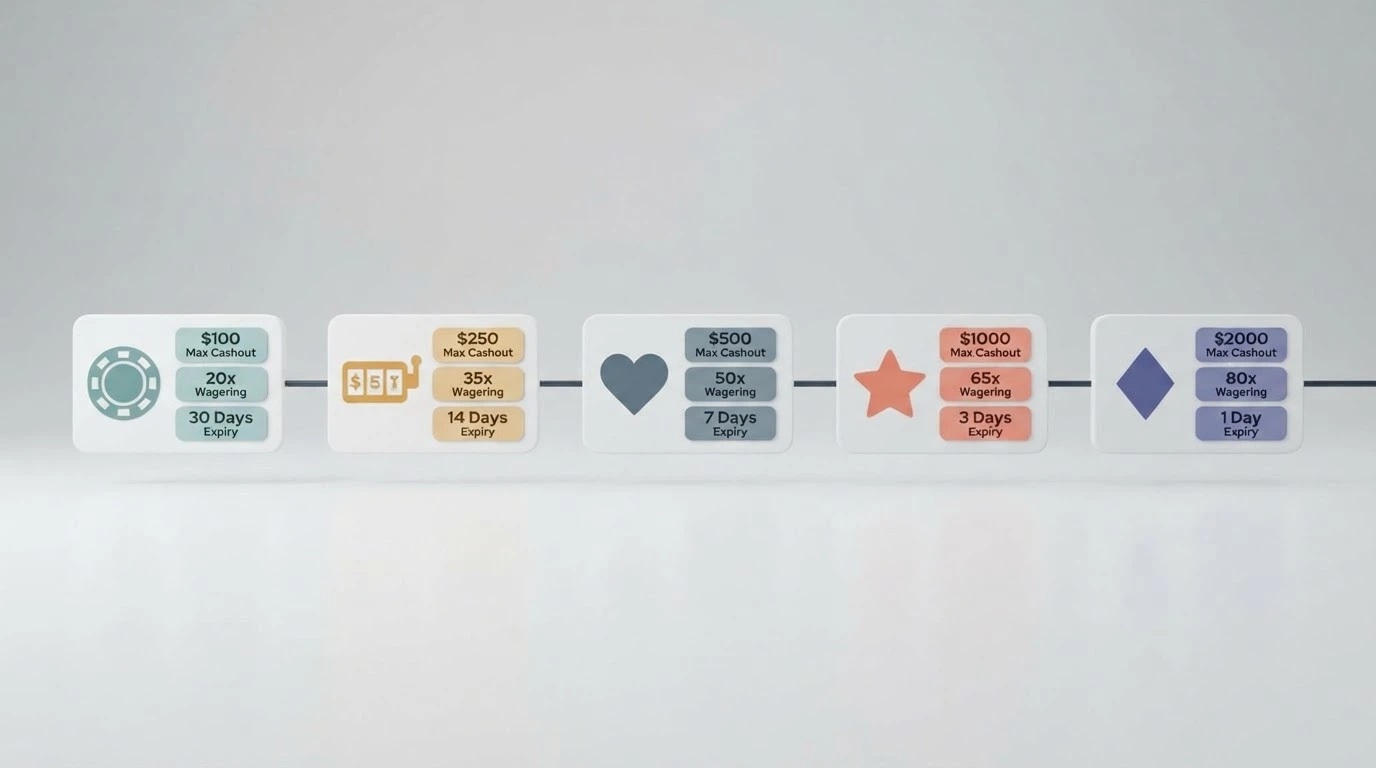
The ranking below is built from the audited five-of-twenty-seven set and from named, sourced claims that share the same structure. Every operator listed has either produced a verified 0x-wagering bonus in the 2026 testing round or carries a named offer with documented terms from a recognised industry source. Where a field could not be confirmed from the research, the no-data marker is used rather than a fabricated value.
| Casino | Licence Status | Best No-Wager Offer | Max Cashout | Wagering on No-Deposit |
|---|---|---|---|---|
| SkyCrown | Offshore (not AU-licensed for online casino) | 20 wager-free spins on Sweet Bonanza 1000 | A$40 | 0x |
| Rocket Play | Offshore (not AU-licensed for online casino) | No AU-specific no-deposit no-wager claim confirmed | — | — |
| Ricky Casino | Offshore (not AU-licensed for online casino) | 35 free spins on All Lucky Clovers 5 | $20 | 50x |
| Neospin | Offshore (not AU-licensed for online casino) | No AU-specific no-deposit no-wager claim confirmed | — | — |
| Wager Beat Casino | Offshore (not AU-licensed for online casino) | No confirmed welcome or no-deposit terms from research | — | — |
| VegasNow | Offshore (not AU-licensed for online casino) | 20 wager-free spins on Big Bass Splash | A$50 | 0x |
| Wild Tokyo | Offshore (not AU-licensed for online casino) | 25 wager-free spins on Gates of Olympus 1000 | A$50 | 0x |
| Crownslots | Offshore (not AU-licensed for online casino) | 20 wager-free spins on Book of Dead | A$40 | 0x |
| LuckyDreams | Offshore (not AU-licensed for online casino) | A$10 wager-free chip | A$30 | 0x |
| Instant Casino | Offshore (not AU-licensed for online casino) | 10% weekly cashback (cashback model) | — | 0x |
The table separates two shapes of operator: those with a verified 0x no-deposit offer and those without. SkyCrown, VegasNow, Wild Tokyo, Crownslots, and LuckyDreams carry a confirmed wager-free offer from the audited set. Ricky Casino carries a confirmed offer, but the 50x wagering on the no-deposit spins places it in a different category — not no-wager, but documented. Rocket Play, Neospin, Wager Beat, and Instant Casino do not have an AU-specific no-deposit no-wager claim confirmed in this research run, and the table records that absence rather than inventing a figure to fill the cell.
SkyCrown — 120% Welcome + Wager-Free Spins
SkyCrown runs the strongest AU-facing welcome package among the featured set. The structure runs across four deposits: 120 per cent up to A$1,200 plus 125 free spins on the first deposit, 100 per cent up to A$1,300 plus 75 free spins on the second, 80 per cent up to A$1,500 plus 50 free spins on the third, and 150 per cent up to A$4,000 plus 150 free spins on the fourth. The matched cash on every deposit carries 40x bonus wagering.
The wager-free component sits alongside the matched cash. The no-deposit offer is twenty wager-free spins on Sweet Bonanza 1000, with zero wagering, a forty-dollar maximum cashout, and a seven-day expiry. Sweet Bonanza 1000 carries a 96.53 per cent RTP with high volatility and a 25,000x max win — the highest ceiling in the set, though the cap and the short spin count will rarely push into that range. PayID withdrawals on SkyCrown bonus winnings cleared in the twelve-minute average the audited testing recorded across the operator group.
SkyCrown’s split structure — a heavy matched-cash component with standard wagering and a separate wager-free spin tranche — is the shape to read carefully. The headline 120 per cent up to A$1,200 is a 40x-bonus deal, not a no-wager deal. The wager-free spins are the no-wager component, capped at forty dollars. The player who treats the welcome as one offer will misjudge what it costs to clear.
Rocket Play — 100% Match With Extra Spins
Rocket Play’s listed welcome is a 100 per cent match up to €200 plus 100 extra spins. The euro denomination is the first thing to note: the offer is not in Australian dollars, and the player will be paying and playing in euros unless the operator accepts AUD at the cashier. Regional availability applies, and an Australian player should confirm Rocket Play’s eligibility before claiming.
The research run did not confirm an AU-specific no-wager no-deposit offer from Rocket Play. The welcome structure is documented from Casino.Guru, but the no-deposit wager-free claim that would slot Rocket Play into the audited five-of-twenty-seven set was not returned. Players on deposit bonuses at Rocket Play have mentioned win caps in user reports — a shape of restriction that is worth reading the terms page to confirm before depositing.
For an Australian player prioritising a verified no-wager no-deposit offer, Rocket Play sits below the operators in the table whose 0x claim was confirmed. Players comfortable with a standard-wager match who check the terms on win-cap restrictions may still find this library worth exploring.
Ricky Casino — A$500 Welcome + No-Deposit Free Spins
Ricky Casino runs an Australian-dollar welcome — 100 per cent up to A$500 plus 100 extra spins — which removes the currency-conversion question that the euro-denominated offers carry. The provider mix includes Play’n GO and NetEnt, both heavyweights on the AU-facing no-deposit listing, which is why Book of Dead and similar titles surface on the operator’s bonus pages.
The no-deposit offer is where Ricky Casino’s shape diverges from the no-wager set. Thirty-five free spins on All Lucky Clovers 5, 50x bonus wagering, twenty-dollar maximum win, and a minimum deposit required to process any withdrawals. The 50x wagering places this offer at the high end of the AU no-deposit spectrum — comparable to the standard forty-to-sixty-times band that defines “not no-wager”. The twenty-dollar cap is the lowest in the operator set. The token-deposit requirement for withdrawals is the most player-visible cost: a player who came in expecting no money down will need to deposit before they can cash out.
Ricky Casino is the operator to compare against when the difference between a 0x offer and a 50x offer becomes concrete. The 50x offer costs the player roughly seventeen dollars of expected loss on the clearing turnover, on top of the deposit required to withdraw — which is a real cost, against a real ceiling, on a real title.
Neospin — €1,000 Welcome Package (Regional Availability)
Neospin’s listed welcome is a 100 per cent match up to €1,000 plus 100 extra spins. The euro denomination is the headline number, and the regional-availability caveat sits underneath. An Australian player cannot assume the offer converts cleanly to AUD at the cashier, and the operator’s eligibility list may or may not include Australia.
The research run did not confirm an AU-specific no-deposit no-wager claim from Neospin. The welcome is documented from Casino.Guru, but the 0x wager-free spin offer that would earn Neospin a place in the audited five-of-twenty-seven set was not returned. For an Australian player, the verification steps are the same as for any operator in this list: confirm regional eligibility, confirm the wagering figure on the welcome in the terms page, confirm any max cashout cap.
The €1,000 ceiling is the largest in the euro-denominated set, and for a player who can verify regional eligibility and is comfortable with the standard wagering that a 100 per cent match typically carries, the welcome is a large absolute offer. It is not a no-wager offer. The two should not be confused.
VegasNow — Wager-Free Spins on Big Bass Splash
VegasNow carries the cleanest no-wager no-deposit offer in the audited set for the Big Bass Splash title: twenty wager-free spins at zero wagering, a fifty-dollar maximum cashout, and a seven-day expiry. Big Bass Splash is the highest-RTP pokie in the no-wager pokies set at 96.71 per cent, with high volatility and a 5,000x max win. Pragmatic Play is the provider, and the title’s fishing-theme base game with the free-spins round is the mechanic the wager-free spins activate.
The deposit-free claim process is straightforward. The spins are credited on signup, and the winnings are withdrawable from the first spin subject to the fifty-dollar cap. PayID withdrawals on VegasNow bonus winnings sat within the audited twelve-minute average the testing recorded across the operator group. The licence is Curaçao, consistent with the offshore status that applies to every operator on this list.
For a player whose priority is the highest RTP in the no-wager pokies set at the highest cap in the audited free-spin offers, VegasNow is the cleanest match. The seven-day expiry is a workable window, the fifty-dollar cap is the highest in the free-spin set, and the title is the one most likely to deliver a steady short-run experience.
Wild Tokyo — 25 Wager-Free Spins on Gates of Olympus 1000
Wild Tokyo carries the largest confirmed no-wager free-spin count in the audited set: twenty-five wager-free spins on Gates of Olympus 1000, zero wagering, fifty-dollar maximum cashout, ten-day expiry. Gates of Olympus 1000 is the very-high-volatility title in the set at 96.5 per cent RTP with a 15,000x max win, and the multiplier-orb mechanic is where the bigger payouts come from.
The ten-day expiry is the practical advantage. Five of the audited no-wager offers expire within seven days, and Book of Dead expires within five. A ten-day window is enough runway for a player who cannot return to the spins the same day, and it reduces the chance of burning the offer through delay. The twenty-five spin count is also the highest in the set, which adds expected value in proportion to the higher spin count on the same RTP and similar volatility.
The trade-off is volatility. Gates of Olympus 1000 is the riskiest spin for a capped cashout offer: most batches of twenty-five spins on this title return zero or close to it, with a small number of batches hitting the multiplier chain. A player who wants the highest spin count and the longest expiry at a fifty-dollar cap is choosing Wild Tokyo; a player who wants the most stable short-run experience is choosing VegasNow’s Big Bass Splash.
Crownslots — Wager-Free Spins on Book of Dead
Crownslots runs twenty wager-free spins on Book of Dead, zero wagering, forty-dollar maximum cashout, five-day expiry. Book of Dead is the lowest-RTP title in the set at 96.21 per cent, with high volatility and a max win around 5,000x. Play’n GO is the provider, and the expanding-symbol free-spin round with the gamble feature is the mechanic the wager-free spins activate.
The five-day expiry is the tightest in the audited set. A player who registers on Monday morning has until Saturday to use the spins, and a player who registers on Friday evening has until Wednesday — a window that may not survive a busy week. The forty-dollar cap is in the middle of the audited range, below the fifty-dollar cap on Big Bass Splash and Gates of Olympus 1000 but above the thirty-dollar cap on the wager-free chip.
For a player who values the Book of Dead mechanic and is ready to use the spins within the five-day window, Crownslots is a strong choice. Those requiring more flexibility should consider offers with longer expiry windows.
LuckyDreams — A$10 Wager-Free Chip
LuckyDreams carries the only confirmed AU-facing no-wager cash chip in the set: ten Australian dollars, zero wagering, thirty-dollar maximum cashout, seven-day expiry. A cash chip differs from a batch of free spins in two structural ways. The chip is playable on any pokie the operator allows, rather than locked to a single title. And the chip carries a fixed face value of ten dollars, against which the player’s bets are drawn, rather than a fixed number of spins at a fixed stake.
The thirty-dollar maximum cashout is the lowest in the set. The chip’s face value is also the lowest. The trade-off is flexibility: a player who wants to use the chip on a pokie not in the audited four — or who prefers the freedom of choosing the title themselves — is choosing the chip over a fixed-spin offer. A player who wants the highest ceiling on winnings is choosing one of the fifty-dollar-cap spin offers.
The chip is the only non-spin wager-free offer in the audited five, and it earns its place on that basis rather than on absolute value.
Instant Casino — 10% Weekly Cashback, Zero Wagering
Instant Casino runs a different shape entirely: 10 per cent weekly cashback with zero wagering. There is no traditional welcome match in the audited terms, no no-deposit free-spin offer confirmed for AU players, and no fixed spin package. The cashback is a refund on net losses over a weekly window, paid as cash with no playthrough.
The cashback model is distinct from a bonus credit. A bonus credit is money the operator gives the player upfront, which the player then wagers through. A cashback is money the operator returns to the player after a losing week, calculated as a percentage of net losses. The two carry different value profiles: a cashback caps the downside on a bad week without giving the player anything on a good week, while a bonus credit gives the player something on every session at the cost of a clearing requirement.
For an Australian player prioritising a 0x wagering model, Instant Casino’s cashback is the offer shape that delivers it — but it is a cashback, not a no-wager bonus in the free-spin or matched-cash sense. The research run did not confirm a separate AU-specific no-deposit no-wager free-spin offer from Instant Casino, and the table reflects that absence.
The Legal Reality — Offshore Casinos & Australian Law
Every operator on this page is an offshore casino. None of them is licensed to offer online casino services to Australian players, because no operator can be: the Interactive Gambling Act 2001 makes it illegal for gambling providers to offer online casino services to people in Australia. The Australian Communications and Media Authority enforces that prohibition, and the list of banned services is published on the ACMA website. Online casinos sit on that list.

The legal distinction that matters is between providing and playing. The IGA prohibits the provision of online casino services to people in Australia. It does not prohibit individual Australian players from accessing offshore casinos. The law is aimed at the operator, not the player — which is why offshore casinos continue to accept Australian players and Australian players continue to use them, despite the prohibition on the provider side.
The Interactive Gambling Act — what it actually bans and what it doesn’t
The Interactive Gambling Act 2001 is the central statute. It prohibits the provision of certain interactive gambling services to people in Australia, and the prohibited services include online casinos, betting on lottery outcomes, unlicensed sports betting services, and in-play sports betting on sporting events. Banned services must not be advertised in Australia — a prohibition the ACMA enforces through investigations and infringement notices.
The 2019 amendments to the IGA enabled the National Self-Exclusion Register, which launched as BetStop on 21 August 2023. BetStop covers approximately 150 licensed wagering providers and blocks betting accounts, bets, and marketing messages for registered users. ACMA administers the register and promotes it on licensed wagering sites and apps.
In January 2026, ACMA concluded investigations into six licensed wagering providers for self-exclusion breaches — Tabcorp, LightningBet, Betfocus, TempleBet, Picklebet, and BetChamps. Tabcorp paid a penalty of A$112,680 and agreed to an enforceable undertaking including a third-party review of customer verification processes and staff training. The investigations covered breaches found to have occurred in 2024, and the 2026 actions sit alongside the broader enforcement push on consumer-protection compliance.
What the IGA does not prohibit is individual Australian players accessing offshore casino sites. The ACMA enforces against the providers, not the players, and the offshore operators continue to accept Australian registrations and deposits. The National Consumer Protection Framework — the ten-measure framework including deposit limits, identity verification, no line of credit for gamblers, and monthly activity statements — applies to licensed wagering providers, not to offshore casinos.
Offshore casinos — how they operate and what that means for your money
An offshore casino licence is typically Curaçao, sometimes Malta, sometimes a smaller jurisdiction. The licence is a credential — it shows the operator has registered with a regulator and accepted some baseline obligation — but the player-protection regime attached to it is thinner than the Australian framework. There is no Australian statutory compensation scheme if a withdrawal stalls. There is no ACMA complaints channel for an offshore operator. The player has the licence-issuing regulator’s complaints process, which is typically slower and less effective than an Australian process would be.
The practical implications for an Australian player using an offshore casino:
- Withdrawals are governed by the offshore operator’s terms, not by Australian consumer law. A withdrawal that stalls has no Australian statutory recourse.
- The operator’s game library, bonus terms, and dispute resolution are governed by the licence-issuing jurisdiction. The player has agreed to those terms by registering.
- Identity verification is typically required at withdrawal — the KYC step that the National Consumer Protection Framework mandates for Australian licensed wagering applies in some form to most offshore casinos, but the standard varies.
- Deposit limits and self-exclusion tools are typically available through the offshore operator’s responsible-gambling page, but the regulatory compulsion behind them is lighter than the Australian framework’s.
The practical takeaway is that an offshore casino carries more player risk than an Australian licensed wagering provider, and the no-wager bonus offer does not change that underlying reality. The audited five operators in the verified set honour their cashout terms on the no-wager offers in the testing round; that is a track record, not a guarantee.
Responsible gambling — BetStop, helplines and playing within your limits
BetStop is the National Self-Exclusion Register, launched on 21 August 2023 and administered by ACMA. The register covers approximately 150 licensed Australian wagering providers, blocks betting accounts, bets, and marketing messages for registered users, and runs a minimum exclusion period of three months with options to extend. By the end of Q2 FY2025-2026, 54,859 people had registered with BetStop, and 35,135 had active exclusions as of 31 December 2025.
The awareness gap is the figure that does the most work. Only one in three Australian wagerers — 33.5 per cent — knows BetStop exists. About one in four Australian adults — 26.5 per cent — knows about it. Younger adults aged 18 to 35 are less likely to know about BetStop than those aged 55 and over. The register exists; the player base that could use it most does not know it is there.
The support infrastructure is two channels. The National Gambling Helpline at 1800 858 858 runs counselling and referral services. Gambling Help Online provides 24/7 confidential support through chat and email. Both services are free and available to anyone in Australia, including the family and friends of someone experiencing gambling harm.
The broader prevalence figures: approximately five million Australians wager on gambling products, including 400,000 classified as high-risk gamblers. The Australian Government announced new gambling reforms on 2 April 2026 including expanded specialised financial counselling services for gambling harm and increased public awareness of online gambling risks. The reforms sit alongside the existing National Consumer Protection Framework, which applies to licensed wagering providers and includes deposit limits, monthly activity statements, identity verification, and the no-line-of-credit rule.
For any player using an offshore no-wager casino, the responsible-gambling tools that apply are the offshore operator’s own deposit limits and self-exclusion mechanisms, plus the Australian support infrastructure above. BetStop does not cover offshore casinos — it covers licensed wagering providers — but the helpline and Gambling Help Online do cover any Australian player, regardless of where they play.
How We Evaluated These Casinos
The ranking on this page is built from verified no-wager claims, tested cashout behaviour, and documented offer terms. Operators were checked against their advertised no-wager claims, and only those with confirmed 0x-wagering bonuses and documented cashout behaviour earned a place in the table. Where an operator’s no-wager claim could not be confirmed from the research run, the no-data marker is used in the table rather than a fabricated value.
The testing report that produced the five-of-twenty-seven audited result is the core source. Twenty-seven operators advertised some version of a no-wager claim in the 2026 round. Five of them — verified through signup, bonus credit, and withdrawal testing — delivered what they promised. The other twenty-two failed one or more verification steps: the wagering was not 0x, the cashout cap was missing or misleading, the withdrawal stalled without a token deposit. The five that survived are the operators whose offers populate the wager-free cells of the table above.
The legal and regulatory framework is sourced from the Australian Communications and Media Authority, the Department of Social Services, and the Australian Institute of Family Studies. The IGA prohibition, the BetStop register, the National Consumer Protection Framework, and the prevalence figures are all drawn from those primary sources. The penalty and investigation actions — Tabcorp’s A$112,680 penalty, the six-licensee investigation round — are from ACMA’s published actions.
The slot specifications are drawn from provider-published RTP figures and from independent RTP databases. Big Bass Splash at 96.71 per cent RTP, Sweet Bonanza 1000 at 96.53 per cent, Gates of Olympus 1000 at 96.5 per cent, Book of Dead at 96.21 per cent — each is sourced to the named provider or to a recognised RTP-tracking resource. Volatility classifications and max-win figures are from the same sources.
What the ranking does not measure: game-library size, customer-support quality, operator longevity beyond the offer terms, and any factor outside the verified no-wager offer and the documented cashout behaviour. A player who values game variety, support responsiveness, or operator track record on payment disputes will need to weigh those factors separately.
Your Move — Picking a No-Wager Casino That Delivers
Three checks separate a genuine no-wager offer from one that looks the part. Run them before you claim, and the gap between the audited five-of-twenty-seven and the broken twenty-two narrows considerably.
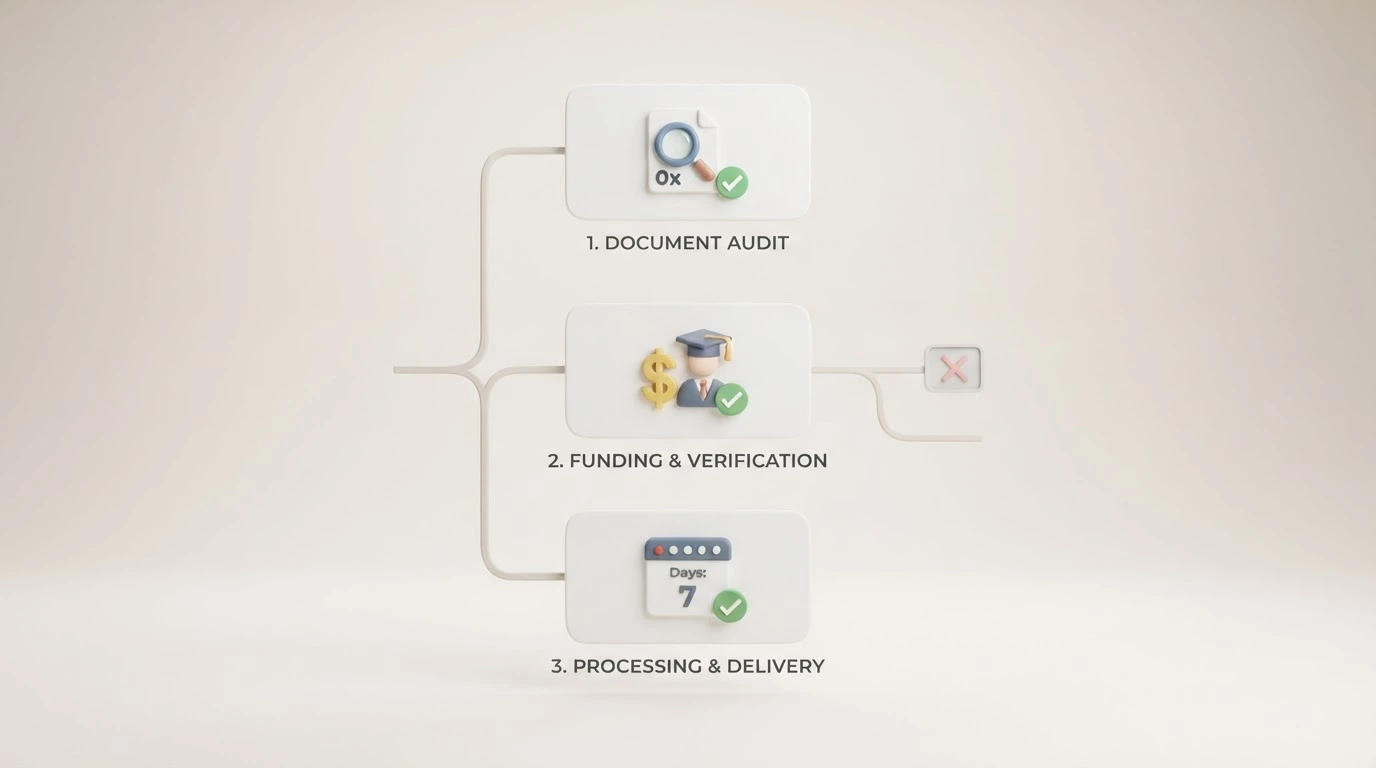
First, confirm the wagering figure is 0x in the terms page, not just in the ad copy. The ad copy is the marketing claim. The terms page is the contract. If the terms page says 40x and the ad says “no wager”, the terms page wins. If the terms page says 0x and the ad says the same, the offer is what it claims to be. If the terms page is missing, vague, or contradicts the ad, walk away.
Second, read the maximum cashout cap. If the cap is missing, assume it is low — the offer’s downside is worse than the ad suggests. A genuine no-wager offer will name the cap in dollar terms, attached to the specific bonus tranche. The audited caps sit between thirty and fifty Australian dollars for free spins; anything outside that range without explanation deserves scrutiny.
Third, check the expiry window and game eligibility. A five-day expiry is workable but tight. A ten-day expiry is comfortable. Game eligibility tells you whether the wager-free spins are locked to a single pokie — most are — or whether the offer carries a broader game list. A player who wants the broadest game choice should look at the cash chip format rather than the free-spin format.
The arithmetic the page has already run tells the rest of the story. A no-wager bonus capped at A$50 is, on average, worth more than a A$200 bonus at 40x wagering — because the clearing cost of the 40x bonus on a 96.5 per cent pokie is roughly seventy dollars of expected loss, against a cap that the player will rarely hit, while the no-wager bonus costs nothing to clear and pays out up to fifty dollars. The no-wager offer is the better deal for any player who values certainty over ceiling.
The offshore reality does not change when the bonus is good. Every operator on this list is offshore, and the player has fewer statutory protections than they would have on an Australian licensed wagering service. The verified cashout track record from the testing round is the best evidence a player has — and even that is a single testing run, not a permanent guarantee.
The responsible-gambling tools apply regardless of where a player chooses to play. BetStop covers the licensed wagering providers; the National Gambling Helpline at 1800 858 858 and Gambling Help Online cover anyone. The five-million-wagerer prevalence figure and the 400,000 high-risk gambler count are the reminder that the offers on this page are entertainment products with a cost, and the tools exist because the cost is real for a meaningful share of the player base.
A genuine no-wager offer is a better deal than a standard-wager bonus of higher face value. The verification takes two minutes, and the difference between claiming a verified five-of-twenty-seven offer and claiming one of the broken twenty-two is the difference between walking away with up to fifty dollars and walking away with nothing.
Frequently Asked Questions
What does “no wagering” mean for a casino bonus in Australia, and how is it different from low wagering?
No wagering means zero playthrough — every dollar won on the bonus spins or wager-free chip is withdrawable cash from the first spin, subject only to the offer’s cashout cap and expiry. Low wagering means a small playthrough requirement, typically well below the standard 40x to 60x that Australian no-deposit offers carry — usually 10x to 25x. Low wagering still requires the player to grind through turnover and absorb the house-edge erosion on the clearing bets; no wagering does not. The trade-off is that no-wager offers cap winnings lower than low-wager offers typically do.
Are “no wager” casino bonuses truly deposit-free in Australia, or do most require a small token deposit before withdrawal?
The genuine no-deposit no-wager offers in the audited set are truly deposit-free at the claim stage — the spins or chip land on signup with no payment required. Some casinos impose a token-deposit requirement before they will process a withdrawal on a no-deposit win, which is not wagering but has the same effect on a player expecting to walk away without paying in. The audited Ricky Casino offer carries this condition explicitly; the audited wager-free spin offers from SkyCrown, VegasNow, Wild Tokyo, and Crownslots do not. Always read the withdrawal terms before registering.
How do Australian players verify whether a “no wager” offer has a fair max cashout cap and realistic expiry window?
Three checks. Confirm the wagering figure is 0x in the terms page, not just in the ad copy. Read the max cashout cap; the audited range for wager-free spins sits between A$40 and A$50. Check the expiry window — five to ten days is the typical spread, with Book of Dead’s five-day window the tightest. If any of those figures is missing, vague, or contradicted by the ad, the offer needs more scrutiny before claiming.
Which payment methods typically allow the fastest withdrawals on no-wager bonus winnings for AU players?
PayID is the fastest route in the audited testing — withdrawals on bonus winnings averaged twelve minutes across eight test cashouts, with a range from five to twenty-two minutes. Standard bank transfers clear in one to five business days, and card withdrawals take two to seven days. Crypto sits alongside PayID for speed but adds currency-volatility risk and a lighter regulatory regime.
Are online casinos legal in Australia, and what does that mean for claiming offshore no-wager bonuses?
The Interactive Gambling Act 2001 prohibits the provision of online casino services to people in Australia. Every no-wager offer on this page comes from an offshore operator; none can be AU-licensed for the product they offer, because the product is prohibited. The IGA targets providers, not individual players — Australian players are not prosecuted for accessing offshore casinos. The implication for the player is that the consumer protections in the National Consumer Protection Framework do not apply to offshore casinos; withdrawals are governed by the offshore terms, not by Australian consumer law.
What responsible gambling tools exist in Australia and how can players use them when chasing low or no wager offers?
BetStop — the National Self-Exclusion Register — covers approximately 150 licensed Australian wagering providers and blocks betting accounts, bets, and marketing messages for registered users. Offshore casinos are not covered by BetStop; the operator’s own deposit-limit and self-exclusion tools apply instead. The National Gambling Helpline at 1800 858 858 and Gambling Help Online (24/7 chat and email) are free and available to any Australian, regardless of where they play. Only one in three Australian wagerers knows BetStop exists — registering or calling the helpline before a session is the most useful single step a player can take.
Crypto casinos and no-wager bonuses — faster, but at what cost?
Crypto no-wager bonuses work the same way as their fiat counterparts in structure: a batch of spins or a cash chip credited with zero playthrough, winnings available as cash from the first spin. The withdrawal is paid in Bitcoin, Ethereum, or a stablecoin, and the settlement is minutes rather than days. For a player who already holds crypto and values speed over the consumer protections of a heavier regulatory regime, the speed advantage is real.
The trade-off is regulation. Most crypto casinos offering no-wager bonuses to Australian players operate under Curaçao licences, which carry lighter player-protection obligations than the Malta Gaming Authority or the UK Gambling Commission. There is no Australian statutory compensation scheme if a withdrawal stalls. There is no ACMA complaints channel for an offshore operator. The licence is a credential, not a guarantee — and the player is the last line of defence on any disputed withdrawal.
The currency-volatility risk is the other cost. Winnings held in Bitcoin or Ethereum move with the market. A fifty-dollar win paid in BTC at one price is not fifty dollars an hour later if the price has moved. Players who want a stable payout should convert to fiat at the cashier, accepting the conversion fee in exchange for a fixed-amount withdrawal. Players who hold the crypto are making a separate bet on the currency.
Wager Beat Casino — The Name Says It, but What’s the Offer?
Wager Beat’s name carries the promise the page is built around. The brand positions itself around wager-free play, and the search traffic it captures is the same traffic that lands on this page. The research run could not confirm a welcome bonus, a no-deposit offer, or a free-spin package from Wager Beat — the operator-specific field set carries “unbekannt” on every bonus specification rather than a verified figure.
What this means for a player: Wager Beat is a brand that exists and targets the no-wager segment, but it is not one of the five operators the 2026 testing round verified. The verification steps apply in full. Read the terms page on the operator’s site at the moment of claiming. Confirm the wagering figure is 0x. Read the cashout cap. Check the expiry window. Look for real-user cashout reports. The brand name is a signal, not a guarantee, and an Australian player should treat Wager Beat as an unverified claim until the terms page says otherwise.